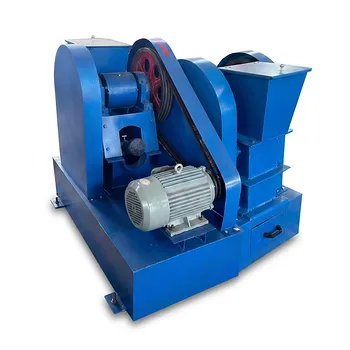
What role do a laboratory hydraulic press and molds play in SiCN preparation? Optimize Your Ceramic Consolidation.
Updated 5 months ago
The laboratory hydraulic press and stainless steel molds serve as the essential mechanical tools for the "green body" consolidation phase of SiCN fabrication. They apply intense axial pressures—often reaching 200 MPa—to polymer precursor powders to transform loose material into a dense, cohesive solid. This process is a physical prerequisite for achieving high-density ceramics, as it establishes the structural foundation necessary to survive the subsequent pyrolysis stage.
The combination of a hydraulic press and precision molds bridges the gap between raw polymer powders and technical ceramics by eliminating inter-particle porosity. This consolidation is critical for managing the intense volume shrinkage and gas volatilization that occur during the polymer-to-ceramic conversion.
The Primary Role of Mechanical Consolidation
High-Pressure Densification
The hydraulic press applies controlled axial force to force polymer precursor particles into a high-density state. This compaction significantly reduces the distance between particles, which is vital for the eventual formation of a continuous ceramic matrix.
Precise Geometric Definition
High-strength stainless steel molds act as the negative space that defines the final shape and dimensions of the green body. This allows researchers to produce specimens with consistent geometries, such as discs or bars, which are necessary for standardized mechanical testing.
Structural Integrity of the Green Body
By forcing particles together, the press induces physical interlocking and plastic deformation of the polymer precursors. This creates a "green body" with sufficient mechanical strength to be handled and moved into a furnace without crumbling.
Critical Mechanisms for Material Integrity
Porosity Reduction and Air Expulsion
The primary physical hurdle in SiCN preparation is the removal of air trapped between powder particles. High-pressure consolidation expels residual air, which prevents the formation of large internal pores that would otherwise act as failure points in the finished ceramic.
Controlling Volume Shrinkage
During the conversion from polymer to ceramic (pyrolysis), the material loses mass through the volatilization of gaseous byproducts. A densely packed green body helps mitigate the severe volume shrinkage associated with this mass loss, reducing the likelihood of catastrophic cracking.
Minimizing Microstructural Defects
Precise pressure control allows for a uniform distribution of particles, which limits the size of initial defects. This uniformity is directly linked to the reliability and Weibull modulus of the final silicon carbonitride material.
Understanding the Trade-offs
Pressure Gradients and Wall Friction
Friction between the precursor powder and the walls of the stainless steel mold can cause pressure gradients. This often results in a green body that is more dense at the top than the bottom, which may lead to warping or non-uniform grain growth during heat treatment.
Material Limitations of Molds
While stainless steel offers high strength and corrosion resistance, repeated exposure to pressures near 200 MPa can lead to mold fatigue or deformation. Using molds beyond their elastic limit can result in dimensional inaccuracies in the SiCN specimens.
Atmospheric Sensitivity
Polymer precursors are often sensitive to moisture and oxygen. To ensure the highest purity and thermal stability, the pressing process must often be conducted under a protective argon atmosphere to prevent pre-oxidation before the pyrolysis stage.
How to Apply This to Your Project
Successful SiCN preparation requires balancing compaction force with the specific characteristics of your polymer precursor.
- If your primary focus is achieving maximum density: Utilize axial pressures at the upper limit (up to 200 MPa) to minimize inter-particle voids before pyrolysis begins.
- If your primary focus is preventing structural cracks: Ensure the compaction process is followed by a slow, controlled pressure release to prevent elastic recovery from fracturing the green body.
- If your primary focus is geometric precision: Invest in high-tolerance stainless steel molds with polished internal surfaces to minimize wall friction and ensure uniform density.
By mastering the consolidation phase using a hydraulic press, you establish the fundamental structural parameters required to transform a polymer powder into a high-performance SiCN ceramic.
Summary Table:
| Component | Primary Function | Key Benefit |
|---|---|---|
| Lab Hydraulic Press | High-Pressure Consolidation (up to 200 MPa) | Eliminates inter-particle porosity for a dense ceramic matrix. |
| Stainless Steel Molds | Geometric Definition & Containment | Ensures consistent specimen shapes (discs/bars) for standardized testing. |
| Mechanical Compaction | Physical Interlocking of Precursors | Creates structural integrity in the "green body" for safe handling. |
| Pressure Control | Controlled Air Expulsion | Minimizes internal defects and mitigates shrinkage during pyrolysis. |
Elevate Your Material Science Research with Precision Consolidation
Achieving high-density SiCN ceramics requires more than just pressure—it requires precision. Our brand provides complete laboratory sample preparation solutions specifically designed for advanced material science and powder processing.
We specialize in high-performance compaction equipment and powder processing tools, including:
- Hydraulic Presses: A full spectrum of solutions including Standard Lab Presses, Cold/Warm Isostatic Presses (CIP/WIP), XRF Pellet Presses, and Vacuum Hot Presses.
- Precision Tooling: High-tolerance stainless steel molds designed for high-pressure durability and minimal wall friction.
- Powder Processing: Advanced crushers (jaw/roll), liquid nitrogen cryogenic grinders, and high-efficiency mills (planetary, jet, and rotor).
- Preparation Auxiliaries: Sieve shakers, powder mixers, and defoaming mixers to ensure feedstock uniformity.
Whether you are refining polymer-to-ceramic conversion or optimizing green body density, our equipment provides the reliability and control you need to minimize microstructural defects.
Ready to optimize your SiCN fabrication process? Contact us today to find the perfect equipment for your laboratory!
References
- Mingxing Li, Jie Zhou. Formation of nanocrystalline graphite in polymer-derived SiCN by polymer infiltration and pyrolysis at a low temperature. DOI: 10.1007/s40145-021-0501-2
Mentioned Products
- 6-Ton Small Single-Punch Tablet Press — Laboratory Powder & Granule Tableting Equipment / Tablet Forming Machine
- 5 Ton Single Punch Tablet Press Laboratory Small Batch Production
- Manual Tablet Press with Dual Scale Pressure Gauge for Pharmaceutical Food Chemical Laboratory Sample Preparation
- 6 Ton Variable Frequency Single Punch Tablet Press
- High Shear Laboratory Emulsifier for Mixing and Homogenization
People Also Ask
- What is the function of a laboratory press in Cr-Ti alloy evaluation? Quantify Fracture Stress & Strength
- What is the function of a laboratory press in assessing the hydrophobic performance of modified vermiculite fillers?
- What is the core function of a laboratory press in the forming of ceramic filter element green bodies? Maximize Density.
- What is the function of a laboratory press in the preparation of ceramic feed rods? Master Density and Precision
- Why is vacuum sealing and flexible packaging necessary for Aluminum Titanate powders during CIP? Ensure Peak Density

Tech Team · PowderPreparation
Last updated on May 14, 2026
Related Products
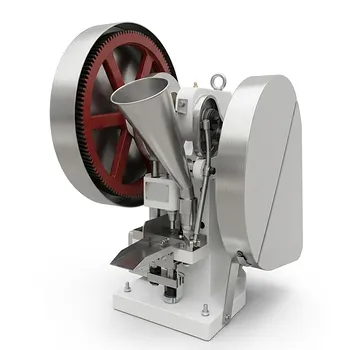
6-Ton Small Single-Punch Tablet Press — Laboratory Powder & Granule Tableting Equipment / Tablet Forming Machine
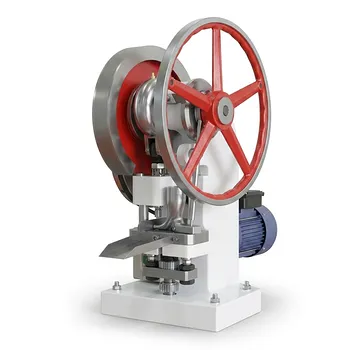
5 Ton Single Punch Tablet Press Laboratory Small Batch Production
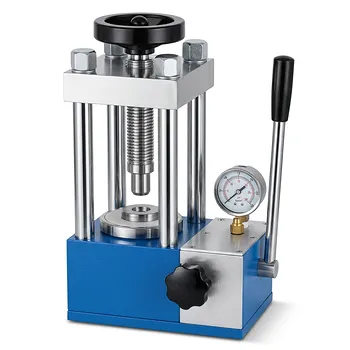
Manual Tablet Press with Dual Scale Pressure Gauge for Pharmaceutical Food Chemical Laboratory Sample Preparation
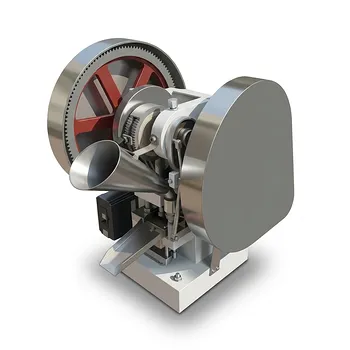
6 Ton Variable Frequency Single Punch Tablet Press
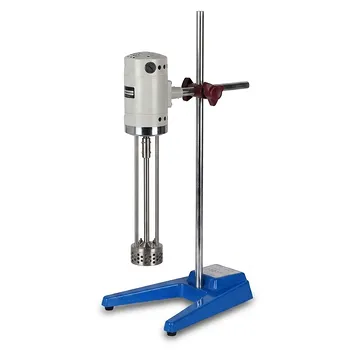
High Shear Laboratory Emulsifier for Mixing and Homogenization
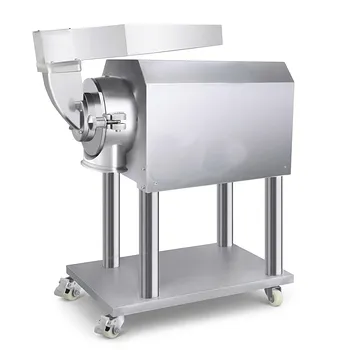
High Speed Small Laboratory Crusher for Dry Material Sample Preparation
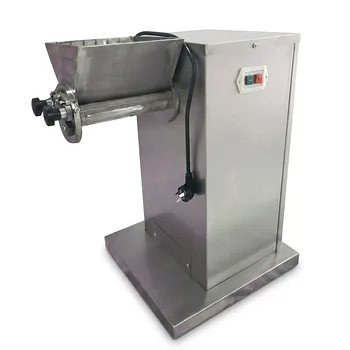
Small Laboratory Oscillating Granulator for Wet and Dry Granulation Processing
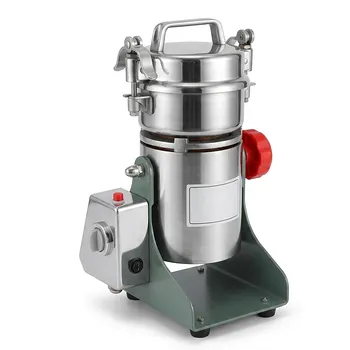
High Speed Swing Type Laboratory Pulverizer for Fine Powder Grinding and Sample Preparation