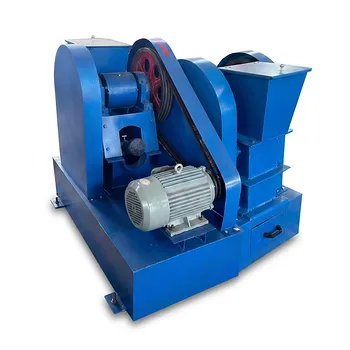
What role does a lab hydraulic press play in fire powder sample prep? Achieve Accurate Contact Angle Measurement.
Updated 4 months ago
Standardizing the physical state of the powder sample.
A laboratory hydraulic press prepares fire extinguishing powders for contact angle testing by compressing loose particles into flat, dense pellets under constant pressure (typically around 10 MPa). This process is essential because it eliminates powder porosity, preventing the liquid droplet from being absorbed into the gaps between particles. By creating a uniform surface, the press allows a contact angle meter to accurately measure the chemical hydrophobicity of the powder, specifically evaluating how treatments like nano-silica modify the surface of composite powders.
The core role of the hydraulic press is to transform a three-dimensional, porous powder mass into a two-dimensional planar reference. This isolation of surface chemistry from physical structure is the only way to obtain a repeatable and scientifically valid contact angle.
Eliminating Porosity and Capillary Interference
Neutralizing Physical Absorption
In its loose state, fire extinguishing powder contains significant air gaps that trigger capillary action. When a test droplet is placed on loose powder, it often "disappears" into the sample not because of poor hydrophobicity, but because of physical suction.
The hydraulic press applies high-precision pressure to force particles together, effectively closing these pores. This ensures that the liquid droplet remains on the surface, allowing for an accurate reading of the solid-liquid interface.
Isolating Chemical Modification Effects
Researchers often add hydrophobic nano-silica to fire extinguishing agents (like HM/DAP composites) to improve flow and moisture resistance. Without a pressed pellet, it is impossible to tell if a high contact angle is due to these chemical additives or simply the way the powder was poured.
The press provides a standardized baseline. This allows technicians to directly correlate changes in the contact angle to the concentration or type of hydrophobic treatment applied to the powder surface.
Surface Reconstruction and Standardization
Achieving a Perfectly Flat Plane
Optical contact angle meters require a clear baseline and a sharp image of the droplet's silhouette. Loose powder creates an uneven, "mountainous" topography at a microscopic level, which distorts the light and makes the baseline impossible to define.
Applying several tons of force creates a smooth, reflective surface. This physical reconstruction provides the necessary geometric precision for the instrument’s software to calculate the angle between the tangent of the droplet and the solid surface.
Ensuring Repeatability Across Batches
Testing fire extinguishing agents requires consistency across multiple samples to ensure fire safety standards are met. Manual leveling of powder is subjective and prone to human error.
The hydraulic press uses calibrated pressure settings to ensure every sample has the exact same packing density. This standardization means that any variation in test results is a reflection of the material properties, not the sample preparation technique.
Understanding the Trade-offs and Pitfalls
The Risk of Over-Compression
While high pressure is necessary to eliminate porosity, excessive force can lead to particle deformation or crushing. If the primary particles of the fire extinguishing agent are fractured, new "clean" surfaces may be exposed that do not have the hydrophobic coating, leading to an artificially low contact angle.
Pressure Consistency and Dwell Time
Applying pressure too quickly can trap air pockets within the pellet, leading to structural failure or "capping" when the pressure is released. Maintaining a consistent dwell time (the duration the pressure is held) is just as critical as the peak pressure itself for achieving a stable, non-reactive pellet.
Surface Contamination
The polished faces of the pressing dies must be meticulously cleaned between samples. Any residual surfactants or oils on the metal dies can transfer to the powder pellet, completely invalidating the contact angle measurement by altering the surface energy of the sample.
How to Apply This to Your Laboratory Process
To achieve the most accurate results when evaluating fire extinguishing powders, your preparation protocol should be tailored to your specific testing objective.
- If your primary focus is evaluating chemical additives: Use a consistent pressure (such as 10 MPa) to create the densest possible pellet, ensuring that the liquid droplet reacts only to the surface chemistry of the nano-silica coating.
- If your primary focus is quality control across batches: Establish a strict SOP that defines the exact mass of powder, the dwell time, and the die cleaning procedure to ensure that physical variables are completely neutralized.
- If your primary focus is comparing different material compositions: Monitor the pellet for structural integrity after pressing; if the pellet "flakes," you may need to adjust the pressure to find the equilibrium between density and particle preservation.
By treating the hydraulic press as a precision instrument rather than a simple crushing tool, you ensure that your contact angle data is a true reflection of your material's performance.
Summary Table:
| Key Role | Impact on Testing | Critical Parameter |
|---|---|---|
| Porosity Elimination | Prevents liquid absorption & capillary interference | Compaction Pressure (e.g., 10 MPa) |
| Surface Reconstruction | Creates a flat, reflective plane for optical baseline | Die Surface Polishing |
| Chemical Isolation | Separates additive effects from physical structure | Consistent Dwell Time |
| Standardization | Ensures batch-to-batch repeatability | Calibrated Pressure Settings |
Elevate Your Material Analysis with Precision Sample Preparation
At [Brand Name], we provide complete laboratory sample preparation solutions tailored for material science and advanced powder processing. Whether you are characterizing fire extinguishing agents or developing new composites, our equipment ensures the structural integrity and surface precision your research demands.
Our Specialized Product Range Includes:
- Hydraulic Presses: A full spectrum featuring standard lab presses, XRF pellet presses, Hot Presses, Vacuum Hot Presses, and Isostatic Presses (CIP/WIP).
- Powder Processing: High-performance crushers (jaw/roll), liquid nitrogen cryogenic grinders, and advanced mills (planetary ball, jet, sand/bead, disc, rotor).
- Sieving & Mixing: Vibratory and air-jet sieve shakers with precision meshes, alongside high-efficiency powder and defoaming mixers.
Don't let poor sample preparation compromise your data. Partner with experts who understand the physics of powders.
Contact Our Engineering Team Today to find the perfect compaction or grinding solution for your laboratory.
References
- Lijing Wang, Haijun Zhang. Enhanced Fire-Extinguishing Performance and Synergy Mechanism of HM/DAP Composite Dry Powder. DOI: 10.3390/ma18030533
Mentioned Products
- 6-Ton Small Single-Punch Tablet Press — Laboratory Powder & Granule Tableting Equipment / Tablet Forming Machine
- 5 Ton Single Punch Tablet Press Laboratory Small Batch Production
- Manual Tablet Press with Dual Scale Pressure Gauge for Pharmaceutical Food Chemical Laboratory Sample Preparation
- 6 Ton Variable Frequency Single Punch Tablet Press
- High Shear Laboratory Emulsifier for Mixing and Homogenization
People Also Ask
- What is the function of a laboratory press in Cr-Ti alloy evaluation? Quantify Fracture Stress & Strength
- What is the function of a laboratory press in assessing the hydrophobic performance of modified vermiculite fillers?
- What is the core function of a laboratory press in the forming of ceramic filter element green bodies? Maximize Density.
- What is the function of a laboratory press in the preparation of ceramic feed rods? Master Density and Precision
- Why is vacuum sealing and flexible packaging necessary for Aluminum Titanate powders during CIP? Ensure Peak Density

Tech Team · PowderPreparation
Last updated on Jun 03, 2026
Related Products
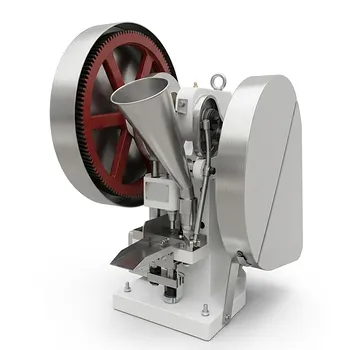
6-Ton Small Single-Punch Tablet Press — Laboratory Powder & Granule Tableting Equipment / Tablet Forming Machine
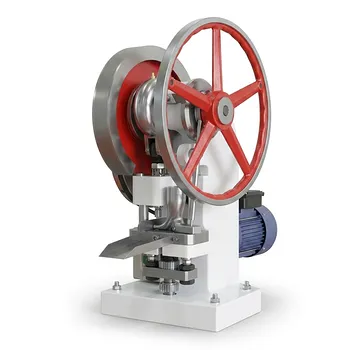
5 Ton Single Punch Tablet Press Laboratory Small Batch Production
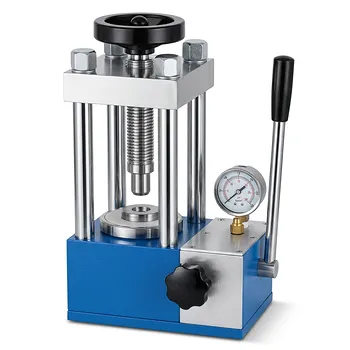
Manual Tablet Press with Dual Scale Pressure Gauge for Pharmaceutical Food Chemical Laboratory Sample Preparation
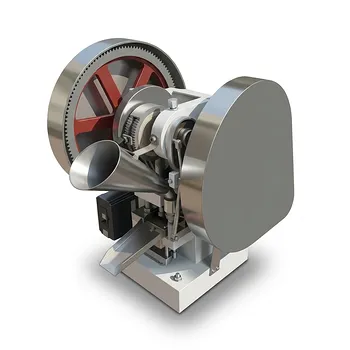
6 Ton Variable Frequency Single Punch Tablet Press
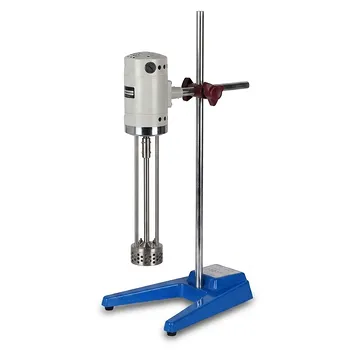
High Shear Laboratory Emulsifier for Mixing and Homogenization
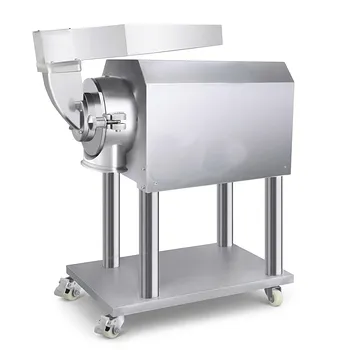
High Speed Small Laboratory Crusher for Dry Material Sample Preparation
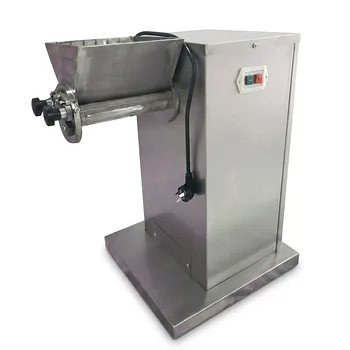
Small Laboratory Oscillating Granulator for Wet and Dry Granulation Processing
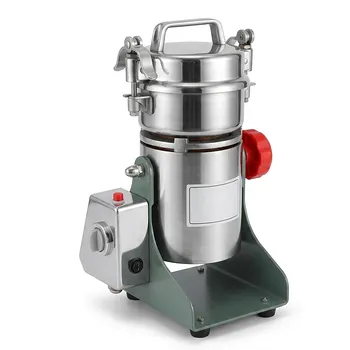
High Speed Swing Type Laboratory Pulverizer for Fine Powder Grinding and Sample Preparation