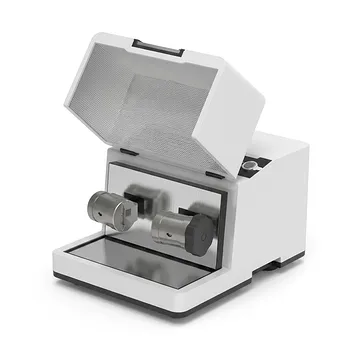
What role does a high-speed planetary ball mill play in BZCY preparation? Achieve Nanoscale Refinement & Pure Phases
Updated 5 months ago
The high-speed planetary ball mill is the primary mechanism for transforming calcined BZCY into a highly reactive, nanometric precursor. It utilizes high-energy impacts to reduce the average particle size ($d_{50}$) to approximately 600 nm while simultaneously breaking down soft agglomerates. This mechanical activation increases the specific surface area, providing the necessary physical state for successful low-temperature cold sintering and the formation of a pure perovskite phase.
Core Takeaway: A planetary ball mill serves as a high-energy processor that refines BZCY ceramic powders to the nanometer scale and ensures atomic-level homogeneity. This intensive milling stage is essential for maximizing powder reactivity and ensuring structural uniformity in the final proton-conducting electrolyte.
Mechanical Refinement and Particle Control
Nanoscale Particle Size Reduction
The primary function of the planetary ball mill is the fine grinding of calcined BZCY powders. By employing high rotational speeds, the equipment generates centrifugal impact and shear forces that reduce the $d_{50}$ of the powder to the nanometer scale. This drastic reduction in size is a prerequisite for achieving high-density ceramics during subsequent sintering stages.
De-agglomeration of Calcined Powders
During the calcination process, ceramic powders often form soft agglomerates that can lead to density gradients in the final product. The high-energy collisions within the mill effectively break these clusters apart. This ensures a more uniform powder morphology, which is critical for consistent packing during the green body formation.
Increasing Specific Surface Area
As the particle size decreases, the specific surface area of the BZCY powder increases exponentially. This increased surface area elevates the Gibbs free energy of the powder system. Consequently, the powder becomes significantly more chemically reactive, facilitating faster diffusion and lower reaction temperatures.
Chemical Homogenization and Phase Synthesis
Achieving Molecular-Level Mixing
The planetary ball mill is used to perform deep mixing of multi-component oxides such as barium, zirconium, cerium, and yttrium. Through high-frequency impact and friction, the mill achieves atomic-level uniform mixing of these diverse components. This homogenization is vital for preventing the formation of secondary phases and ensuring a pure perovskite solid solution.
Facilitating Low-Temperature Sintering
The reactivity gained during high-speed milling provides a critical foundation for low-temperature cold sintering processes. By reducing the energy barrier for densification, the mill allows BZCY ceramics to achieve high density without the need for extreme thermal budgets. This is particularly beneficial for maintaining the desired microstructural integrity of the electrolyte.
Use of Liquid Milling Media
In many BZCY preparation protocols, the mill utilizes wet grinding in media such as ethanol or heptane. This medium prevents the powder from re-agglomerating due to van der Waals forces during the milling process. Furthermore, it aids in the uniform distribution of components at the microscale, which is essential for producing high-quality screen-printing pastes or thin-film electrolytes.
Understanding the Trade-offs and Risks
Milling Media Contamination
The high-energy nature of planetary milling can lead to the wear of grinding jars and balls, typically made of zirconia or alumina. Small amounts of these materials can shed into the BZCY powder, potentially acting as impurities that degrade protonic conductivity. Care must be taken to match the milling media to the ceramic chemistry or account for these minor inclusions.
Heat Generation and Phase Stability
The intense friction and impact within the mill generate significant thermal energy. If not managed through intermittent milling cycles, this heat can cause localized temperature spikes. In some sensitive ceramic systems, excessive heat might trigger premature phase transitions or the volatilization of specific dopants before the formal sintering stage.
How to Apply This to Your BZCY Processing
Making the Right Choice for Your Goal
- If your primary focus is maximizing ionic conductivity: Prioritize longer milling times or higher speeds to ensure a pure perovskite phase and atomic-level dopant distribution.
- If your primary focus is energy efficiency in sintering: Focus on achieving the smallest possible $d_{50}$ (sub-600 nm) to leverage the increased surface energy for low-temperature densification.
- If your primary focus is purity and phase integrity: Utilize high-purity zirconia milling media and cooling breaks to prevent contamination and thermal degradation of the BZCY powder.
By precisely controlling the mechanical energy of the planetary ball mill, researchers can bridge the gap between raw oxide mixtures and high-performance, dense proton-conducting ceramics.
Summary Table:
| Key Function | Impact on BZCY Powder | Technical Benefit |
|---|---|---|
| Nanoscale Grinding | Reduces $d_{50}$ to ~600 nm | Enables high-density sintering |
| De-agglomeration | Breaks soft calcined clusters | Ensures uniform powder morphology |
| Mechanical Activation | Increases specific surface area | Lowers required sintering temperatures |
| Atomic-Level Mixing | Homogenizes Barium, Zirconium, etc. | Prevents secondary phases (Pure Perovskite) |
| Wet Milling Support | Prevents re-agglomeration | Ideal for screen-printing paste preparation |
Elevate Your Ceramic Research with Precision Powder Solutions
Achieving the perfect proton-conducting BZCY electrolyte requires more than just chemistry—it requires precision engineering. At [Brand Name], we provide complete laboratory sample preparation solutions for material science, specializing in high-performance powder processing and compaction equipment.
From high-speed planetary ball mills, jet mills, and rotor mills for nanoscale refinement to our advanced Cold/Warm Isostatic Presses (CIP/WIP) and vacuum hot presses for superior densification, we offer the tools you need for every stage of synthesis. Our extensive range also includes crushers, sieve shakers, and specialized powder mixers designed to ensure atomic-level homogeneity and structural integrity.
Ready to optimize your BZCY processing and improve ionic conductivity? Contact our technical experts today to find the ideal equipment for your laboratory.
References
- Moritz Kindelmann, Olivier Guillon. Highly conductive grain boundaries in cold-sintered barium zirconate-based proton conductors. DOI: 10.1039/d3ta07076j
Mentioned Products
- Vertical Production Planetary Ball Mill for High Throughput Powder Processing
- Planetary Ball Mill 12L
- High Energy Planetary Ball Mill for Nano Scale Grinding and Mechanical Alloying
- High Energy Omnidirectional Planetary Ball Mill 16L
- High Energy Omnidirectional Planetary Ball Mill 20L
People Also Ask
- What is the function of a high-performance planetary ball mill in AMZ laminates? Master Ceramic Homogenization.
- What is the role of a planetary ball mill in Al–Si3N4 nanocomposite prep? Achieve Uniform Homogenization
- What is the function of a planetary ball mill in lanthanum hexaaluminate synthesis? Master Micron-Level Homogenization
- What role does a planetary ball mill play in the synthesis of Er-doped PMN-PT ceramics? Enhancing Homogeneity & Purity
- What are the advantages of using a planetary ball mill for the fine grinding of barium silicate glass powder? Peak Results

Tech Team · PowderPreparation
Last updated on May 14, 2026
Related Products
Vertical Production Planetary Ball Mill for High Throughput Powder Processing
Planetary Ball Mill 12L
High Energy Planetary Ball Mill for Nano Scale Grinding and Mechanical Alloying
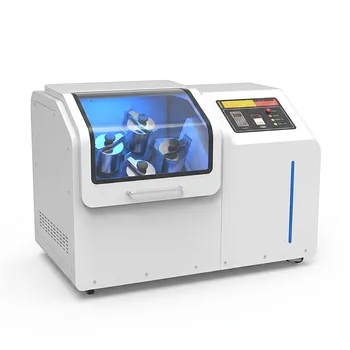
High Energy Omnidirectional Planetary Ball Mill 16L
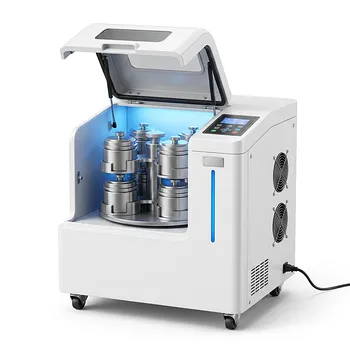
High Energy Omnidirectional Planetary Ball Mill 20L
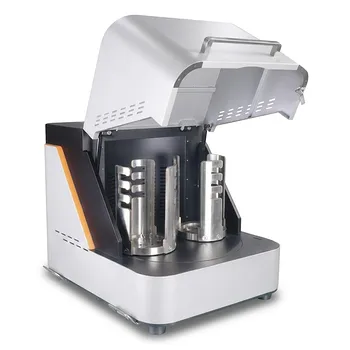
High Energy Laboratory Planetary Ball Mill for Nano Grinding and Colloidal Mixing of Hard and Brittle Materials
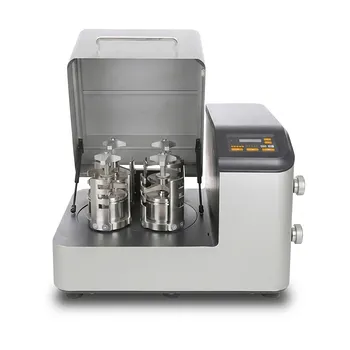
High Energy Planetary Ball Mill for Nano Scale Grinding and Colloidal Mixing in Material Science Research
High Energy Laboratory Planetary Ball Mill for Nano Grinding and Material Science Sample Preparation
Miniature Planetary Ball Mill with Vacuum Grinding and High Efficiency for Laboratory Sample Preparation
Dual Station Planetary Ball Mill 24L
Vertical Square Planetary Ball Mill for Laboratory Sample Preparation and Nanoscale Grinding
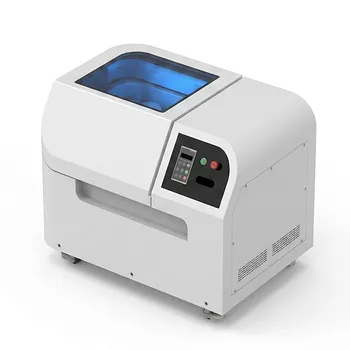
8L Planetary Ball Mill for Laboratory Grinding and Sample Preparation
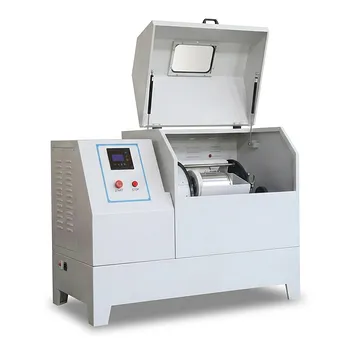
Heavy Duty Horizontal Planetary Ball Mill for Efficient Industrial Grinding and Sample Preparation
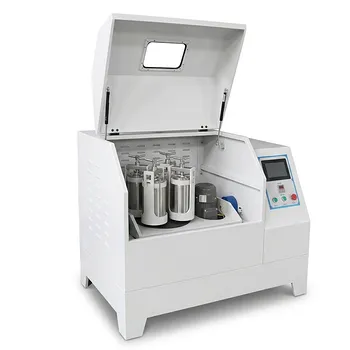
360° Rotating Omnidirectional Laboratory Planetary Ball Mill for Homogeneous Ultra-Fine Grinding and Mixing
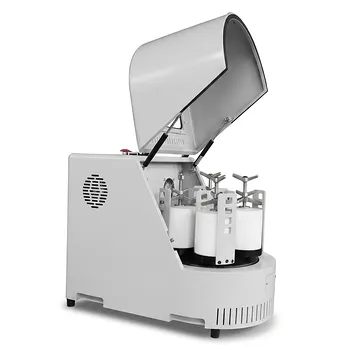
Vertical Semi Circular Planetary Ball Mill for Laboratory Precision Grinding
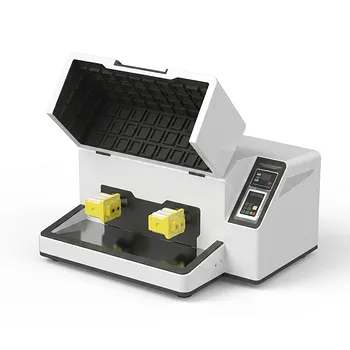
Multi-Platform Nanoscale High-Energy Vibratory Ball Mill
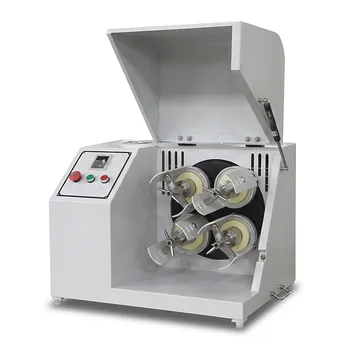
Horizontal Light Duty Planetary Ball Mill for Laboratory Sample Preparation
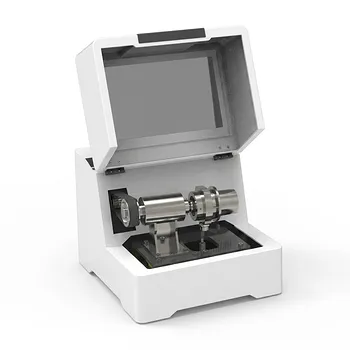
Single Tank High Energy Vibratory Ball Mill for Laboratory Grinding and Mixing
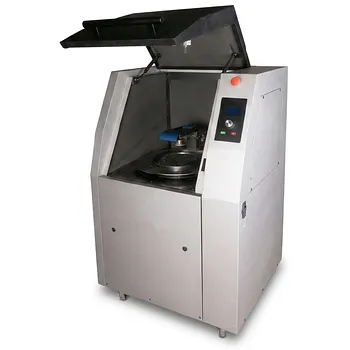
High Speed Vibratory Disc Mill for Spectral Analysis Sample Preparation and Rapid Powder Grinding