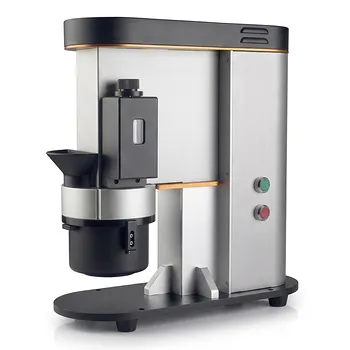
What role does a high-precision vibratory sieve shaker play in bioretention soil fractionation? Optimize Your Analysis
Updated 4 months ago
High-precision vibratory sieve shakers provide the standardized mechanical energy required to isolate specific particle size fractions from bioretention pond soil. By utilizing program-controlled vibrations and stacked industrial-grade sieves, this equipment enables researchers to quantify the distribution of pollutants, such as tire wear particles (TWPs), across discrete size intervals. This process is the fundamental precursor for calculating mass percentages and identifying how contaminants are distributed within the soil matrix.
The vibratory sieve shaker acts as the foundational tool for soil characterization by ensuring repeatable, three-dimensional particle movement that overcomes inter-particle friction. This precision is essential for identifying pollutant migration patterns and determining the engineering properties of bioretention media.
Mechanics of Automated Soil Fractionation
Three-Dimensional Particle Movement
A high-precision shaker generates a complex three-dimensional motion that causes soil particles to continuously bounce and rearrange across the sieve surface. This motion ensures that every particle has multiple opportunities to present its smallest dimension to the mesh openings. This is particularly critical for bioretention soils, which often contain irregular shapes and complex organic matter.
High-Frequency Vibration Control
The equipment uses controlled high-frequency vibrations to drive dry soil samples through a series of sieves arranged by descending aperture size. This mechanical energy overcomes the adhesive forces between fine particles, allowing for the precise separation of silt and clay from larger sand fractions. Standardized frequencies (often between 200 to 250 rpm) ensure that results are comparable across different study sites.
Automated Screening Consistency
Compared to manual sieving, digital vibratory shakers eliminate human error by maintaining constant duration and intensity. This repeatability is vital for longitudinal studies of bioretention ponds, where researchers must track changes in soil texture and pollutant accumulation over several years.
Critical Role in Environmental Assessment
Identifying Contaminant Distribution
In bioretention research, the shaker is used to isolate specific intervals—such as 50 µm, 100 µm, and 500 µm—to locate tire wear particles (TWPs). By fractionating the soil, technicians can calculate the mass percentage of these microplastics in each size category. This data reveals whether contaminants are trapped in the top sediment layer or migrating deeper into the pond's filtration media.
Facilitating Heavy Metal Migration Studies
Precision fractionation is essential for studying the relationship between soil texture and heavy metal transport. Because heavy metals often bind to finer particles like silt and clay, the shaker's ability to accurately separate these fine fractions is critical for environmental risk assessments.
Calculating Engineering Properties
Beyond pollution tracking, the equipment provides the raw data needed to calculate the coefficient of uniformity and the coefficient of curvature. These parameters help engineers evaluate the drainage and filtration efficiency of the bioretention pond. For example, it allows for the classification of soils according to AASHTO or other engineering standards based on the proportion of particles passing through specific sieves like the No. 200 (0.075mm).
Understanding the Trade-offs
Aggregate Integrity vs. Separation Efficiency
While vibratory shakers are more efficient than manual methods, the mechanical impact must be carefully calibrated. Excessive vibration can physically destroy delicate soil aggregates, leading to an overestimation of the "fine" particle fraction. Conversely, insufficient energy may fail to break the bonds of dry soil, resulting in incomplete separation.
Moisture Sensitivity and Clogging
The precision of vibratory sieving is highly dependent on the dryness of the soil sample. Even minor moisture content can cause fine particles to clump or "blind" (clog) the industrial-grade stainless steel meshes, particularly at the 50 µm level. This necessitates rigorous pre-drying of bioretention samples before the fractionation process begins.
Applying Fractionation Results to Your Project
Recommendations Based on Project Goals
- If your primary focus is Pollutant Quantification (e.g., TWPs): Utilize industrial-grade stainless steel sieves with specific apertures (50, 100, and 500 µm) to isolate the exact fractions where microplastics are known to accumulate.
- If your primary focus is Engineering and Soil Grading: Use a full stack of standard test sieves ranging from 4.75mm down to 0.075mm to accurately determine soil gradation and AASHTO classification.
- If your primary focus is Soil Morphology and Aggregate Study: Set the shaker to a lower vibration frequency for a longer duration to achieve separation without the physical destruction of soil aggregates.
- If your primary focus is Research Repeatability: Employ a digital, program-controlled shaker to ensure that vibration frequency and timing remain identical across all samples in your data set.
Accurate particle size fractionation is the indispensable first step in transforming raw bioretention soil into actionable environmental and engineering data.
Summary Table:
| Application Goal | Key Function of Sieve Shaker | Critical Parameters/Tools |
|---|---|---|
| Pollutant Tracking | Isolates TWPs & microplastics | 50, 100, 500 µm apertures |
| Heavy Metal Study | Separates silt/clay fine fractions | High-frequency vibration control |
| Soil Grading | Calculates uniformity & curvature | No. 200 (0.075mm) standard sieves |
| Research Consistency | Eliminates manual error & bias | Digital program control (Time/RPM) |
Enhance Your Environmental Research with Precision Lab Solutions
Precise sample preparation is the foundation of reliable bioretention and material science data. At our facility, we provide complete laboratory sample preparation solutions designed to meet the rigorous demands of environmental assessment and soil engineering.
Whether you are quantifying tire wear particles or analyzing heavy metal migration, our specialized equipment ensures repeatable, high-accuracy results. Our extensive product lines include:
- Sieving & Separation: High-precision vibratory and air-jet sieve shakers with a full range of test sieves and meshes.
- Milling & Grinding: Planetary ball mills, jet mills, liquid nitrogen cryogenic grinders, and jaw/roll crushers.
- Powder Processing: Advanced powder mixers and defoaming mixers for uniform sample preparation.
- Compaction & Pressing: A full spectrum of hydraulic presses, including Cold/Warm Isostatic Presses (CIP/WIP), vacuum hot presses, and XRF pellet presses.
Ready to optimize your laboratory workflow? Our experts are here to help you select the perfect equipment for your specific research goals.
Contact us today to request a quote or technical consultation!
References
- Demmelash Mengistu, Arve Heistad. Concentrations and Retention Efficiency of Tire Wear Particles from Road Runoff in Bioretention Cells. DOI: 10.3390/w14203233
Mentioned Products
- Vibratory Sieve Shaker Electromagnetic 3D Motion Powder Particle Size Analyzer for Dry and Wet Sieving
- Stainless Steel Laboratory Vibratory Test Sieve Shaker
- Dry Three Dimensional Vibratory Sieve Shaker
- Small Laboratory Vibratory Sieve Shaker for Powder Gradation and Particle Size Analysis
- Small Laboratory Vibrating Sieve Shaker for Precise Particle Size Analysis
People Also Ask
- How does a vibratory sieve shaker contribute to optimizing the performance of activated carbon? Enhance Adsorption Precision
- Why is a laboratory vibratory sieve shaker necessary for processing magnesium-based borate precursor powders? Boost Activity
- Why use a vibratory sieve shaker to verify coarse aggregate grading in rubberized concrete? Ensure Structural Integrity
- What function do vibratory sieve shakers and standard test sieves serve in the preparation of adsorbents? Key Guide
- What role does a vibratory sieve shaker play in the particle size analysis of ground corn products? Enhance QC Precision

Tech Team · PowderPreparation
Last updated on Jun 03, 2026
Related Products
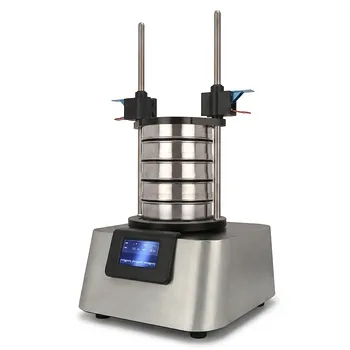
Vibratory Sieve Shaker Electromagnetic 3D Motion Powder Particle Size Analyzer for Dry and Wet Sieving
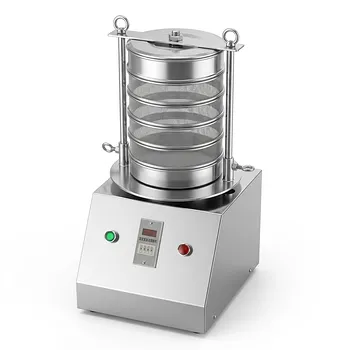
Stainless Steel Laboratory Vibratory Test Sieve Shaker
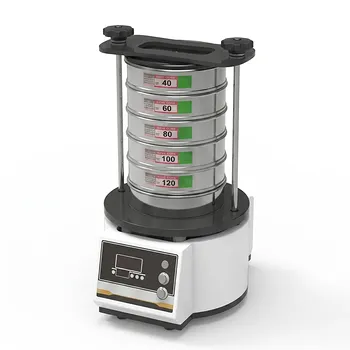
Dry Three Dimensional Vibratory Sieve Shaker
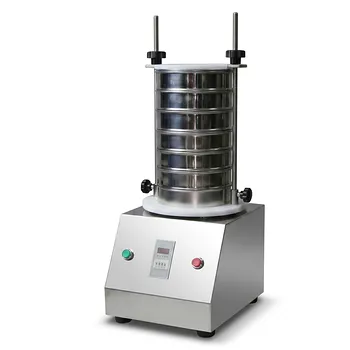
Small Laboratory Vibratory Sieve Shaker for Powder Gradation and Particle Size Analysis
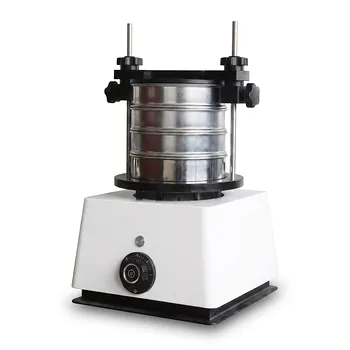
Small Laboratory Vibrating Sieve Shaker for Precise Particle Size Analysis
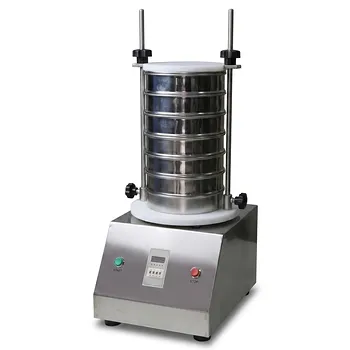
Laboratory Vibratory Test Sieve Shaker for Precision Particle Size Analysis and Powder Grading
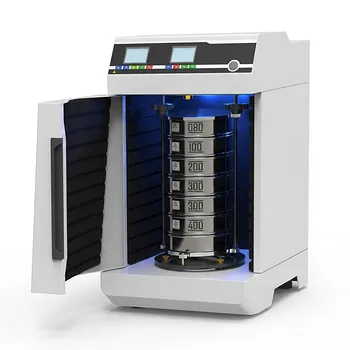
Laboratory Dry and Wet Three Dimensional Vibratory Sieve Shaker for Particle Analysis
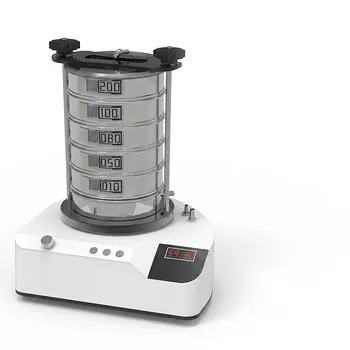
Heavy Duty Dry Three Dimensional Vibratory Sieve Shaker for Particle Separation
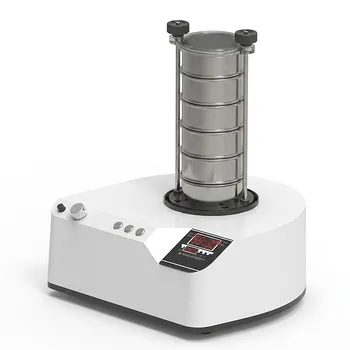
三维电磁微量振动筛分仪
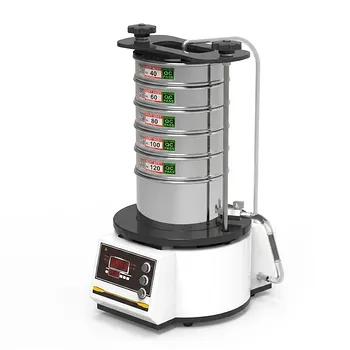
High Frequency Wet Three-Dimensional Vibrating Sieve Shaker for Dry and Wet Particle Size Analysis
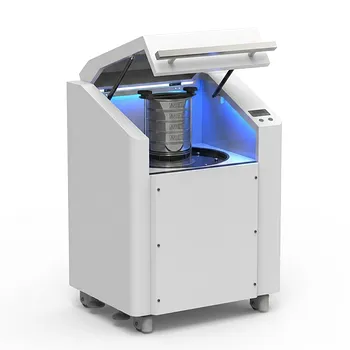
High Frequency Cabinet Type Three-Dimensional Rotary Vibrating Sieve Shaker for Dry Sieving and Particle Classification
Tapping Oscillating Sieve Shaker for Dry and Wet Particle Size Analysis
Three Dimensional Rotary Vibrating Sieve
Stainless Steel Rotary Vibrating Sieve High Precision Circular Vibratory Separator Industrial Powder Grading Machine Multi Layer Sifting Equipment
Vibratory Disc Mill for Rapid Fine Grinding and High Throughput Sample Preparation of Hard and Brittle Materials
Automatic Vibrating Powder Feeder for Laboratory Material Processing Precision Vibratory Hopper Feeder for Granular and Powder Material Handling Industrial Grade Vibrating Tray Feeder for Consistent Material Sample Preparation
Small High-Speed Swing Grinder for Laboratory Sample Preparation