What role does a high-precision laboratory hydraulic press play in fabrication of Mn-doped UO2 ceramic pellets?
Updated 4 months ago
The high-precision laboratory hydraulic press is the foundational tool for transforming loose, manganese-doped uranium dioxide powder into structural "green pellets." It applies uniform, controlled pressure to reduce inter-particle porosity and maximize contact area, establishing the exact geometric shape and density required for successful high-temperature sintering.
The press serves as the critical link between raw powder and a sintered ceramic, providing the initial compaction necessary to drive densification kinetics. By achieving a high-density "green" state, it ensures the pellets can withstand thermal processing without cracking, excessive shrinkage, or internal structural failures.
The Mechanics of Green Pellet Formation
Achieving Optimal Green Density
The primary role of the hydraulic press is to compress active powders into a "green" state with a specific density. High green density is essential because it reduces the volume of pores between particles, which directly influences how the material behaves during heating.
Enhancing Particle Contact for Diffusion
By applying high pressure, the press forces manganese and uranium dioxide particles into intimate contact. This close contact establishes the physical foundation for atomic diffusion and grain rearrangement, which are the primary drivers of densification during the sintering stage.
Establishing Geometric Precision
Laboratory presses use specialized dies to mold powders into precise cylindrical or prismatic shapes. This ensures that every pellet in a batch has a uniform volume and shape, which is critical for maintaining stability during subsequent processing and testing.
Impact on Post-Sintering Performance
Driving Densification Kinetics
The pressure applied during the pressing stage significantly enhances the kinetics of high-temperature sintering. A well-compacted green pellet requires less energy and time to reach its final theoretical density, making the fabrication process more efficient.
Controlling Volume Shrinkage
High-precision pressing helps minimize the degree of volume shrinkage that occurs as the ceramic densifies. By achieving high initial packing density, the press prevents the formation of large voids that could lead to significant dimensional changes or structural warping.
Minimizing Internal Micro-Defects
Precise pressure control is vital for reducing internal micro-defects and pores within the green bulk. Eliminating these defects early prevents the formation of micro-cracks during sintering, which is essential for achieving the high bulk density required for nuclear fuel applications.
Understanding the Trade-offs
Pressure Gradients and Friction
One common pitfall in hydraulic pressing is the friction between the powder and the die walls. This can lead to non-uniform pressure distribution, resulting in pellets that have different densities at the top versus the bottom.
The Risk of Over-Compaction
While high pressure is generally beneficial, exceeding the material's limits can cause "lamination" or capping. This occurs when trapped air or elastic recovery causes the pellet to split into horizontal layers upon being ejected from the die.
Elastic "Springback"
All materials experience some degree of elastic recovery once the pressing load is removed. If the hydraulic press does not provide stable, repeatable pressure, this "springback" can vary between pellets, leading to inconsistent final dimensions after sintering.
How to Apply This to Your Fabrication Process
Achieving the perfect Mn-doped $UO_2$ pellet requires balancing pressure precision with material characteristics.
- If your primary focus is maximum bulk density: Utilize higher pressures (e.g., up to 150 MPa) to expel maximum air and minimize the distance between particles for faster atomic diffusion.
- If your primary focus is geometric uniformity: Ensure the press provides stable, unidirectional pressure and use high-precision dies to mitigate the effects of elastic springback.
- If your primary focus is reducing internal defects: Use a press with precise, slow-release pressure controls to allow trapped air to escape and prevent lamination during ejection.
Properly calibrated hydraulic pressing is the most critical step in ensuring the structural and functional integrity of ceramic nuclear materials.
Summary Table:
| Key Role | Technical Benefit | Impact on Final Ceramic |
|---|---|---|
| Powder Compaction | Achieves high "green density" | Faster densification kinetics during sintering |
| Particle Contact | Enhances atomic diffusion | Promotes grain rearrangement and material strength |
| Geometric Molding | Ensures uniform shape/volume | Minimizes volume shrinkage and dimensional warping |
| Precision Control | Eliminates internal micro-voids | Prevents micro-cracks and lamination defects |
Elevate Your Ceramic Research with Precision Engineering
Achieving the perfect green state for Mn-doped $UO_2$ pellets requires more than just pressure—it requires absolute control. [Company Name] provides complete laboratory sample preparation solutions for material science, specializing in high-performance powder processing and compaction equipment.
Our extensive manufacturing lines include:
- Hydraulic Presses: A full spectrum of Cold/Warm Isostatic Presses (CIP/WIP), standard lab presses, XRF pellet presses, hot presses, and vacuum hot presses.
- Powder Processing: Crushers (jaw/roll), liquid nitrogen cryogenic grinders, and diverse mills (planetary ball, jet, rotor).
- Classification & Mixing: Sieve shakers, powder mixers, and vacuum defoaming mixers.
Whether you are aiming for maximum bulk density or geometric uniformity in nuclear fuel fabrication, our equipment is designed to minimize micro-defects and ensure repeatable results.
Ready to optimize your fabrication process? Contact our technical experts today to find the ideal solution for your laboratory!
References
- Gabriel L. Murphy, Nina Huittinen. The role of redox and structure on grain growth in Mn-doped UO2. DOI: 10.1038/s43246-024-00714-x
Mentioned Products
- 6-Ton Small Single-Punch Tablet Press — Laboratory Powder & Granule Tableting Equipment / Tablet Forming Machine
- 5 Ton Single Punch Tablet Press Laboratory Small Batch Production
- Manual Tablet Press with Dual Scale Pressure Gauge for Pharmaceutical Food Chemical Laboratory Sample Preparation
- 6 Ton Variable Frequency Single Punch Tablet Press
- High Shear Laboratory Emulsifier for Mixing and Homogenization
People Also Ask
- What is the function of a laboratory press in Cr-Ti alloy evaluation? Quantify Fracture Stress & Strength
- What is the function of a laboratory press in assessing the hydrophobic performance of modified vermiculite fillers?
- What is the core function of a laboratory press in the forming of ceramic filter element green bodies? Maximize Density.
- What is the function of a laboratory press in the preparation of ceramic feed rods? Master Density and Precision
- Why is vacuum sealing and flexible packaging necessary for Aluminum Titanate powders during CIP? Ensure Peak Density

Tech Team · PowderPreparation
Last updated on Jun 03, 2026
Related Products
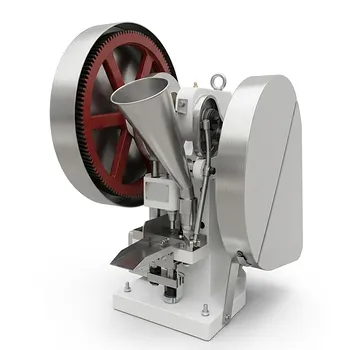
6-Ton Small Single-Punch Tablet Press — Laboratory Powder & Granule Tableting Equipment / Tablet Forming Machine
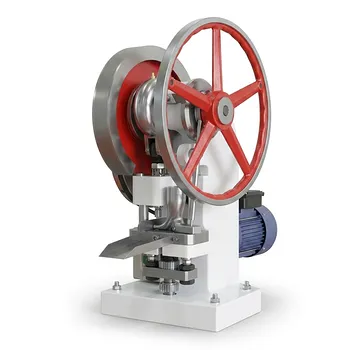
5 Ton Single Punch Tablet Press Laboratory Small Batch Production
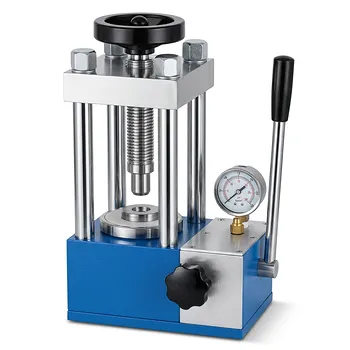
Manual Tablet Press with Dual Scale Pressure Gauge for Pharmaceutical Food Chemical Laboratory Sample Preparation
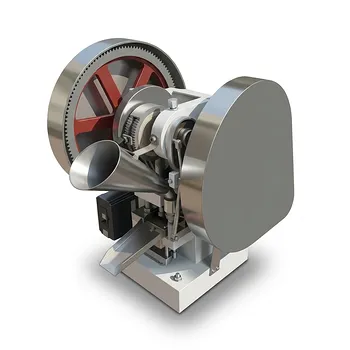
6 Ton Variable Frequency Single Punch Tablet Press
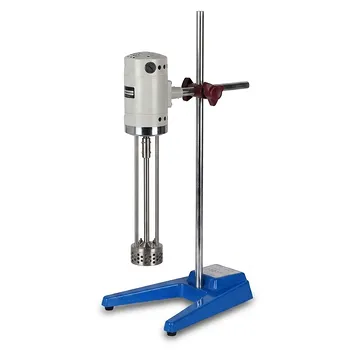
High Shear Laboratory Emulsifier for Mixing and Homogenization
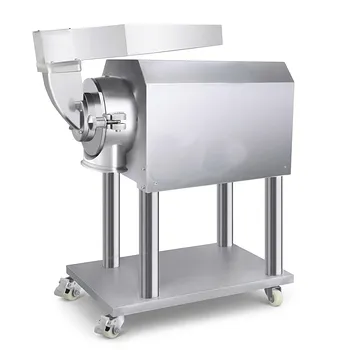
High Speed Small Laboratory Crusher for Dry Material Sample Preparation
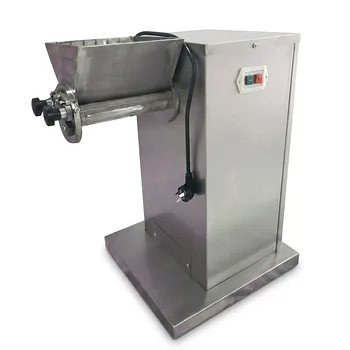
Small Laboratory Oscillating Granulator for Wet and Dry Granulation Processing
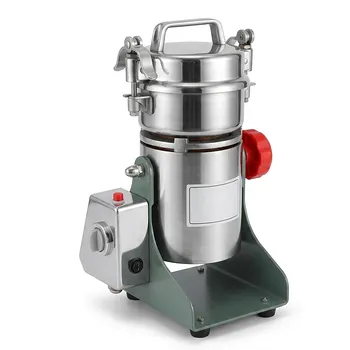
High Speed Swing Type Laboratory Pulverizer for Fine Powder Grinding and Sample Preparation
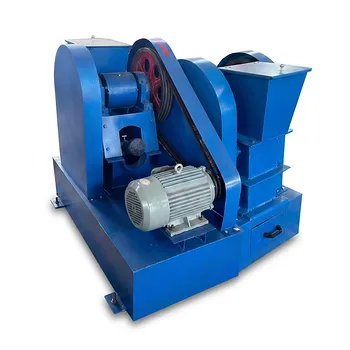
Horizontal Jaw Crusher Medium Hard Material Crushing Laboratory Sample Preparation Equipment