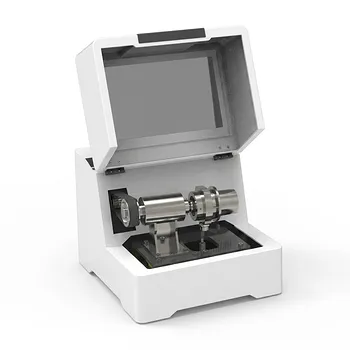
What role does a high-energy planetary ball mill play in the traditional mechanical alloying of Ti-Al systems?
Updated 3 months ago
A high-energy planetary ball mill serves as the mechanical engine for solid-state synthesis in Ti-Al systems. By utilizing grinding media to deliver intense impact and shear forces, the mill induces repeated cycles of cold welding and fracturing in raw titanium and aluminum powders. This mechanical action reduces grain size to the nanoscale and introduces lattice distortions, which promote solid-state diffusion and the formation of uniformly mixed pre-alloyed powders at temperatures significantly lower than traditional melting points.
The planetary ball mill facilitates mechanical alloying by transforming kinetic energy into structural changes, creating nanocrystalline, pre-alloyed Ti-Al powders. This process enables the creation of supersaturated solid solutions and metastable phases that are difficult or impossible to achieve through conventional thermal processing.
The Mechanics of Energy Transfer
Impact and Shear Forces
The primary role of the mill is to provide the kinetic energy necessary for mechanical activation. High-speed rotation and revolution of the grinding jars cause the grinding balls to collide with the powder particles with high frequency.
These collisions exert compression and shear forces that drive the physical transformation of the metal. Without this high-energy input, the titanium and aluminum would remain a simple physical mixture rather than an alloyed system.
Driving Plastic Deformation
The titanium particles undergo severe plastic deformation under the weight of the grinding media. This deformation is the first step in breaking down the oxide layers that naturally form on the surface of the raw powders.
By exposing fresh metallic surfaces, the mill allows the different elements to come into direct contact. This contact is essential for the subsequent steps of the mechanical alloying process.
The Cycle of Cold Welding and Fracturing
Morphological Transformation
During processing, the powders undergo a continuous cycle of flattening, cold welding, and fracturing. Aluminum, being more ductile, often flattens and wraps around the harder titanium particles.
The repeated impact forces the layers to weld together, while the high energy eventually causes the composite particles to fracture. This constant renewal of surfaces ensures that the components are mixed at a molecular or atomic level.
Grain Refinement and Lattice Distortions
The milling process significantly refines the powder grain size, often reaching the nanocrystalline scale (e.g., approximately 70 nm). This refinement increases the total surface area and the energy stored within the powder.
Simultaneously, the mill introduces lattice distortions and defects. These defects serve as pathways for "short-circuit" diffusion, allowing atoms to migrate more easily through the material.
Enabling Solid-State Diffusion and Alloying
Facilitating Solid Solution
The high energy of the planetary mill forces solute atoms into the matrix lattice of the solvent. This results in a supersaturated solid solution, where the aluminum and titanium are integrated far beyond their typical equilibrium solubility limits.
This state is a critical precursor for creating high-performance alloys. It ensures that the final product will have a homogeneous chemical distribution once it is eventually sintered or hot-pressed.
Lowering Thermal Requirements
By mechanically "activating" the powder, the planetary ball mill lowers the reaction temperature required for subsequent processing. The high stored energy in the milled powder acts as a chemical driving force.
This means that phase reactions, such as the formation of the Ti2AlN MAX phase or other Ti-Al intermetallics, can occur during shorter soaking times. This efficiency preserves the fine grain structure of the final component.
Understanding the Trade-offs
Risk of Contamination
The high-energy nature of the process means that the powder is in constant, violent contact with the grinding balls and jar walls. This can lead to media wear, introducing impurities like iron or carbon into the Ti-Al system.
Contamination can negatively impact the mechanical properties of the final alloy. To mitigate this, practitioners often use grinding media made of the same material as the alloy or high-hardness ceramics like zirconia.
Heat Generation and Atmospheric Control
The intense friction and impact within the mill generate significant internal heat. If not managed through cooling cycles, this heat can cause unplanned grain growth or even lead to the oxidation of the aluminum.
Furthermore, because of the high surface area and activity of the powders, they become highly reactive. Processing must usually occur under an inert gas atmosphere (such as argon) to prevent the formation of unwanted oxides or nitrides.
How to Apply This to Your Project
Making the Right Choice for Your Goal
The parameters of your planetary ball mill should be adjusted based on the specific phase you intend to create and the desired final properties of the Ti-Al alloy.
- If your primary focus is Nanocrystalline Grain Refinement: Use high-speed rotation and longer milling times to maximize the frequency of fracturing over cold welding.
- If your primary focus is Phase Purity and Homogeneity: Prioritize a moderate milling energy with frequent "rest" cycles to prevent overheating and atmospheric contamination.
- If your primary focus is Subsequent Sintering Efficiency: Focus on achieving a tri-modal or uniform particle size distribution to improve the packing density and reactivity during the heating phase.
The high-energy planetary ball mill is the indispensable tool for overcoming the thermodynamic barriers of traditional alloying, providing the mechanical force necessary to engineer Ti-Al materials from the atomic level upward.
Summary Table:
| Key Aspect | Role in Ti-Al Mechanical Alloying |
|---|---|
| Energy Transfer | Provides high-intensity impact and shear forces for mechanical activation. |
| Morphology Control | Drives a continuous cycle of cold welding and fracturing to ensure atomic-level mixing. |
| Structural Change | Refines grains to the nanocrystalline scale and introduces lattice distortions. |
| Thermal Advantage | Lowers the reaction temperature required for subsequent sintering or phase formation. |
| Atmosphere | Requires inert gas control to prevent oxidation of highly reactive Ti-Al powders. |
Elevate Your Material Research with Expert Powder Processing Solutions
Achieving the perfect nanocrystalline structure in Ti-Al systems requires precision and high-energy performance. At [Brand Name], we provide complete laboratory sample preparation solutions tailored for material science, specializing in the equipment you need to move from raw powder to high-performance alloy.
Our comprehensive range includes:
- High-Energy Milling: Planetary ball mills, jet mills, and cryogenic grinders for superior mechanical alloying.
- Advanced Compaction: A full spectrum of hydraulic presses, including Cold/Warm Isostatic Presses (CIP/WIP), vacuum hot presses, and XRF pellet presses.
- Precision Preparation: Crushers, sieve shakers (vibratory/air-jet), and defoaming mixers to ensure chemical homogeneity.
Whether you are refining intermetallic phases or developing new composites, our specialized equipment ensures repeatable results and maximum efficiency.
Optimize your powder metallurgy workflow—Contact us today!
References
- М. И. Лернер, Nikita Toropkov. Electrical Explosion Synthesis, Oxidation and Sintering Behavior of Ti-Al Intermetallide Powders. DOI: 10.3390/met11050760
Mentioned Products
- High Energy Planetary Ball Mill for Nano Scale Grinding and Mechanical Alloying
- High Energy Laboratory Planetary Ball Mill for Nano Grinding and Colloidal Mixing of Hard and Brittle Materials
- High Energy Planetary Ball Mill for Nano Scale Grinding and Colloidal Mixing in Material Science Research
- High Energy Omnidirectional Planetary Ball Mill 16L
- High Energy Laboratory Planetary Ball Mill for Nano Grinding and Material Science Sample Preparation
People Also Ask
- Why is a high-energy planetary ball mill used for nano-milling As4Se3? Achieve Expert Structural Transformation
- What role do high-energy planetary ball mills play in FDM composite filament preparation? Optimize Material Performance
- What is the role of a high-energy planetary ball mill in the exfoliation of modified WSe2? Achieve Nano-Precision
- What is the function of a planetary ball mill in glass-ceramic sintering? Optimize Reactivity and Uniformity
- What is the role of a high-energy planetary ball mill in the preparation of high-performance nano-ceramics? Key Guide

Tech Team · PowderPreparation
Last updated on May 14, 2026
Related Products
High Energy Planetary Ball Mill for Nano Scale Grinding and Mechanical Alloying
High Energy Laboratory Planetary Ball Mill for Nano Grinding and Colloidal Mixing of Hard and Brittle Materials
High Energy Planetary Ball Mill for Nano Scale Grinding and Colloidal Mixing in Material Science Research
High Energy Omnidirectional Planetary Ball Mill 16L
High Energy Laboratory Planetary Ball Mill for Nano Grinding and Material Science Sample Preparation
High Energy Omnidirectional Planetary Ball Mill 20L
Vertical Square Planetary Ball Mill for Laboratory Sample Preparation and Nanoscale Grinding
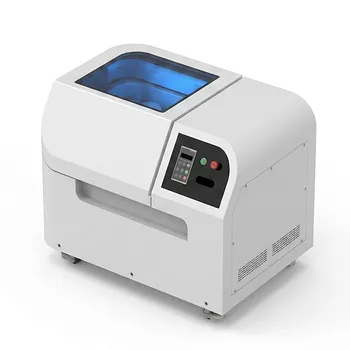
8L Planetary Ball Mill for Laboratory Grinding and Sample Preparation
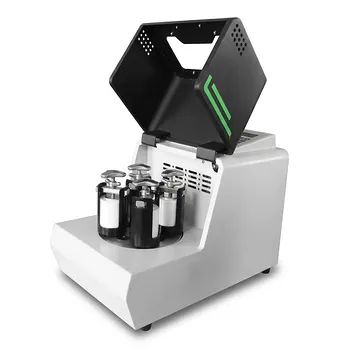
Miniature Planetary Ball Mill with Vacuum Grinding and High Efficiency for Laboratory Sample Preparation
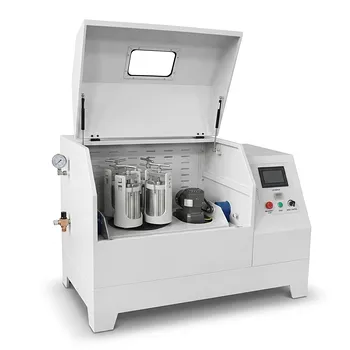
Vertical Production Planetary Ball Mill for High Throughput Powder Processing
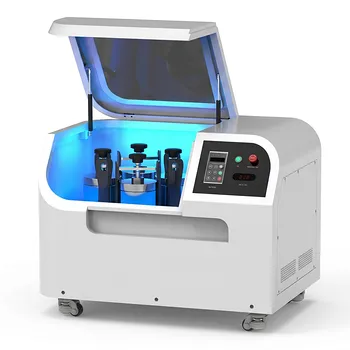
Planetary Ball Mill 12L
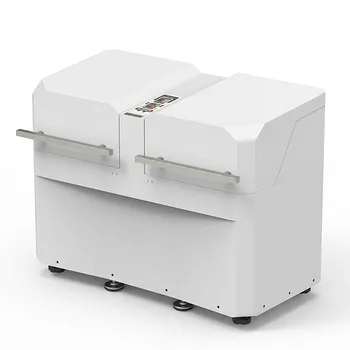
Dual Station Planetary Ball Mill 24L
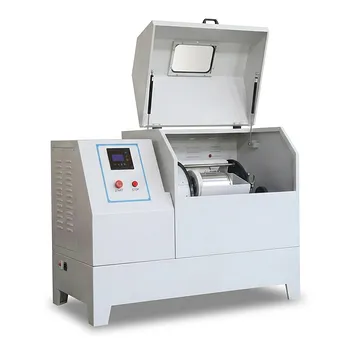
Heavy Duty Horizontal Planetary Ball Mill for Efficient Industrial Grinding and Sample Preparation

High Energy Hybrid Vibratory Ball Mill for Grinding Mixing and Cell Disruption
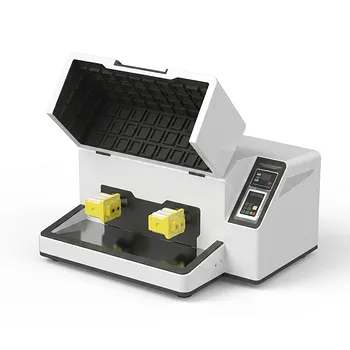
Multi-Platform Nanoscale High-Energy Vibratory Ball Mill

Ultra-Low Temperature Cryogenic High-Energy Vibratory Ball Mill

Nano High Energy Vibratory Ball Mill with Heating and Temperature Control
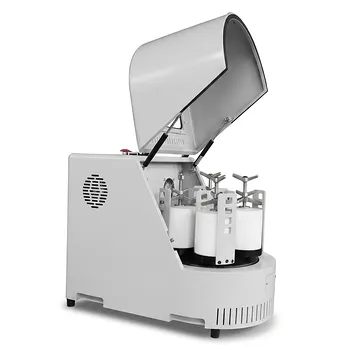
Vertical Semi Circular Planetary Ball Mill for Laboratory Precision Grinding
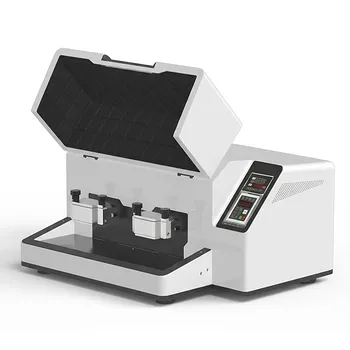
Nanoscale High-Energy Vibratory Ball Mill for Laboratory Sample Preparation, Mechanochemistry, and Mechanical Alloying