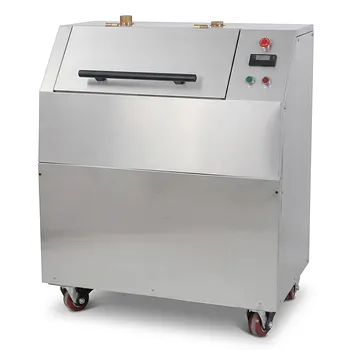
What role does a digital vibratory sieve shaker play in testing sandstone particle size? Optimize Aggregate Gradation.
Updated 4 months ago
A digital vibratory sieve shaker is the primary instrument for automating the mechanical separation of sandstone aggregates into discrete size fractions. By utilizing program-controlled vertical and horizontal oscillations, the device ensures that particles are uniformly distributed across a stack of standard test sieves. This process provides the precise gradation data required to evaluate the density, load-bearing capacity, and overall structural integrity of the material.
Core Takeaway: The digital vibratory sieve shaker replaces inconsistent manual methods with a standardized, high-frequency mechanical process. It provides the repeatable energy necessary to accurately classify sandstone particles, which is fundamental for calculating engineering metrics like the Fineness Modulus and the coefficient of uniformity.
Mechanizing Particle Stratification
The Role of Three-Dimensional Vibration
The shaker generates high-frequency, three-dimensional vibrations that move sandstone samples efficiently across the sieve surface. This multi-directional movement ensures that every particle has the maximum opportunity to encounter a mesh opening that matches its size. Unlike manual shaking, this mechanical force is consistent throughout the entire test duration.
Multi-Layer Sieve Stacking
The device accommodates a stack of precision test sieves arranged with apertures decreasing in size from top to bottom. As the shaker operates, the sandstone aggregate is classified into multiple components—from coarse gravel-sized particles down to fine silts and clays—in a single automated cycle.
Automation and Programmed Control
Digital controls allow operators to set specific sieving intensities and durations, ensuring that the energy applied is uniform across different batches. This level of control is critical for maintaining "standard" conditions, which allows results to be compared across different laboratories or production shifts.
Overcoming Physical and Data Barriers
Overcoming Inter-Particle Friction
Sandstone particles often experience friction and electrostatic adsorption, which can cause smaller grains to stick to larger ones. The high-frequency reciprocating movement of the shaker provides enough kinetic energy to break these bonds, ensuring that "fines" pass through to the lower sieves rather than being trapped in the upper layers.
Generating Precise Gradation Curves
The data collected from the shaker is used to plot aggregate grading curves, which visualize the distribution of grain sizes. These curves are essential for identifying whether the sandstone meets specific project requirements, such as the grading standards for concrete aggregates or roadbed bases.
Calculating Key Engineering Coefficients
By providing accurate mass-retained data for each sieve layer, the shaker enables the calculation of the Fineness Modulus (FPM), the Coefficient of Uniformity (Cu), and the Coefficient of Curvature (Cc). These values provide an objective assessment of how well the sand will pack together and its potential for heavy metal migration in soil studies.
Understanding the Trade-offs
Risk of Particle Degradation
One potential downside of high-frequency vibration is the mechanical degradation of softer sandstone samples. If the vibration intensity is too high or the duration too long, particles may break apart, leading to an artificially "finer" result that does not reflect the original material state.
Material Moisture Sensitivity
Digital shakers are primarily designed for dry sieve analysis. If the sandstone aggregate contains significant moisture, the particles may clump or clog the mesh apertures (blinding), which renders the mechanical vibration ineffective and skews the gradation data.
Applying This Technology to Your Project
Recommendations for Implementation
- If your primary focus is structural load-bearing: Use the shaker to ensure your sandstone meets the specific D50 and sorting coefficient requirements for maximum density.
- If your primary focus is concrete performance: Focus on the Fineness Modulus (FPM) derived from the shaker data to ensure the aggregate provides the correct workability and strength.
- If your primary focus is research repeatability: Utilize the digital programming features to lock in vibration parameters, ensuring that every sample is treated with identical sieving energy.
By integrating a digital vibratory sieve shaker into your testing protocol, you ensure that your sandstone aggregate analysis is governed by scientific precision rather than manual variability.
Summary Table:
| Feature | Impact on Sandstone Aggregate Testing |
|---|---|
| 3D Vibration | Ensures uniform distribution and overcomes inter-particle friction for accurate separation. |
| Digital Control | Standardizes sieving intensity and duration, ensuring repeatability across different batches. |
| Multi-Layer Stacking | Classifies samples into discrete fractions (from gravel to silt) in a single automated cycle. |
| Data Accuracy | Provides the precise mass-retained data needed to calculate Fineness Modulus and Cu/Cc. |
Enhance Your Material Testing Precision with Expert Solutions
Ready to elevate the accuracy of your sandstone aggregate analysis? At [Brand Name], we provide complete laboratory sample preparation solutions for material science. We specialize in high-performance powder processing and compaction equipment designed to meet the most rigorous engineering standards.
Our extensive product line includes:
- Sieve Shakers: Vibratory and air-jet models with a full range of precision test sieves.
- Milling & Grinding: Planetary ball mills, jet mills, and liquid nitrogen cryogenic grinders.
- Crushing: Heavy-duty jaw and roll crushers for primary sample reduction.
- Hydraulic Presses: A full spectrum of Cold/Warm Isostatic Presses (CIP/WIP), vacuum hot presses, and XRF pellet presses.
- Mixing: High-efficiency powder mixers and vacuum defoaming mixers.
Whether you are calculating the Fineness Modulus for concrete or conducting advanced material research, our equipment ensures repeatable, scientific results. Contact our technical experts today to find the perfect solution for your laboratory needs!
References
- Eric Enzula Bayari, Jude Simons Bayor. Tamale sandstone petrology and engineering properties as suitable coarse aggregate in concrete production. DOI: 10.1007/s44288-025-00290-8
Mentioned Products
- Vibratory Sieve Shaker Electromagnetic 3D Motion Powder Particle Size Analyzer for Dry and Wet Sieving
- Small Laboratory Vibratory Sieve Shaker for Powder Gradation and Particle Size Analysis
- Dry Three Dimensional Vibratory Sieve Shaker
- 三维电磁微量振动筛分仪
- Laboratory Vibratory Test Sieve Shaker for Precision Particle Size Analysis and Powder Grading
People Also Ask
- How does a vibratory sieve shaker contribute to optimizing the performance of activated carbon? Enhance Adsorption Precision
- Why is a laboratory vibratory sieve shaker necessary for processing magnesium-based borate precursor powders? Boost Activity
- Why use a vibratory sieve shaker to verify coarse aggregate grading in rubberized concrete? Ensure Structural Integrity
- What function do vibratory sieve shakers and standard test sieves serve in the preparation of adsorbents? Key Guide
- What role does a vibratory sieve shaker play in the particle size analysis of ground corn products? Enhance QC Precision

Tech Team · PowderPreparation
Last updated on Jun 03, 2026
Related Products
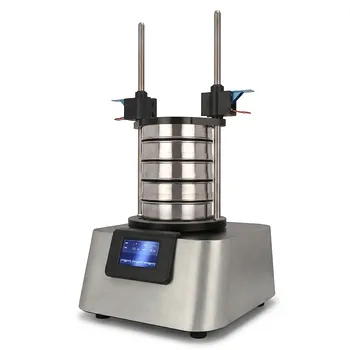
Vibratory Sieve Shaker Electromagnetic 3D Motion Powder Particle Size Analyzer for Dry and Wet Sieving
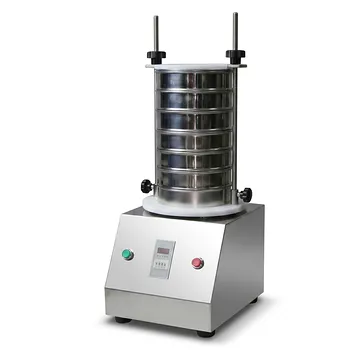
Small Laboratory Vibratory Sieve Shaker for Powder Gradation and Particle Size Analysis
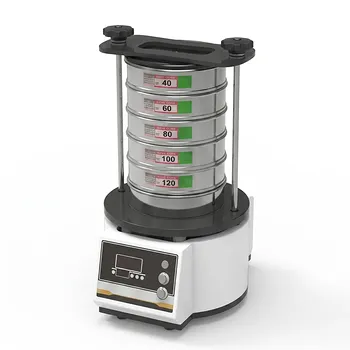
Dry Three Dimensional Vibratory Sieve Shaker
三维电磁微量振动筛分仪
Laboratory Vibratory Test Sieve Shaker for Precision Particle Size Analysis and Powder Grading
Laboratory Dry and Wet Three Dimensional Vibratory Sieve Shaker for Particle Analysis
Stainless Steel Laboratory Vibratory Test Sieve Shaker
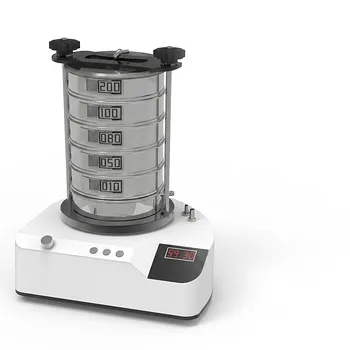
Heavy Duty Dry Three Dimensional Vibratory Sieve Shaker for Particle Separation
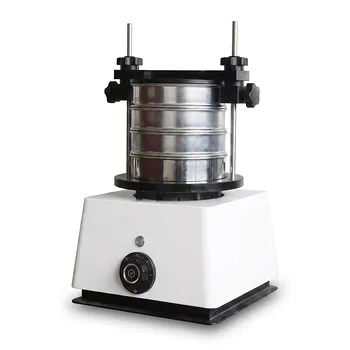
Small Laboratory Vibrating Sieve Shaker for Precise Particle Size Analysis
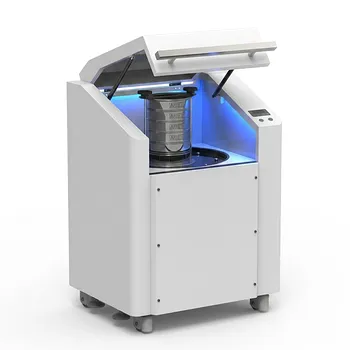
High Frequency Cabinet Type Three-Dimensional Rotary Vibrating Sieve Shaker for Dry Sieving and Particle Classification
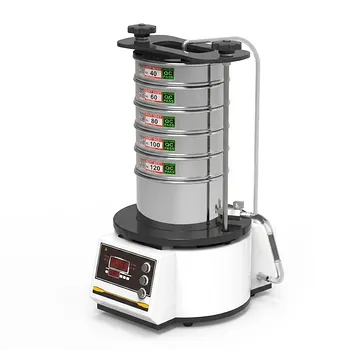
High Frequency Wet Three-Dimensional Vibrating Sieve Shaker for Dry and Wet Particle Size Analysis
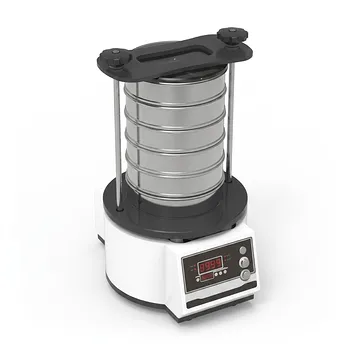
Tapping Oscillating Sieve Shaker for Dry and Wet Particle Size Analysis
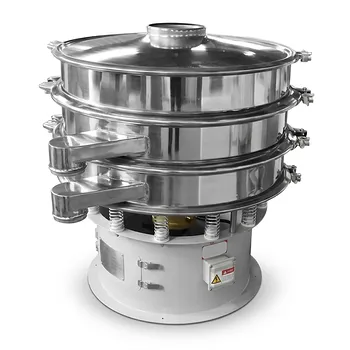
Three Dimensional Rotary Vibrating Sieve
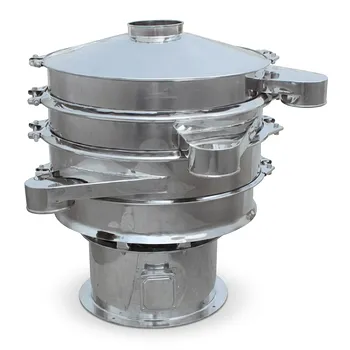
Stainless Steel Rotary Vibrating Sieve High Precision Circular Vibratory Separator Industrial Powder Grading Machine Multi Layer Sifting Equipment
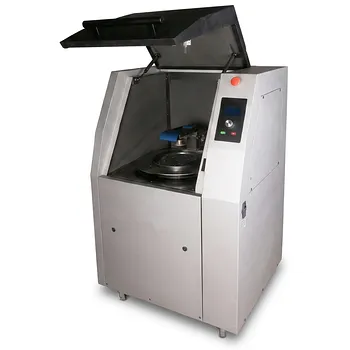
High Speed Vibratory Disc Mill for Spectral Analysis Sample Preparation and Rapid Powder Grinding