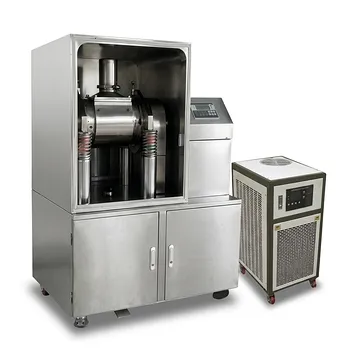
What role does a digital vibratory sieve shaker play in soil particle size distribution analysis? Precision Gradation
Updated 5 months ago
Digital vibratory sieve shakers provide the automated precision necessary for objective soil classification. These devices use program-controlled mechanical vibrations to drive a stack of standard test sieves, ensuring that soil particles are separated by size with high repeatability. By automating the screening of dry samples, they allow researchers to accurately categorize soil into sand, silt, and clay components for engineering and environmental analysis.
The digital vibratory sieve shaker acts as the mechanical foundation for soil grading, replacing inconsistent manual methods with standardized, high-frequency vibrations. This technology ensures precise particle size distribution (PSD) data, which is critical for soil classification, structural engineering, and environmental impact studies.
The Mechanics of Automated Separation
Program-Controlled 3D Movement
Unlike basic mechanical shakers, digital vibratory models utilize high-frequency vibrations to generate three-dimensional movement. This motion causes soil particles to continuously bounce and rearrange themselves across the sieve surface. This ensures that every particle has multiple opportunities to pass through the corresponding mesh openings for an accurate result.
Efficient Particle Rearrangement
The high-frequency vibration and mechanical impact facilitate the rapid separation of coarse particles, such as sand and gravel. By preventing "blinding" (where particles clog the mesh), the shaker allows fine particles to move efficiently toward the bottom of the sieve stack. This process is essential for determining the proportion of grading components larger than 0.063 mm.
Establishing Soil Gradation and Classification
Defining the Grading Curve
The primary role of the shaker is to help technicians determine a soil's grading curve. By using a series of sieves with apertures ranging from 0.074mm to 8mm, the equipment quantifies the exact percentage of each particle size within a sample. This data is the prerequisite for identifying whether a soil is "poorly graded" or "well-graded."
Standardized Soil Naming and Naming
Precise sieving data is required for AASHTO classification and other international soil standards. For instance, distinguishing between sandy silts and silty sands depends entirely on the quantitative analysis provided by the shaker. This classification informs critical safety assessments, such as evaluating the anti-liquefaction performance of soil in seismic zones.
Enhancing Analytical Reliability
Repeatability Over Manual Methods
One of the most significant advantages of digital vibratory shakers is the elimination of human error. Program-controlled settings allow for constant vibration amplitude and duration, ensuring that every test is performed under identical conditions. This level of consistency and repeatability is impossible to achieve with manual sieving.
Supporting Environmental and Engineering Research
Accurate PSD data is fundamental for specialized research, such as studying the relationship between soil texture and heavy metal migration. In civil engineering, this data provides the physical basis for calculating stabilizer ratios in marsh soils or evaluating the quality of roadbed materials.
Understanding the Trade-offs
Dry vs. Wet Sieving Limitations
While highly effective for dry soil, vibratory shakers are primarily designed for dry sieving experiments. For soils with extremely high clay content that clump together, dry sieving may not fully represent the true particle size without pre-treatment. In these cases, particles might stay bonded, leading to an overestimation of coarse components.
Particle Shape Sensitivity
Vibratory motion is highly effective for spherical or angular grains, but elongated or flat particles can sometimes produce inconsistent results. If a particle is long and thin, its ability to pass through the mesh depends on its orientation when it hits the screen. While 3D vibration minimizes this issue, it remains a factor in highly irregular soil samples.
How to Apply This to Your Project
Selecting the Right Approach
- If your primary focus is Roadbed or Structural Engineering: Use the vibratory shaker to determine the "fines content" to ensure the soil meets load-bearing grading characteristics.
- If your primary focus is Environmental Contamination: Leverage the high repeatability of digital settings to correlate specific particle size fractions with heavy metal concentrations.
- If your primary focus is Geotechnical Safety: Use the grading curve data to identify silty sands that may be at risk for liquefaction during seismic events.
- If your primary focus is Soil Stabilization: Rely on the shaker to distinguish between clay and sand proportions to accurately calculate the required chemical stabilizer ratios.
The digital vibratory sieve shaker transforms soil analysis from a subjective manual task into a precise, data-driven science.
Summary Table:
| Feature | Function in Soil Analysis | Benefit |
|---|---|---|
| 3D Vibratory Motion | Ensures particles hit mesh at multiple angles | Prevents blinding; increases separation accuracy |
| Digital Control | Standardizes vibration amplitude and time | Eliminates human error; ensures high repeatability |
| Grading Curve Data | Quantifies particle percentages (0.074mm - 8mm) | Essential for AASHTO and ISO soil classification |
| High-Frequency Impact | Rapidly separates coarse sand and gravel | Shortens testing time compared to manual methods |
Optimize Your Material Analysis with Expert Solutions
Precision in soil and material classification starts with the right equipment. At [Company Name], we provide complete laboratory sample preparation solutions for material science, specializing in high-performance powder processing and compaction technology.
Whether you need to refine particles or prepare samples for testing, our extensive product line has you covered:
- Sieving & Mixing: Advanced digital vibratory sieve shakers, air-jet shakers, test sieves, and high-efficiency powder or defoaming mixers.
- Milling & Grinding: Planetary ball mills, jet mills, disc mills, and liquid nitrogen cryogenic grinders for even the toughest materials.
- Crushing: Durable jaw and roll crushers for initial sample reduction.
- Compaction: A full spectrum of hydraulic presses, including Cold/Warm Isostatic Presses (CIP/WIP), XRF pellet presses, and vacuum hot presses.
Our equipment is designed to ensure consistency, reliability, and superior data quality for researchers and industrial engineers alike. Contact our technical team today to find the perfect solution for your laboratory needs and see how our expertise can enhance your research outcomes.
References
- Stellamaris Chinenye Duru, Michael Emeka Okechukwu. Spatial variability of heavy metals concentrations in soil of auto-mechanic workshop clusters in Nsukka, Nigeria. DOI: 10.1038/s41598-024-60044-3
Mentioned Products
- Vibratory Sieve Shaker Electromagnetic 3D Motion Powder Particle Size Analyzer for Dry and Wet Sieving
- Laboratory Dry and Wet Three Dimensional Vibratory Sieve Shaker for Particle Analysis
- Dry Three Dimensional Vibratory Sieve Shaker
- Heavy Duty Dry Three Dimensional Vibratory Sieve Shaker for Particle Separation
- Small Laboratory Vibratory Sieve Shaker for Powder Gradation and Particle Size Analysis
People Also Ask
- How does a vibratory sieve shaker contribute to optimizing the performance of activated carbon? Enhance Adsorption Precision
- Why is a laboratory vibratory sieve shaker necessary for processing magnesium-based borate precursor powders? Boost Activity
- Why use a vibratory sieve shaker to verify coarse aggregate grading in rubberized concrete? Ensure Structural Integrity
- What function do vibratory sieve shakers and standard test sieves serve in the preparation of adsorbents? Key Guide
- What role does a vibratory sieve shaker play in the particle size analysis of ground corn products? Enhance QC Precision

Tech Team · PowderPreparation
Last updated on May 14, 2026
Related Products
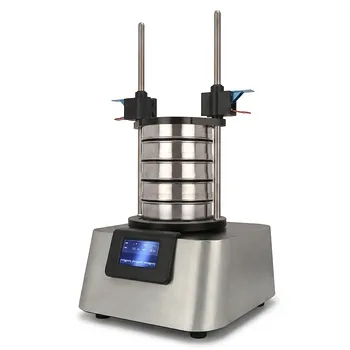
Vibratory Sieve Shaker Electromagnetic 3D Motion Powder Particle Size Analyzer for Dry and Wet Sieving
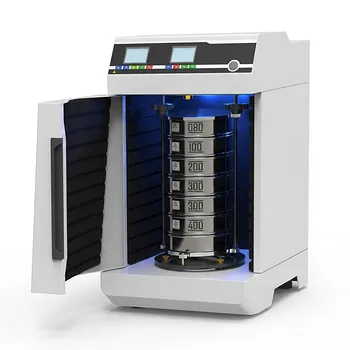
Laboratory Dry and Wet Three Dimensional Vibratory Sieve Shaker for Particle Analysis
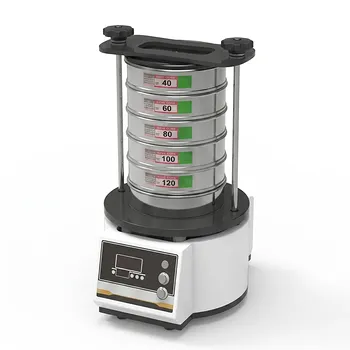
Dry Three Dimensional Vibratory Sieve Shaker
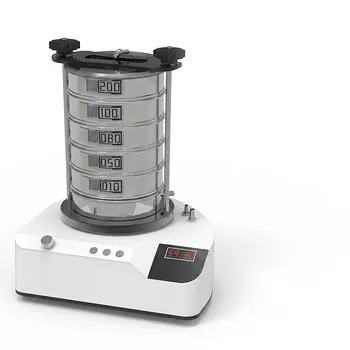
Heavy Duty Dry Three Dimensional Vibratory Sieve Shaker for Particle Separation
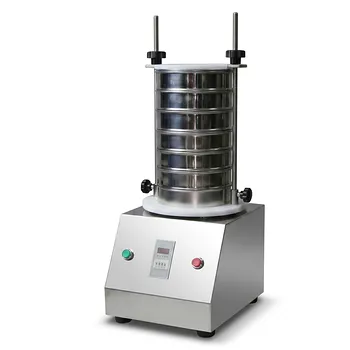
Small Laboratory Vibratory Sieve Shaker for Powder Gradation and Particle Size Analysis
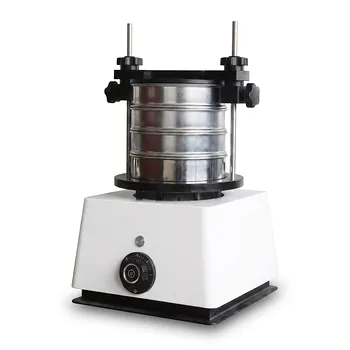
Small Laboratory Vibrating Sieve Shaker for Precise Particle Size Analysis
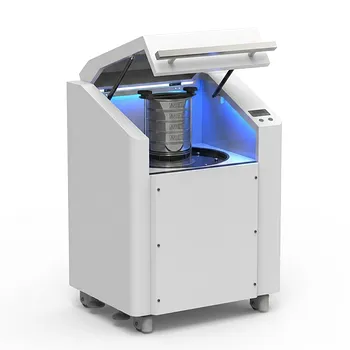
High Frequency Cabinet Type Three-Dimensional Rotary Vibrating Sieve Shaker for Dry Sieving and Particle Classification
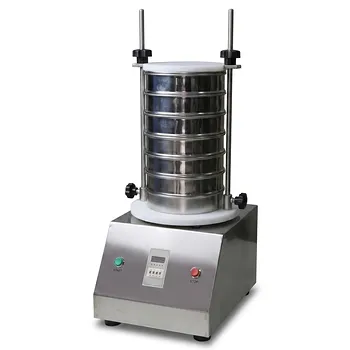
Laboratory Vibratory Test Sieve Shaker for Precision Particle Size Analysis and Powder Grading
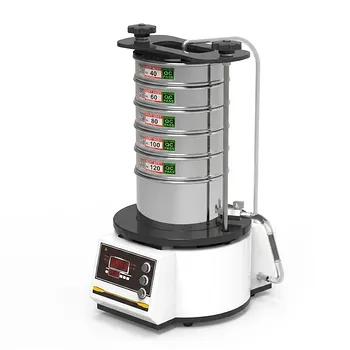
High Frequency Wet Three-Dimensional Vibrating Sieve Shaker for Dry and Wet Particle Size Analysis
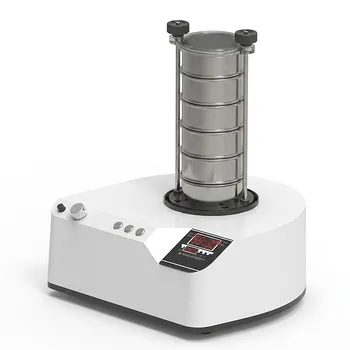
三维电磁微量振动筛分仪
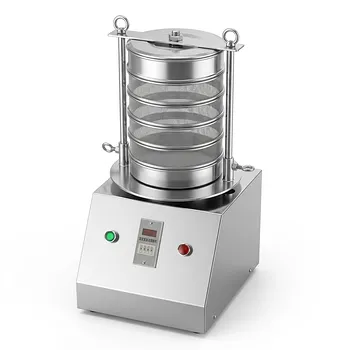
Stainless Steel Laboratory Vibratory Test Sieve Shaker
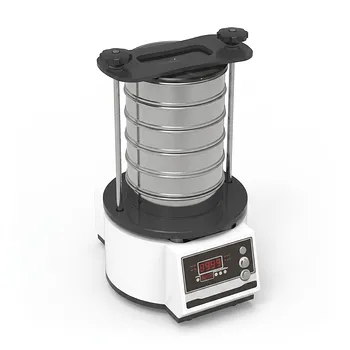
Tapping Oscillating Sieve Shaker for Dry and Wet Particle Size Analysis
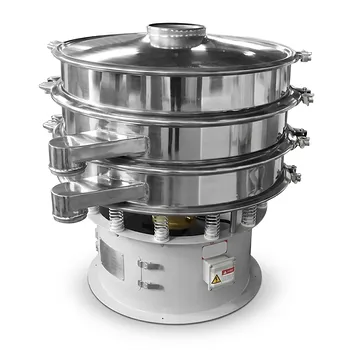
Three Dimensional Rotary Vibrating Sieve
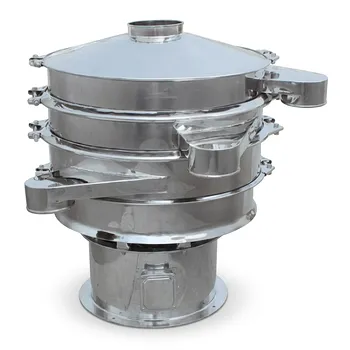
Stainless Steel Rotary Vibrating Sieve High Precision Circular Vibratory Separator Industrial Powder Grading Machine Multi Layer Sifting Equipment
High Speed Vibratory Disc Mill for Spectral Analysis Sample Preparation and Rapid Powder Grinding

Automatic Vibrating Powder Feeder for Laboratory Material Processing Precision Vibratory Hopper Feeder for Granular and Powder Material Handling Industrial Grade Vibrating Tray Feeder for Consistent Material Sample Preparation