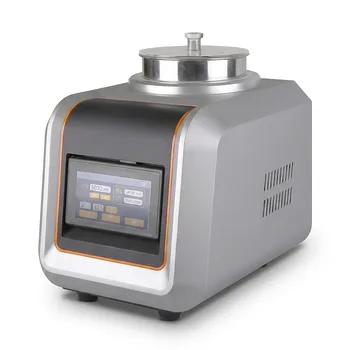
What role do vibratory sieve shakers play in asphalt particle classification? Key to Durable, High-Performance Pavements
Updated 4 months ago
Vibratory sieve shakers are the critical engines of precision in the asphalt industry, providing the mechanical force necessary to separate raw aggregates into specific, standardized size fractions. By utilizing consistent vibration frequencies, these machines ensure that coarse aggregates, fine aggregates, and fillers are classified with a level of accuracy that manual sieving cannot match. This precise classification is the foundation for creating mixtures that meet strict engineering specifications for pavement durability, drainage, and structural stability.
Core Takeaway: Vibratory sieve shakers transform raw mineral materials into highly controlled components, allowing engineers to optimize the interlocking structure and void ratios of asphalt mixtures to ensure long-term road performance and regulatory compliance.
Ensuring Structural Integrity and Pavement Performance
Optimizing the Interlocking Effect
The primary role of the sieve shaker is to facilitate a well-graded aggregate distribution, which is essential for a densely interlocked structure. When particles are correctly classified and recombined in specific ratios, they create a robust mineral skeleton that supports heavy traffic loads. This internal friction between particles minimizes the movement of the mixture under pressure.
Improving Rutting Resistance
Accurate classification directly impacts the rutting resistance of the finished pavement. By strictly controlling the mass ratio of different particle sizes, such as 0-3 mm, 3-5 mm, and 5-10 mm, engineers can reduce the void ratio. A lower, more controlled void ratio prevents the asphalt from deforming or "shoving" over time, extending the lifespan of the road surface.
Managing Porosity for Drainage
In the design of porous asphalt mixtures (such as the ACW14 standard), sieve shakers are used to ensure an open-graded structure. By precisely separating out specific fine aggregates and fillers, the shaker helps maintain interconnected void structures. These gaps are vital for effective water drainage, reducing hydroplaning risks and improving safety during wet weather.
Standardizing Classification for Engineering and Research
Compliance with International Standards
Vibratory sieve shakers allow laboratories to adhere to rigorous global benchmarks, including ASTM E11 and EN 933-2. These standards dictate the exact aperture sizes required to classify materials ranging from 19.5 mm down to 0.075 mm. Using automated shakers ensures that the results are repeatable and meet the legal requirements for infrastructure projects.
Enhancing Research Accuracy
In a research environment, these machines allow for the analysis of how specific surface areas across various aggregate sizes affect asphalt film thickness. Precise classification is required for advanced testing, such as low-field nuclear magnetic resonance (LF-NMR) spectroscopy. Without the consistency of a vibratory shaker, the data derived from these spectroscopic characteristics would be unreliable.
Maximizing Operational Efficiency and Accuracy
Eliminating Human Error
Unlike manual sieving, an electric vibratory shaker provides continuous and regular mechanical vibration. This automation ensures that every sediment particle has the maximum opportunity to pass through the sieve mesh. By removing the variability of human operation, the thoroughness of the particle size classification is guaranteed across different batches.
Consistency in Large-Scale Production
Industrial-grade shakers are designed to handle mixed aggregates, including crushed waste concrete and stone powder, with high throughput. They provide the foundational data needed to establish aggregate gradation curves. These curves are the "blueprints" used by plants to ensure that every ton of asphalt produced matches the design intent of the project.
Understanding the Trade-offs and Potential Pitfalls
The Risk of Sieve Blinding and Pegging
While vibratory shakers are highly efficient, improper settings can lead to blinding (fine particles clogging the mesh) or pegging (near-size particles getting stuck in the apertures). This is often caused by incorrect vibration intensity or overloading the sieve stack. If not monitored, these issues result in inaccurate grading data and "carry-over" of sizes.
Maintenance of Standardized Apertures
The high-frequency vibration used in these machines can lead to sieve wear over time. Even microscopic changes in the aperture size due to abrasion can lead to a failure in meeting ASTM or EN specifications. Regular calibration and inspection of the sieve mesh are mandatory to maintain the integrity of the classification process.
Making the Right Choice for Your Project
The effectiveness of your asphalt mixture depends entirely on the precision of your initial aggregate grading.
- If your primary focus is pavement durability: Prioritize a shaker that offers high-amplitude vibration to ensure the dense interlocking of coarse aggregates for maximum rutting resistance.
- If your primary focus is drainage and safety: Focus on the precise separation of mineral fillers and fine aggregates to guarantee the interconnected void structures required for porous asphalt.
- If your primary focus is research and development: Invest in a shaker with programmable frequencies to accurately analyze specific surface areas and their impact on asphalt film thickness.
By mastering the mechanical classification of aggregates, you ensure that every layer of asphalt provides the ideal balance of strength, permeability, and longevity.
Summary Table:
| Key Role | Impact on Asphalt Performance | Relevant Standards/Specs |
|---|---|---|
| Aggregate Grading | Creates a robust mineral skeleton for heavy traffic support. | ASTM E11, EN 933-2 |
| Void Ratio Control | Improves rutting resistance by optimizing particle interlocking. | 0-10 mm precise fractions |
| Porosity Management | Maintains interconnected voids for effective water drainage. | Open-graded (ACW14) |
| Research Accuracy | Analyzes specific surface areas for asphalt film thickness. | LF-NMR Spectroscopy |
Optimize Your Material Testing with Precision Sieve Shaking
At [Your Brand Name], we provide complete laboratory sample preparation solutions tailored for material science and infrastructure engineering. Achieving the perfect asphalt mix requires uncompromising accuracy in aggregate classification.
Our extensive product line is designed to streamline your powder processing and compaction workflows:
- Classification & Analysis: High-performance vibratory and air-jet sieve shakers with a full range of test sieves.
- Sample Preparation: Advanced crushers (jaw/roll), liquid nitrogen cryogenic grinders, and various mills (planetary ball, jet, and disc).
- Compaction & Pressing: A full spectrum of hydraulic presses, including Cold/Warm Isostatic Presses (CIP/WIP), XRF pellet presses, and vacuum hot presses.
Whether you are a researcher refining pavement longevity or a distributor seeking reliable laboratory equipment, our solutions ensure structural integrity and regulatory compliance.
Ready to enhance your lab's efficiency? Contact us today to discuss your project requirements!
References
- C. Mei, Jia Che. Effect of Asphalt Content on Low-Field Nuclear Magnetic Resonance Spectrum and Aging Evaluation of Asphalt Mixtures. DOI: 10.3390/ma18092004
Mentioned Products
- Vibratory Sieve Shaker Electromagnetic 3D Motion Powder Particle Size Analyzer for Dry and Wet Sieving
- Laboratory Dry and Wet Three Dimensional Vibratory Sieve Shaker for Particle Analysis
- Stainless Steel Laboratory Vibratory Test Sieve Shaker
- Heavy Duty Dry Three Dimensional Vibratory Sieve Shaker for Particle Separation
- Dry Three Dimensional Vibratory Sieve Shaker
People Also Ask
- How does a vibratory sieve shaker contribute to optimizing the performance of activated carbon? Enhance Adsorption Precision
- Why is a laboratory vibratory sieve shaker necessary for processing magnesium-based borate precursor powders? Boost Activity
- Why use a vibratory sieve shaker to verify coarse aggregate grading in rubberized concrete? Ensure Structural Integrity
- What function do vibratory sieve shakers and standard test sieves serve in the preparation of adsorbents? Key Guide
- What role does a vibratory sieve shaker play in the particle size analysis of ground corn products? Enhance QC Precision

Tech Team · PowderPreparation
Last updated on Jun 03, 2026
Related Products

Vibratory Sieve Shaker Electromagnetic 3D Motion Powder Particle Size Analyzer for Dry and Wet Sieving
Laboratory Dry and Wet Three Dimensional Vibratory Sieve Shaker for Particle Analysis

Stainless Steel Laboratory Vibratory Test Sieve Shaker

Heavy Duty Dry Three Dimensional Vibratory Sieve Shaker for Particle Separation
Dry Three Dimensional Vibratory Sieve Shaker

Small Laboratory Vibratory Sieve Shaker for Powder Gradation and Particle Size Analysis

High Frequency Wet Three-Dimensional Vibrating Sieve Shaker for Dry and Wet Particle Size Analysis

Small Laboratory Vibrating Sieve Shaker for Precise Particle Size Analysis
High Frequency Cabinet Type Three-Dimensional Rotary Vibrating Sieve Shaker for Dry Sieving and Particle Classification

Laboratory Vibratory Test Sieve Shaker for Precision Particle Size Analysis and Powder Grading

三维电磁微量振动筛分仪
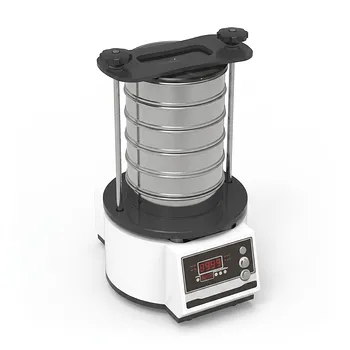
Tapping Oscillating Sieve Shaker for Dry and Wet Particle Size Analysis

Stainless Steel Rotary Vibrating Sieve High Precision Circular Vibratory Separator Industrial Powder Grading Machine Multi Layer Sifting Equipment

Three Dimensional Rotary Vibrating Sieve
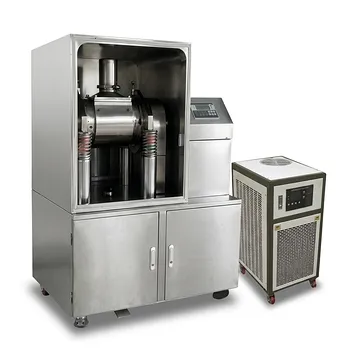
Small Vibrating Ultrafine Grinder for Traditional Chinese Medicine
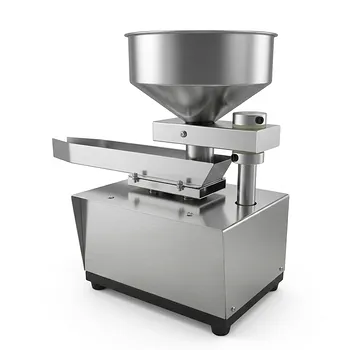
Automatic Vibrating Powder Feeder for Laboratory Material Processing Precision Vibratory Hopper Feeder for Granular and Powder Material Handling Industrial Grade Vibrating Tray Feeder for Consistent Material Sample Preparation
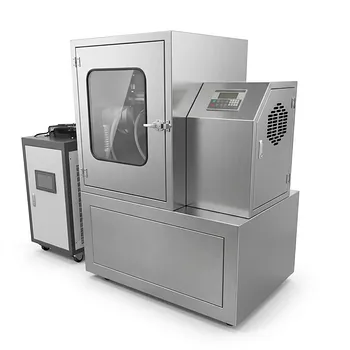
Vibratory Superfine Grinder for Ultra Fine Laboratory Powder Milling
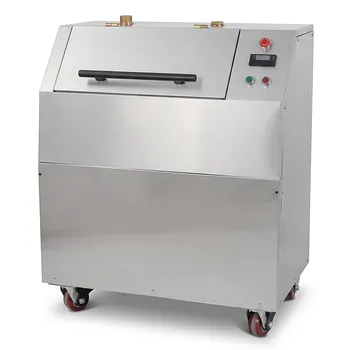
Vibratory Disc Mill for Rapid Fine Grinding and High Throughput Sample Preparation of Hard and Brittle Materials