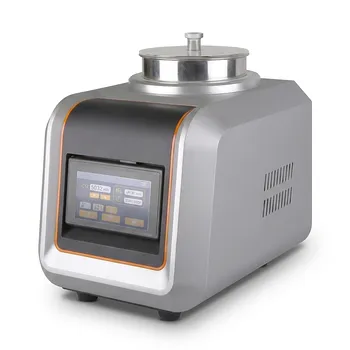
What role do vibratory sieve shakers and test sieves play in incinerator ash analysis? Optimize Your Waste Grading
Updated 4 months ago
Vibratory sieve shakers and test sieves are the primary instruments used to physically fractionate incinerator ash into distinct size categories for mass-based grading. By employing controlled mechanical vibration, these systems drive ash samples through a series of nested sieves with decreasing apertures—ranging from 40mm down to 0.074mm—to isolate specific particle populations. This classification is the critical first step in identifying heavy metal enrichment patterns, assessing leaching toxicity, and determining the suitability of ash for industrial reuse.
Core Takeaway: Sieve analysis transforms a heterogeneous mass of incinerator ash into organized, size-specific data. This physical separation is essential because the chemical toxicity and recycling potential of the ash are directly dictated by its particle size distribution.
The Mechanics of Ash Classification
Overcoming Particle Adhesion
Incinerator bottom ash often exhibits significant adhesion forces between particles, which can lead to clumping and inaccurate grading. Vibratory sieve shakers utilize high-frequency mechanical vibrations to overcome these forces, ensuring that each particle has the opportunity to pass through the correct aperture.
Standardized Mass-Based Grading
The process utilizes a stack of standardized test sieves (such as 2000, 1000, and 500 micrometers) to achieve precise grading. By weighing the material retained on each sieve, technicians can generate a distribution curve that defines the physical profile of the municipal solid waste incineration (MSWI) residue.
Precision Across Broad Ranges
Modern vibratory systems are capable of separating multi-component ash into specific fractions, such as 0–2 mm, 2–5.6 mm, and up to 40 mm. This range allows for the detailed characterization of both fine fly ash and coarser bottom ash within a single analytical framework.
The Environmental and Technical Impact
Analyzing Heavy Metal Enrichment
Research indicates that smaller ash particles possess a higher specific surface area, which often leads to higher concentrations of heavy metals like Lead (Pb) and Cadmium (Cd). Sieve analysis allows researchers to isolate these fine fractions to perform targeted chemical analysis and leaching toxicity testing.
Evaluating Material Reuse Potential
For the construction industry, sieve shakers classify incinerator bottom ash (IBA) into coarse and fine aggregates. This provides the physical data necessary for proportioning ash as a substitute for natural fine aggregates in materials like concrete or road base.
Foundation for Stabilization Processes
Graded stabilization involves treating specific size fractions of ash to neutralize environmental risks. By using vibratory sieving, engineers can identify which fractions require the most intensive chemical treatment, optimizing the stabilization process and reducing overall costs.
Common Pitfalls and Trade-offs
Limitations in Sub-Micron Analysis
While vibratory sieving is highly effective for particles down to 0.074mm (74 micrometers), it reaches a point of diminishing returns for ultra-fine dust. For particles smaller than this, the mechanical energy may not be sufficient to prevent blinding (clogging) of the mesh, potentially requiring wet sieving or laser diffraction for higher accuracy.
Sample Representative Error
Incinerator ash is inherently non-uniform. If the initial sample size is too small or if the vibration time is insufficient, the sieve analysis will not reflect the true distribution of the waste stream, leading to skewed environmental risk assessments.
Mechanical Wear and Sieve Blinding
Abrasive bottom ash can wear down sieve meshes over time, altering the aperture size and compromising data integrity. Regular calibration and cleaning are required to ensure that the physical "ground truth" provided by the sieves remains accurate for long-term research.
How to Apply This to Your Project
Making the Right Choice for Your Goal
To achieve the most accurate particle size distribution analysis, your approach should be tailored to your specific analytical objective.
- If your primary focus is Environmental Risk Assessment: Use a wide range of sieves (down to 0.074mm) to isolate the finest particles, as these typically contain the highest concentrations of hazardous heavy metals.
- If your primary focus is Industrial Material Reuse: Focus on the grading of coarse and fine aggregates (typically the 0–11.2mm range) to ensure the ash meets the structural specifications for concrete or road construction.
- If your primary focus is Stabilization Efficiency: Use sieving to determine the specific surface area of different fractions, allowing you to calculate the precise amount of chemical additives required for heavy metal immobilization.
Effective sieve analysis turns raw incinerator waste into actionable data, bridging the gap between physical classification and environmental safety.
Summary Table:
| Feature | Role in Incinerator Ash Analysis |
|---|---|
| Primary Function | Physical fractionation into distinct size categories for mass-based grading |
| Size Range | Precise classification from 40mm down to 0.074mm (74 microns) |
| Key Outcome | Identification of heavy metal enrichment (Pb, Cd) in fine fractions |
| Application | Determining suitability for concrete aggregates and road base reuse |
| Process Benefit | Overcomes particle adhesion to ensure accurate distribution data |
Optimize Your Material Analysis with Precision Equipment
At our facility, we provide complete laboratory sample preparation solutions for material science, specializing in advanced powder processing and compaction. Whether you are analyzing incinerator ash for environmental safety or industrial reuse, our equipment ensures accuracy and efficiency.
Our extensive product range includes:
- Sizing & Separation: High-precision vibratory and air-jet sieve shakers with a full range of test sieves and meshes.
- Milling & Crushing: Jaw and roll crushers, planetary ball mills, jet mills, and liquid nitrogen cryogenic grinders.
- Compaction & Pressing: A full spectrum of hydraulic presses, including Cold/Warm Isostatic Presses (CIP/WIP), vacuum hot presses, and XRF pellet presses.
- Mixing: High-performance powder mixers and defoaming mixers.
From raw waste grading to the development of stabilized industrial materials, we empower your research with reliable, high-performance tools. Contact our technical team today to find the perfect solution for your lab!
References
- Monika Kasina, Małgorzata Wendorff-Belon. Comprehensive characterization and environmental implications of industrial and hazardous incineration ashes: insights into chemistry, mineralogy, elements’ fractionation and leaching potential. DOI: 10.1038/s41598-024-80782-8
Mentioned Products
- Vibratory Sieve Shaker Electromagnetic 3D Motion Powder Particle Size Analyzer for Dry and Wet Sieving
- Laboratory Dry and Wet Three Dimensional Vibratory Sieve Shaker for Particle Analysis
- Stainless Steel Laboratory Vibratory Test Sieve Shaker
- Heavy Duty Dry Three Dimensional Vibratory Sieve Shaker for Particle Separation
- Dry Three Dimensional Vibratory Sieve Shaker
People Also Ask
- How does a vibratory sieve shaker contribute to optimizing the performance of activated carbon? Enhance Adsorption Precision
- Why is a laboratory vibratory sieve shaker necessary for processing magnesium-based borate precursor powders? Boost Activity
- Why use a vibratory sieve shaker to verify coarse aggregate grading in rubberized concrete? Ensure Structural Integrity
- What function do vibratory sieve shakers and standard test sieves serve in the preparation of adsorbents? Key Guide
- What role does a vibratory sieve shaker play in the particle size analysis of ground corn products? Enhance QC Precision

Tech Team · PowderPreparation
Last updated on Jun 03, 2026
Related Products
Vibratory Sieve Shaker Electromagnetic 3D Motion Powder Particle Size Analyzer for Dry and Wet Sieving
Laboratory Dry and Wet Three Dimensional Vibratory Sieve Shaker for Particle Analysis
Stainless Steel Laboratory Vibratory Test Sieve Shaker
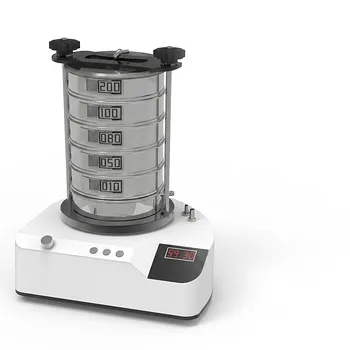
Heavy Duty Dry Three Dimensional Vibratory Sieve Shaker for Particle Separation
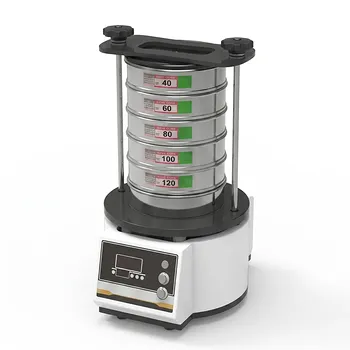
Dry Three Dimensional Vibratory Sieve Shaker
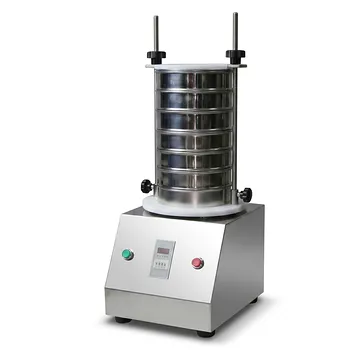
Small Laboratory Vibratory Sieve Shaker for Powder Gradation and Particle Size Analysis
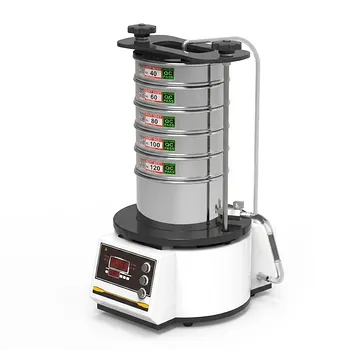
High Frequency Wet Three-Dimensional Vibrating Sieve Shaker for Dry and Wet Particle Size Analysis
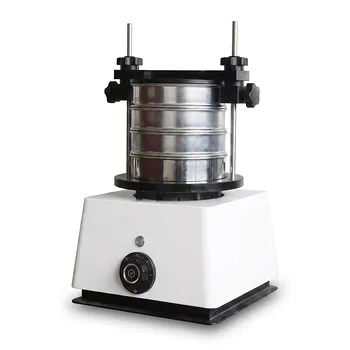
Small Laboratory Vibrating Sieve Shaker for Precise Particle Size Analysis
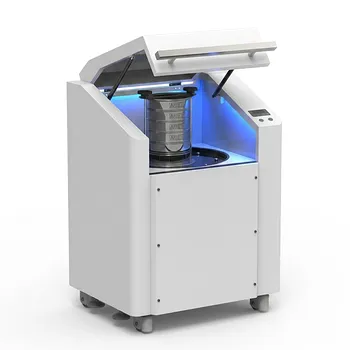
High Frequency Cabinet Type Three-Dimensional Rotary Vibrating Sieve Shaker for Dry Sieving and Particle Classification
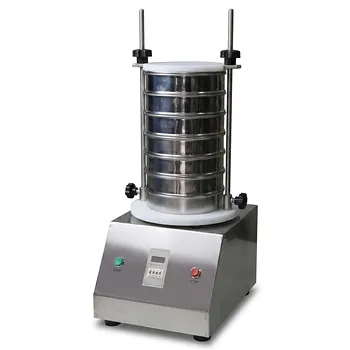
Laboratory Vibratory Test Sieve Shaker for Precision Particle Size Analysis and Powder Grading
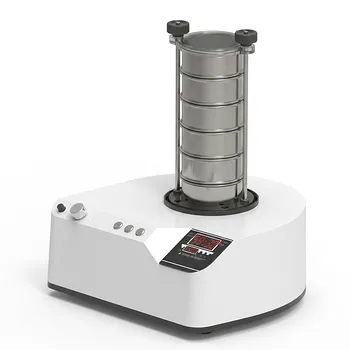
三维电磁微量振动筛分仪
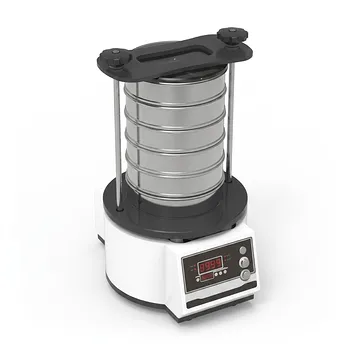
Tapping Oscillating Sieve Shaker for Dry and Wet Particle Size Analysis
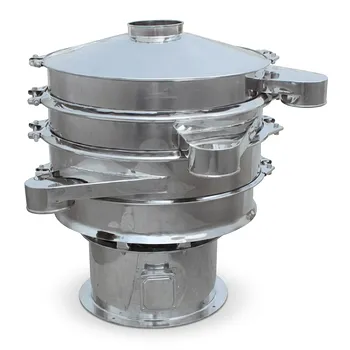
Stainless Steel Rotary Vibrating Sieve High Precision Circular Vibratory Separator Industrial Powder Grading Machine Multi Layer Sifting Equipment
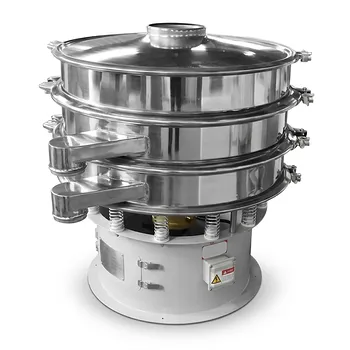
Three Dimensional Rotary Vibrating Sieve
Small Vibrating Ultrafine Grinder for Traditional Chinese Medicine
Automatic Vibrating Powder Feeder for Laboratory Material Processing Precision Vibratory Hopper Feeder for Granular and Powder Material Handling Industrial Grade Vibrating Tray Feeder for Consistent Material Sample Preparation
Vibratory Superfine Grinder for Ultra Fine Laboratory Powder Milling
Vibratory Disc Mill for Rapid Fine Grinding and High Throughput Sample Preparation of Hard and Brittle Materials