What role do vibratory sieve shakers and standard test sieves play in the production flow of eggshell powder? Ensure Precision.
Updated 4 months ago
Vibratory sieve shakers and standard test sieves are the primary tools used for particle size control and quality assurance in eggshell powder (ESP) production. By utilizing high-frequency vibration to pass ground material through precise mesh apertures, such as 150μm or 80μm, these tools ensure the final powder has a consistent particle size distribution. This precision is essential for maintaining the stability of ESP when used as a filler in bitumen, polymers, or bio-adsorbents.
Core Takeaway: The role of vibratory sieving is to transform raw ground eggshells into a standardized industrial filler by eliminating oversized particles that would otherwise cause material failure, internal stress concentration, or poor dispersion in the final product.
Achieving Precise Particle Size Control
Eliminating Coarse and Oversized Particles
In the production flow, the primary function of a vibratory sieve shaker is to remove oversized particles that have not been sufficiently ground. Using a 150μm standard test sieve ensures that only powder finer than this threshold enters the modification phase, preventing "clumping" in the final application.
Ensuring High-Precision Grading
For specialized applications like bioplastics or pharmaceuticals, even finer apertures such as 80μm or even 0.1μm microporous sieves are employed. This level of precise grading allows manufacturers to isolate specific fractions, ensuring the powder is highly consistent and meets the strict requirements of high-performance composite materials.
Maintaining Particle Size Distribution (PSD)
A vibratory shaker often drives a stack of sieves with varying apertures (e.g., 30, 40, 100, and 200 mesh) simultaneously. This allows producers to measure the cumulative particle size distribution, providing a quantitative map of the powder’s morphology and ensuring it falls within the desired d10, d50, or d90 metrics.
Enhancing Material Performance and Stability
Preventing Internal Stress Concentration
When eggshell powder is used as a filler in a polylactic acid (PLA) matrix or bitumen, large, non-uniform particles act as "stress risers." By ensuring a uniform and fine particle size, sieving prevents these stress concentrations, which significantly improves the mechanical strength and durability of the resulting composite.
Optimizing Dispersion and Adsorption
Fine particle sizes achieved through sieving increase the specific surface area of the eggshell powder. This is critical for bio-adsorbent films, where a uniform powder ensures high contact efficiency for heavy metal ions and prevents the formation of macroscopic cracks during the film-drying process.
Guaranteeing Stable Bitumen Performance
In the context of modified bitumen, sieving is used to prevent particle settlement. A consistent distribution of particles smaller than 150μm ensures that the ESP remains suspended in the bitumen, providing stable performance and preventing the internal stress that leads to premature road wear.
Understanding the Trade-offs and Limitations
Balancing Throughput with Accuracy
While increasing the vibration amplitude can speed up the sieving process, it may lead to inaccurate results if particles are bounced over the mesh apertures rather than passing through them. Producers must find the optimal cycle time and intensity to ensure every particle has sufficient opportunity to be graded.
Managing Mesh Blinding
Eggshell powder can be cohesive, especially at sizes below 53μm, which may lead to "blinding" or clogging of the sieve mesh. Regular cleaning of standard test sieves and the use of anti-blinding attachments (such as ultrasonic cleaners or bouncing balls) are often necessary to maintain grading accuracy over long production runs.
Crushing Efficiency vs. Energy Costs
Sieving provides the data needed to evaluate biomass crushing efficiency. If a large percentage of material is retained on the upper sieves, it indicates the grinding process is inefficient; however, over-grinding to reach extremely fine sizes increases energy consumption and production costs.
How to Apply Sieving to Your Production Goal
Implementing Quality Standards
Depending on your final application, your sieving protocol should be tailored to the specific mechanical or chemical requirements of the end product.
- If your primary focus is Modified Bitumen: Use 150μm standard sieves to ensure a stable distribution that prevents particle settlement and internal stress.
- If your primary focus is Polymer Fillers (PLA): Utilize 80μm or finer sieves to ensure uniform dispersion and prevent stress concentration at large particle sites.
- If your primary focus is Bio-adsorbents: Focus on achieving a fine, consistent mesh size to maximize surface area and improve heavy metal ion contact efficiency.
- If your primary focus is Process Optimization: Use a multi-stage stack of sieves to generate a particle size distribution curve and objectively measure your crushing equipment's efficiency.
By integrating precise vibratory sieving, you transition from producing raw waste to creating a high-value, functional bio-material.
Summary Table:
| Application Target | Recommended Mesh Size | Key Benefit to Final Product |
|---|---|---|
| Modified Bitumen | 150μm Standard Sieve | Prevents particle settlement and internal stress concentration. |
| Polymer Fillers (PLA) | 80μm or Finer | Ensures uniform dispersion and prevents mechanical stress risers. |
| Bio-adsorbents | < 80μm / Microporous | Maximizes specific surface area for heavy metal ion adsorption. |
| Quality Assurance | Multi-stage Sieve Stack | Provides quantitative Particle Size Distribution (PSD) metrics. |
| Process Monitoring | Various Meshes | Evaluates crushing efficiency to optimize energy consumption. |
Optimize Your Powder Processing with Expert Solutions
Elevate your material science research and production efficiency with [Brand Name]. We provide complete laboratory sample preparation solutions specializing in high-precision powder processing and compaction equipment. Whether you are refining eggshell powder for bio-composites or developing advanced materials, our extensive product lines are engineered to meet your strictest standards:
- Size Reduction: High-performance crushers (jaw/roll), liquid nitrogen cryogenic grinders, and advanced mills (planetary ball, jet, sand/bead, disc, rotor).
- Sieving & Grading: Precision vibratory and air-jet sieve shakers with a full range of test sieves and meshes.
- Mixing & Blending: Industrial-grade powder mixers and high-speed defoaming mixers.
- Compaction & Pressing: A full spectrum of hydraulic presses, including Cold/Warm Isostatic Presses (CIP/WIP), standard lab presses, XRF pellet presses, and vacuum hot presses.
Ready to achieve superior consistency and performance? Contact our technical team today to find the perfect equipment for your workflow!
References
- Goh Hong Chee, P.J. Ramadhansyah. The Influence of Eggshell Powder as Additive on the Physical and Mechanical Properties of Stone Mastic Asphalt. DOI: 10.15282/construction.v2i1.7409
Mentioned Products
- Small Laboratory Vibratory Sieve Shaker for Powder Gradation and Particle Size Analysis
- Laboratory Vibratory Test Sieve Shaker for Precision Particle Size Analysis and Powder Grading
- Vibratory Sieve Shaker Electromagnetic 3D Motion Powder Particle Size Analyzer for Dry and Wet Sieving
- Stainless Steel Laboratory Vibratory Test Sieve Shaker
- Dry Three Dimensional Vibratory Sieve Shaker
People Also Ask
- Why use a 450 μm vibratory sieve shaker for MLO? Ensure Superior Particle Uniformity & Adsorption Performance
- Why is a laboratory vibratory sieve shaker essential for coconut cake fiber? Achieve Precise Particle Size Analysis
- What is the role of laboratory vibratory sieve shakers in waste PUR foam recycling? Optimize Particle Size and Density
- How does a laboratory vibratory sieve shaker contribute to the pre-treatment of PCB powders before sorting? Boost Yields
- What is the primary function of a laboratory vibratory sieve shaker in the evaluation of sand liquefaction potential?

Tech Team · PowderPreparation
Last updated on Jun 03, 2026
Related Products
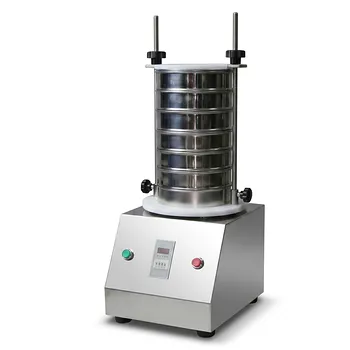
Small Laboratory Vibratory Sieve Shaker for Powder Gradation and Particle Size Analysis
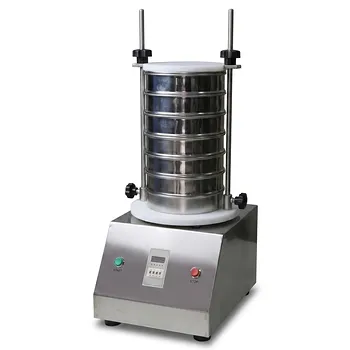
Laboratory Vibratory Test Sieve Shaker for Precision Particle Size Analysis and Powder Grading
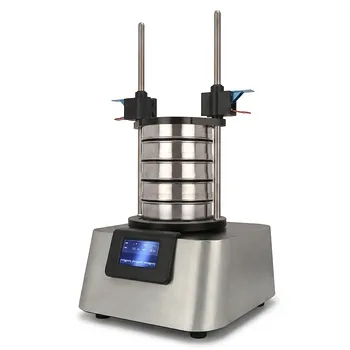
Vibratory Sieve Shaker Electromagnetic 3D Motion Powder Particle Size Analyzer for Dry and Wet Sieving
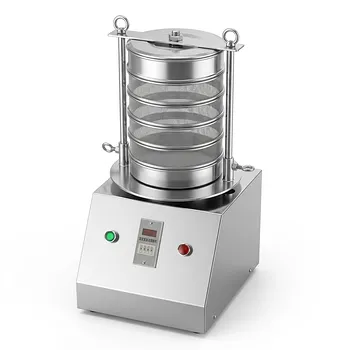
Stainless Steel Laboratory Vibratory Test Sieve Shaker
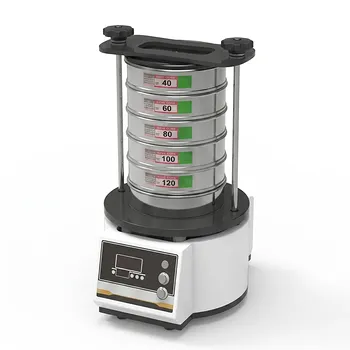
Dry Three Dimensional Vibratory Sieve Shaker
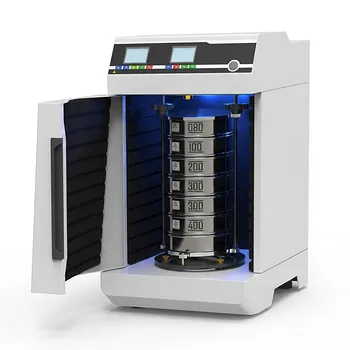
Laboratory Dry and Wet Three Dimensional Vibratory Sieve Shaker for Particle Analysis
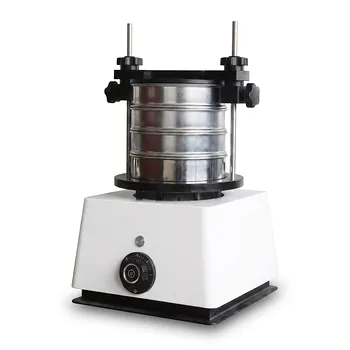
Small Laboratory Vibrating Sieve Shaker for Precise Particle Size Analysis
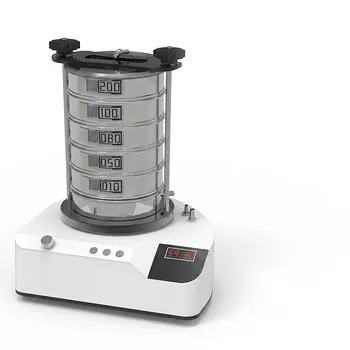
Heavy Duty Dry Three Dimensional Vibratory Sieve Shaker for Particle Separation
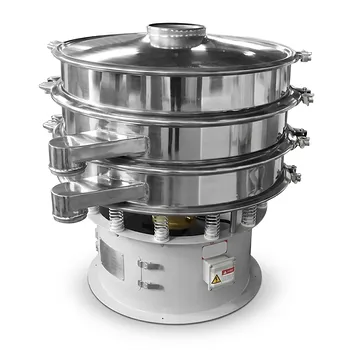
Three Dimensional Rotary Vibrating Sieve
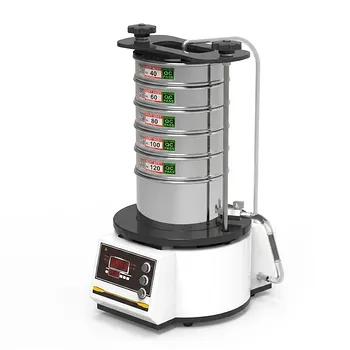
High Frequency Wet Three-Dimensional Vibrating Sieve Shaker for Dry and Wet Particle Size Analysis
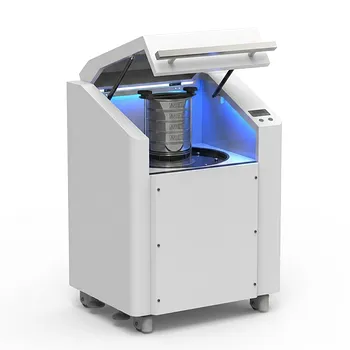
High Frequency Cabinet Type Three-Dimensional Rotary Vibrating Sieve Shaker for Dry Sieving and Particle Classification
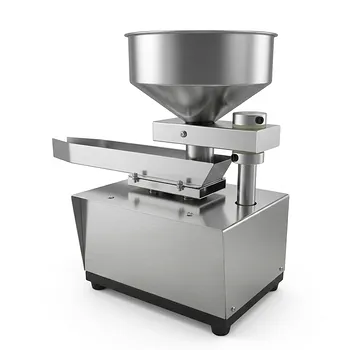
Automatic Vibrating Powder Feeder for Laboratory Material Processing Precision Vibratory Hopper Feeder for Granular and Powder Material Handling Industrial Grade Vibrating Tray Feeder for Consistent Material Sample Preparation
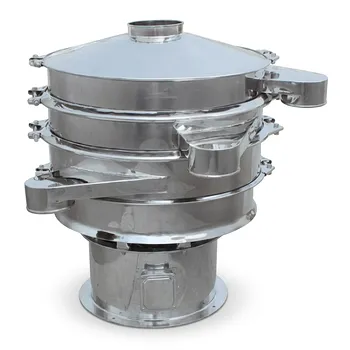
Stainless Steel Rotary Vibrating Sieve High Precision Circular Vibratory Separator Industrial Powder Grading Machine Multi Layer Sifting Equipment
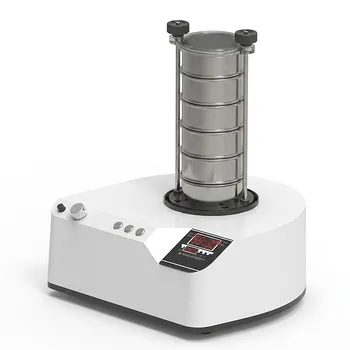
三维电磁微量振动筛分仪
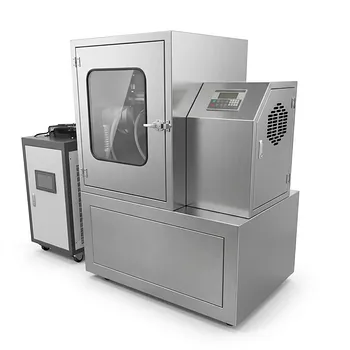
Vibratory Superfine Grinder for Ultra Fine Laboratory Powder Milling
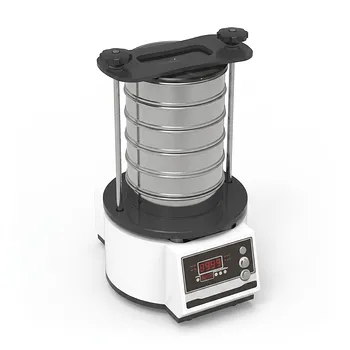
Tapping Oscillating Sieve Shaker for Dry and Wet Particle Size Analysis
High Speed Vibratory Disc Mill for Spectral Analysis Sample Preparation and Rapid Powder Grinding
Laboratory Air Jet Sieving Machine for Fine Powder Particle Size Analysis and Deagglomeration