What role do vibratory sieve shakers and standard test sieves play in the classification of turmeric powder? | PSD Guide
Updated 4 months ago
Vibratory sieve shakers and standard test sieves are the primary tools for precise particle size distribution (PSD) analysis in turmeric processing.
These instruments work in tandem to mechanically separate ground turmeric into distinct grades using high-frequency vibrations and calibrated mesh screens. This process ensures that the final powder meets strict food industry standards for texture, appearance, and consistency, while providing the necessary data to evaluate the efficiency of the grinding process.
The central takeaway: Vibratory sieve shakers provide a standardized, repeatable method for classifying turmeric powder by size, which is essential for maintaining product quality, ensuring uniform physical properties, and optimizing industrial milling operations.
The Mechanism of Precise Classification
High-Frequency Mechanical Vibration
The vibratory sieve shaker utilizes high-frequency mechanical vibrations to move the turmeric powder across the sieve surface. This motion ensures that every particle has multiple opportunities to pass through the mesh openings, leading to an accurate separation based on physical dimensions.
Multi-Layered Sieve Stack Analysis
By using a series of standard test sieves stacked in descending order of mesh size (such as 40, 60, or 85 mesh), operators can fractionate a single sample into multiple grades simultaneously. This allows for a comprehensive analysis of the powder’s cumulative distribution, identifying the exact percentage of "fines" versus "coarse" particles.
Consistent Particle Size Foundation
This mechanical classification provides a consistent foundation for subsequent physical property analysis. By isolating specific fractions, technicians can more accurately measure variables such as bulk density, flowability, and the Fineness Modulus (FM) of the turmeric.
Impact on Product Quality and Process Control
Ensuring Sensory and Textural Uniformity
In the food industry, the "mouthfeel" and appearance of turmeric are dictated by its particle size. Precise grading ensures that the powder is free from gritty, oversized particles, resulting in a uniform texture that meets consumer expectations and professional culinary standards.
Quantifying Milling and Grinding Efficiency
The data gathered from sieving—such as the average particle size—is used to evaluate the performance of grinding equipment. If the sieve analysis shows a high proportion of oversized particles, it indicates that the milling parameters or foaming techniques need adjustment to improve product quality.
Influence on Chemical and Physical Properties
Particle size directly impacts the surface area of the turmeric powder, which influences its water absorption capacity and the release efficiency of its active compounds. Finer powders, often classified through 100-mesh sieves, typically offer faster dispersion and more intense color release in food applications.
Understanding the Trade-offs
The Risk of Sieve Blinding
Turmeric contains natural oils that can make the powder slightly cohesive or "sticky." During high-frequency vibration, these particles can clog the mesh openings—a phenomenon known as blinding—which reduces separation accuracy and requires frequent cleaning of the sieves.
Sample Loss and Environmental Factors
Vibratory sieving is an open or semi-closed process where fine dust can be lost to the air, potentially skewing the results of a precise mass balance. Additionally, electrostatic charges generated during the vibration can cause fine particles to cling to the sieve frame, requiring careful handling to ensure all material is accounted for.
Processing Time vs. Accuracy
While longer vibration cycles generally lead to better separation, excessive sieving can lead to particle attrition. The mechanical stress of the vibration may cause fragile turmeric particles to break down further during the test, resulting in a recorded particle size that is finer than the actual product in the production line.
How to Apply This to Your Project
Effective classification depends on matching your sieving parameters to your specific quality goals.
- If your primary focus is meeting food industry standards: Prioritize the use of 40-mesh and 85-mesh sieves to ensure your product fits standard trade classifications for "ground" or "fine" turmeric.
- If your primary focus is optimizing milling costs: Use the sieve shaker to calculate the Fineness Modulus (FM), allowing you to reduce grinding time once the desired particle size distribution is consistently achieved.
- If your primary focus is improving product solubility or color release: Focus on the "fines" fraction by utilizing 100-mesh sieves to monitor the proportion of the powder that maximizes surface area for rapid dispersion.
By mastering the use of vibratory sieve shakers, you transform a simple powder into a standardized, high-performance ingredient backed by scientific data.
Summary Table:
| Feature | Impact on Turmeric Classification |
|---|---|
| Equipment Used | Vibratory sieve shakers & calibrated standard test sieves |
| Common Mesh Sizes | 40, 60, 85, and 100 mesh (for coarse to ultra-fine grades) |
| Key Quality Gains | Texture uniformity, optimized color release, and consistent mouthfeel |
| Process Control | Quantifies milling efficiency and calculates Fineness Modulus (FM) |
| Technical Hurdles | Managing sieve blinding from natural oils and electrostatic charges |
Elevate Your Powder Processing with Laboratory Excellence
Achieving the perfect particle size distribution is critical for product quality and industrial efficiency. At [Brand Name], we provide complete laboratory sample preparation solutions tailored for material science and food processing.
Our extensive equipment line ensures precision at every stage:
- Classification: Vibratory and air-jet sieve shakers with a full range of test sieves and meshes.
- Size Reduction: Advanced crushers (jaw/roll), liquid nitrogen cryogenic grinders, and high-energy mills (planetary ball, jet, sand/bead, disc, rotor).
- Mixing & Homogenization: Professional powder mixers and defoaming mixers.
- Compaction: A full spectrum of hydraulic presses, including Cold/Warm Isostatic Presses (CIP/WIP), standard lab presses, and vacuum hot presses.
Whether you are optimizing turmeric milling or developing advanced materials, our specialists are ready to help you find the ideal setup. Contact us today to optimize your lab workflow!
References
- P. Barnwal, Pankaj Kumar. Selected physico-mechanical characteristics of cryogenic and ambient ground turmeric. DOI: 10.2478/intag-2013-0033
Mentioned Products
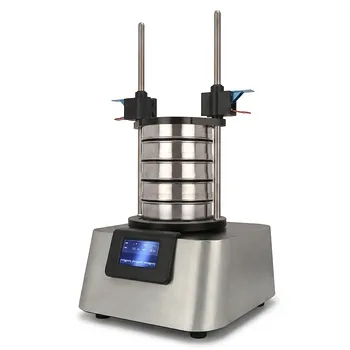
- Vibratory Sieve Shaker Electromagnetic 3D Motion Powder Particle Size Analyzer for Dry and Wet Sieving
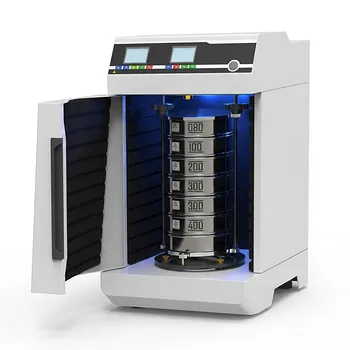
- Laboratory Dry and Wet Three Dimensional Vibratory Sieve Shaker for Particle Analysis
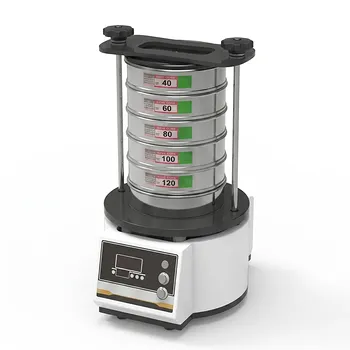
- Dry Three Dimensional Vibratory Sieve Shaker
- Stainless Steel Laboratory Vibratory Test Sieve Shaker
- Heavy Duty Dry Three Dimensional Vibratory Sieve Shaker for Particle Separation
People Also Ask
- How does a vibratory sieve shaker contribute to optimizing the performance of activated carbon? Enhance Adsorption Precision
- Why is a laboratory vibratory sieve shaker necessary for processing magnesium-based borate precursor powders? Boost Activity
- Why use a vibratory sieve shaker to verify coarse aggregate grading in rubberized concrete? Ensure Structural Integrity
- What function do vibratory sieve shakers and standard test sieves serve in the preparation of adsorbents? Key Guide
- What role does a vibratory sieve shaker play in the particle size analysis of ground corn products? Enhance QC Precision

Tech Team · PowderPreparation
Last updated on Jun 03, 2026
Related Products
Vibratory Sieve Shaker Electromagnetic 3D Motion Powder Particle Size Analyzer for Dry and Wet Sieving
Laboratory Dry and Wet Three Dimensional Vibratory Sieve Shaker for Particle Analysis
Dry Three Dimensional Vibratory Sieve Shaker
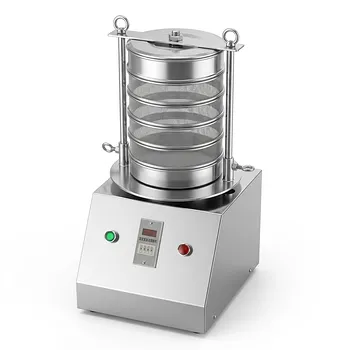
Stainless Steel Laboratory Vibratory Test Sieve Shaker
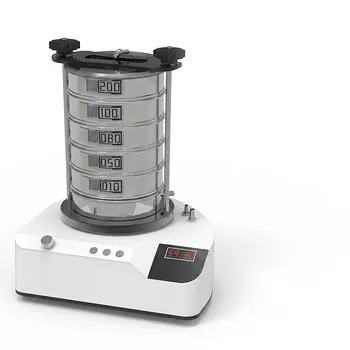
Heavy Duty Dry Three Dimensional Vibratory Sieve Shaker for Particle Separation
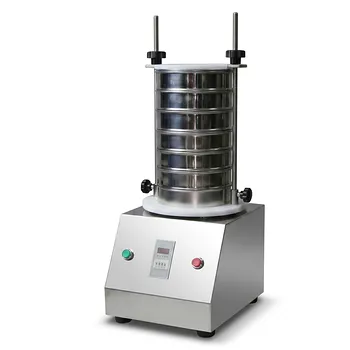
Small Laboratory Vibratory Sieve Shaker for Powder Gradation and Particle Size Analysis
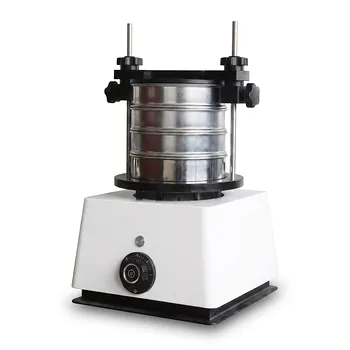
Small Laboratory Vibrating Sieve Shaker for Precise Particle Size Analysis
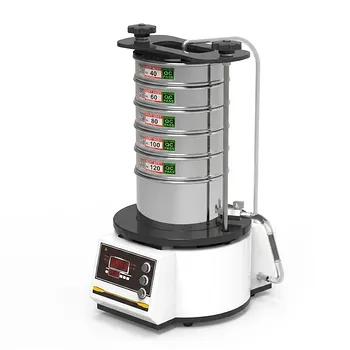
High Frequency Wet Three-Dimensional Vibrating Sieve Shaker for Dry and Wet Particle Size Analysis
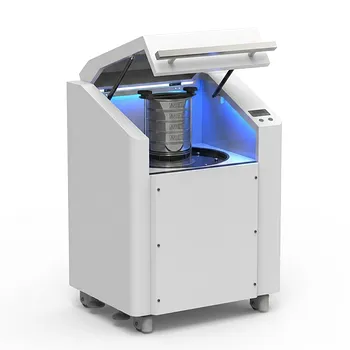
High Frequency Cabinet Type Three-Dimensional Rotary Vibrating Sieve Shaker for Dry Sieving and Particle Classification
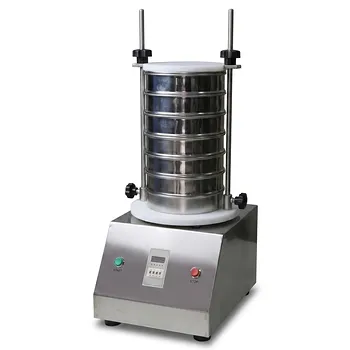
Laboratory Vibratory Test Sieve Shaker for Precision Particle Size Analysis and Powder Grading
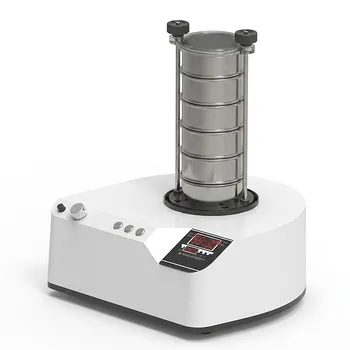
三维电磁微量振动筛分仪
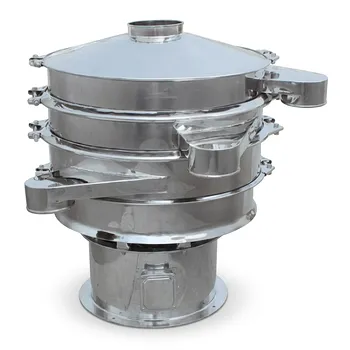
Stainless Steel Rotary Vibrating Sieve High Precision Circular Vibratory Separator Industrial Powder Grading Machine Multi Layer Sifting Equipment
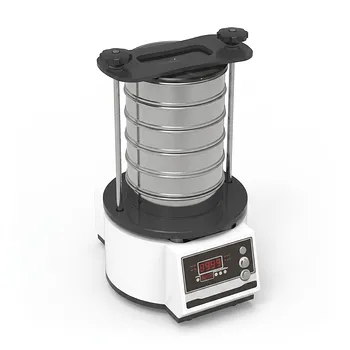
Tapping Oscillating Sieve Shaker for Dry and Wet Particle Size Analysis
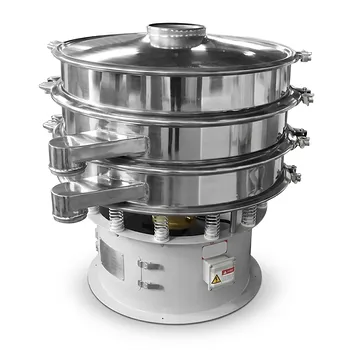
Three Dimensional Rotary Vibrating Sieve
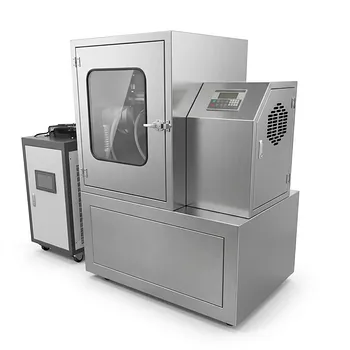
Vibratory Superfine Grinder for Ultra Fine Laboratory Powder Milling
Small Vibrating Ultrafine Grinder for Traditional Chinese Medicine
Automatic Vibrating Powder Feeder for Laboratory Material Processing Precision Vibratory Hopper Feeder for Granular and Powder Material Handling Industrial Grade Vibrating Tray Feeder for Consistent Material Sample Preparation