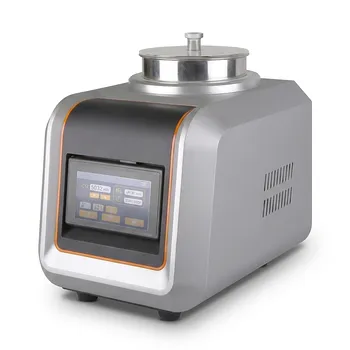
What role do vibratory sieve shakers and test sieves play in mango powder classification? Ensure Precise Particle Sizes
Updated 4 months ago
Vibratory sieve shakers and standard test sieves classify mango powder by using controlled mechanical energy to sort particles through a vertical stack of graded mesh apertures. This process separates dried and crushed mango into precise size fractions, which is essential for determining the powder's flowability, bulk density, and final sensory texture.
The combination of vibratory shakers and test sieves serves as a foundational quality control mechanism. By physically isolating particle sizes, producers can ensure product consistency and predict how the powder will behave during downstream processing or consumption.
The Mechanics of Physical Classification
Controlled Mechanical Vibration
Vibratory sieve shakers utilize multi-dimensional high-frequency vibrations to move mango powder across the sieve surface. These vibrations ensure that every particle has multiple opportunities to pass through the mesh openings.
The shaker allows for precise control over amplitude and cycle times. This consistency is vital for repeatable results, as it prevents the manual errors associated with hand-sieving.
Sieve Mesh Gradation
Standard test sieves are stacked with the largest mesh openings at the top and the smallest at the bottom. Common sizes for mango powder include 50, 60, and 85 mesh, or apertures ranging from 0.85mm to 0.25mm.
As the mango powder moves through the stack, each sieve retains a specific size fraction. This physical separation allows technicians to weigh the residue on each layer to determine the particle size distribution (PSD).
Impact on Product Quality and Functionality
Enhancing Extraction Efficiency
For mango seed kernel powder, classification is critical for the extraction of phenolic compounds and oils. Smaller particles provide a larger specific surface area, which increases the contact area between the powder and the solvent.
Uniform particle sizes ensure that the solvent penetrates the material at a consistent rate. This optimization directly leads to higher yields and more efficient processing times.
Influencing Sensory and Physical Properties
The particle size of mango powder dictates its flowability and water-holding capacity. Finer particles often improve the smooth "mouthfeel" in food applications but may increase the cohesiveness of the powder, making it harder to pour.
By classifying the powder, manufacturers can target specific sensory textures. This ensures that the final product meets consumer expectations for consistency and quality.
Data-Driven Process Optimization
Constructing Distribution Curves
By weighing the material retained on each sieve, technicians can construct cumulative distribution curves. These curves provide a visual representation of the powder’s composition.
This data is used to verify the classification effectiveness of grinding and milling equipment. It allows engineers to calibrate machinery to ensure the output meets narrow technical specifications.
Predicting Granulation and Extrusion Outcomes
Particle size data helps predict how mango powder will behave during granulation or pelletizing. For instance, knowing the proportion of 60-mesh particles allows operators to control extrusion resistance.
Proper classification ensures that the raw material is compatible with processing dies. This prevents equipment wear and ensures the mechanical strength of the finished pellets or granules.
Understanding the Trade-offs
The Risk of Sieve Blinding
A common pitfall in mango powder classification is sieve blinding, where oily or sticky particles plug the mesh openings. This prevents smaller particles from falling through, leading to inaccurate data.
Over-Vibration and Particle Attrition
Excessive vibration intensity or duration can cause particle attrition. In this scenario, the mechanical energy actually breaks the mango particles into smaller pieces during the test, resulting in a recorded size that is finer than the actual product.
Material Loss and Static Charges
Fine mango powders are susceptible to electrostatic charges, causing them to cling to the sieve walls. This can lead to a loss of sample weight and skew the final distribution analysis if not properly managed with anti-static measures.
Making the Right Choice for Your Goal
When implementing a sieving protocol for mango powder, your primary objective should dictate your choice of mesh and vibration settings.
- If your primary focus is extraction yield: Target a finer classification (e.g., 85 mesh) to maximize the specific surface area for solvent interaction.
- If your primary focus is powder flow and packaging: Focus on isolating and removing "fines" (cohesive particles smaller than 53 μm) that can cause clumping in machinery.
- If your primary focus is equipment calibration: Use a full stack of multi-layered sieves (20 to 100 mesh) to construct a detailed cumulative distribution curve.
- If your primary focus is sensory consistency: Maintain a strict percentage of material passing through a 250-micrometer sieve to ensure a uniform mouthfeel in food products.
Precise particle classification is the vital link between raw material processing and the predictable performance of the final mango powder product.
Summary Table:
| Key Feature | Role in Classification | Impact on Mango Powder |
|---|---|---|
| Multi-dimensional Vibration | Ensures particles hit mesh apertures repeatedly | Eliminates manual error and ensures repeatable results. |
| Graded Mesh Stack | Separates powder into specific size fractions | Controls flowability, bulk density, and mouthfeel. |
| Surface Area Control | Increases specific surface area (fine mesh) | Optimizes phenolic compound and oil extraction yields. |
| Distribution Data | Provides cumulative distribution curves | Calibrates milling machinery and predicts granulation success. |
Optimize Your Powder Processing with Precision Solutions
Achieve unmatched consistency in your material analysis with [Brand Name]. Providing complete laboratory sample preparation solutions for material science, we specialize in high-performance powder processing and compaction equipment designed for precision and reliability.
Our extensive product line supports every stage of your workflow:
- Advanced Milling & Grinding: From jaw and roll crushers to liquid nitrogen cryogenic grinders and planetary ball, jet, or rotor mills.
- Precision Classification: High-efficiency vibratory and air-jet sieve shakers equipped with a full range of standard test sieves and meshes.
- Mixing & Compaction: Powder and defoaming mixers, plus a full spectrum of hydraulic presses, including Cold/Warm Isostatic Presses (CIP/WIP), XRF pellet presses, and vacuum hot presses.
Whether you are refining food powders like mango or developing advanced industrial materials, our expert team is ready to help you find the perfect equipment configuration.
Contact our specialists today to enhance your lab’s efficiency!
References
- Monika Sharma, R. K. Gupta. Influence of particle size on physical and sensory attributes of mango pulp powder. DOI: 10.2478/intag-2013-0001
Mentioned Products
- Vibratory Sieve Shaker Electromagnetic 3D Motion Powder Particle Size Analyzer for Dry and Wet Sieving
- Laboratory Dry and Wet Three Dimensional Vibratory Sieve Shaker for Particle Analysis
- Stainless Steel Laboratory Vibratory Test Sieve Shaker
- Heavy Duty Dry Three Dimensional Vibratory Sieve Shaker for Particle Separation
- Dry Three Dimensional Vibratory Sieve Shaker
People Also Ask
- How does a vibratory sieve shaker contribute to optimizing the performance of activated carbon? Enhance Adsorption Precision
- Why is a laboratory vibratory sieve shaker necessary for processing magnesium-based borate precursor powders? Boost Activity
- Why use a vibratory sieve shaker to verify coarse aggregate grading in rubberized concrete? Ensure Structural Integrity
- What function do vibratory sieve shakers and standard test sieves serve in the preparation of adsorbents? Key Guide
- What role does a vibratory sieve shaker play in the particle size analysis of ground corn products? Enhance QC Precision

Tech Team · PowderPreparation
Last updated on Jun 03, 2026
Related Products
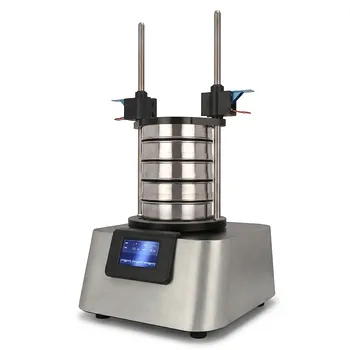
Vibratory Sieve Shaker Electromagnetic 3D Motion Powder Particle Size Analyzer for Dry and Wet Sieving
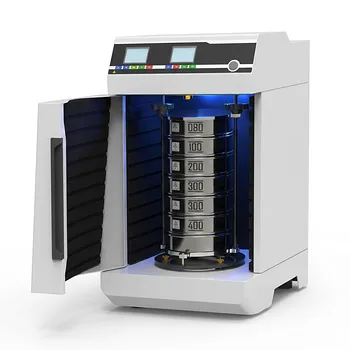
Laboratory Dry and Wet Three Dimensional Vibratory Sieve Shaker for Particle Analysis
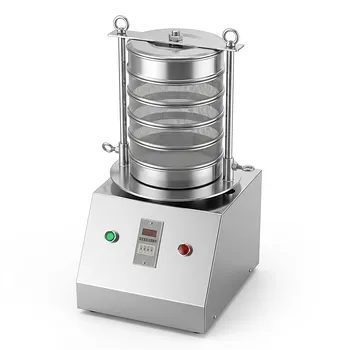
Stainless Steel Laboratory Vibratory Test Sieve Shaker
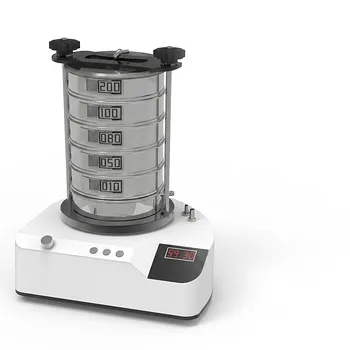
Heavy Duty Dry Three Dimensional Vibratory Sieve Shaker for Particle Separation
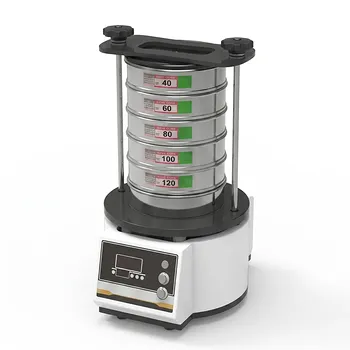
Dry Three Dimensional Vibratory Sieve Shaker
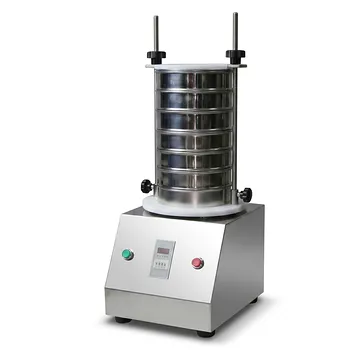
Small Laboratory Vibratory Sieve Shaker for Powder Gradation and Particle Size Analysis
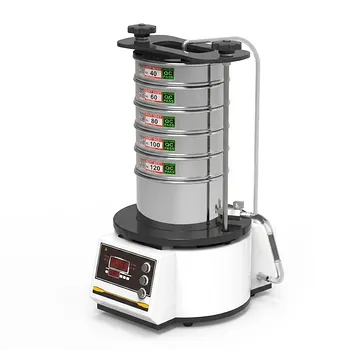
High Frequency Wet Three-Dimensional Vibrating Sieve Shaker for Dry and Wet Particle Size Analysis
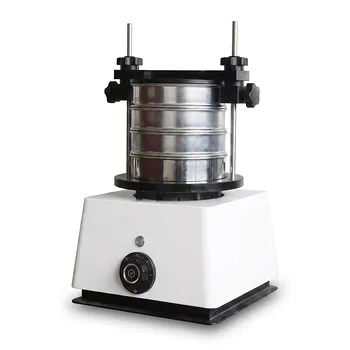
Small Laboratory Vibrating Sieve Shaker for Precise Particle Size Analysis
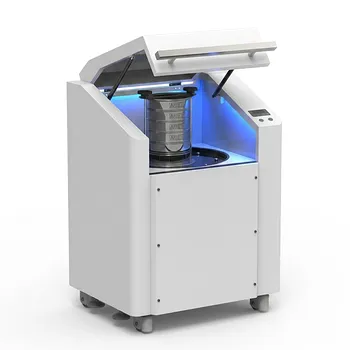
High Frequency Cabinet Type Three-Dimensional Rotary Vibrating Sieve Shaker for Dry Sieving and Particle Classification
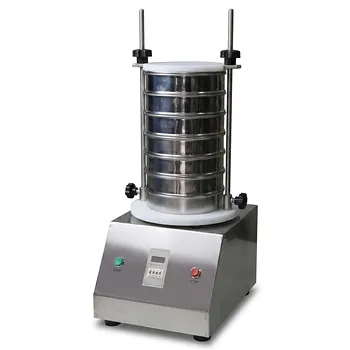
Laboratory Vibratory Test Sieve Shaker for Precision Particle Size Analysis and Powder Grading
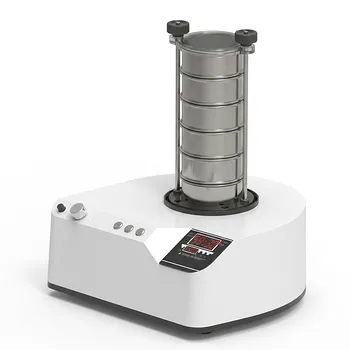
三维电磁微量振动筛分仪
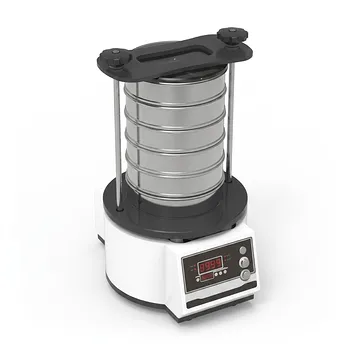
Tapping Oscillating Sieve Shaker for Dry and Wet Particle Size Analysis
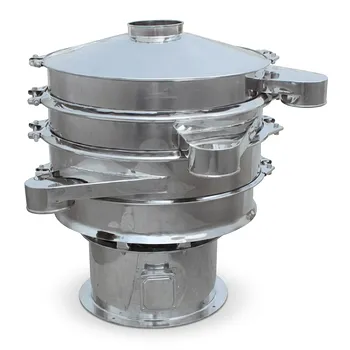
Stainless Steel Rotary Vibrating Sieve High Precision Circular Vibratory Separator Industrial Powder Grading Machine Multi Layer Sifting Equipment
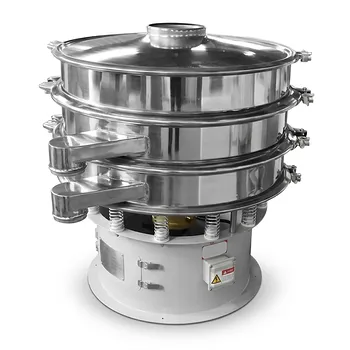
Three Dimensional Rotary Vibrating Sieve
Small Vibrating Ultrafine Grinder for Traditional Chinese Medicine
Automatic Vibrating Powder Feeder for Laboratory Material Processing Precision Vibratory Hopper Feeder for Granular and Powder Material Handling Industrial Grade Vibrating Tray Feeder for Consistent Material Sample Preparation
Vibratory Superfine Grinder for Ultra Fine Laboratory Powder Milling
Vibratory Disc Mill for Rapid Fine Grinding and High Throughput Sample Preparation of Hard and Brittle Materials