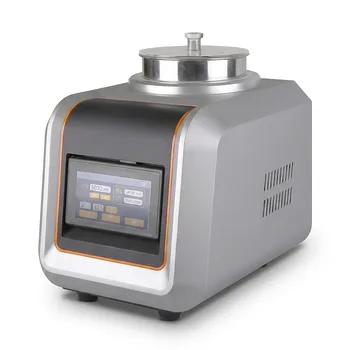
What role do vibratory sieve shakers play in carbon adsorbent PSD? Optimize Your Particle Size Characterization.
Updated 5 months ago
Vibratory sieve shakers and standard analysis sieves function as the primary tools for the physical classification and quantitative characterization of carbon-based adsorbents. These systems use mechanical vibration to sort particles across a vertical stack of mesh screens (typically ranging from 38 to 850 micrometers), allowing operators to calculate the specific mass fraction of each size range. This data is fundamental for determining the average particle size, ensuring material uniformity, and predicting how the adsorbent will behave in practical applications like water filtration or gas-phase adsorption.
The core role of vibratory sieving is to eliminate particle size as a variable in adsorption kinetics and fluid dynamics. By isolating specific size fractions, technical professionals can ensure data reproducibility in mathematical modeling and optimize the hydraulic performance of filtration beds.
Quantifying Particle Size Distribution (PSD)
The Mechanics of Physical Separation
A vibratory sieve shaker applies a constant, standardized vibration amplitude to a sample placed atop a stack of nested sieves. As the material moves, particles smaller than the mesh openings pass through to lower levels, while larger particles are retained on the screens.
Calculating Mass Fractions
Once the shaking duration is complete, the material on each sieve is weighed to determine its solid mass fraction. This quantitative analysis allows researchers to calculate the mean particle size and evaluate the distribution width, often expressed through metrics like P10-P90.
Defining Material Uniformity
Standard analysis sieves ensure that the resulting adsorbent meets strict consistency requirements, such as particles being smaller than 0.3 mm or falling within the 75-150 μm range. High uniformity is a prerequisite for ensuring that experimental data is reproducible across different batches or manufacturing runs.
The Impact on Adsorption and Kinetics
Eliminating Diffusion Variables
In adsorption studies, inconsistent particle sizes lead to varied diffusion rates, which can obscure the true performance of the carbon material. By using vibratory sieving to isolate a specific size, researchers can eliminate these variations, ensuring that kinetic data and isotherm analysis are accurate.
Enhancing Mathematical Modeling
Precise particle classification is essential for fitting data to models such as pseudo-second-order kinetics. When the particle size is controlled and known, the resulting mathematical models more accurately reflect the material's chemical affinity and internal pore structure rather than its physical dimensions.
Optimizing Dispersion and Sedimentation
In liquid-phase applications, the particle size directly influences how well a powder disperses in water and how quickly it settles. Proper sieving ensures that carbon-based adsorbents maintain the correct sedimentation characteristics, which is vital for dosage accuracy and effective removal during treatment processes.
Predicting Industrial Performance
Hydraulic Performance in Filtration Beds
For large-scale water treatment, the particle size distribution is used to predict pressure loss across the filtration bed. A well-defined PSD allows engineers to calculate fluid dynamics and prevent premature clogging or excessive resistance within the system.
Geldart Classification and Fluidization
Sieving is used to determine the appropriate Geldart classification group for carbon particles intended for fluidized bed reactors. This classification is critical for understanding how the particles will interact with gas or liquid flows during industrial processing.
Understanding the Trade-offs and Limitations
Sieve Blinding and Material Loss
Vibratory sieving is highly effective but can suffer from sieve blinding, where particles become wedged in the mesh openings, leading to inaccurate mass calculations. This is particularly common with carbon materials that may have irregular shapes or high moisture content.
Duration and Amplitude Sensitivity
The accuracy of the PSD is highly dependent on the vibration duration and intensity. If the shaker runs for too short a period, the separation is incomplete; if it runs too long, the mechanical action may cause particle attrition, physically breaking the carbon and artificially shifting the distribution toward finer sizes.
Geometric Limitations
Standard sieves measure the second-smallest dimension of a particle, which can be misleading for needle-like or flat carbon flakes. While sieving provides an excellent approximation for spherical or granular biochar, it does not provide information regarding the aspect ratio or surface morphology of the particles.
Applying Sieving Data to Your Objectives
Strategic Recommendations
To get the most value from your particle size analysis, align your sieving strategy with your specific operational requirements:
- If your primary focus is kinetic research and modeling: Use a narrow range of sieves (e.g., a single 300 µm mesh) to isolate highly uniform particles and eliminate diffusion as a variable.
- If your primary focus is industrial water filtration: Prioritize the calculation of the uniformity coefficient and mean particle size to accurately predict pressure drop and backwash requirements.
- If your primary focus is manufacturing quality control: Establish standardized vibration amplitudes and durations to ensure that every batch of carbon-based adsorbent meets the P10-P90 specifications for the end-user.
Effective particle size characterization is the bridge between raw carbon material and a predictable, high-performance adsorbent system.
Summary Table:
| Application Phase | Key Function of Sieving | Primary Benefit |
|---|---|---|
| Research & Modeling | Isolates specific mass fractions | Eliminates diffusion variables in kinetic data |
| Industrial Filtration | Defines uniformity coefficients | Predicts pressure loss and hydraulic performance |
| Quality Control | Ensures P10-P90 consistency | Guarantees batch-to-batch reproducibility |
| Industrial Processing | Geldart Classification | Determines fluidization behavior in reactors |
Elevate Your Material Research with Precision Sample Prep
High-performance carbon adsorbents require precise particle size control to ensure predictable kinetics and filtration efficiency. At [Your Brand Name], we provide complete laboratory sample preparation solutions for material science, specializing in advanced powder processing and compaction equipment.
Our extensive product line supports every stage of your workflow:
- Classification: Vibratory and air-jet sieve shakers with a wide range of test sieves.
- Processing: High-efficiency crushers, planetary ball mills, jet mills, and liquid nitrogen cryogenic grinders.
- Compaction: A full spectrum of hydraulic presses, including Cold/Warm Isostatic Presses (CIP/WIP), XRF pellet presses, and vacuum hot presses.
Whether you are refining biochar research or scaling industrial production, our equipment delivers the accuracy and reliability your project demands.
Ready to optimize your lab efficiency? Contact our experts today for tailored equipment solutions!
References
- Simone Marzeddu, Maria Rosaria Boni. Physical-Chemical Characterization of Different Carbon-Based Sorbents for Environmental Applications. DOI: 10.3390/ma15207162
Mentioned Products
- Vibratory Sieve Shaker Electromagnetic 3D Motion Powder Particle Size Analyzer for Dry and Wet Sieving
- Laboratory Dry and Wet Three Dimensional Vibratory Sieve Shaker for Particle Analysis
- Stainless Steel Laboratory Vibratory Test Sieve Shaker
- Heavy Duty Dry Three Dimensional Vibratory Sieve Shaker for Particle Separation
- Dry Three Dimensional Vibratory Sieve Shaker
People Also Ask
- How does a vibratory sieve shaker contribute to optimizing the performance of activated carbon? Enhance Adsorption Precision
- Why is a laboratory vibratory sieve shaker necessary for processing magnesium-based borate precursor powders? Boost Activity
- Why use a vibratory sieve shaker to verify coarse aggregate grading in rubberized concrete? Ensure Structural Integrity
- What function do vibratory sieve shakers and standard test sieves serve in the preparation of adsorbents? Key Guide
- What role does a vibratory sieve shaker play in the particle size analysis of ground corn products? Enhance QC Precision

Tech Team · PowderPreparation
Last updated on May 14, 2026
Related Products
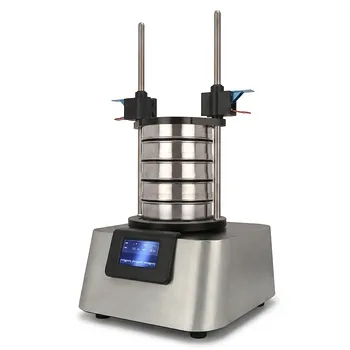
Vibratory Sieve Shaker Electromagnetic 3D Motion Powder Particle Size Analyzer for Dry and Wet Sieving
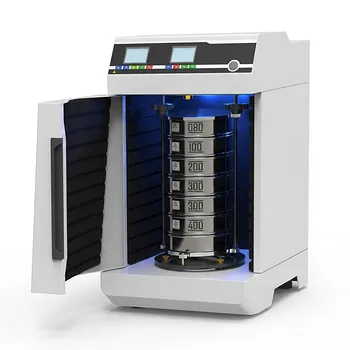
Laboratory Dry and Wet Three Dimensional Vibratory Sieve Shaker for Particle Analysis
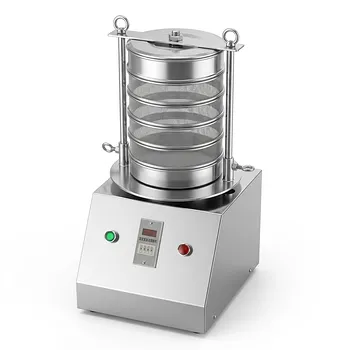
Stainless Steel Laboratory Vibratory Test Sieve Shaker
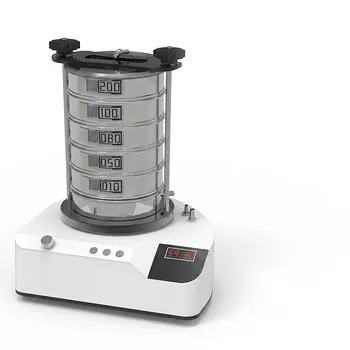
Heavy Duty Dry Three Dimensional Vibratory Sieve Shaker for Particle Separation
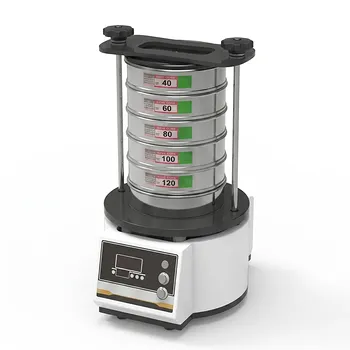
Dry Three Dimensional Vibratory Sieve Shaker
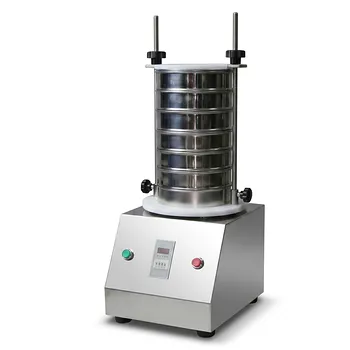
Small Laboratory Vibratory Sieve Shaker for Powder Gradation and Particle Size Analysis
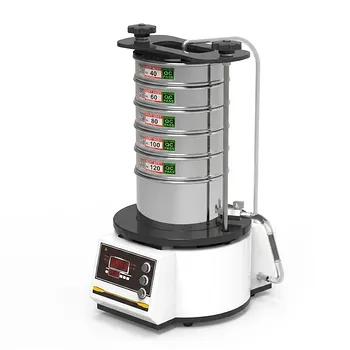
High Frequency Wet Three-Dimensional Vibrating Sieve Shaker for Dry and Wet Particle Size Analysis
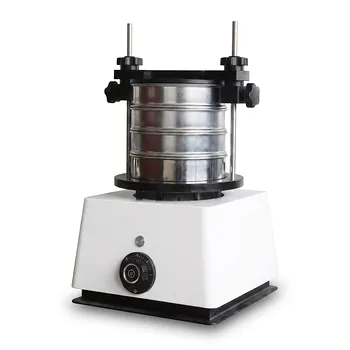
Small Laboratory Vibrating Sieve Shaker for Precise Particle Size Analysis
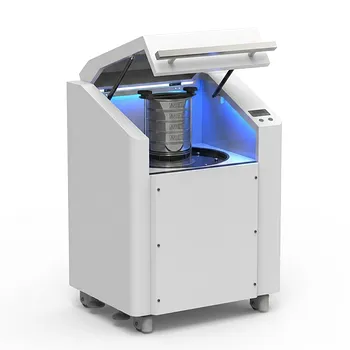
High Frequency Cabinet Type Three-Dimensional Rotary Vibrating Sieve Shaker for Dry Sieving and Particle Classification
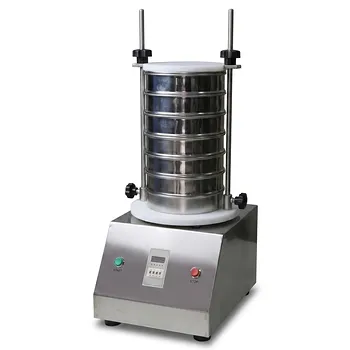
Laboratory Vibratory Test Sieve Shaker for Precision Particle Size Analysis and Powder Grading
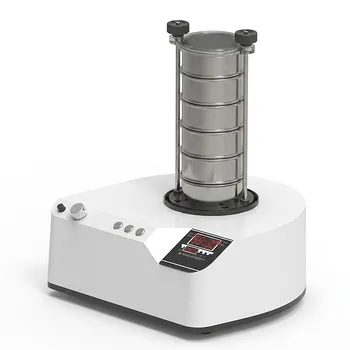
三维电磁微量振动筛分仪
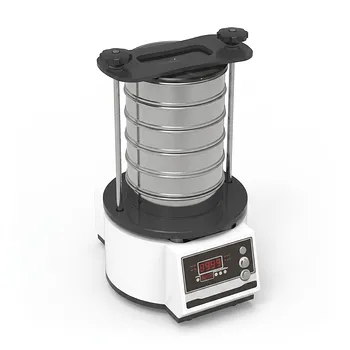
Tapping Oscillating Sieve Shaker for Dry and Wet Particle Size Analysis
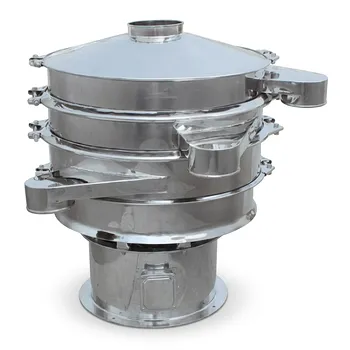
Stainless Steel Rotary Vibrating Sieve High Precision Circular Vibratory Separator Industrial Powder Grading Machine Multi Layer Sifting Equipment
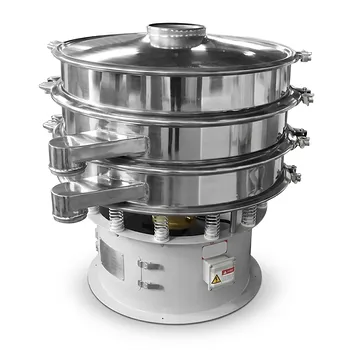
Three Dimensional Rotary Vibrating Sieve
Small Vibrating Ultrafine Grinder for Traditional Chinese Medicine
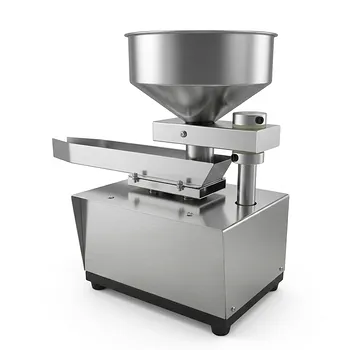
Automatic Vibrating Powder Feeder for Laboratory Material Processing Precision Vibratory Hopper Feeder for Granular and Powder Material Handling Industrial Grade Vibrating Tray Feeder for Consistent Material Sample Preparation
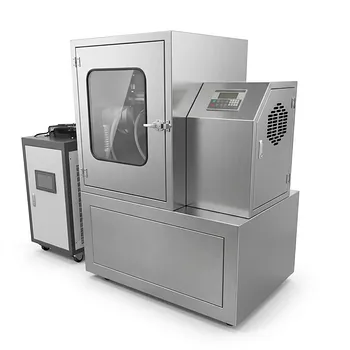
Vibratory Superfine Grinder for Ultra Fine Laboratory Powder Milling
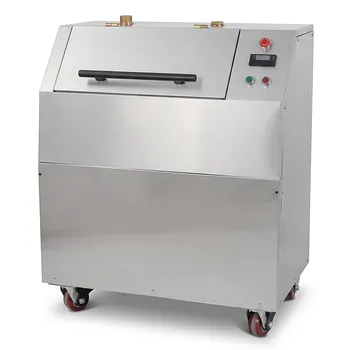
Vibratory Disc Mill for Rapid Fine Grinding and High Throughput Sample Preparation of Hard and Brittle Materials