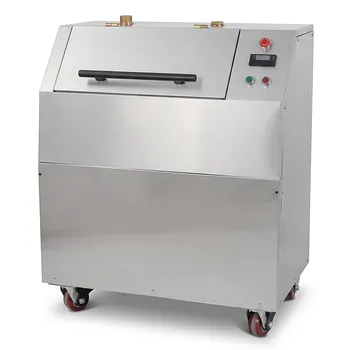
What Role Do Sieve Shakers Play in Copper Slag Analysis? Key to Metal Recovery and PSD Accuracy
Updated 3 months ago
Vibratory sieve shakers and high-precision test sieves are the foundational tools for quantifying the particle size distribution (PSD) of copper slag. This equipment uses high-frequency mechanical oscillation to classify slag particles into precise fractions, typically ranging from 38 µm to 3350 µm. This classification reveals critical data regarding metal enrichment patterns—such as the concentration of copper and lead in fine fractions—which dictates the selection of downstream processing, leaching, or construction applications.
The synergy between vibratory shakers and precision sieves enables repeatable physical grading that identifies the specific size fractions where valuable metals concentrate. By establishing an accurate cumulative passage curve, engineers can optimize grinding efficiency, predict leaching rates, and ensure the slag meets industrial standards for cement or concrete production.
Metallurgical Characterization and Metal Recovery
Identifying Metal Concentration Zones
The primary role of these tools is to reveal the enrichment patterns of valuable metals across different size fractions. Analysis often shows that metals like copper and lead concentrate heavily in the fine fraction (-75 µm).
Optimizing Downstream Processing
By isolating specific size ranges, technicians can determine the most efficient recovery method. This data is decisive for choosing between physical mineral processing, flotation, or chemical leaching paths based on where the mineral value is highest.
Analyzing Leaching Reaction Rates
Precise separation into ranges like 75 µm or 212 µm allows for quantitative analysis of reaction kinetics. This helps researchers predict sulfuric acid consumption and the overall rate of metal extraction during the leaching process.
Engineering Performance and Material Science
Monitoring Grinding Efficiency
Vibratory sieve shakers enable real-time monitoring of the grinding process for metallurgical slag and micro-powders. This ensures the material achieves the necessary fineness and uniformity coefficients required for high-quality cement additives.
Enhancing Concrete and Aggregate Quality
In construction applications, precise screening allows technicians to optimize particle gradation of slag aggregates. Proper gradation increases the density of concrete and reduces the void ratio, directly enhancing compressive strength and durability.
Assessing Chemical Reactivity
The equipment separates water-quenched granular slag into specific ranges (e.g., 0–0.5 mm) to study alkali-activated reactivity. This allows researchers to understand how particle size influences the glass phase content and mineral composition of the slag.
Technical Execution and Accuracy
Mechanical Classification Precision
Vibratory shakers use consistent mechanical oscillation to drive powders through multiple sieve layers (e.g., 90µm, 180µm, 250µm). This creates high repeatability in physical grading, which is essential for comparative research and industrial quality control.
Preventing Fine Particle Agglomeration
When dealing with extremely fine fractions (smaller than 20 µm), wet sieving techniques are often employed with the shaker. This prevents particles from clumping together, ensuring an accurate characterization of the material’s surface area and viscosity.
Establishing Environmental Correlations
Mechanical classification provides the necessary data to study how heavy metals correlate with particle size. It identifies how fine particles adsorb and enrich metals, which is critical for environmental impact assessments of slag disposal.
Understanding the Trade-offs and Pitfalls
Agglomeration and Blinding
In dry sieving, fine copper slag particles are prone to static-induced agglomeration, which can lead to "blinding" (plugging) of the sieve mesh. This results in inaccurate data where fine particles are incorrectly retained in larger mesh fractions.
Calibration of Amplitude and Time
The accuracy of the analysis is highly dependent on the vibration amplitude and duration. Excessive vibration can cause particle degradation (further breaking the slag), while insufficient time prevents the material from reaching the appropriate sieve level, skewing the PSD curve.
Sieve Wear and Maintenance
High-precision meshes are delicate and subject to wear over time, especially with abrasive materials like copper slag. Regular calibration and replacement are necessary to prevent measurement drift and ensure compliance with international standards.
How to Apply This to Your Project
Identifying the correct sieving strategy depends on your ultimate operational goal for the copper slag.
- If your primary focus is metal recovery: Use precision sieves down to 38 µm to identify which fine fractions contain the highest concentrations of copper and lead.
- If your primary focus is cement or concrete additives: Prioritize calculating the uniformity coefficient and cumulative passage curves to ensure the slag meets density and durability standards.
- If your primary focus is chemical leaching: Perform detailed grading to analyze how specific particle sizes impact sulfuric acid consumption and the speed of the leaching reaction.
- If your primary focus is ultra-fine particle analysis: Utilize wet sieving attachments to prevent agglomeration and ensure accurate characterization of fractions below 20 µm.
By utilizing vibratory sieve shakers as a diagnostic foundation, you transform raw slag into a predictable, engineered material ready for high-value industrial use.
Summary Table:
| Application Category | Role of Sieving & Analysis | Primary Industrial Benefit |
|---|---|---|
| Metal Recovery | Identifies enrichment zones (e.g., -75 µm) | Maximizes recovery of Cu and Pb |
| Construction Science | Optimizes particle gradation & void ratios | Enhances concrete compressive strength |
| Chemical Leaching | Analyzes reaction kinetics by size fraction | Predicts & reduces acid consumption |
| Grinding Control | Monitors fineness & uniformity coefficients | Ensures high-quality cement additives |
| Environmental | Correlates heavy metal adsorption with PSD | Accurate slag disposal impact assessment |
Elevate Your Metallurgical Research with Precision Sample Preparation
Accurate particle size distribution is the foundation of efficient metal recovery and material innovation. We provide complete laboratory sample preparation solutions specifically designed for material science and powder processing.
Our extensive product line empowers your lab to achieve repeatable, high-precision results:
- Sieving & Classification: Vibratory and air-jet sieve shakers with a wide range of high-precision test sieves.
- Size Reduction: Heavy-duty jaw/roll crushers, planetary ball mills, jet mills, and liquid nitrogen cryogenic grinders.
- Mixing & Homogenization: Advanced powder mixers and defoaming mixers for uniform sample preparation.
- Advanced Compaction: A full spectrum of hydraulic presses, including Cold/Warm Isostatic Presses (CIP/WIP), XRF pellet presses, and vacuum hot presses.
Whether you are optimizing copper slag leaching or developing high-strength aggregates, our equipment ensures your data is reliable and your processes are efficient.
Contact our technical experts today to discuss your specific application and find the perfect equipment configuration for your lab!
References
- Godfrey Dzinomwa, Kayini Chigayo. Mineralogical Characterization of Historic Copper Slag to Guide the Recovery of Valuable Metals: A Namibian Case Study. DOI: 10.3390/ma16186126
Mentioned Products
- Vibratory Sieve Shaker Electromagnetic 3D Motion Powder Particle Size Analyzer for Dry and Wet Sieving
- Laboratory Dry and Wet Three Dimensional Vibratory Sieve Shaker for Particle Analysis
- Dry Three Dimensional Vibratory Sieve Shaker
- Stainless Steel Laboratory Vibratory Test Sieve Shaker
- Heavy Duty Dry Three Dimensional Vibratory Sieve Shaker for Particle Separation
People Also Ask
- How does a vibratory sieve shaker contribute to optimizing the performance of activated carbon? Enhance Adsorption Precision
- Why is a laboratory vibratory sieve shaker necessary for processing magnesium-based borate precursor powders? Boost Activity
- Why use a vibratory sieve shaker to verify coarse aggregate grading in rubberized concrete? Ensure Structural Integrity
- What function do vibratory sieve shakers and standard test sieves serve in the preparation of adsorbents? Key Guide
- What role does a vibratory sieve shaker play in the particle size analysis of ground corn products? Enhance QC Precision

Tech Team · PowderPreparation
Last updated on Jun 03, 2026
Related Products
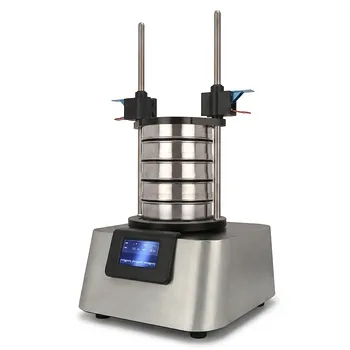
Vibratory Sieve Shaker Electromagnetic 3D Motion Powder Particle Size Analyzer for Dry and Wet Sieving
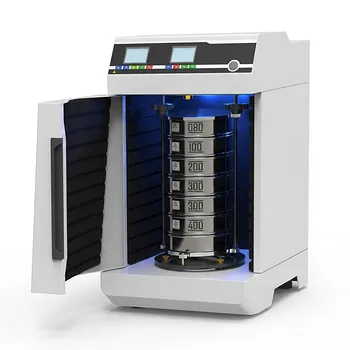
Laboratory Dry and Wet Three Dimensional Vibratory Sieve Shaker for Particle Analysis
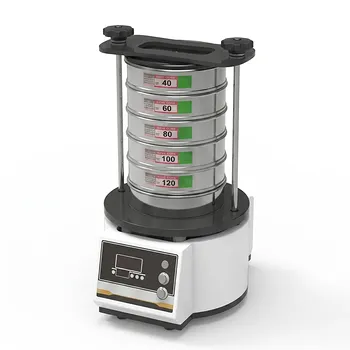
Dry Three Dimensional Vibratory Sieve Shaker
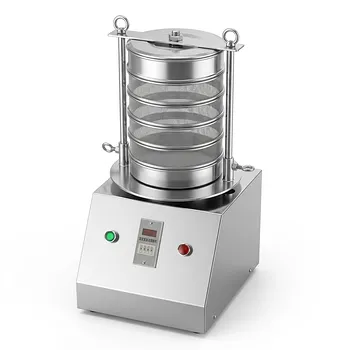
Stainless Steel Laboratory Vibratory Test Sieve Shaker
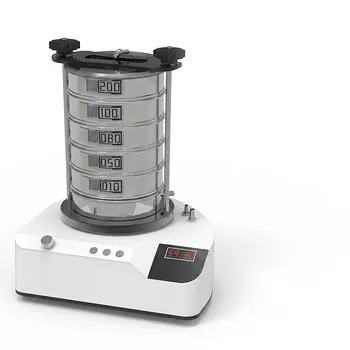
Heavy Duty Dry Three Dimensional Vibratory Sieve Shaker for Particle Separation
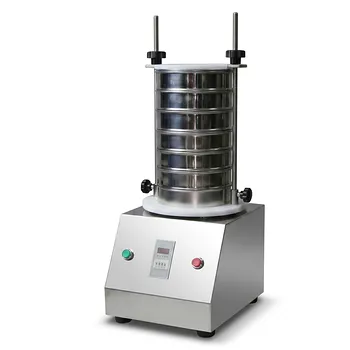
Small Laboratory Vibratory Sieve Shaker for Powder Gradation and Particle Size Analysis
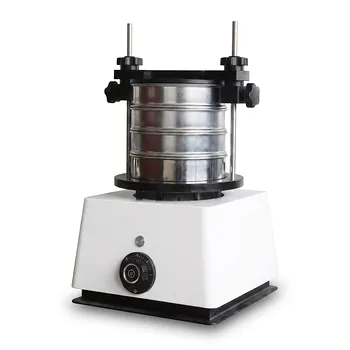
Small Laboratory Vibrating Sieve Shaker for Precise Particle Size Analysis
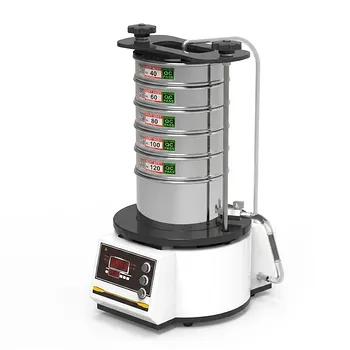
High Frequency Wet Three-Dimensional Vibrating Sieve Shaker for Dry and Wet Particle Size Analysis
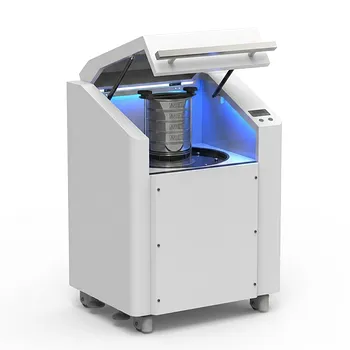
High Frequency Cabinet Type Three-Dimensional Rotary Vibrating Sieve Shaker for Dry Sieving and Particle Classification
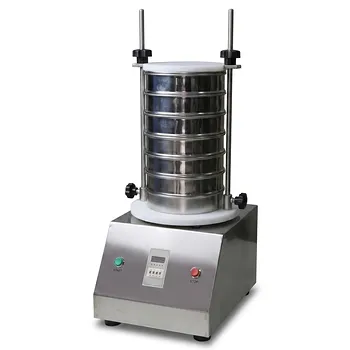
Laboratory Vibratory Test Sieve Shaker for Precision Particle Size Analysis and Powder Grading
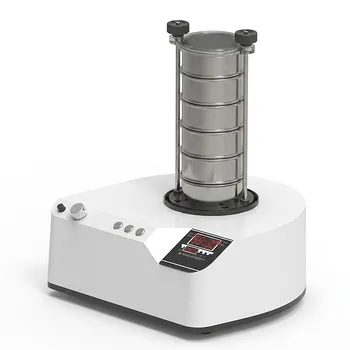
三维电磁微量振动筛分仪
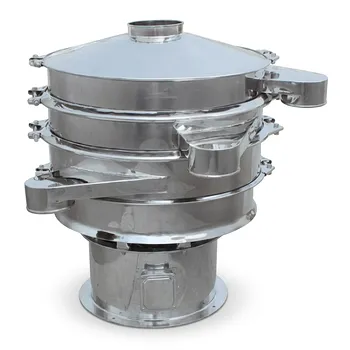
Stainless Steel Rotary Vibrating Sieve High Precision Circular Vibratory Separator Industrial Powder Grading Machine Multi Layer Sifting Equipment
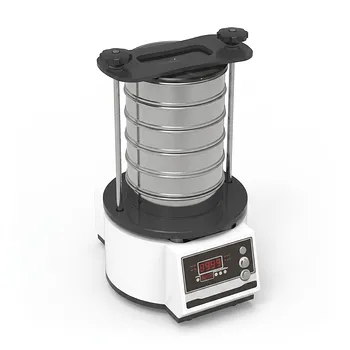
Tapping Oscillating Sieve Shaker for Dry and Wet Particle Size Analysis
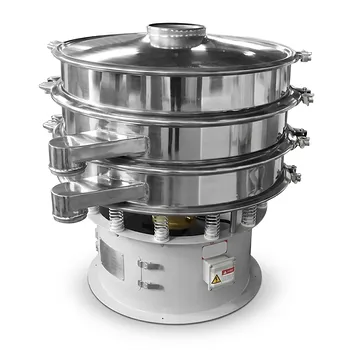
Three Dimensional Rotary Vibrating Sieve
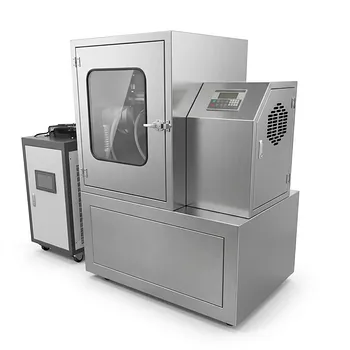
Vibratory Superfine Grinder for Ultra Fine Laboratory Powder Milling
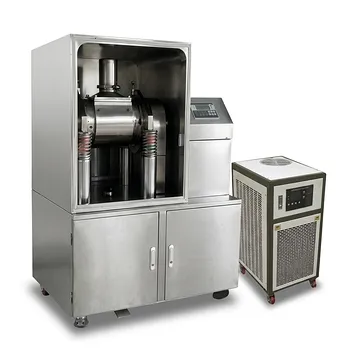
Small Vibrating Ultrafine Grinder for Traditional Chinese Medicine

Automatic Vibrating Powder Feeder for Laboratory Material Processing Precision Vibratory Hopper Feeder for Granular and Powder Material Handling Industrial Grade Vibrating Tray Feeder for Consistent Material Sample Preparation