What role do standard test sieves play in the feasibility assessment of lava stone powder as a cement substitute?
Updated 4 months ago
Standard test sieves serve as the primary diagnostic tool for validating the physical compatibility of lava stone powder with Portland cement. By performing fineness modulus analysis through mechanical screening, these sieves allow technical personnel to determine if the particle size distribution of the volcanic waste matches the specific grading required to maintain the structural integrity of concrete.
The feasibility of lava stone powder as a cement substitute hinges on its particle size; standard test sieves provide the precise quantitative data needed to ensure the material achieves the surface area required for chemical reactivity and mechanical bonding.
Characterizing Particle Size Distribution (PSD)
Determining the Fineness Modulus
Standard test sieves, used in conjunction with vibratory sieve shakers, are employed to conduct a comprehensive fineness modulus analysis. By passing lava stone extracts through multiple graduated sieve layers, engineers can map the exact particle size distribution of the material.
Matching Cement Grading
For a substitute material to be viable, its grading must closely mimic that of ordinary Portland cement. Sieving allows for the comparison of these profiles, which is a critical step in ensuring the substitute does not negatively impact the density or water demand of the final concrete mix.
Identifying Residue Rates
Technical personnel use specific mesh apertures to measure residue rates, which indicate the percentage of material that fails to pass through a designated size. This measurement is vital for monitoring the stability of the grinding process and ensuring the powder meets established technical specifications.
Impact on Mechanical and Chemical Performance
Influencing Hydration and Strength
The fineness of a cementitious material directly dictates its hydration rate and subsequent strength development. High-precision sieves allow for the exact control of particle size, ensuring there is sufficient surface area for the chemical reactions necessary to achieve structural durability.
Optimizing Volumetric Stability
By strictly controlling the fineness distribution—often using mesh sizes such as 45μm, 75μm, and 90μm—operators can reduce concrete bleeding. This precision ensures that the lava stone powder fills microscopic voids effectively, improving the filling performance and "green body" density of the mixture.
Removing Impurities and Agglomerates
Sieves are also utilized to filter out unground impurities or powder agglomerates that may form during the grinding stage. Eliminating these clusters is essential for maintaining powder flowability, which ensures a consistent and stable feed during the mixing or application process.
Understanding the Trade-offs
Grinding Energy vs. Reactivity
While finer particles generally lead to higher compressive strength and faster hydration, achieving extreme fineness requires significantly higher energy consumption during the grinding stage. Engineers must use sieve analysis to find the "sweet spot" where the material is fine enough to be reactive but coarse enough to remain economically viable.
Physical vs. Chemical Limitations
It is important to note that while standard test sieves confirm the physical feasibility of a powder, they cannot account for its chemical pozzolanic activity. A material may pass all sieving requirements for size matching but still fail as a substitute if its chemical composition does not support cementitious bonding.
How to Apply Sieve Analysis to Your Project
Recommendations for Feasibility Testing
- If your primary focus is Maximum Compressive Strength: Utilize fine mesh sieves (45μm or smaller) to ensure the lava stone powder reaches a high surface area, facilitating rapid hydration and dense particle packing.
- If your primary focus is Production Efficiency: Monitor the residue rates on larger mesh sizes (90μm) to prevent over-grinding, which reduces energy costs while maintaining acceptable material uniformity.
- If your primary focus is Mix Workability: Focus on achieving a balanced particle size distribution across a range of sieve sizes to minimize water demand and prevent the "bleeding" of the concrete.
Precise sieve analysis transforms raw volcanic waste into a calibrated technical material capable of meeting modern construction standards.
Summary Table:
| Analysis Factor | Key Equipment/Mesh | Critical Impact on Performance |
|---|---|---|
| PSD Analysis | Vibratory Sieve Shaker | Matches cement grading to ensure mix density |
| Fineness Control | 45μm, 75μm, 90μm | Optimizes hydration rates and structural strength |
| Residue Testing | Specific Mesh Apertures | Monitors grinding efficiency and powder flowability |
| Quality Filtration | Standard Test Sieves | Removes impurities and unground agglomerates |
Optimize Your Material Research with Professional Sample Prep Solutions
Precise analysis starts with high-quality preparation. At [Brand Name], we provide complete laboratory sample preparation solutions for material science, specializing in powder processing and compaction.
Whether you are assessing volcanic waste or developing advanced cementitious materials, our extensive line of equipment—including jaw/roll crushers, planetary ball mills for fine grinding, and high-precision vibratory/air-jet sieve shakers—ensures your samples meet the strictest technical specifications. We also offer a full spectrum of hydraulic presses (CIP/WIP/Hot Press) for final material testing.
Ready to enhance your lab's efficiency? Contact our technical experts today to find the perfect equipment for your powder processing needs!
References
- I Made Sastra Wibawa, Shinta Maharani. Lava Stone Waste Extract as a Substitute for Cement in the Mixture Concrete to Maintain Environmental Sustainability. DOI: 10.13189/cea.2024.120236
Mentioned Products
- Stainless Steel Laboratory Vibratory Test Sieve Shaker
- Laboratory Vibratory Test Sieve Shaker for Precision Particle Size Analysis and Powder Grading
- Small Laboratory Vibrating Sieve Shaker for Precise Particle Size Analysis
- Small Laboratory Vibratory Sieve Shaker for Powder Gradation and Particle Size Analysis
- 三维电磁微量振动筛分仪
People Also Ask
- What function does a laboratory vibratory sieve shaker serve in the production process of metakaolin? Optimize Reactivity
- Why is a precision laboratory vibratory sieve shaker necessary for particle size control? Optimize Biomass Carbonization
- What is the function of a laboratory vibratory sieve shaker? Enhance Coal Particle Size Distribution (PSD) Analysis
- What role do laboratory vibratory sieve shakers and test sieves play before the molding of Nb-Cu composite powders?
- What is the primary function of a laboratory vibratory sieve shaker in the evaluation of sand liquefaction potential?

Tech Team · PowderPreparation
Last updated on Jun 03, 2026
Related Products
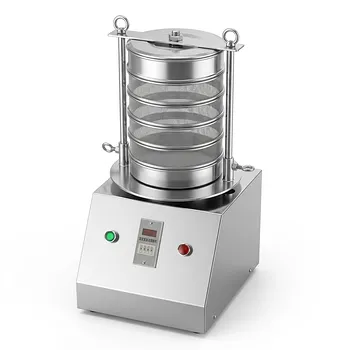
Stainless Steel Laboratory Vibratory Test Sieve Shaker
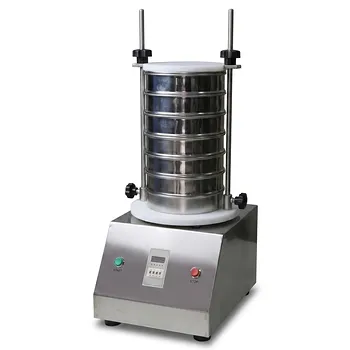
Laboratory Vibratory Test Sieve Shaker for Precision Particle Size Analysis and Powder Grading
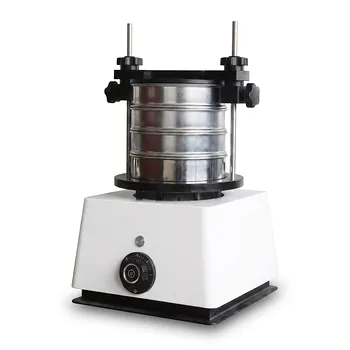
Small Laboratory Vibrating Sieve Shaker for Precise Particle Size Analysis
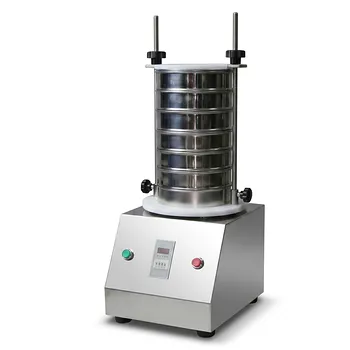
Small Laboratory Vibratory Sieve Shaker for Powder Gradation and Particle Size Analysis
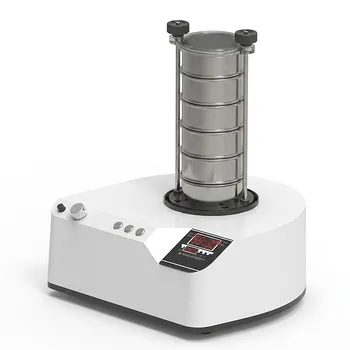
三维电磁微量振动筛分仪
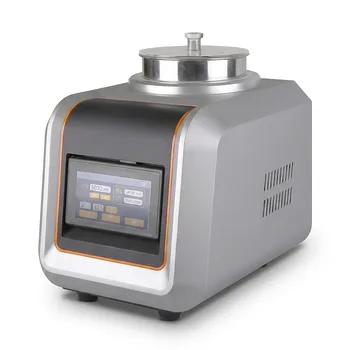
Laboratory Air Jet Sieving Machine for Fine Powder Particle Size Analysis and Deagglomeration
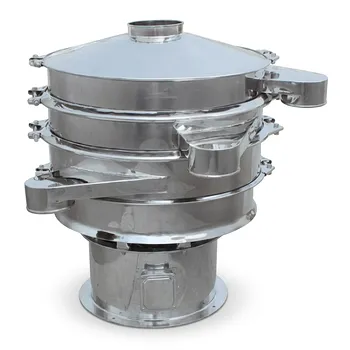
Stainless Steel Rotary Vibrating Sieve High Precision Circular Vibratory Separator Industrial Powder Grading Machine Multi Layer Sifting Equipment
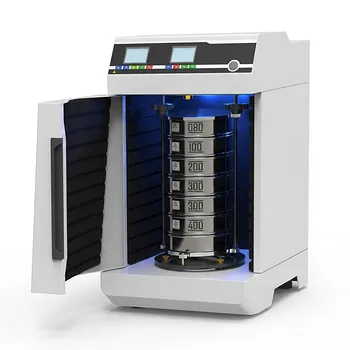
Laboratory Dry and Wet Three Dimensional Vibratory Sieve Shaker for Particle Analysis
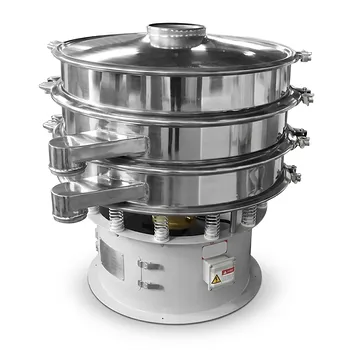
Three Dimensional Rotary Vibrating Sieve
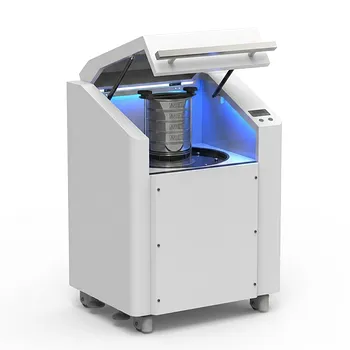
High Frequency Cabinet Type Three-Dimensional Rotary Vibrating Sieve Shaker for Dry Sieving and Particle Classification
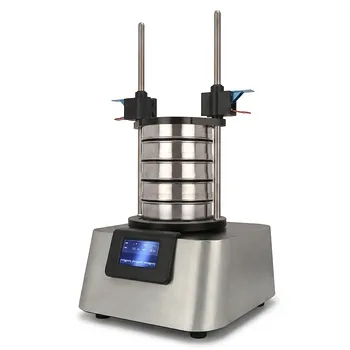
Vibratory Sieve Shaker Electromagnetic 3D Motion Powder Particle Size Analyzer for Dry and Wet Sieving
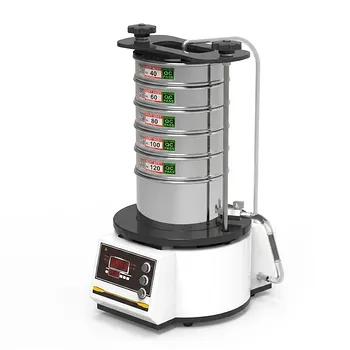
High Frequency Wet Three-Dimensional Vibrating Sieve Shaker for Dry and Wet Particle Size Analysis
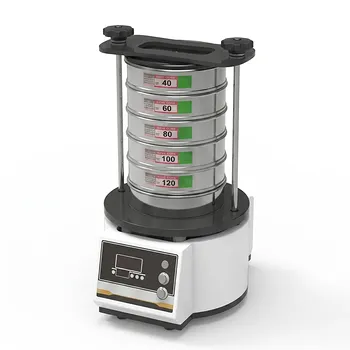
Dry Three Dimensional Vibratory Sieve Shaker
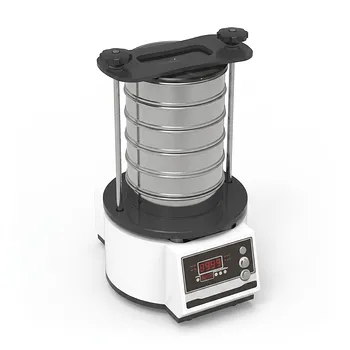
Tapping Oscillating Sieve Shaker for Dry and Wet Particle Size Analysis
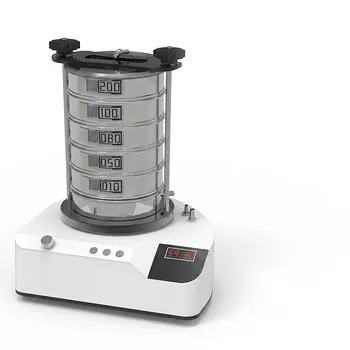
Heavy Duty Dry Three Dimensional Vibratory Sieve Shaker for Particle Separation
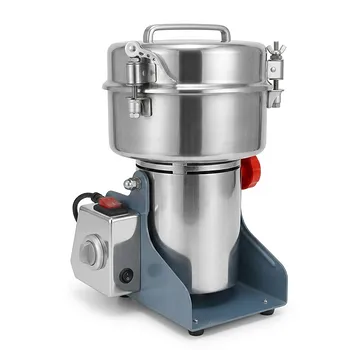
Small High-Speed Grinder for Efficient Laboratory Sample Preparation
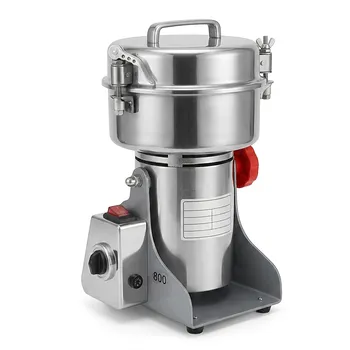
Small High-Speed Laboratory Grinder for Rapid Sample Preparation
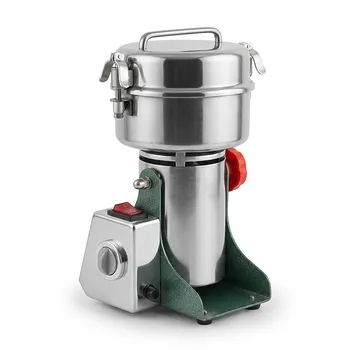
Small High-Speed Swing Grinder for Laboratory Sample Preparation
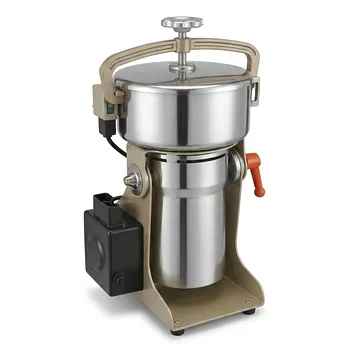
Multifunctional High Efficiency High Speed Laboratory Grinder