What role do standard sieves & vibratory shakers play in characterizing waste glass for cement? Expert Lab Solutions
Updated 5 months ago
Standard test sieves and vibratory sieve shakers provide the mechanical framework required to isolate and quantify the particle size distribution of waste glass powder. This process involves multi-stage sieving that spans from 1400 μm down to less than 63 μm. By accurately grading these particles, engineers can predict the powder's pozzolanic reactivity and its ability to physically densify cement-based overlays.
The integration of standard sieves and vibratory shakers transforms raw waste glass into a characterized technical material. This precise classification is essential for ensuring the powder acts as both a reactive binder and a structural filler in high-performance cementitious applications.
Quantifying Particle Size Distribution (PSD)
Precision Through Multi-Stage Sieving
Standard test sieves allow for the quantitative analysis of glass fragments across a wide spectrum. By utilizing a stack of sieves with decreasing aperture sizes, researchers can calculate the cumulative percentage passing each level.
This data is used to establish the fineness modulus and uniformity coefficient, which are the physical foundations for evaluating material quality. Without this granular data, the performance of waste glass in a cement mixture remains unpredictable.
Mechanical Consistency via Vibratory Shakers
Vibratory sieve shakers provide the standardized mechanical drive necessary to force particles through the mesh. They utilize specific amplitudes and cycle times to ensure that even cohesive powders—those smaller than 53 μm—are effectively separated.
This mechanical consistency eliminates the human error associated with manual sieving. It ensures that the resulting grading curves are repeatable and meet the geometric requirements necessary for specialized testing, such as direct shear tests.
Evaluating Material Performance in Overlays
Optimizing Pozzolanic Activity
The fineness of waste glass powder directly dictates its pozzolanic activity. Particles smaller than 63 μm are particularly valuable, as their increased surface area facilitates a chemical reaction with calcium hydroxide in cement.
Characterizing these fine fractions allows engineers to ensure the glass will contribute to the chemical strength of the overlay rather than remaining inert. Proper sieving confirms the presence of the ultra-fine particles required for this strength-enhancing reaction.
Enhancing Physical Filling Effects
Beyond chemical reactivity, glass powder serves as a physical filler within the cement and aggregate matrix. Characterization ensures a uniform fineness distribution, which allows smaller glass particles to fill the microscopic voids between larger aggregates.
This "filling effect" increases the packing density of the mixture, leading to higher durability. Precise grading prevents the inclusion of oversized particles that could cause structural stress concentration or mixture segregation.
Understanding the Trade-offs
The Challenge of Cohesive Fractions
As glass powder is ground finer to increase reactivity, it becomes more cohesive. Particles smaller than 53 μm often resist passing through the mesh due to electrostatic forces or moisture.
While vibratory shakers mitigate this, excessive sieving time can lead to particle attrition, where the glass fragments break down further during the test itself. This can result in a skewed data set that suggests the material is finer than it actually is in a resting state.
Balancing Fineness and Workability
While very fine powder (below 63 μm) maximizes chemical reactivity, it also significantly increases the water demand of the concrete mix. Characterizing the powder allows for a balance; a mix that is too fine may become unworkable, while a mix that is too coarse will lack the necessary density.
Maintaining a continuous grading curve is critical. Relying on a single particle size rather than a distribution can lead to "gap-graded" mixtures that are prone to bleeding and reduced long-term durability.
How to Apply This to Your Project
Making the Right Choice for Your Goal
To effectively utilize waste glass powder in cement-based overlays, your characterization strategy should align with your specific performance targets:
- If your primary focus is Maximum Chemical Strength: Prioritize sieving and isolating fractions below 63 μm to ensure high pozzolanic reactivity.
- If your primary focus is Mixture Density and Workability: Focus on achieving a continuous grading curve that fills voids between fine and coarse aggregates without excessive water demand.
- If your primary focus is Structural Homogeneity: Use standard sieves to strictly monitor the maximum particle size, ensuring it does not exceed 1/6th of the planned overlay thickness to prevent stress concentrations.
Accurate grain size characterization is the bridge between raw waste glass and a reliable, high-performance supplementary cementitious material.
Summary Table:
| Characterization Feature | Technical Role | Impact on Cement Overlays |
|---|---|---|
| Multi-Stage Sieving | Isolates particles from 1400μm down to <63μm | Determines fineness modulus and material uniformity |
| Vibratory Shaking | Provides consistent mechanical separation | Ensures repeatability and eliminates manual error |
| Ultra-fine Analysis | Captures reactive fractions (<63μm) | Maximizes pozzolanic activity and chemical bonding |
| Grading Curves | Maps the full particle size distribution (PSD) | Optimizes physical packing density and reduces voids |
Elevate Your Material Research with Precision Powder Solutions
Are you looking to optimize the performance of waste glass powder or other advanced materials? Contact us today to discover how our comprehensive laboratory solutions can enhance your characterization and production workflows.
As specialists in material science sample preparation, we provide end-to-end equipment for powder processing and compaction. Our extensive product lines include:
- Size Reduction: Jaw/roll crushers, liquid nitrogen cryogenic grinders, and advanced mills (planetary ball, jet, sand/bead, disc, and rotor).
- Particle Analysis: Vibratory and air-jet sieve shakers equipped with a wide range of precision test sieves and meshes.
- Mixing & De-aeration: High-performance powder mixers and specialized defoaming mixers.
- Advanced Compaction: A full spectrum of hydraulic presses, including Cold/Warm Isostatic Presses (CIP/WIP), XRF pellet presses, and vacuum hot presses.
Whether you are a researcher refining a cementitious mix or a distributor seeking reliable OEM/ODM support, we deliver the technical expertise and durable equipment needed for superior results. Partner with us for complete laboratory solutions!
References
- Łukasz Sadowski. Towards the utilization of waste glass powder in sustainable cement based overlays. DOI: 10.1051/matecconf/201816303001
Mentioned Products
- Stainless Steel Laboratory Vibratory Test Sieve Shaker
- Laboratory Vibratory Test Sieve Shaker for Precision Particle Size Analysis and Powder Grading
- Small Laboratory Vibratory Sieve Shaker for Powder Gradation and Particle Size Analysis
- Vibratory Sieve Shaker Electromagnetic 3D Motion Powder Particle Size Analyzer for Dry and Wet Sieving
- Laboratory Dry and Wet Three Dimensional Vibratory Sieve Shaker for Particle Analysis
People Also Ask
- What function does a laboratory vibratory sieve shaker serve in the production process of metakaolin? Optimize Reactivity
- Why is a precision laboratory vibratory sieve shaker necessary for particle size control? Optimize Biomass Carbonization
- What is the function of a laboratory vibratory sieve shaker? Enhance Coal Particle Size Distribution (PSD) Analysis
- What role do laboratory vibratory sieve shakers and test sieves play before the molding of Nb-Cu composite powders?
- What is the primary function of a laboratory vibratory sieve shaker in the evaluation of sand liquefaction potential?

Tech Team · PowderPreparation
Last updated on May 14, 2026
Related Products
Stainless Steel Laboratory Vibratory Test Sieve Shaker
Laboratory Vibratory Test Sieve Shaker for Precision Particle Size Analysis and Powder Grading
Small Laboratory Vibratory Sieve Shaker for Powder Gradation and Particle Size Analysis
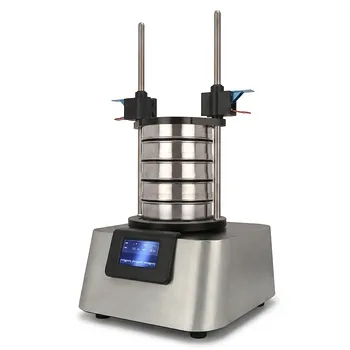
Vibratory Sieve Shaker Electromagnetic 3D Motion Powder Particle Size Analyzer for Dry and Wet Sieving
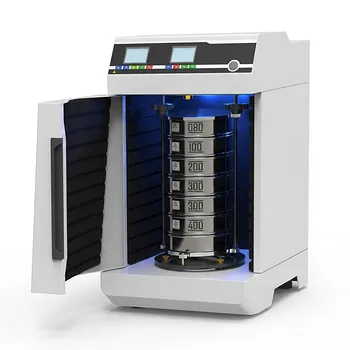
Laboratory Dry and Wet Three Dimensional Vibratory Sieve Shaker for Particle Analysis
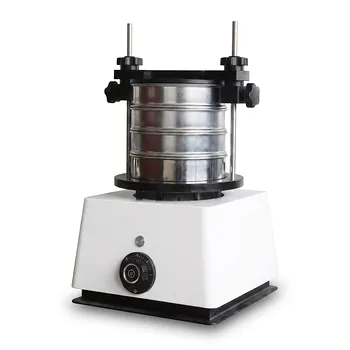
Small Laboratory Vibrating Sieve Shaker for Precise Particle Size Analysis
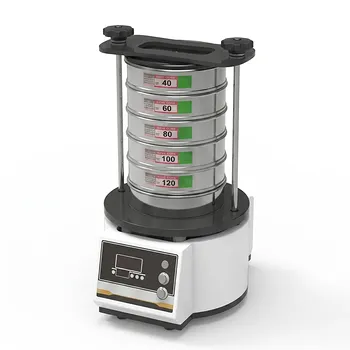
Dry Three Dimensional Vibratory Sieve Shaker
Heavy Duty Dry Three Dimensional Vibratory Sieve Shaker for Particle Separation
High Frequency Wet Three-Dimensional Vibrating Sieve Shaker for Dry and Wet Particle Size Analysis
High Frequency Cabinet Type Three-Dimensional Rotary Vibrating Sieve Shaker for Dry Sieving and Particle Classification
三维电磁微量振动筛分仪
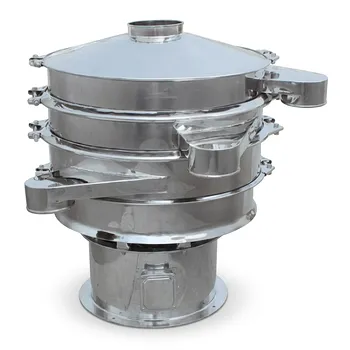
Stainless Steel Rotary Vibrating Sieve High Precision Circular Vibratory Separator Industrial Powder Grading Machine Multi Layer Sifting Equipment
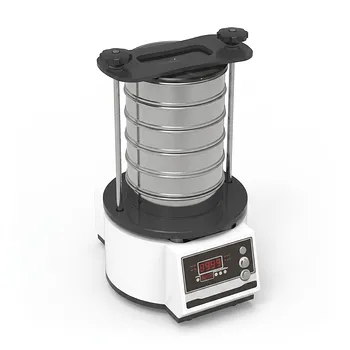
Tapping Oscillating Sieve Shaker for Dry and Wet Particle Size Analysis
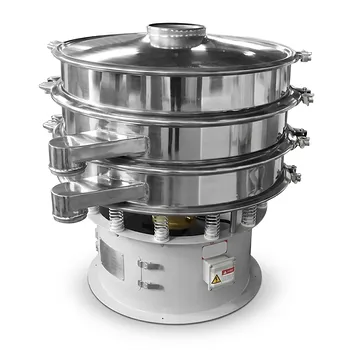
Three Dimensional Rotary Vibrating Sieve
Vibratory Superfine Grinder for Ultra Fine Laboratory Powder Milling
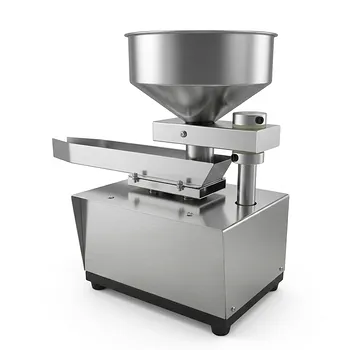
Automatic Vibrating Powder Feeder for Laboratory Material Processing Precision Vibratory Hopper Feeder for Granular and Powder Material Handling Industrial Grade Vibrating Tray Feeder for Consistent Material Sample Preparation
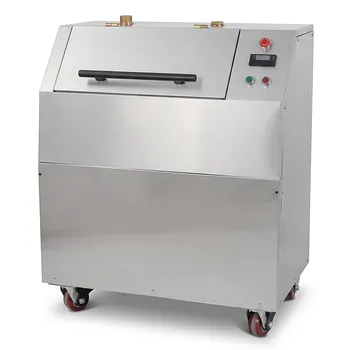
Vibratory Disc Mill for Rapid Fine Grinding and High Throughput Sample Preparation of Hard and Brittle Materials
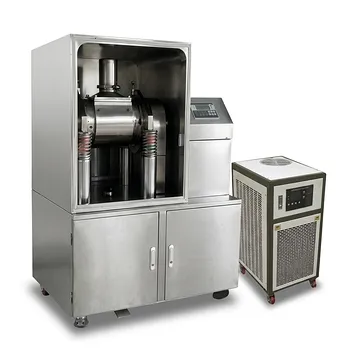
Small Vibrating Ultrafine Grinder for Traditional Chinese Medicine