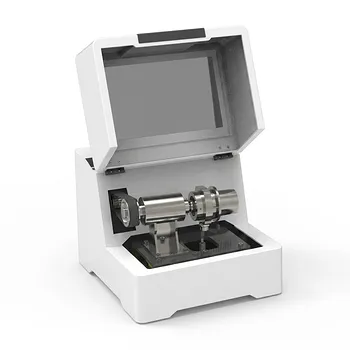
What role do planetary ball mills and anhydrous ethanol play in SiCp/Al composites? Achieve Perfect Powder Homogeneity
Updated 4 months ago
The successful fabrication of SiCp/Al composites relies heavily on the initial powder homogeneity achieved during the preparation phase. In this process, planetary ball mills provide the high-energy mechanical impact necessary to blend Silicon Carbide (SiC) reinforcement particles uniformly into the aluminum matrix at a micro-scale level. Anhydrous ethanol acts as a critical grinding aid, reducing the electrostatic attraction between particles to prevent the agglomeration of ultra-fine SiC, ensuring a stable and uniform dispersion.
Core Takeaway: Planetary ball mills provide the mechanical energy to physically distribute and embed SiC particles into aluminum powder, while anhydrous ethanol chemically stabilizes the mixture by neutralizing surface forces that would otherwise cause clumping.
The Mechanics of Planetary Ball Milling
Achieving Micro-Scale Homogeneity
Planetary ball mills utilize high-speed rotation to generate intense mechanical impact and shear forces between the grinding balls and the powder. This energy is essential for breaking down initial particle clusters and ensuring that the hard SiC reinforcement is evenly distributed throughout the softer aluminum binder.
Mechanical Embedding and Alloying
Beyond simple mixing, the high-energy environment can forcibly embed nano-sized SiC particles into the surface of the aluminum alloy powder. This creates composite particles that act as a "delivery agent," preventing the SiC from separating or floating during subsequent processes like vacuum hot pressing or melt-casting.
Refining Particle Size and Morphology
The continuous friction and impact refine the raw materials to a micron or sub-micron scale, increasing the specific surface area and reactivity of the powder. This refinement is crucial for creating a dense final product, as it allows the aluminum phase to undergo plastic deformation and fill the gaps between the hard ceramic reinforcements.
The Chemical Role of Anhydrous Ethanol
Reducing Surface Electrostatic Attraction
Ultra-fine SiC particles naturally carry surface charges that lead to electrostatic attraction, causing them to "ball up" or agglomerate. Anhydrous ethanol acts as a liquid medium that coats these particles, significantly neutralizing these forces and allowing the particles to remain individual and mobile during the milling process.
Inhibiting Particle Agglomeration
By inhibiting agglomeration, ethanol ensures that the reinforcement phase remains uniformly dispersed rather than concentrated in "islands" within the aluminum matrix. This uniformity is a fundamental prerequisite for the structural integrity of the composite during subsequent consolidation phases, such as vacuum hot pressing.
Managing Fluidity and Reactivity
The addition of ethanol helps maintain the fluidity of the powder mixture, preventing it from caking onto the walls of the milling vial or the grinding balls. This ensures that the mechanical energy of the mill is consistently applied to the powder, rather than being wasted on compacted "dead zones" within the container.
Understanding the Trade-offs and Pitfalls
Risk of Material Contamination
While high-energy milling is effective, it introduces the risk of impurities from the grinding media (balls and vials) leaching into the composite powder. Users must carefully select milling components—such as tungsten carbide or alumina—that are compatible with the SiCp/Al system to avoid degrading the material's final properties.
Handling and Evaporation Issues
Anhydrous ethanol is highly volatile; if the milling containers are not perfectly sealed, the liquid can evaporate, leading to a sudden shift from wet grinding to dry grinding. This transition can cause the powder to overheat or agglomerate mid-process, resulting in an inconsistent batch.
Balancing Energy and Powder Integrity
Excessive milling time or speed can lead to over-processing, where the aluminum powder becomes too work-hardened or oxidized. Finding the "sweet spot" between achieving perfect SiC dispersion and maintaining the aluminum's ability to bond during the final pressing stage is the primary challenge for technicians.
How to Apply This to Your Powder Preparation
Recommendations Based on Project Goals
- If your primary focus is maximum dispersion of nano-particles: Use a higher ratio of anhydrous ethanol to powder to ensure every particle is coated and neutralized during the high-energy impact phase.
- If your primary focus is structural density in the final part: Prioritize a milling duration that achieves mechanical embedding of SiC into the Al surface without excessively work-hardening the aluminum particles.
- If your primary focus is preventing oxidation: Ensure that the planetary mill is operated under an inert gas atmosphere or that the anhydrous ethanol remains fully sealed within the milling vial throughout the cycle.
By mastering the balance between the mechanical force of the planetary mill and the chemical stabilization of anhydrous ethanol, you can create a high-performance composite powder ready for advanced manufacturing.
Summary Table:
| Component | Primary Function | Key Impact on SiCp/Al Powder |
|---|---|---|
| Planetary Ball Mill | High-energy mechanical impact & shear | Achieves micro-scale dispersion and mechanical embedding of SiC into Al. |
| Anhydrous Ethanol | Liquid grinding aid & surfactant | Neutralizes electrostatic forces to prevent ultra-fine particle clumping. |
| Combined Effect | Synergy of force and chemistry | Produces refined, non-agglomerated composite powder ready for consolidation. |
Elevate Your Material Research with Precision Powder Solutions
Achieving the perfect SiCp/Al composite requires more than just high-quality raw materials—it demands the right equipment. Contact our technical team today to find the ideal setup for your laboratory!
We provide complete laboratory sample preparation solutions tailored for material science. Our expertise spans the entire powder processing workflow, including:
- High-Energy Milling: Planetary ball mills, jet mills, and cryogenic grinders for ultra-fine dispersion.
- Powder Refining: Vibratory and air-jet sieve shakers for precise particle size control.
- Advanced Compaction: A full spectrum of hydraulic presses, including Vacuum Hot Presses, Cold/Warm Isostatic Presses (CIP/WIP), and XRF pellet presses.
Whether you are a researcher or an industrial distributor, we offer the reliability, OEM/ODM support, and technical expertise needed to ensure your composites reach maximum density and performance. Reach out now to optimize your production process!
References
- Renyu Feng, Zijuan Huang. Effects of SiC Particle Size on SiCp/Al Composite During Vacuum Hot Pressing. DOI: 10.3390/ma19010084
Mentioned Products
- Vertical Semi Circular Planetary Ball Mill for Laboratory Precision Grinding
- High Energy Planetary Ball Mill for Nano Scale Grinding and Mechanical Alloying
- Vertical Production Planetary Ball Mill for High Throughput Powder Processing
- Heavy Duty Horizontal Planetary Ball Mill for Efficient Industrial Grinding and Sample Preparation
- 360° Rotating Omnidirectional Laboratory Planetary Ball Mill for Homogeneous Ultra-Fine Grinding and Mixing
People Also Ask
- What role does a planetary ball mill play in the synthesis of Li6PS5Cl (LPSCl)? Unlock High Ionic Conductivity
- Why is a planetary ball mill essential for SiBCN-rGO wet-spinning? Achieve Superior Dispersion and Spinnability
- Why is an intermittent grinding process required for perovskites in a planetary ball mill? Ensure Stability & Purity
- Why is a planetary ball mill required for PET micronization? Ensure Accurate Chemical Analysis of Reprocessed PET
- How does mechanized planetary ball milling compare to manual agate grinding? Optimize sulfide standard material precision.

Tech Team · PowderPreparation
Last updated on Jun 03, 2026
Related Products
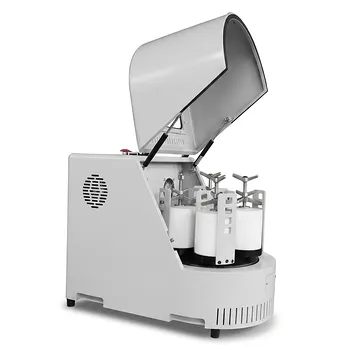
Vertical Semi Circular Planetary Ball Mill for Laboratory Precision Grinding

High Energy Planetary Ball Mill for Nano Scale Grinding and Mechanical Alloying

Vertical Production Planetary Ball Mill for High Throughput Powder Processing

Heavy Duty Horizontal Planetary Ball Mill for Efficient Industrial Grinding and Sample Preparation

360° Rotating Omnidirectional Laboratory Planetary Ball Mill for Homogeneous Ultra-Fine Grinding and Mixing

Vertical Square Planetary Ball Mill for Laboratory Sample Preparation and Nanoscale Grinding

Miniature Planetary Ball Mill with Vacuum Grinding and High Efficiency for Laboratory Sample Preparation

High Energy Laboratory Planetary Ball Mill for Nano Grinding and Material Science Sample Preparation

High Energy Omnidirectional Planetary Ball Mill 16L
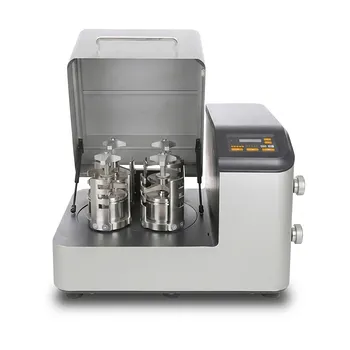
High Energy Planetary Ball Mill for Nano Scale Grinding and Colloidal Mixing in Material Science Research
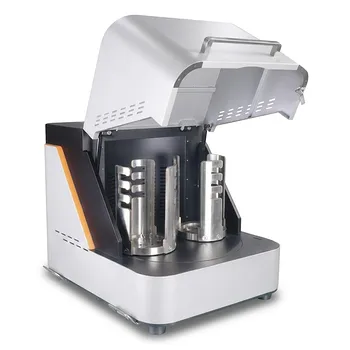
High Energy Laboratory Planetary Ball Mill for Nano Grinding and Colloidal Mixing of Hard and Brittle Materials

High Energy Omnidirectional Planetary Ball Mill 20L
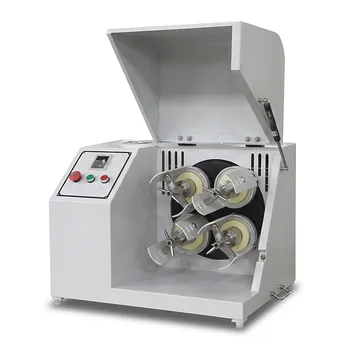
Horizontal Light Duty Planetary Ball Mill for Laboratory Sample Preparation

8L Planetary Ball Mill for Laboratory Grinding and Sample Preparation
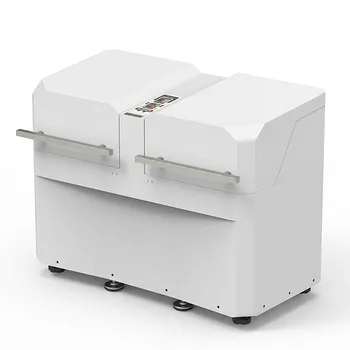
Dual Station Planetary Ball Mill 24L
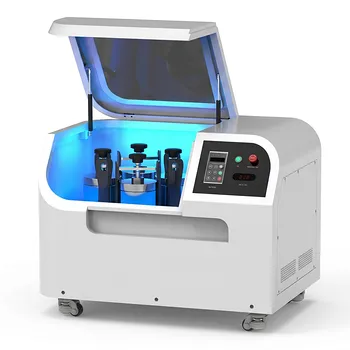
Planetary Ball Mill 12L

Nano High Energy Vibratory Ball Mill for Laboratory Sample Preparation
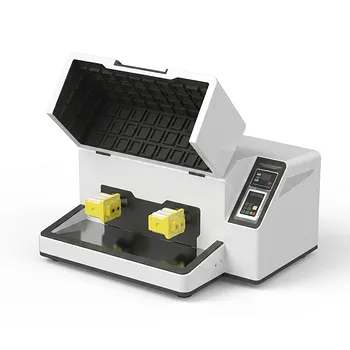
Multi-Platform Nanoscale High-Energy Vibratory Ball Mill
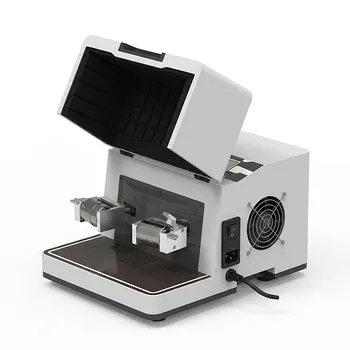
High Energy Hybrid Vibratory Ball Mill for Grinding Mixing and Cell Disruption