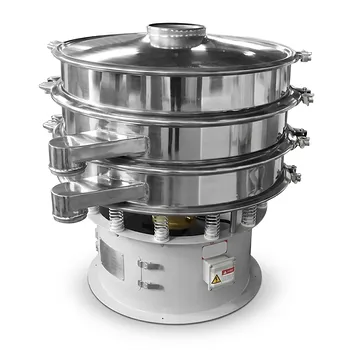
What role do sieve shakers and sieves play in PET fiber-reinforced concrete? Ensure Optimal Gradation & Strength.
Updated 4 months ago
The mechanical sieve shaker and standard test sieves are the primary instruments for ensuring the structural integrity of recycled PET fiber-reinforced concrete by validating aggregate gradation. These tools perform a precise sieve analysis to determine the particle size distribution of fine aggregates (sand) and coarse aggregates (crushed stone). This process ensures that the raw materials meet "continuous gradation" requirements, which is essential for creating a dense, workable matrix capable of effectively bonding with recycled PET fibers.
Core Takeaway: Sieve shakers and test sieves allow engineers to optimize the internal packing density of the concrete by identifying the exact distribution of aggregate sizes. This reduces the void ratio and ensures the material achieves the specific compressive strength and workability required for fiber-reinforced applications.
Quantifying Particle Size Distribution
The Role of Mechanical Vibration
A mechanical sieve shaker applies regular, consistent vibrations to a stack of standard test sieves for approximately 10 minutes. This mechanical agitation ensures that every aggregate particle is thoroughly separated and classified according to its specific grain size.
Determining Aggregate Suitability
The data gathered from the sieving process is used to calculate the curvature coefficient and the uniformity coefficient. These metrics are vital for confirming that the aggregates meet the standards for a qualified mix, ensuring the final concrete has the necessary structural uniformity.
Controlling the Fineness Modulus
By using sieves with apertures ranging from 9.5 mm down to 150 micrometers, technicians can accurately determine the fineness modulus of fine aggregates. This level of precision is required to ensure that the mortar fraction of the concrete can properly encapsulate the recycled PET fibers without clumping or segregation.
Optimizing the Concrete Matrix
Reducing Internal Void Ratios
Achieving an optimal particle size distribution is critical for minimizing the internal void ratio of the concrete. A lower void ratio means that fewer gaps exist between the aggregates, which significantly improves the density and durability of the finished material.
Enhancing Workability and Fiber Dispersion
Properly graded aggregates improve the workability of the wet concrete mix, which is often a challenge when adding recycled PET fibers. A well-graded mix allows the fibers to disperse more evenly, preventing the "balling" effect that can occur in poorly graded mixtures.
Minimizing Cement Consumption
When the aggregate gradation is optimized through sieve analysis, the total volume of voids is reduced. This leads to a decrease in the amount of cement paste required to fill those voids, making the concrete more cost-effective and environmentally friendly.
Common Pitfalls to Avoid
Overloading the Sieve Stack
One of the most common errors is placing too much material on the top sieve at once. Overloading prevents particles from reaching the mesh surface, leading to clogging and inaccurate gradation results that could compromise the concrete's final strength.
Neglecting Sieve Maintenance
Standard test sieves are precision instruments that can become deformed or "blinded" (mesh openings filled) over time. Using damaged sieves leads to an incorrect grading curve, which may result in a concrete mix that is either too rocky or too sandy for fiber reinforcement.
Inconsistent Vibration Timing
Failing to adhere to the standardized vibration time (typically 10 minutes) can lead to incomplete separation. Insufficient shaking results in under-representation of fine particles, while excessive shaking can cause softer aggregates to degrade, skewing the final analysis.
How to Apply This to Your Project
To ensure your recycled PET fiber-reinforced concrete meets engineering standards, use the following recommendations based on your project goals:
- If your primary focus is Maximum Compressive Strength: Use the sieve shaker to ensure a high-density packing that minimizes voids, ensuring the matrix provides the strongest possible grip on the PET fibers.
- If your primary focus is Improved Workability: Focus on achieving a balanced fineness modulus in your sand, which helps the concrete flow more easily around the fibers during the pouring process.
- If your primary focus is Sustainable Material Replacement: Utilize the sieves to carefully grade any other recycled components (like crushed glass or rubber) to ensure they match the particle size distribution of the natural aggregates they are replacing.
By mastering the gradation analysis of your raw materials, you create a stable and predictable foundation for the successful integration of recycled PET fibers into high-performance concrete.
Summary Table:
| Parameter | Role in Material Preparation | Engineering Benefit |
|---|---|---|
| Particle Size Distribution | Classifies aggregates via mechanical vibration | Ensures continuous gradation & structural integrity |
| Fineness Modulus | Measures fine aggregate fractions (down to 150μm) | Prevents fiber clumping and improves mortar bond |
| Internal Void Ratio | Identifies optimal packing density | Minimizes cement consumption and enhances density |
| Workability Control | Validates aggregate-to-fiber compatibility | Eliminates "balling" effects and ensures even dispersion |
Precision Lab Solutions for Advanced Material Science
Achieving superior structural integrity in recycled PET fiber-reinforced concrete requires uncompromising accuracy in raw material preparation. [Your Brand Name] provides complete laboratory sample preparation solutions tailored for material science and powder processing.
Our extensive product line is designed to support every stage of your research and production:
- Classification & Analysis: High-precision vibratory and air-jet sieve shakers with a full range of standard test sieves.
- Size Reduction: Durable jaw/roll crushers, liquid nitrogen cryogenic grinders, and high-energy mills (planetary, jet, and disc).
- Mixing & Compaction: Powder and defoaming mixers, plus a full spectrum of hydraulic presses, including Cold/Warm Isostatic Presses (CIP/WIP), vacuum hot presses, and XRF pellet presses.
Optimize your concrete matrix and improve research outcomes today. Contact our technical team for a custom solution!
References
- Marc Nshimiyimana, Jean Pierre Nsengimana. UTILIZATION OF RECYCLED POLYETHYLENE TEREPHTHALATE (RECYCLED PET) FIBERS FOR INNOVATIVE CONCRETE PROPERTY ENHANCEMENT. DOI: 10.33736/jcest.6029.2025
Mentioned Products
- Vibratory Sieve Shaker Electromagnetic 3D Motion Powder Particle Size Analyzer for Dry and Wet Sieving
- 三维电磁微量振动筛分仪
- Small Laboratory Vibrating Sieve Shaker for Precise Particle Size Analysis
- Stainless Steel Laboratory Vibratory Test Sieve Shaker
- Laboratory Dry and Wet Three Dimensional Vibratory Sieve Shaker for Particle Analysis
People Also Ask
- How does a vibratory sieve shaker contribute to optimizing the performance of activated carbon? Enhance Adsorption Precision
- Why is a laboratory vibratory sieve shaker necessary for processing magnesium-based borate precursor powders? Boost Activity
- Why use a vibratory sieve shaker to verify coarse aggregate grading in rubberized concrete? Ensure Structural Integrity
- What function do vibratory sieve shakers and standard test sieves serve in the preparation of adsorbents? Key Guide
- What role does a vibratory sieve shaker play in the particle size analysis of ground corn products? Enhance QC Precision

Tech Team · PowderPreparation
Last updated on Jun 03, 2026
Related Products
Vibratory Sieve Shaker Electromagnetic 3D Motion Powder Particle Size Analyzer for Dry and Wet Sieving
三维电磁微量振动筛分仪
Small Laboratory Vibrating Sieve Shaker for Precise Particle Size Analysis
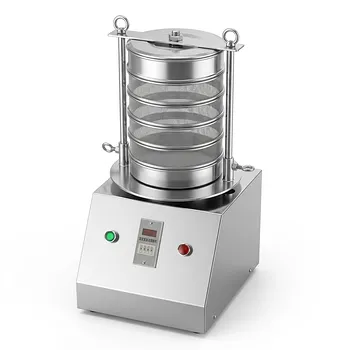
Stainless Steel Laboratory Vibratory Test Sieve Shaker
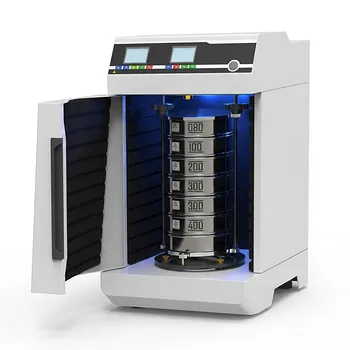
Laboratory Dry and Wet Three Dimensional Vibratory Sieve Shaker for Particle Analysis
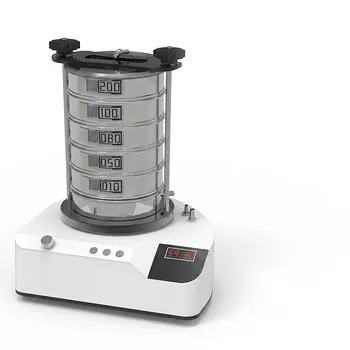
Heavy Duty Dry Three Dimensional Vibratory Sieve Shaker for Particle Separation
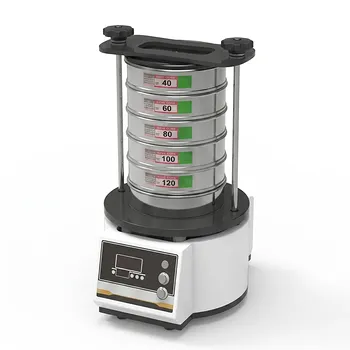
Dry Three Dimensional Vibratory Sieve Shaker
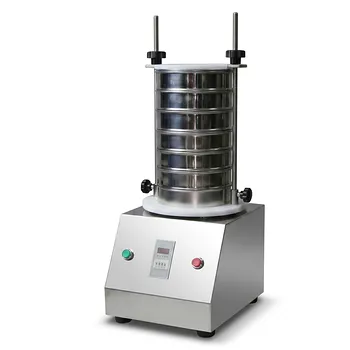
Small Laboratory Vibratory Sieve Shaker for Powder Gradation and Particle Size Analysis
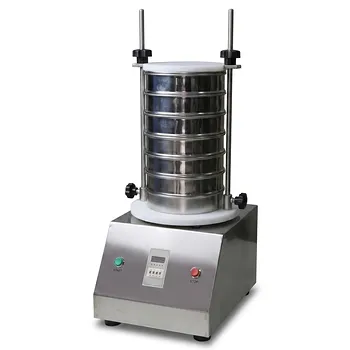
Laboratory Vibratory Test Sieve Shaker for Precision Particle Size Analysis and Powder Grading
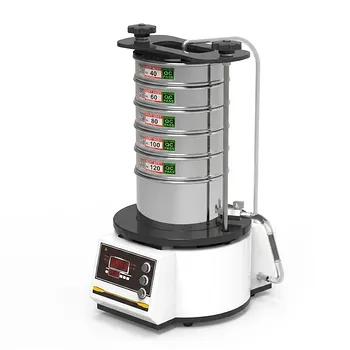
High Frequency Wet Three-Dimensional Vibrating Sieve Shaker for Dry and Wet Particle Size Analysis
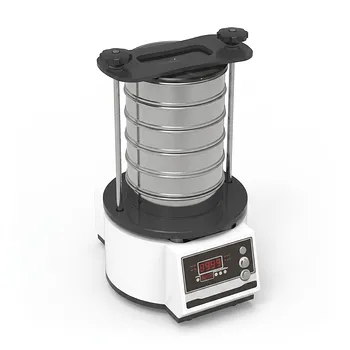
Tapping Oscillating Sieve Shaker for Dry and Wet Particle Size Analysis
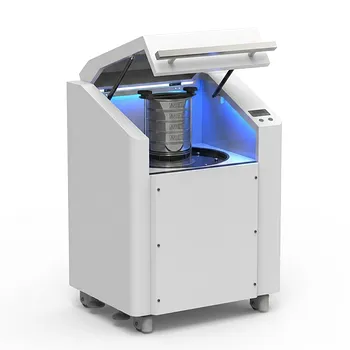
High Frequency Cabinet Type Three-Dimensional Rotary Vibrating Sieve Shaker for Dry Sieving and Particle Classification
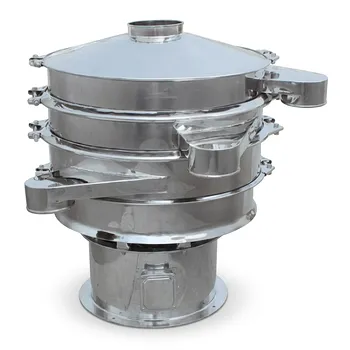
Stainless Steel Rotary Vibrating Sieve High Precision Circular Vibratory Separator Industrial Powder Grading Machine Multi Layer Sifting Equipment
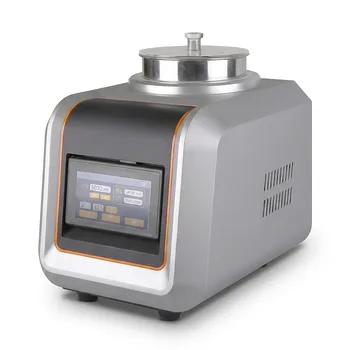
Laboratory Air Jet Sieving Machine for Fine Powder Particle Size Analysis and Deagglomeration