What role do laboratory vibratory sieve shakers and test sieves play in determining activated carbon particle size?
Updated 5 months ago
Laboratory vibratory sieve shakers and standard test sieves act as the primary tools for the mechanical classification and quantitative analysis of activated carbon particle sizes. These instruments use controlled mechanical vibration to separate carbon granules into discrete fractions across a range of mesh sizes, typically from 38 micrometers to 850 micrometers. This process is fundamental for calculating mean particle size and ensuring the uniformity required for predictable adsorption kinetics and fluid dynamics.
Precise particle size control through vibratory sieving is the technical bridge between raw material processing and final product performance. By ensuring size uniformity, manufacturers can guarantee consistent pore structure development, optimal surface area, and reliable pressure drop characteristics in filtration systems.
The Mechanics of Size Classification
Physical Separation and Fractioning
Vibratory sieve shakers utilize a vertical stack of standard test sieves with decreasing aperture sizes to physically isolate particle groups. By applying continuous mechanical vibration, the shaker ensures that every particle has multiple opportunities to pass through the mesh openings. This method allows technicians to measure the mass of material retained on each layer to determine the exact composition of the sample.
Calculating Distribution and Uniformity
The data gathered from the sieving process is used to calculate critical metrics such as Mean Particle Size and the particle size distribution width (P10-P90). These measurements allow for the evaluation of the pulverization process and the determination of the material’s Geldart classification group. This classification is essential for understanding how the carbon will behave when fluidized in industrial reactors.
Evaluating Raw Material Consistency
In the production phase, sieving is used to grade crushed precursors like coconut shells or coal powder before they undergo thermal treatment. Ensuring a consistent particle size—often between 100–500 μm—is vital for the uniform penetration of chemical activators. This consistency prevents over-processing or under-processing of the core material during the carbonization stage.
Impact on Material Performance
Enhancing Adsorption Efficiency
Particle size uniformity is a primary driver of adsorption performance and specific surface area. Smaller, uniform particles (such as those screened at 300 micrometers) facilitate the formation of dense microporous structures. This high degree of uniformity is specifically required to enhance the efficiency of specialized applications, such as nickel ion adsorption.
Regulating Pore Structure and Pyrolysis
During the pyrolysis and carbonization of biomass, uniform particle sizes ensure even heating throughout the material. If particles are non-uniform, smaller grains may over-carbonize while larger ones remain under-processed at the core. Precision sieving results in a finished activated carbon with a stable and consistent pore structure distribution.
Predicting Fluid Dynamics and Packing Density
In water treatment and gas-phase applications, the particle size determines the packing density and the resulting pressure loss across a filtration bed. By using sieves to narrow the size range, engineers can accurately predict diffusion rates and fluid flow behavior. This prevents "channeling" and ensures that the entire volume of the carbon bed is utilized effectively.
Understanding the Trade-offs
Mechanical Attrition and Sample Integrity
While vibratory shakers are efficient, the mechanical energy applied can cause particle attrition, where more fragile carbon granules break down into smaller fines during the test itself. This can lead to a "false" distribution reading that suggests the material is finer than it actually is. It is critical to calibrate vibration intensity and duration to balance separation efficiency with material preservation.
Limitations with Ultra-Fine Powders
Standard mechanical sieving faces diminishing returns as particle sizes drop below 38 micrometers. At these sizes, electrostatic forces and moisture can cause particles to "blind" or clog the mesh, leading to inaccurate results. For activated carbons intended for high-end electrochemical or liquid-phase applications, supplemental methods like laser diffraction may be necessary to verify the sieve data.
Optimizing Particle Size for Your Application
Choosing the Right Strategy
- If your primary focus is rapid adsorption kinetics: Use a sieve shaker to isolate finer fractions (e.g., <300 μm) to maximize accessible surface area and decrease internal diffusion paths.
- If your primary focus is water treatment filtration beds: Aim for a narrow particle size distribution to minimize pressure drop and prevent the migration of "fines" into the effluent.
- If your primary focus is chemical activation of biomass: Ensure raw materials are sieved to a uniform range (typically 100-500 μm) to allow for even activator penetration and consistent heating.
Precise particle size analysis is the fundamental safeguard that ensures activated carbon meets the rigorous demands of modern industrial adsorption.
Summary Table:
| Function | Key Metric Analyzed | Impact on Activated Carbon |
|---|---|---|
| Physical Fractioning | Mass retained on each mesh | Determines precise particle size distribution (P10-P90). |
| Uniformity Control | Mean Particle Size (MPS) | Ensures consistent pore structure and adsorption kinetics. |
| Precursor Grading | 100–500 μm size range | Guarantees even chemical activation and thermal penetration. |
| Fluid Dynamics | Packing density | Predicts pressure drop and prevents channeling in filters. |
| Quality Assurance | Material consistency | Validates suitability for nickel ion or gas-phase adsorption. |
Optimize Your Material Science Workflow with Precision Equipment
Achieving the perfect particle size distribution is critical for the performance of activated carbon and advanced materials. At [Company Name], we provide comprehensive laboratory sample preparation solutions designed to deliver accuracy and repeatability.
Whether you are crushing raw precursors with our jaw and roll crushers, achieving ultra-fine powders via planetary ball or jet mills, or conducting precise classification with our vibratory and air-jet sieve shakers, our equipment is engineered for excellence. We also specialize in material compaction, offering a full spectrum of Hydraulic Presses, including Cold/Warm Isostatic Presses (CIP/WIP), hot presses, and vacuum hot presses for specialized research applications.
Ready to enhance your lab's efficiency and product quality?
Contact our technical experts today to find the ideal processing or sieving solution for your specific material requirements.
References
- Mayowa Adeoye Lala, Abdulwahab Gıwa. Maize cob-derived activated carbon as an adsorbent for the removal of nickel (II) cation from aqueous solution: optimization and kinetic studies. DOI: 10.1080/25765299.2023.2266230
Mentioned Products
- Vibratory Sieve Shaker Electromagnetic 3D Motion Powder Particle Size Analyzer for Dry and Wet Sieving
- Laboratory Dry and Wet Three Dimensional Vibratory Sieve Shaker for Particle Analysis
- Stainless Steel Laboratory Vibratory Test Sieve Shaker
- Heavy Duty Dry Three Dimensional Vibratory Sieve Shaker for Particle Separation
- Dry Three Dimensional Vibratory Sieve Shaker
People Also Ask
- How does a vibratory sieve shaker contribute to optimizing the performance of activated carbon? Enhance Adsorption Precision
- Why is a laboratory vibratory sieve shaker necessary for processing magnesium-based borate precursor powders? Boost Activity
- Why use a vibratory sieve shaker to verify coarse aggregate grading in rubberized concrete? Ensure Structural Integrity
- What function do vibratory sieve shakers and standard test sieves serve in the preparation of adsorbents? Key Guide
- What role does a vibratory sieve shaker play in the particle size analysis of ground corn products? Enhance QC Precision

Tech Team · PowderPreparation
Last updated on May 14, 2026
Related Products
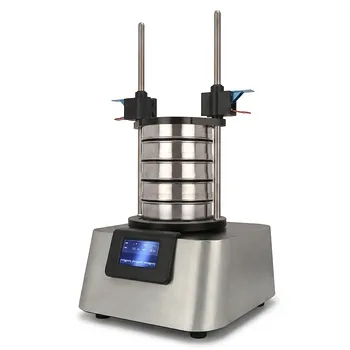
Vibratory Sieve Shaker Electromagnetic 3D Motion Powder Particle Size Analyzer for Dry and Wet Sieving
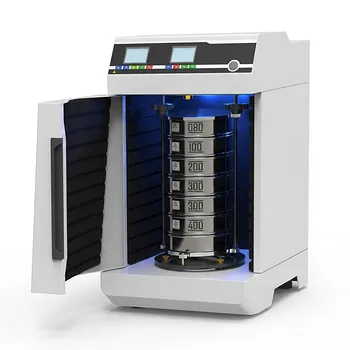
Laboratory Dry and Wet Three Dimensional Vibratory Sieve Shaker for Particle Analysis
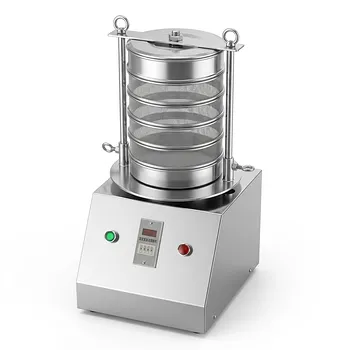
Stainless Steel Laboratory Vibratory Test Sieve Shaker
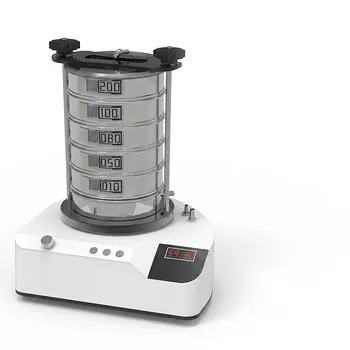
Heavy Duty Dry Three Dimensional Vibratory Sieve Shaker for Particle Separation
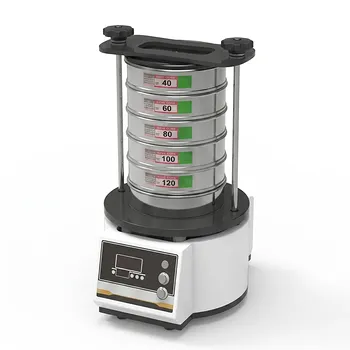
Dry Three Dimensional Vibratory Sieve Shaker
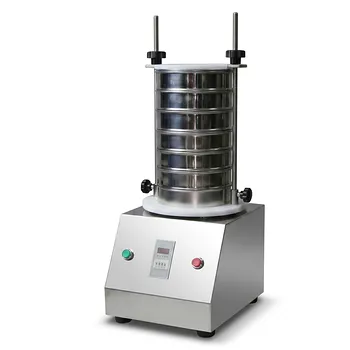
Small Laboratory Vibratory Sieve Shaker for Powder Gradation and Particle Size Analysis
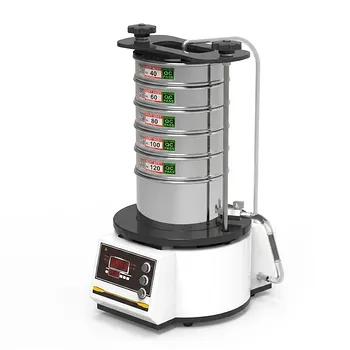
High Frequency Wet Three-Dimensional Vibrating Sieve Shaker for Dry and Wet Particle Size Analysis
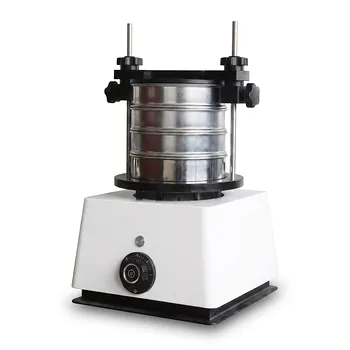
Small Laboratory Vibrating Sieve Shaker for Precise Particle Size Analysis
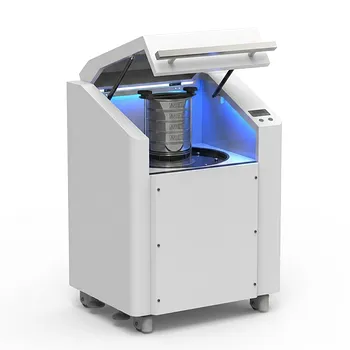
High Frequency Cabinet Type Three-Dimensional Rotary Vibrating Sieve Shaker for Dry Sieving and Particle Classification
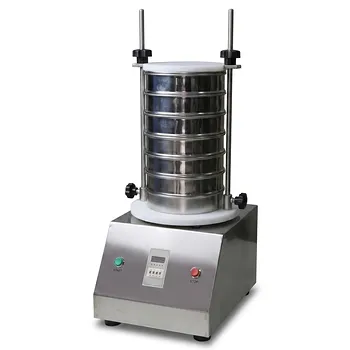
Laboratory Vibratory Test Sieve Shaker for Precision Particle Size Analysis and Powder Grading
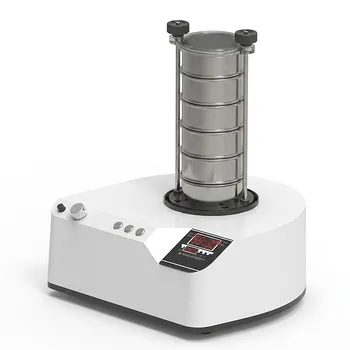
三维电磁微量振动筛分仪
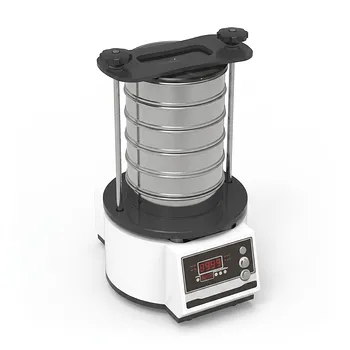
Tapping Oscillating Sieve Shaker for Dry and Wet Particle Size Analysis
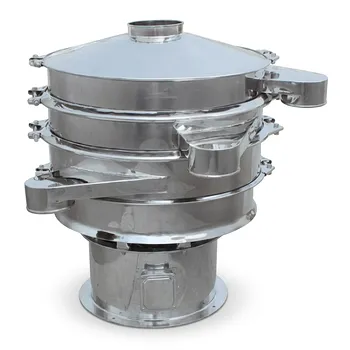
Stainless Steel Rotary Vibrating Sieve High Precision Circular Vibratory Separator Industrial Powder Grading Machine Multi Layer Sifting Equipment
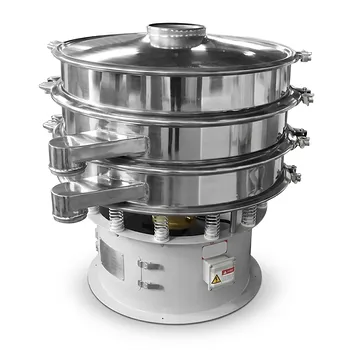
Three Dimensional Rotary Vibrating Sieve
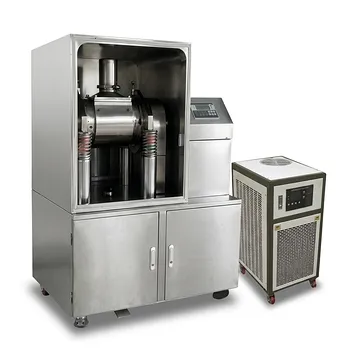
Small Vibrating Ultrafine Grinder for Traditional Chinese Medicine
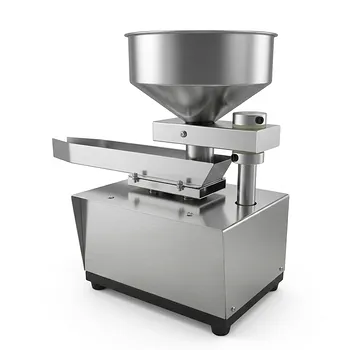
Automatic Vibrating Powder Feeder for Laboratory Material Processing Precision Vibratory Hopper Feeder for Granular and Powder Material Handling Industrial Grade Vibrating Tray Feeder for Consistent Material Sample Preparation
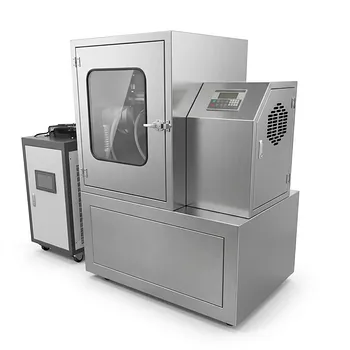
Vibratory Superfine Grinder for Ultra Fine Laboratory Powder Milling
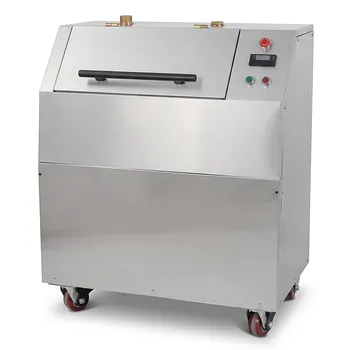
Vibratory Disc Mill for Rapid Fine Grinding and High Throughput Sample Preparation of Hard and Brittle Materials