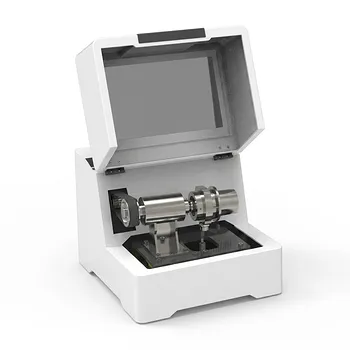
What role do laboratory grinding equipment and planetary ball mills play in biomass pellet mixing? Achieve Homogeneity.
Updated 5 months ago
Laboratory grinding equipment and planetary ball mills act as the primary engines for homogenization, utilizing mechanical shear to reduce particle size and eliminate material agglomeration. During the mixing phase of biomass composite pellets, these tools ensure that functional binders and additives are uniformly coated onto or embedded within the biomass matrix, creating a chemically and physically consistent precursor for pelletization.
The core role of this equipment is to transform heterogeneous raw materials into a standardized, high-surface-area powder. This process ensures that binders and reinforcements achieve a molecular-level distribution, which is essential for the structural integrity and functional performance of the final composite pellet.
Achieving Homogeneity through Mechanical Shear
Particle Size Reduction and Surface Area
Laboratory-grade equipment utilizes mechanical forces to pulverize dry biomass, such as Jatropha stems or wheat straw, into fine particles. This reduction significantly increases the specific surface area, which is critical for ensuring uniform heat transfer during subsequent processing and facilitating thorough contact between the biomass and modification agents.
Eliminating Agglomeration
High-frequency rotation and impact forces are essential for breaking down nano-agglomerates in additives like graphene nanoplatelets or magnesium oxide. By preventing the "clumping" common in standard melt mixing, planetary ball mills establish a foundation for the stability of material properties in the finished pellet.
Standardizing Fibrous Structures
Biomass materials possess complex, fibrous physical constructions that resist uniform mixing. Grinding equipment breaks down these structures into a standardized dust form, which is a prerequisite for accurate particle size distribution analysis and ensuring the material accurately simulates industrial-scale environments.
The Mechanics of Surface Coating and Reinforcement
Binder Distribution and Rheology
In composites using binders like chitosan, the mechanical shear force ensures the binder is uniformly coated onto the surfaces of solid waste particles. This creates a homogeneous paste with optimal rheological properties, which is vital for the flow and shaping of the pellet during the extrusion or pressing phase.
Mechanical Alloying and Embedding
Planetary ball mills provide the high energy necessary to mechanically coat or embed reinforcements—such as magnetic iron oxide nanopowders or carbon fibers—onto the pores of biochar or polymer powders. This process, often referred to as mechanical alloying, ensures that functional components are securely attached without obstructing active adsorption sites.
Enhancing Structural Density
By crushing coarse carbonized particles into fine powders, grinding equipment facilitates a more intimate contact between different biomass components, such as coconut shell and rice husk charcoal. This fine-tuning of the particle matrix leads to significantly higher structural density once the biomass is pressed into its final briquette or pellet form.
Understanding the Trade-offs
Mechanical Resistance and Energy Consumption
While grinding is necessary, different agricultural wastes exhibit varying levels of resistance to mechanical crushing based on their fibrous structure. This requires careful calibration of rotation speeds and operation times to avoid excessive energy consumption while still achieving the desired pulverization.
Simulation vs. Reality
A laboratory ball mill is often used to simulate industrial-scale coal mills, but there are inherent limits to how accurately a small cylindrical jar can replicate the dynamics of mass production. Researchers must acknowledge that the high-energy environment of a planetary mill may produce material characteristics that are difficult to replicate exactly on a low-energy industrial conveyor or mixer.
Applying Grinding Strategies to Your Project
How to Apply This to Your Project
To achieve the best results with your biomass composite pellets, tailor your grinding approach to your specific material goals:
- If your primary focus is structural integrity: Prioritize fine grinding to maximize surface area and density, ensuring the binder can coat every particle surface.
- If your primary focus is functional additives: Use a planetary ball mill to ensure molecular-level distribution and to prevent the agglomeration of reinforcements like graphene or magnetic nanoparticles.
- If your primary focus is industrial scalability: Use laboratory ball milling to quantify the mechanical resistance of your biomass, using those metrics to select the appropriate industrial-scale pulverization equipment.
- If your primary focus is thermal processing: Focus on achieving a uniform particle size to ensure consistent heat transfer and avoid localized overheating during torrefaction.
The precision of your laboratory grinding process ultimately dictates the uniformity, density, and functional success of the resulting biomass composite pellet.
Summary Table:
| Key Function | Impact on Biomass Pellets | Recommended Equipment |
|---|---|---|
| Size Reduction | Increases surface area for better heat transfer & binder contact. | Jaw/Roll Crushers, Disc Mills |
| De-agglomeration | Ensures additives (e.g., graphene) are distributed at the molecular level. | Planetary Ball Mills, Jet Mills |
| Surface Coating | Uniformly coats binders onto particles to optimize rheology and flow. | Planetary Ball Mills, Mixers |
| Structural Density | Standardizes fibrous materials into powders for superior compaction. | Rotor Mills, Cryogenic Grinders |
| Homogenization | Creates a consistent precursor for stable, high-performance pellets. | Powder & Defoaming Mixers |
Elevate Your Biomass Research with Precision Sample Preparation
To achieve superior structural integrity and functional performance in biomass composite pellets, the right equipment is essential. [Brand Name] provides complete laboratory sample preparation solutions tailored for material science, specializing in advanced powder processing and high-pressure compaction.
How We Add Value to Your Lab:
- Superior Grinding & Milling: From high-energy planetary ball mills and jet mills to liquid nitrogen cryogenic grinders, we ensure your biomass reaches the perfect particle size distribution.
- Advanced Mixing: Our powder mixers and defoaming mixers eliminate agglomeration and ensure molecular-level distribution of binders and reinforcements.
- Precision Pressing: Once your mixture is ready, our full spectrum of hydraulic presses—including Cold/Warm Isostatic Presses (CIP/WIP), XRF pellet presses, and vacuum hot presses—ensures maximum pellet density and stability.
Ready to optimize your material processing workflow?
Contact Our Technical Experts Today to find the perfect equipment solution for your research requirements.
References
- Bernd G. K. Steiger, Lee D. Wilson. Sustainable agro-waste pellets as granular slow-release fertilizer carrier systems for ammonium sulfate. DOI: 10.1039/d4su00141a
Mentioned Products
- Vertical Semi Circular Planetary Ball Mill for Laboratory Precision Grinding
- High Energy Planetary Ball Mill for Nano Scale Grinding and Mechanical Alloying
- Vertical Production Planetary Ball Mill for High Throughput Powder Processing
- Heavy Duty Horizontal Planetary Ball Mill for Efficient Industrial Grinding and Sample Preparation
- 360° Rotating Omnidirectional Laboratory Planetary Ball Mill for Homogeneous Ultra-Fine Grinding and Mixing
People Also Ask
- What role does a planetary ball mill play in the synthesis of Li6PS5Cl (LPSCl)? Unlock High Ionic Conductivity
- Why is a planetary ball mill essential for SiBCN-rGO wet-spinning? Achieve Superior Dispersion and Spinnability
- Why is an intermittent grinding process required for perovskites in a planetary ball mill? Ensure Stability & Purity
- Why is a planetary ball mill required for PET micronization? Ensure Accurate Chemical Analysis of Reprocessed PET
- How does mechanized planetary ball milling compare to manual agate grinding? Optimize sulfide standard material precision.

Tech Team · PowderPreparation
Last updated on May 14, 2026
Related Products
Vertical Semi Circular Planetary Ball Mill for Laboratory Precision Grinding
High Energy Planetary Ball Mill for Nano Scale Grinding and Mechanical Alloying
Vertical Production Planetary Ball Mill for High Throughput Powder Processing
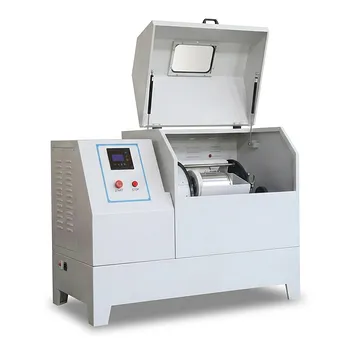
Heavy Duty Horizontal Planetary Ball Mill for Efficient Industrial Grinding and Sample Preparation
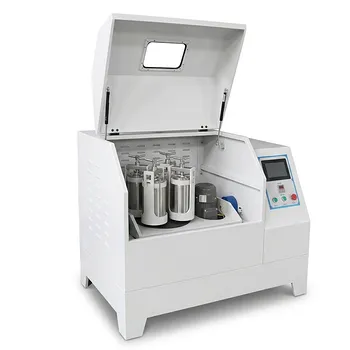
360° Rotating Omnidirectional Laboratory Planetary Ball Mill for Homogeneous Ultra-Fine Grinding and Mixing
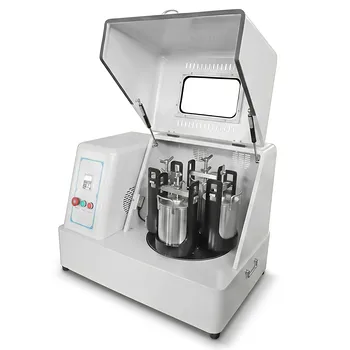
Vertical Square Planetary Ball Mill for Laboratory Sample Preparation and Nanoscale Grinding
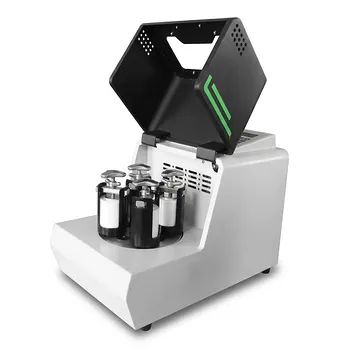
Miniature Planetary Ball Mill with Vacuum Grinding and High Efficiency for Laboratory Sample Preparation
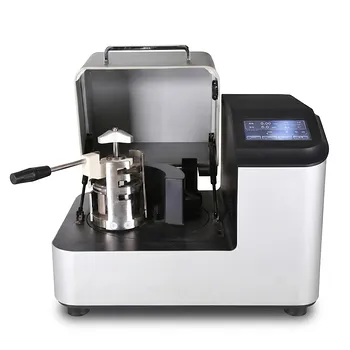
High Energy Laboratory Planetary Ball Mill for Nano Grinding and Material Science Sample Preparation
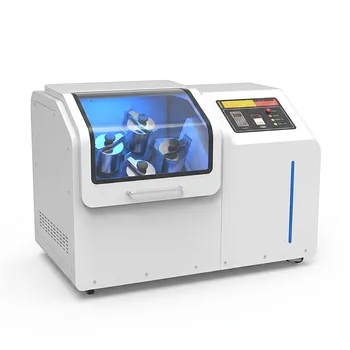
High Energy Omnidirectional Planetary Ball Mill 16L
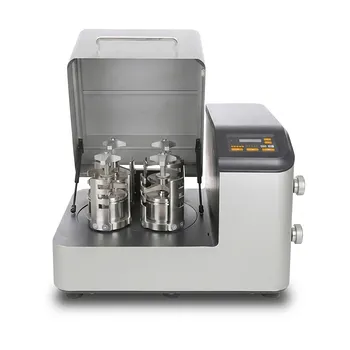
High Energy Planetary Ball Mill for Nano Scale Grinding and Colloidal Mixing in Material Science Research
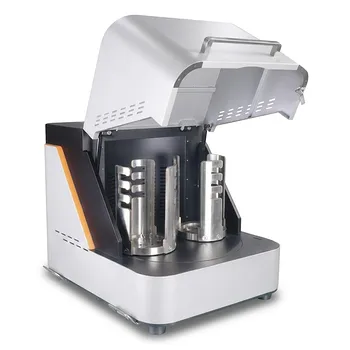
High Energy Laboratory Planetary Ball Mill for Nano Grinding and Colloidal Mixing of Hard and Brittle Materials
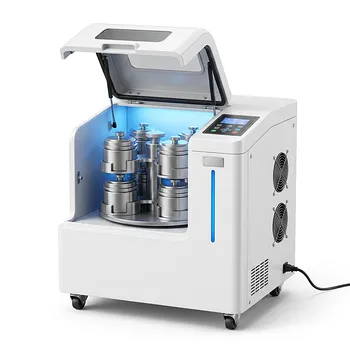
High Energy Omnidirectional Planetary Ball Mill 20L
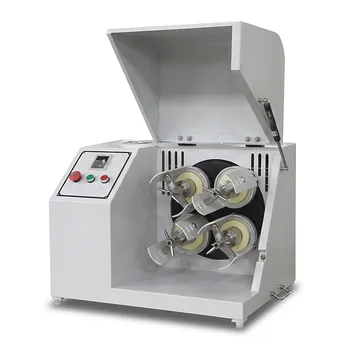
Horizontal Light Duty Planetary Ball Mill for Laboratory Sample Preparation

8L Planetary Ball Mill for Laboratory Grinding and Sample Preparation
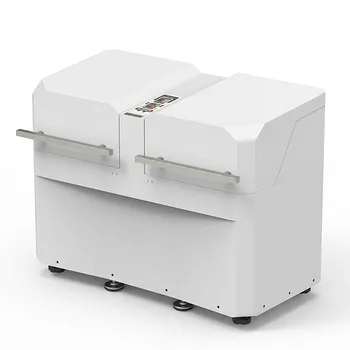
Dual Station Planetary Ball Mill 24L
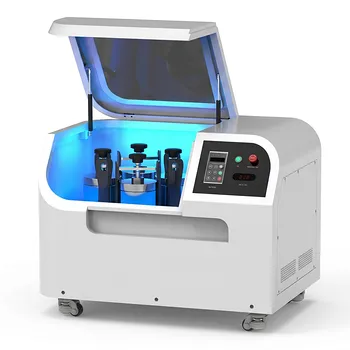
Planetary Ball Mill 12L

Nano High Energy Vibratory Ball Mill for Laboratory Sample Preparation

Multi-Platform Nanoscale High-Energy Vibratory Ball Mill
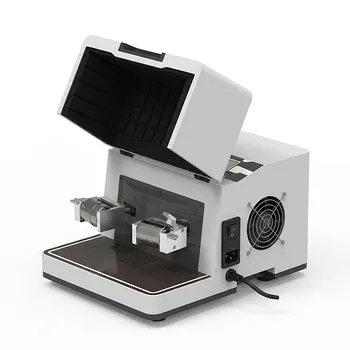
High Energy Hybrid Vibratory Ball Mill for Grinding Mixing and Cell Disruption