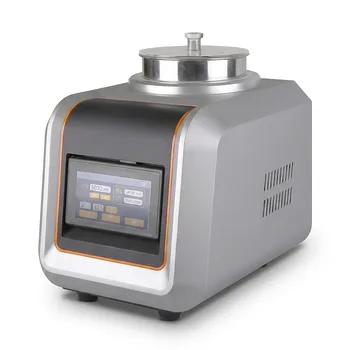
What role do industrial vibratory sieve shakers play in the research of road dust particle size distribution? Analysis
Updated 5 months ago
Industrial vibratory sieve shakers provide the mechanical foundation for road dust research by separating bulk samples into precise particle size fractions. By utilizing high-frequency mechanical vibrations and a stack of standardized sieves, these machines ensure the rapid, thorough, and repeatable classification of pavement dust from sizes as large as 10mm down to below 0.063mm. This standardized separation is essential for any subsequent chemical, environmental, or structural analysis of roadbed materials.
Core Takeaway: Vibratory sieve shakers transform heterogeneous road dust into standardized datasets. This mechanical classification is the critical first step required to study pollutant concentration, evaluate pavement wear, and ensure the structural integrity of roadbed materials.
The Functional Mechanics of Precise Dust Classification
High-Frequency Mechanical Vibration
Vibratory sieve shakers generate high-frequency mechanical vibrations to drive dust samples through a series of multi-layer standard sieves. This mechanized process ensures the continuous screening of collected pavement dust, which is far more efficient and consistent than manual methods.
Three-Dimensional Motion and Recovery
Advanced electromagnetic versions often employ a three-dimensional motion mode that combines vertical vibration with rotation. This movement pattern prevents "blinding" (plugging of the mesh) and ensures a high recovery rate, often exceeding 98% across various retention apertures.
Adherence to International Standards
To ensure data is comparable across different studies, these machines use sieve stacks that comply with international standards like ASTM E11. This allows researchers to accurately categorize particles into specific size intervals, such as those ranging from 2000μm to 28μm.
Facilitating Environmental and Chemical Analysis
Isolating Pollutant Carriers
Physical classification is essential for studying pollutant distribution, as smaller particles have larger specific surface areas. Smaller fractions, such as those at 32 µm or 75 µm, often concentrate higher levels of heavy metals and platinum group elements (PGMs).
Concentrating Microplastics and Wear Particles
Sieve shakers are used to isolate Tire-Road Wear Particles (TRWPs) and Asphalt Pavement Wear Particles (APWPs) for morphological classification. By isolating fine components of 500 µm or less, researchers can create a uniform substrate for subsequent chemical digestion and microscopic observation of microplastics.
Evaluating Cleaning and Collection Efficiency
Researchers use these devices to compare dust residue before and after road cleaning operations. This enables a quantitative evaluation of how effectively different cleaning technologies capture fine versus coarse particles.
Quantifying Roadbed Material Quality
Assessing Gradation for Structural Stability
In roadbed and sandy base research, the vibratory sieve shaker categorizes soil particles to evaluate grading characteristics. This data is fundamental for calculating the coefficient of uniformity (Cu) and the coefficient of curvature (Cc), which determine the stability of the road foundation.
Defining the Fines Content
The separation process identifies the "fines content" within roadbed materials. By isolating particles below the 0.063mm or 45 micrometers threshold, engineers can predict how the material will behave under load and environmental stress.
Understanding the Trade-offs
Risk of Particle Attrition
While vibratory shakers are efficient, the aggressive mechanical action can sometimes cause particle attrition. This occurs when fragile dust particles break down into smaller pieces during the shaking process, potentially skewing the results toward finer distributions.
Limits of Dry Sieving
Dry sieving becomes increasingly difficult as particle sizes drop below 32 to 20 micrometers. At these levels, electrostatic forces and humidity can cause particles to clump together, which may require specialized "wet sieving" techniques or ultrasonic assistance that standard vibratory shakers may not provide without modification.
How to Apply This to Your Research Project
Making the Right Choice for Your Goal
- If your primary focus is Environmental Pollutant Analysis: Prioritize shakers with electromagnetic 3D motion to ensure the highest recovery rates of the finest (and most toxic) particles.
- If your primary focus is Roadbed Engineering and Soil Mechanics: Focus on high-capacity shakers that can handle larger bulk samples and a wide range of sieve apertures (from 10mm down to 0.063mm) to accurately calculate gradation coefficients.
- If your primary focus is Microplastic (TRWP) Identification: Use the shaker primarily to remove large debris and stones, concentrating your sample into the sub-500 µm fraction for more detailed chemical digestion.
Industrial vibratory sieve shakers are the indispensable bridge between raw field samples and the precise, standardized data required for modern road science.
Summary Table:
| Feature | Benefit to Road Dust Research | Key Application |
|---|---|---|
| 3D Motion | Prevents mesh blinding; ensures >98% particle recovery | Microplastic (TRWP) Isolation |
| Standardized Sieves | Compliance with ASTM E11 for repeatable global data | Gradation & Fines Analysis |
| High-Freq Vibration | Rapidly separates fractions from 10mm down to 0.063mm | Pollutant Distribution Study |
| Gradation Logic | Determines stability coefficients (Cu and Cc) | Roadbed Structural Engineering |
Elevate Your Material Research with Precision Sample Preparation
Accurate road dust analysis begins with superior sample classification. At our core, we provide complete laboratory sample preparation solutions for material science, specializing in high-performance powder processing and compaction equipment.
Whether you need to isolate fine pollutants or evaluate roadbed stability, our extensive product lines are designed for accuracy and durability:
- Sizing & Classification: Vibratory and air-jet sieve shakers with a full range of test sieves and meshes.
- Milling & Grinding: Planetary ball mills, jet mills, and liquid nitrogen cryogenic grinders for ultrafine results.
- Crushing & Mixing: Heavy-duty jaw/roll crushers and high-efficiency powder or defoaming mixers.
- Compaction & Pressing: A full spectrum of hydraulic presses, including Cold/Warm Isostatic Presses (CIP/WIP), XRF pellet presses, and vacuum hot presses.
Ready to optimize your lab’s efficiency? Contact us today to discuss how our specialized equipment can enhance your research outcomes.
References
- Magdalena Penkała, Natalia Iwanicka. Exploring the Relationship between Particulate Matter Emission and the Construction Material of Road Surface: Case Study of Highways and Motorways in Poland. DOI: 10.3390/ma16031200
Mentioned Products
- Vibratory Sieve Shaker Electromagnetic 3D Motion Powder Particle Size Analyzer for Dry and Wet Sieving
- Laboratory Dry and Wet Three Dimensional Vibratory Sieve Shaker for Particle Analysis
- Stainless Steel Laboratory Vibratory Test Sieve Shaker
- Heavy Duty Dry Three Dimensional Vibratory Sieve Shaker for Particle Separation
- Dry Three Dimensional Vibratory Sieve Shaker
People Also Ask
- How does a vibratory sieve shaker contribute to optimizing the performance of activated carbon? Enhance Adsorption Precision
- Why is a laboratory vibratory sieve shaker necessary for processing magnesium-based borate precursor powders? Boost Activity
- Why use a vibratory sieve shaker to verify coarse aggregate grading in rubberized concrete? Ensure Structural Integrity
- What function do vibratory sieve shakers and standard test sieves serve in the preparation of adsorbents? Key Guide
- What role does a vibratory sieve shaker play in the particle size analysis of ground corn products? Enhance QC Precision

Tech Team · PowderPreparation
Last updated on May 14, 2026
Related Products
Vibratory Sieve Shaker Electromagnetic 3D Motion Powder Particle Size Analyzer for Dry and Wet Sieving
Laboratory Dry and Wet Three Dimensional Vibratory Sieve Shaker for Particle Analysis
Stainless Steel Laboratory Vibratory Test Sieve Shaker
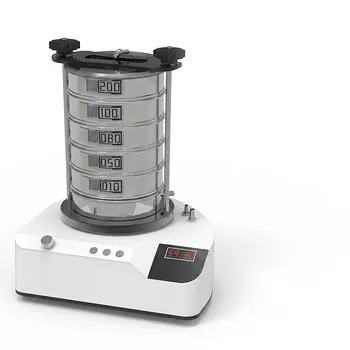
Heavy Duty Dry Three Dimensional Vibratory Sieve Shaker for Particle Separation
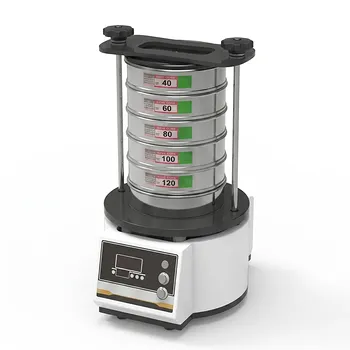
Dry Three Dimensional Vibratory Sieve Shaker
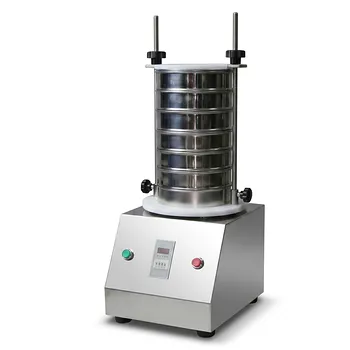
Small Laboratory Vibratory Sieve Shaker for Powder Gradation and Particle Size Analysis
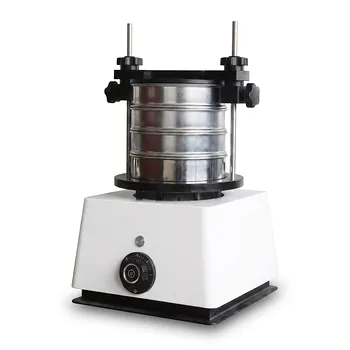
Small Laboratory Vibrating Sieve Shaker for Precise Particle Size Analysis
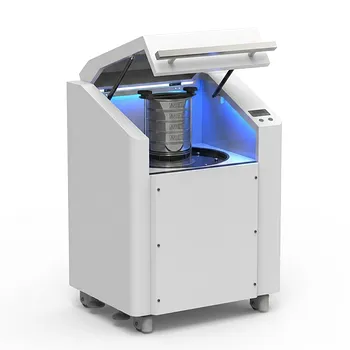
High Frequency Cabinet Type Three-Dimensional Rotary Vibrating Sieve Shaker for Dry Sieving and Particle Classification
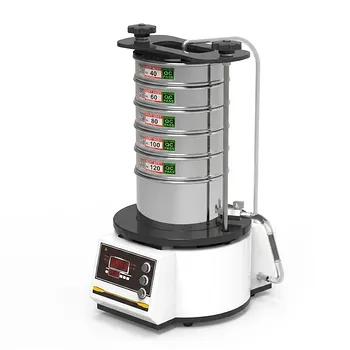
High Frequency Wet Three-Dimensional Vibrating Sieve Shaker for Dry and Wet Particle Size Analysis
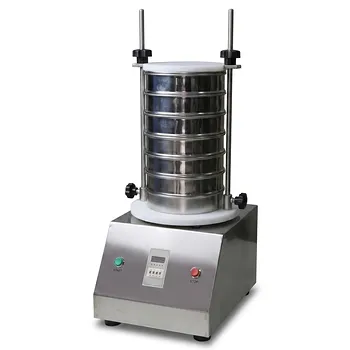
Laboratory Vibratory Test Sieve Shaker for Precision Particle Size Analysis and Powder Grading
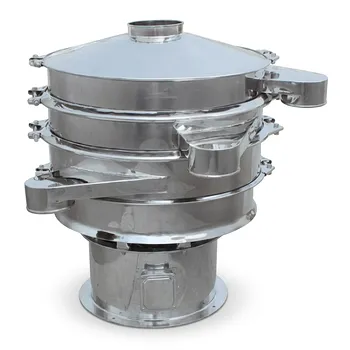
Stainless Steel Rotary Vibrating Sieve High Precision Circular Vibratory Separator Industrial Powder Grading Machine Multi Layer Sifting Equipment
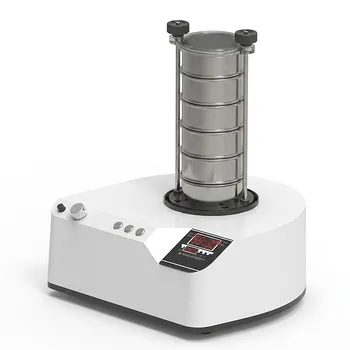
三维电磁微量振动筛分仪
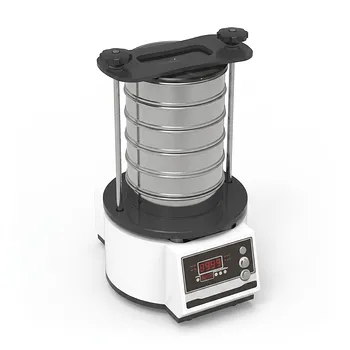
Tapping Oscillating Sieve Shaker for Dry and Wet Particle Size Analysis
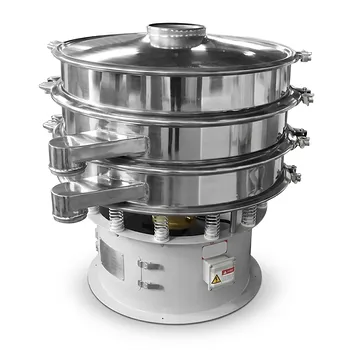
Three Dimensional Rotary Vibrating Sieve
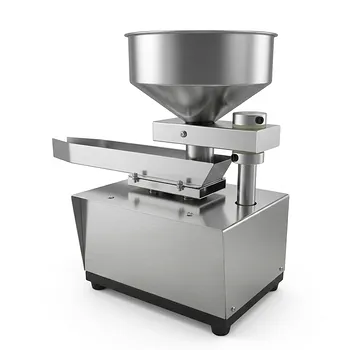
Automatic Vibrating Powder Feeder for Laboratory Material Processing Precision Vibratory Hopper Feeder for Granular and Powder Material Handling Industrial Grade Vibrating Tray Feeder for Consistent Material Sample Preparation
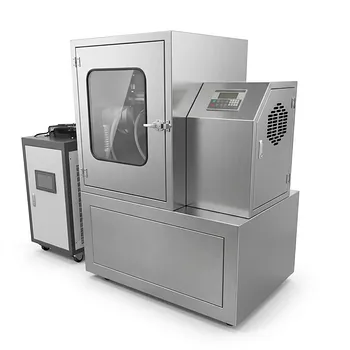
Vibratory Superfine Grinder for Ultra Fine Laboratory Powder Milling
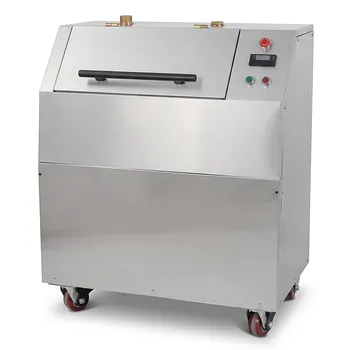
Vibratory Disc Mill for Rapid Fine Grinding and High Throughput Sample Preparation of Hard and Brittle Materials
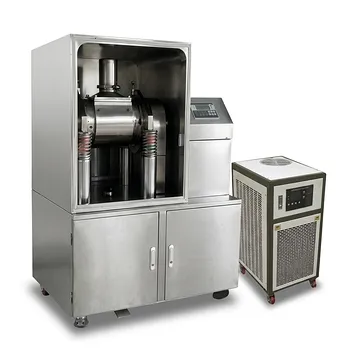
Small Vibrating Ultrafine Grinder for Traditional Chinese Medicine