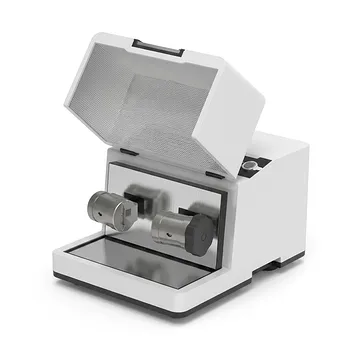
What role do ball mills play in the preparation of Steatite-Based Ceramic (SBC) raw materials? Master Homogenization
Updated 3 months ago
Ball mills serve as the critical processing stage for achieving microscopic homogeneity in Steatite-Based Ceramic (SBC) production. By subjecting raw materials to prolonged mechanical impact and attrition, these machines perform a "deep mixing" of talc powder with manganese oxide (MnO2) additives, which typically comprise 5% to 30% of the weight. This process refines the materials into a highly uniform state, creating the necessary conditions for successful chemical reactions and structural densification during the subsequent sintering phase.
The core role of the ball mill in SBC preparation is to transform disparate raw components into a reactive, homogeneous precursor by ensuring atomic-level distribution and precise particle size refinement.
The Role of Ball Milling in Material Homogenization
Deep Mixing of Talc and Additives
In SBC production, the ball mill is the primary tool for integrating manganese oxide (MnO2) into the base talc powder. This "deep mixing" ensures that the additives, even at high concentrations of up to 30%, are distributed evenly throughout the matrix.
Without this level of uniformity, the final ceramic would suffer from localized inconsistencies in its chemical and physical properties.
Molecular-Level Uniformity
The mechanical forces within the mill—specifically impact and shear—break down agglomerates to achieve molecular-level mixing. This high degree of microscopic uniformity is essential for ensuring that every part of the powder reacts identically when heat is applied.
This uniformity directly influences the formation of a stable, homogeneous microstructure in the finished ceramic component.
Enhancing Sintering Activity Through Refinement
Particle Size Reduction and Surface Area
Ball mills refine raw materials from hundreds of micrometers down to the sub-micron or even nanometer scale. By reducing the particle size, the mill significantly increases the specific surface area of the powder.
A higher surface area translates to greater reaction activity, allowing the solid-state synthesis to occur more efficiently.
Facilitating Phase Transformation
The energy input from ball milling provides the physical foundation for phase transformation during sintering. By increasing the reactivity of the powder, the milling process can effectively reduce the temperatures required for successful sintering.
This increased reactivity is vital for forming the desired crystal structures, such as the pure phase perovskite structures often found in advanced ceramic applications.
Understanding the Trade-offs
Risk of Material Contamination
One of the primary challenges in ball milling is the potential for contamination from the grinding media. As the balls and the mill lining wear down, microscopic particles of the media can incorporate into the SBC mixture.
Selecting grinding media with a hardness and composition compatible with the raw materials is essential to maintain the high purity required for advanced ceramics.
Energy Consumption and Heat Generation
High-energy milling techniques, such as planetary ball milling, offer rapid refinement but consume significant amounts of energy. These processes also generate substantial heat, which may inadvertently alter the chemical properties of sensitive raw materials if not carefully monitored.
Balancing the duration of milling with the desired particle size distribution is a key technical challenge for optimizing production costs and material quality.
How to Apply This to Your Project
When integrating ball milling into your SBC preparation workflow, your choice of equipment and parameters should align with your specific performance requirements.
- If your primary focus is high chemical purity: Use grinding media and mill linings made of the same material as your primary ceramic or a high-purity oxide to minimize the impact of wear-related contamination.
- If your primary focus is rapid production and extreme refinement: Utilize high-energy planetary ball mills to reach sub-micron particle sizes in a fraction of the time required by traditional tumbling mills.
- If your primary focus is maximizing sintering density: Focus on optimizing the milling duration to achieve a narrow particle size distribution, which ensures more efficient packing and fewer voids during the molding process.
By mastering the mechanical refinement of raw materials, you ensure the structural integrity and performance reliability of the final Steatite-Based Ceramic product.
Summary Table:
| Key Milling Role | Impact on SBC Material Quality | Benefit to Final Product |
|---|---|---|
| Deep Mixing | Atomic-level distribution of MnO2 (5-30%) | Eliminates localized chemical inconsistencies |
| Size Reduction | Refines particles to sub-micron or nanometer scale | Increases specific surface area and reactivity |
| Homogenization | Breaks down agglomerates for molecular uniformity | Ensures stable, uniform ceramic microstructure |
| Thermal Efficiency | Increases energy input and surface activity | Lowers required sintering temperatures |
Elevate Your Material Science Research with Precision Processing
Achieving perfect homogeneity in Steatite-Based Ceramics requires equipment that delivers consistent, repeatable results. At [Brand Name], we provide complete laboratory sample preparation solutions tailored for material science. We specialize in high-performance powder processing and compaction equipment designed to transform your raw materials into high-purity precursors.
Our Comprehensive Product Line Includes:
- Advanced Milling & Grinding: High-energy Planetary Ball Mills, Jet Mills, Cryogenic Grinders, and Disc/Rotor Mills for extreme particle refinement.
- Crushing & Sizing: Industrial-grade Jaw/Roll Crushers and Vibratory/Air-jet Sieve Shakers with precision test sieves.
- Mixing Solutions: Specialized powder mixers and vacuum defoaming mixers for air-free consistency.
- Hydraulic Pressing & Sintering: A full spectrum of presses including Cold/Warm Isostatic Presses (CIP/WIP), XRF pellet presses, and Vacuum Hot Presses for superior structural densification.
Ready to optimize your SBC production workflow and ensure structural integrity? Contact our technical experts today to find the perfect equipment for your lab!
References
- H. Kelvin, W.D. Teng. Phase Analysis and Densification of Steatite-based Ceramics. DOI: 10.15282/ijame.1.2010.1.0004
Mentioned Products
- 8L Planetary Ball Mill for Laboratory Grinding and Sample Preparation
- Vertical Square Planetary Ball Mill for Laboratory Sample Preparation and Nanoscale Grinding
- High Energy Laboratory Planetary Ball Mill for Nano Grinding and Colloidal Mixing of Hard and Brittle Materials
- Vertical Nano Bead Mill for Ceramic Materials with Permanent Magnet Motor and High Efficiency Grinding
- Heavy Duty Horizontal Planetary Ball Mill for Efficient Industrial Grinding and Sample Preparation
People Also Ask
- How does mechanized planetary ball milling compare to manual agate grinding? Optimize sulfide standard material precision.
- How does a planetary ball mill contribute to processing waste eggshells into biological fillers? Precision Refinement
- What role does a planetary ball mill play in the synthesis of Er-doped PMN-PT ceramics? Enhancing Homogeneity & Purity
- What is the role of a planetary ball mill in the synthesis of biomass-based CaO catalysts? Maximize Surface Activity
- What is the role of a planetary ball mill in Al–Si3N4 nanocomposite prep? Achieve Uniform Homogenization

Tech Team · PowderPreparation
Last updated on May 14, 2026
Related Products

8L Planetary Ball Mill for Laboratory Grinding and Sample Preparation
Vertical Square Planetary Ball Mill for Laboratory Sample Preparation and Nanoscale Grinding
High Energy Laboratory Planetary Ball Mill for Nano Grinding and Colloidal Mixing of Hard and Brittle Materials
Vertical Nano Bead Mill for Ceramic Materials with Permanent Magnet Motor and High Efficiency Grinding
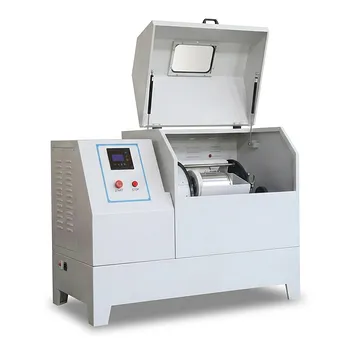
Heavy Duty Horizontal Planetary Ball Mill for Efficient Industrial Grinding and Sample Preparation
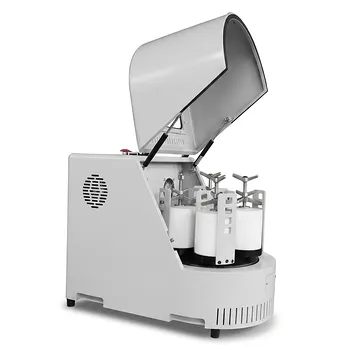
Vertical Semi Circular Planetary Ball Mill for Laboratory Precision Grinding
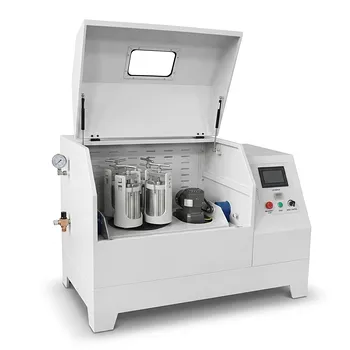
Vertical Production Planetary Ball Mill for High Throughput Powder Processing
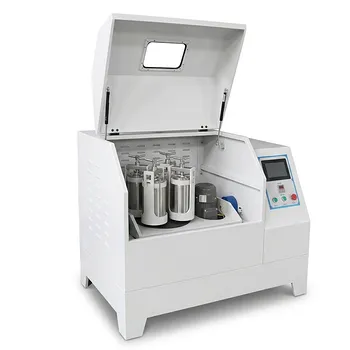
360° Rotating Omnidirectional Laboratory Planetary Ball Mill for Homogeneous Ultra-Fine Grinding and Mixing
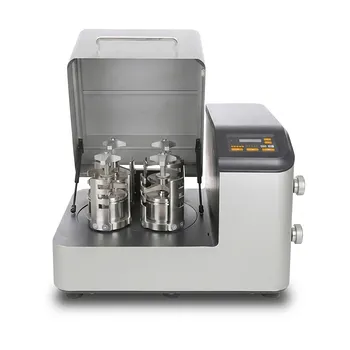
High Energy Planetary Ball Mill for Nano Scale Grinding and Colloidal Mixing in Material Science Research
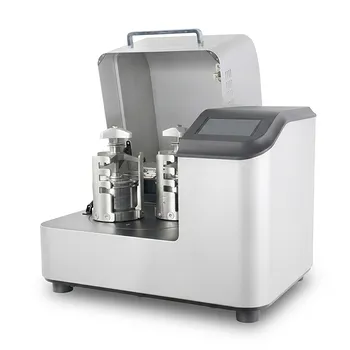
High Energy Planetary Ball Mill for Nano Scale Grinding and Mechanical Alloying
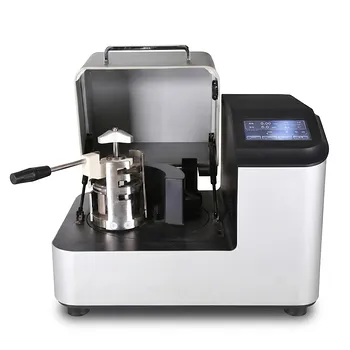
High Energy Laboratory Planetary Ball Mill for Nano Grinding and Material Science Sample Preparation
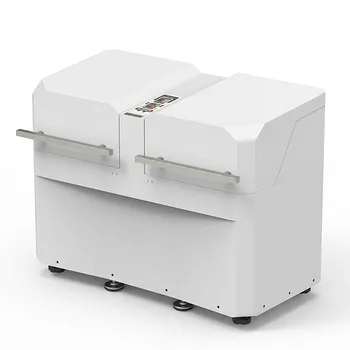
Dual Station Planetary Ball Mill 24L
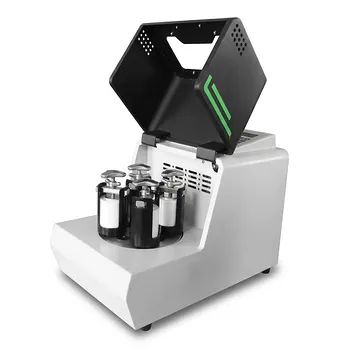
Miniature Planetary Ball Mill with Vacuum Grinding and High Efficiency for Laboratory Sample Preparation
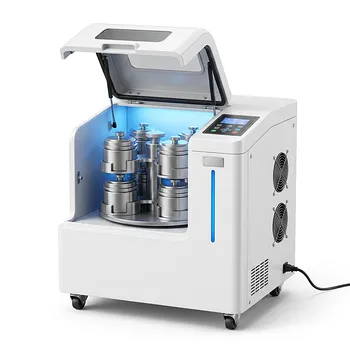
High Energy Omnidirectional Planetary Ball Mill 20L

High Throughput Micro Ball Mill for Cryogenic Grinding and Laboratory Cell Disruption
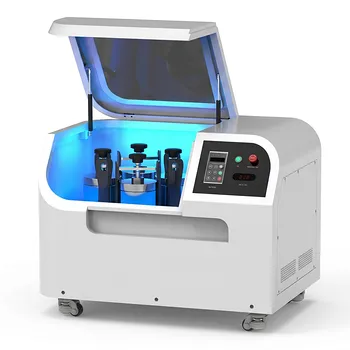
Planetary Ball Mill 12L
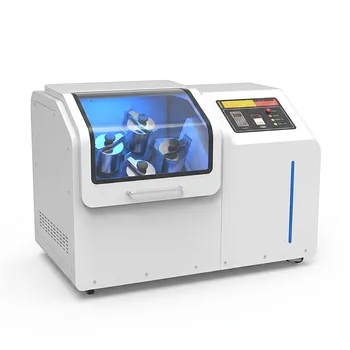
High Energy Omnidirectional Planetary Ball Mill 16L
Laboratory Nano High Energy Ball Mill Ultrafine Grinding Mechanical Alloying
Horizontal Light Duty Planetary Ball Mill for Laboratory Sample Preparation