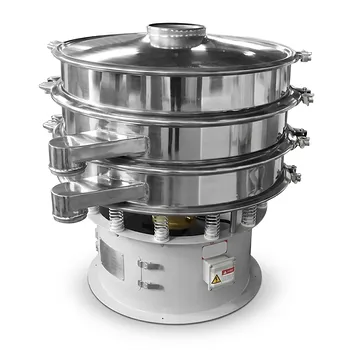
What role do automatic laboratory sieve shakers play in quantifying rock disintegration? Achieve Precise Material Data.
Updated 4 months ago
The disintegration of metamorphic rock is quantified through the precise measurement of particle size reduction over time. Automatic laboratory sieve shakers and standard test sieves provide the standardized mechanical force and graduated apertures required to separate fine debris from original rock fragments. This process allows researchers to calculate breakage rates and fragmentation efficiency, transforming physical weathering observations into objective, repeatable data.
These instruments provide the necessary framework to translate the physical decay of metamorphic rock into measurable metrics, such as the Marsal breakage index and fineness modulus. By ensuring a standardized sieving duration and vibration intensity, they eliminate human error and allow for the accurate assessment of rock stability under environmental stress.
Standardizing the Measurement of Rock Fragmentation
Ensuring Procedural Repeatability
Automatic laboratory sieve shakers provide standardized mechanical vibration and constant sieving durations. This consistency is vital for ensuring that the results of particle size grading are objective and can be replicated across different experimental cycles.
Quantifying Fragmentation Efficiency
By using these tools, researchers can precisely separate fine debris produced during leaching or freeze-thaw experiments from the original coarse fragments. This separation is the foundation for quantifying the efficiency of rock physical fragmentation under varying temperature and environmental conditions.
Mapping the Physical Transition
Sieve analysis allows for the creation of particle size accumulation curves before and after a test. These curves visually and mathematically demonstrate the transition of ground materials from coarse particles to fine debris under specific loads or weathering cycles.
Calculating Structural Integrity and Material Quality
Determining Breakage Indices
The data gathered from standard test sieves is essential for calculating the Marsal breakage index and residue rates. These quantitative values allow engineers to predict how metamorphic rock will behave under structural loads or long-term environmental exposure.
Establishing the Fineness Modulus
Sieve shakers help determine the fineness modulus (Mf) and uniformity coefficient of the disintegrated rock. These physical foundations are used to evaluate whether the resulting material is suitable for use as aggregate in concrete or specialized mortars.
Evaluating Aggregate Suitability
In civil engineering, sieve analysis determines if crushed metamorphic rock, such as granite, meets the density and workability requirements for construction. This ensures the density of the mixture and the overall quality of the concrete mix design.
Understanding the Trade-offs and Pitfalls
The Risk of Secondary Breakage
While automatic shakers ensure consistency, excessive sieving time can cause secondary breakage. The mechanical energy of the shaker itself may further degrade fragile metamorphic fragments, potentially overestimating the natural disintegration rate.
Impact of Sieve Clogging
Fine debris, especially when moisture is present from leaching experiments, can lead to sieve blinding or clogging. If the apertures are blocked, the particle size distribution data will be skewed, leading to inaccurate assessments of rock decay.
Calibration and Wear
Standard test sieves are subject to wear over time, particularly when processing abrasive metamorphic materials. Regular calibration is required to ensure that aperture sizes remain within tolerance, as even minor deviations can compromise the integrity of the breakage index calculations.
How to Apply These Tools to Your Research
If you are quantifying the disintegration of metamorphic rock, your methodology should be guided by your ultimate objective:
- If your primary focus is environmental weathering studies: Prioritize the use of automatic shakers with constant durations to ensure the repeatability of debris separation across hundreds of freeze-thaw cycles.
- If your primary focus is structural engineering or load testing: Focus on calculating the Marsal breakage index and accumulation curves to predict how rock mass stability changes under pressure.
- If your primary focus is material sourcing for construction: Use sieve analysis to determine the fineness modulus and uniformity coefficient, ensuring the rock fragments meet specific aggregate quality standards.
By utilizing these tools correctly, you transform the complex process of metamorphic rock decay into a clear, quantifiable narrative of material transformation.
Summary Table:
| Application Segment | Key Metrics Tracked | Value Proposition |
|---|---|---|
| Weathering Studies | Fragmentation Efficiency | Objective debris separation across freeze-thaw cycles. |
| Structural Engineering | Marsal Breakage Index | Predicts rock mass stability and behavior under load. |
| Construction Materials | Fineness Modulus (Mf) | Evaluates aggregate suitability for concrete and mortar. |
| Laboratory Research | Particle Size Curves | Maps the physical transition from coarse to fine debris. |
| Quality Control | Uniformity Coefficient | Ensures procedural repeatability and eliminates human error. |
Elevate Your Material Analysis with Professional Laboratory Solutions
Are you looking to transform complex metamorphic rock decay into clear, quantifiable data? [Company Name] provides complete laboratory sample preparation solutions for material science, specializing in high-precision powder processing and compaction equipment.
Our extensive product lines are designed to ensure accuracy at every stage of your research:
- Sieving & Grading: Automatic sieve shakers (vibratory/air-jet) and a full range of standard test sieves and meshes.
- Size Reduction: Advanced jaw/roll crushers, liquid nitrogen cryogenic grinders, and various mills (planetary ball, jet, sand, disc, and rotor).
- Sample Compaction: A full spectrum of hydraulic presses, including Cold/Warm Isostatic Presses (CIP/WIP), XRF pellet presses, and vacuum hot presses.
- Mixing: High-efficiency powder mixers and vacuum defoaming mixers.
Whether you are evaluating aggregate suitability or calculating breakage indices, our equipment provides the reliability you need for objective results. Contact our experts today to find the perfect solution for your laboratory's unique requirements!
References
- Boris Ilyashuk, Elena A. Ilyashuk. Water–Rock Interaction and Freeze–Thaw Cycles as Drivers of Acid Rock Drainage Generation by a Rock Glacier in the European Alps. DOI: 10.1021/acsestwater.4c00263
Mentioned Products
- Vibratory Sieve Shaker Electromagnetic 3D Motion Powder Particle Size Analyzer for Dry and Wet Sieving
- 三维电磁微量振动筛分仪
- Stainless Steel Laboratory Vibratory Test Sieve Shaker
- Small Laboratory Vibrating Sieve Shaker for Precise Particle Size Analysis
- Heavy Duty Dry Three Dimensional Vibratory Sieve Shaker for Particle Separation
People Also Ask
- How does a vibratory sieve shaker contribute to optimizing the performance of activated carbon? Enhance Adsorption Precision
- Why is a laboratory vibratory sieve shaker necessary for processing magnesium-based borate precursor powders? Boost Activity
- Why use a vibratory sieve shaker to verify coarse aggregate grading in rubberized concrete? Ensure Structural Integrity
- What function do vibratory sieve shakers and standard test sieves serve in the preparation of adsorbents? Key Guide
- What role does a vibratory sieve shaker play in the particle size analysis of ground corn products? Enhance QC Precision

Tech Team · PowderPreparation
Last updated on Jun 03, 2026
Related Products
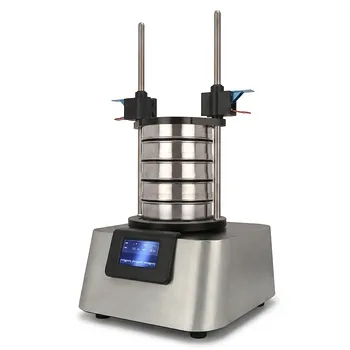
Vibratory Sieve Shaker Electromagnetic 3D Motion Powder Particle Size Analyzer for Dry and Wet Sieving
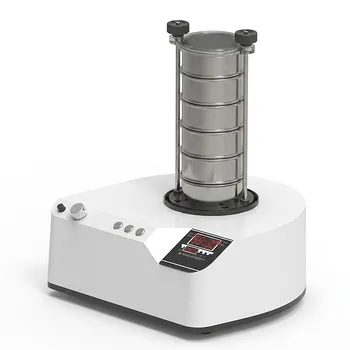
三维电磁微量振动筛分仪
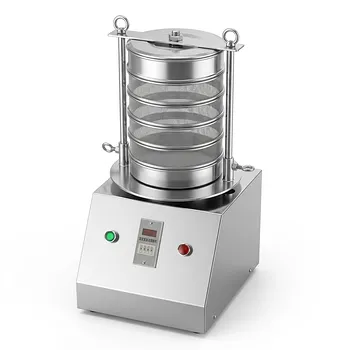
Stainless Steel Laboratory Vibratory Test Sieve Shaker
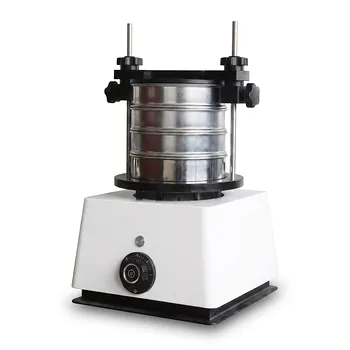
Small Laboratory Vibrating Sieve Shaker for Precise Particle Size Analysis
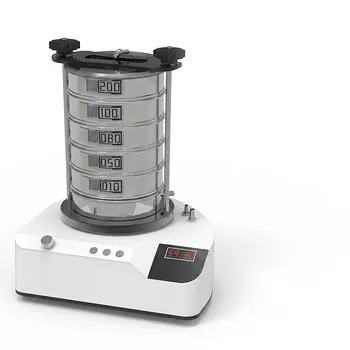
Heavy Duty Dry Three Dimensional Vibratory Sieve Shaker for Particle Separation
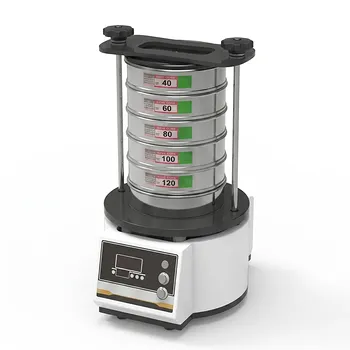
Dry Three Dimensional Vibratory Sieve Shaker
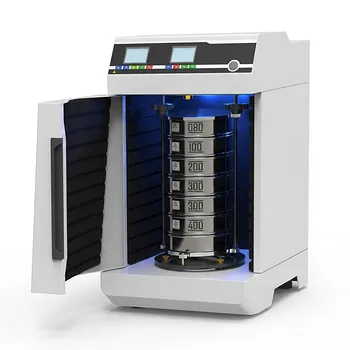
Laboratory Dry and Wet Three Dimensional Vibratory Sieve Shaker for Particle Analysis
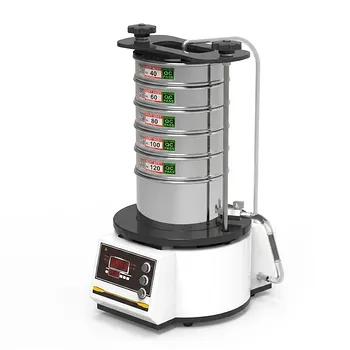
High Frequency Wet Three-Dimensional Vibrating Sieve Shaker for Dry and Wet Particle Size Analysis
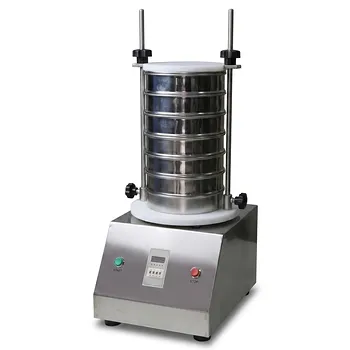
Laboratory Vibratory Test Sieve Shaker for Precision Particle Size Analysis and Powder Grading
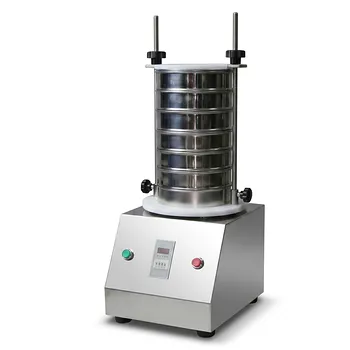
Small Laboratory Vibratory Sieve Shaker for Powder Gradation and Particle Size Analysis
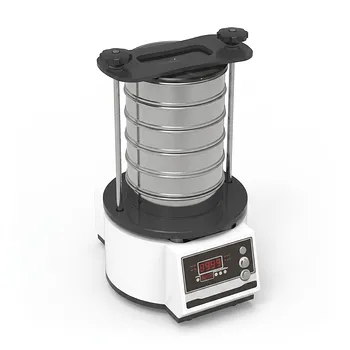
Tapping Oscillating Sieve Shaker for Dry and Wet Particle Size Analysis
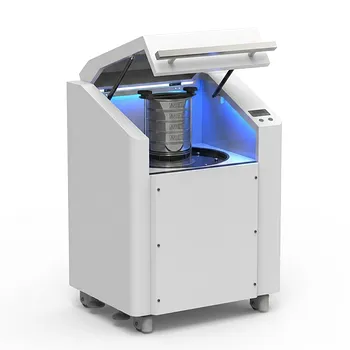
High Frequency Cabinet Type Three-Dimensional Rotary Vibrating Sieve Shaker for Dry Sieving and Particle Classification

Stainless Steel Rotary Vibrating Sieve High Precision Circular Vibratory Separator Industrial Powder Grading Machine Multi Layer Sifting Equipment
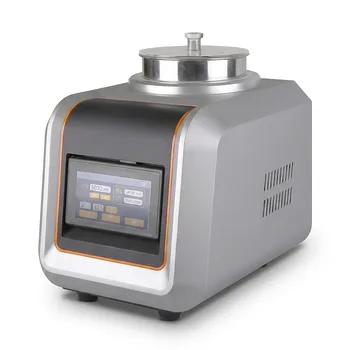
Laboratory Air Jet Sieving Machine for Fine Powder Particle Size Analysis and Deagglomeration