What role do a vibratory sieve shaker and a 200-mesh sieve play in OPEFB bio-adsorbent sizing? Maximize Adsorption.
Updated 4 months ago
The combination of a vibratory sieve shaker and a 200-mesh sieve acts as a mechanical gatekeeper that ensures Oil Palm Empty Fruit Bunch (OPEFB) bio-adsorbents reach a specific, uniform particle size. By utilizing mechanical vibration to pass ground carbon through a 200-mesh screen, researchers isolate particles smaller than 0.074 mm, a critical threshold for maximizing the surface area and adsorption efficiency of the material in wastewater treatment applications.
The core role of these tools is to eliminate particle size variability, ensuring that OPEFB bio-adsorbents exhibit consistent kinetic behavior and predictable adsorption rates. By achieving a uniform distribution below 0.074 mm, the process transforms raw biomass into a high-performance technical material suitable for rigorous mathematical modeling and industrial application.
The Mechanical Function of the Vibratory Sieve Shaker
Providing Consistent Kinetic Energy
The vibratory sieve shaker provides the mechanical energy necessary to overcome inter-particle friction and static electricity in ground OPEFB fibers. This consistent agitation ensures that every particle has multiple opportunities to contact the sieve surface, preventing the "blinding" or clogging of the mesh.
Ensuring Representative Separation
Unlike manual shaking, a vibratory shaker maintains a controlled frequency and amplitude. This precision allows for a highly repeatable separation process, ensuring that the resulting powder accurately represents the desired size fraction across different production batches.
The Role of the 200-Mesh Standard Sieve
Defining the 0.074 mm Threshold
The 200-mesh sieve serves as the physical interceptor, allowing only particles smaller than 0.074 mm to pass through. This specific size is a industry standard for "fine" powders, which are often required to maximize the active surface area of the OPEFB carbon.
Standardizing Surface Area for Adsorption
By restricting the particle size to this narrow range, the sieve ensures that the total available surface area for chemical bonding is maximized. This is essential for the bio-adsorbent's ability to capture contaminants from acidic mine wastewater effectively.
Impact on Bio-adsorbent Performance and Research
Optimizing Adsorption Kinetics
Uniformly small particles eliminate variations in diffusion rates that occur when large and small particles are mixed. When particles are consistent, the time it takes for a contaminant to travel from the surface to the center of the particle remains uniform, leading to faster and more predictable adsorption.
Enhancing Data Reproducibility
For researchers, particle consistency is vital for mathematical model fitting, such as pseudo-second-order kinetics and isotherm analysis. If particle sizes vary wildly, the experimental data becomes "noisy," making it difficult to determine the true efficiency of the OPEFB material.
Improving Dispersibility and Sedimentation
In wastewater treatment, OPEFB powder must be dispersed evenly to contact the pollutants. Small, uniform particles stay suspended longer and settle at a predictable rate, which is critical for designing industrial-scale filtration and sedimentation tanks.
Understanding the Trade-offs and Pitfalls
The Risk of Excessive Degradation
While small particles are generally better for adsorption, over-grinding biomass to pass through a fine mesh can lead to excessive degradation of the nanocellulose structure. This can weaken the mechanical properties of the bio-adsorbent or lead to the loss of specific functional groups.
Handling "Fines" and Dust
Using a 200-mesh sieve creates extremely fine dust that can be difficult to manage in an industrial setting. These ultrafine particles may be prone to entrainment, where they are carried away by water flow or air currents rather than settling, potentially leading to material loss or secondary pollution.
Incomplete Reactions in Larger Fractions
If the sieving process is skipped, larger OPEFB particles may suffer from incomplete chemical reactions during the carbonization or activation phases. The core of a large particle may remain untreated, significantly reducing the overall adsorption capacity of the batch.
How to Apply This to Your Project
Maximizing Your Adsorbent Efficiency
When preparing OPEFB bio-adsorbents, your choice of sieving parameters should be dictated by your specific treatment goals and the limitations of your processing equipment.
- If your primary focus is rapid contaminant removal: Use the 200-mesh sieve to ensure a high surface-area-to-volume ratio, which accelerates adsorption kinetics.
- If your primary focus is mathematical modeling and research: Utilize the vibratory shaker at a fixed frequency to ensure your samples are perfectly consistent for reproducible isotherm studies.
- If your primary focus is industrial-scale wastewater flow: Consider a slightly larger mesh size (e.g., 100-mesh) if the 200-mesh fines are causing filtration clogging or excessive material loss in your specific system.
- If your primary focus is gasification or fluidized beds: Use a range of sieves to create a specific "grading" that prevents fine powder entrainment while avoiding large particle accumulation.
By precisely controlling particle size through standardized sieving, you transform raw OPEFB biomass into a predictable, high-efficiency tool for environmental remediation.
Summary Table:
| Component | Primary Function | Impact on Bio-adsorbent |
|---|---|---|
| Vibratory Sieve Shaker | Consistent mechanical energy | Ensures repeatability and prevents mesh blinding |
| 200-Mesh Sieve | 0.074 mm physical threshold | Maximizes surface area for pollutant capture |
| Mechanical Vibration | Overcomes particle friction | Delivers representative and uniform size fractions |
| Controlled Particle Size | Standardizes diffusion rates | Enhances adsorption kinetics and data accuracy |
Optimize Your Material Science Research with Precision Equipment
Achieving the perfect particle size for OPEFB bio-adsorbents or advanced powders requires reliable, high-precision laboratory tools. We provide complete laboratory sample preparation solutions tailored for material science, specializing in high-end powder processing and compaction equipment.
Our extensive product lines include:
- Size Reduction: Jaw and roll crushers, liquid nitrogen cryogenic grinders, and high-performance mills (planetary ball, jet, sand/bead, disc, and rotor).
- Particle Analysis: Vibratory and air-jet sieve shakers with a full range of standardized test sieves and meshes.
- Mixing & Compaction: Powder and defoaming mixers, plus a full spectrum of hydraulic presses, including Cold/Warm Isostatic Presses (CIP/WIP), standard lab presses, XRF pellet presses, and vacuum hot presses.
Whether you are scaling up environmental remediation research or developing new technical materials, we offer the technical expertise and equipment reliability you need. Contact us today to find the perfect solution for your lab!
References
- Saisa Saisa, Erdiwansyah Erdiwansyah. Development of Alumina-Chitosan Modified Carbon Monolith from Oil Palm Waste: Carbonization and Initial Characterization. DOI: 10.32672/picmr.v7i2.3037
Mentioned Products
- Vibratory Sieve Shaker Electromagnetic 3D Motion Powder Particle Size Analyzer for Dry and Wet Sieving
- Stainless Steel Laboratory Vibratory Test Sieve Shaker
- Small Laboratory Vibratory Sieve Shaker for Powder Gradation and Particle Size Analysis
- Dry Three Dimensional Vibratory Sieve Shaker
- Heavy Duty Dry Three Dimensional Vibratory Sieve Shaker for Particle Separation
People Also Ask
- How does a vibratory sieve shaker contribute to optimizing the performance of activated carbon? Enhance Adsorption Precision
- Why is a laboratory vibratory sieve shaker necessary for processing magnesium-based borate precursor powders? Boost Activity
- Why use a vibratory sieve shaker to verify coarse aggregate grading in rubberized concrete? Ensure Structural Integrity
- What function do vibratory sieve shakers and standard test sieves serve in the preparation of adsorbents? Key Guide
- What role does a vibratory sieve shaker play in the particle size analysis of ground corn products? Enhance QC Precision

Tech Team · PowderPreparation
Last updated on Jun 03, 2026
Related Products
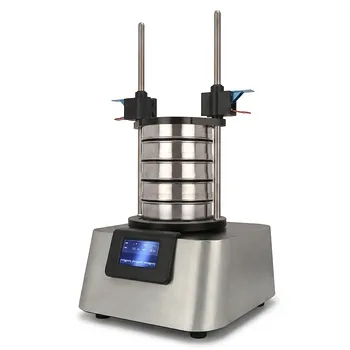
Vibratory Sieve Shaker Electromagnetic 3D Motion Powder Particle Size Analyzer for Dry and Wet Sieving
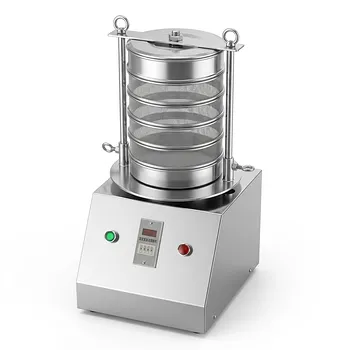
Stainless Steel Laboratory Vibratory Test Sieve Shaker
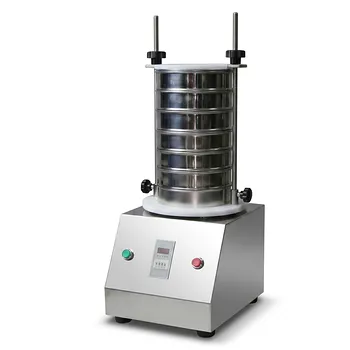
Small Laboratory Vibratory Sieve Shaker for Powder Gradation and Particle Size Analysis
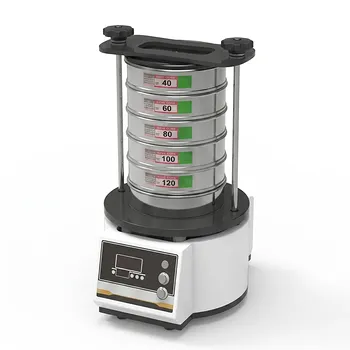
Dry Three Dimensional Vibratory Sieve Shaker
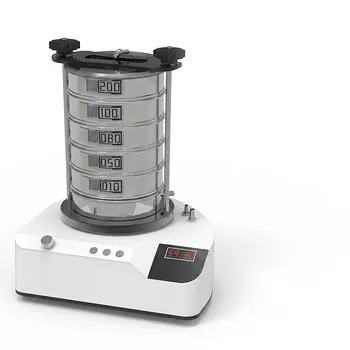
Heavy Duty Dry Three Dimensional Vibratory Sieve Shaker for Particle Separation
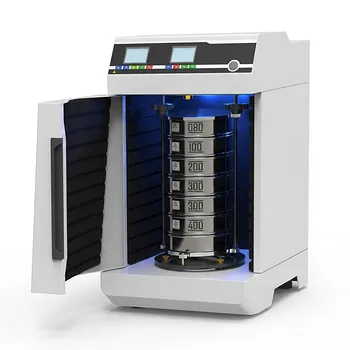
Laboratory Dry and Wet Three Dimensional Vibratory Sieve Shaker for Particle Analysis
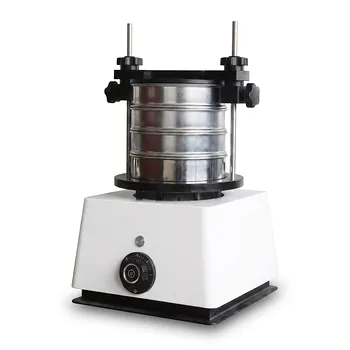
Small Laboratory Vibrating Sieve Shaker for Precise Particle Size Analysis
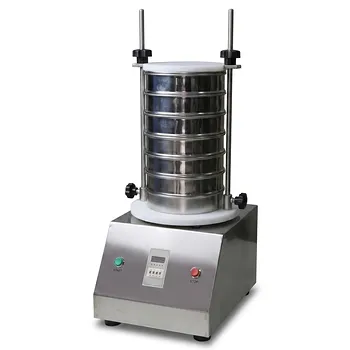
Laboratory Vibratory Test Sieve Shaker for Precision Particle Size Analysis and Powder Grading
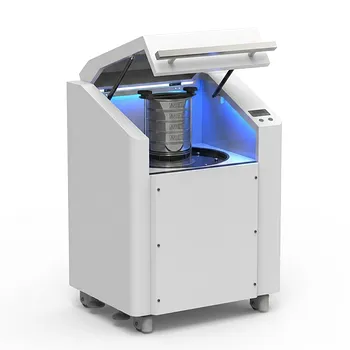
High Frequency Cabinet Type Three-Dimensional Rotary Vibrating Sieve Shaker for Dry Sieving and Particle Classification
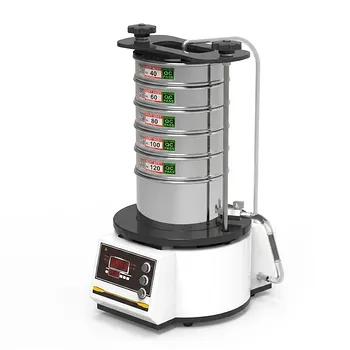
High Frequency Wet Three-Dimensional Vibrating Sieve Shaker for Dry and Wet Particle Size Analysis
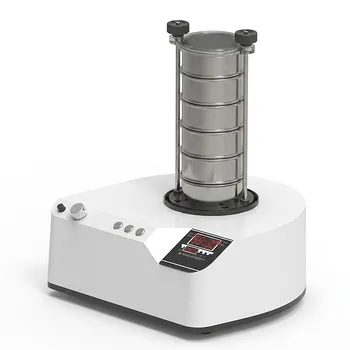
三维电磁微量振动筛分仪
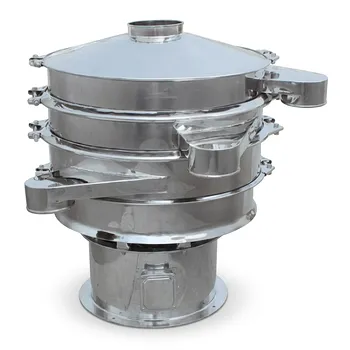
Stainless Steel Rotary Vibrating Sieve High Precision Circular Vibratory Separator Industrial Powder Grading Machine Multi Layer Sifting Equipment
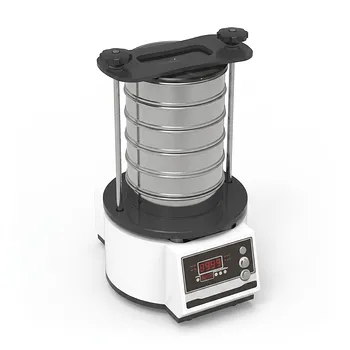
Tapping Oscillating Sieve Shaker for Dry and Wet Particle Size Analysis
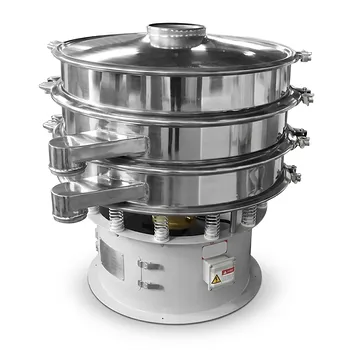
Three Dimensional Rotary Vibrating Sieve
Vibratory Superfine Grinder for Ultra Fine Laboratory Powder Milling
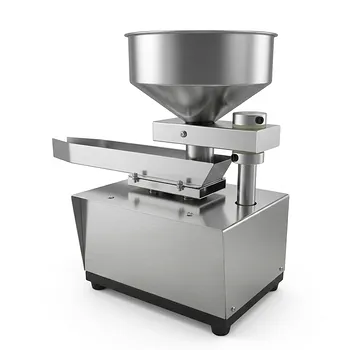
Automatic Vibrating Powder Feeder for Laboratory Material Processing Precision Vibratory Hopper Feeder for Granular and Powder Material Handling Industrial Grade Vibrating Tray Feeder for Consistent Material Sample Preparation