What physical conditions does a laboratory hydraulic press provide for evaluating ZTA ceramics? Precision Compaction.
Updated 4 months ago
The laboratory hydraulic press provides the foundational physical conditions of high-pressure axial compaction and precise geometric molding. By applying a standardized axial pressure (typically 100 MPa to 200 MPa) to ceramic powders within metal molds, the press eliminates the variability of random powder packing. This creates "green bodies" with consistent initial density and regulated dimensions, which are essential for accurately measuring sintering shrinkage, densification behavior, and mechanical properties like fracture toughness.
The core function of a laboratory hydraulic press is to establish a uniform, high-density initial state for ceramic powders, ensuring that subsequent performance data reflects the intrinsic material properties of the ZTA composite rather than specimen flaws. By providing controlled mechanical compression, researchers can isolate the effects of sintering temperatures and powder compositions on the final ceramic microstructure.
Achieving Structural Uniformity through Axial Compaction
Precision Axial Pressure Application
A hydraulic press applies a standardized axial pressure, commonly 100 MPa for ZTA, to compact loose ceramic powder into a solid "green body." This high-pressure environment forces a preliminary rearrangement of particles, effectively expelling air and closing macroscopic gaps between the Alumina and Zirconia grains.
Elimination of Packing Variability
In its raw state, ceramic powder suffers from random packing, which creates inconsistent internal voids. The hydraulic press replaces this randomness with a consistent initial density, providing a stable baseline that allows researchers to compare different material batches with high statistical confidence.
Increased Initial Packing Density
By forcing particles into tight contact, the press significantly increases the initial packing density of the powder. This dense structure provides the green body with the mechanical strength necessary to be handled and measured before it undergoes the high-temperature sintering process.
Defining Geometric Constraints for Testing
Standardized Specimen Geometries
The use of precision metal molds (often steel or stainless steel) allows the press to form powders into standardized shapes such as bars, cylinders, pellets, or discs. These specific geometries are required for various standardized testing protocols, including microhardness measurements and ultrasonic velocity testing.
Dimensional Accuracy and Thickness Control
Controlled pressure ensures that every specimen reaches a regulated thickness and diameter, which is critical for calculating volume-based metrics. This dimensional accuracy allows for the precise tracking of sintering shrinkage, helping researchers predict how the ZTA component will change size during final production.
Minimizing Anisotropic Shrinkage
The uniform density provided by the press is the primary safeguard against non-uniform shrinkage or deformation. When a green body has a consistent internal structure, it is much less likely to crack or warp during the transition from a powder compact to a fully dense ceramic.
Enabling Accurate Mechanical and Thermal Evaluation
Foundation for Hardness and Toughness Testing
A dense, defect-free green body is a prerequisite for evaluating intrinsic hardness and fracture toughness ($K_{1c}$). Without the tight particle contact established by the hydraulic press, subsequent sintering would result in high porosity, which would artificially lower the measured mechanical strength of the ZTA material.
Data Acquisition for Finite Element Analysis
The specimens produced by the press are used to determine core elastic parameters, such as Young’s modulus and Poisson’s ratio. These values serve as accurate material input data for finite element analysis (FEA) models, ensuring that computer simulations of ZTA performance align with physical reality.
Studying Densification Behavior
By establishing a consistent starting state, the hydraulic press allows researchers to isolate the impact of sintering temperature on final porosity. This enables the creation of precise densification curves, which are vital for optimizing the thermal processing of Zirconia Toughened Alumina.
Understanding the Trade-offs and Limitations
Pressure Gradients and Internal Stress
While axial pressing is effective, it can introduce pressure gradients within the sample due to friction between the powder and the mold walls. This can result in slight density variations between the top and bottom of the specimen, which may lead to subtle warping during sintering.
Mold Wear and Contamination
Repeated use of metal molds at high pressures can lead to surface wear, potentially introducing trace metallic contaminants into the ceramic powder. To maintain high purity in ZTA ceramics, researchers must frequently inspect mold surfaces and use lubricants or liners where appropriate.
Geometrical Constraints
Axial pressing is generally limited to simple geometric shapes like discs and rectangular bars. For complex parts, the hydraulic press serves only as a tool for material characterization, as it cannot easily produce the intricate features required for final engineering components.
How to Apply These Conditions to Your Research
Strategic Recommendations for Specimen Preparation
The specific pressure and mold choice should be dictated by the final performance metric you intend to measure.
- If your primary focus is mechanical strength and toughness: Apply a higher pressure (up to 200 MPa) to ensure the elimination of macroscopic defects and to maximize initial densification.
- If your primary focus is sintering kinetics and shrinkage: Use a standardized 100 MPa pressure to maintain a consistent baseline that aligns with established literature and industrial benchmarks.
- If your primary focus is computational modeling (FEA): Ensure your mold produces pellets with a high diameter-to-thickness ratio to minimize the impact of pressure gradients on your elastic modulus measurements.
The laboratory hydraulic press is not merely a forming tool, but a precision instrument that defines the physical environment necessary for rigorous ceramic performance evaluation.
Summary Table:
| Physical Condition | Technical Action | Impact on Performance Evaluation |
|---|---|---|
| Axial Compaction | Applies 100-200 MPa pressure | Eliminates random packing; creates consistent green body density. |
| Geometric Molding | Use of precision metal molds | Produces standardized shapes (bars/discs) for microhardness & shrinkage tests. |
| Mechanical Compression | Particle rearrangement & air expulsion | Increases packing density to prevent warping and cracking during sintering. |
| Pressure Control | Regulated thickness & diameter | Provides accurate volume-based metrics and data for FEA modeling. |
Elevate Your Material Research with Precision Compaction Solutions
Achieving consistent, high-density green bodies is the first step toward breakthrough ceramic performance. At [Company Name], we provide complete laboratory sample preparation solutions for material science, specializing in high-performance powder processing and compaction equipment.
Our extensive range includes:
- Advanced Hydraulic Presses: A full spectrum including Cold/Warm Isostatic Presses (CIP/WIP), standard lab presses, XRF pellet presses, and vacuum hot presses.
- Powder Processing: High-efficiency mills (planetary ball, jet, rotor), crushers (jaw/roll), and cryogenic grinders.
- Sieving & Mixing: Vibratory sieve shakers and advanced powder/defoaming mixers.
Whether you are refining ZTA composites or developing new material formulations, our equipment ensures the structural uniformity and dimensional accuracy your research demands.
Contact our experts today to find the perfect compaction solution for your laboratory.
References
- Т. О. Оболкина, В. С. Комлев. Adding MnO to Improve the Characteristics of Zirconia-Toughened Alumina Ceramic Parts Made Using the Digital Light Processing Method. DOI: 10.3390/min15010010
Mentioned Products
- 6-Ton Small Single-Punch Tablet Press — Laboratory Powder & Granule Tableting Equipment / Tablet Forming Machine
- 5 Ton Single Punch Tablet Press Laboratory Small Batch Production
- Manual Tablet Press with Dual Scale Pressure Gauge for Pharmaceutical Food Chemical Laboratory Sample Preparation
- 6 Ton Variable Frequency Single Punch Tablet Press
- High Shear Laboratory Emulsifier for Mixing and Homogenization
People Also Ask
- What is the function of a laboratory press in Cr-Ti alloy evaluation? Quantify Fracture Stress & Strength
- What is the function of a laboratory press in assessing the hydrophobic performance of modified vermiculite fillers?
- What is the core function of a laboratory press in the forming of ceramic filter element green bodies? Maximize Density.
- What is the function of a laboratory press in the preparation of ceramic feed rods? Master Density and Precision
- Why is vacuum sealing and flexible packaging necessary for Aluminum Titanate powders during CIP? Ensure Peak Density

Tech Team · PowderPreparation
Last updated on Jun 03, 2026
Related Products
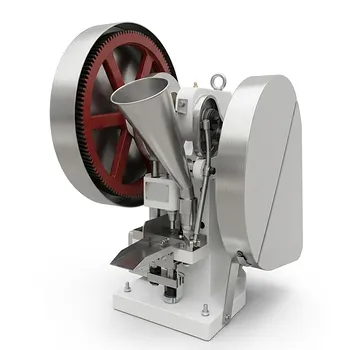
6-Ton Small Single-Punch Tablet Press — Laboratory Powder & Granule Tableting Equipment / Tablet Forming Machine
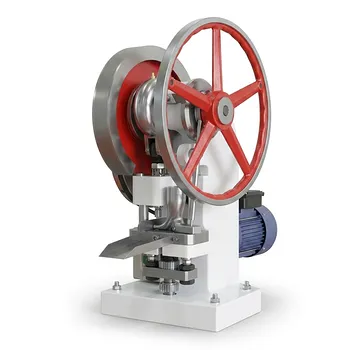
5 Ton Single Punch Tablet Press Laboratory Small Batch Production
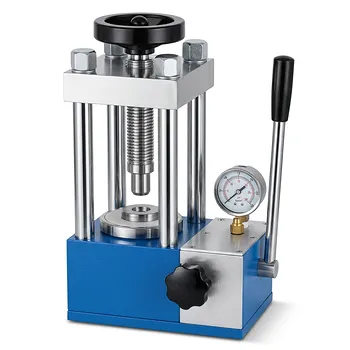
Manual Tablet Press with Dual Scale Pressure Gauge for Pharmaceutical Food Chemical Laboratory Sample Preparation
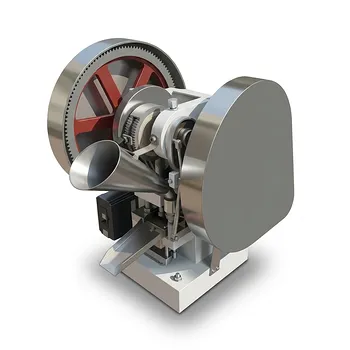
6 Ton Variable Frequency Single Punch Tablet Press
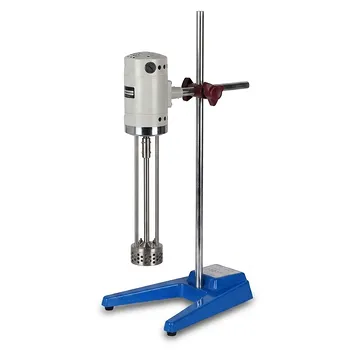
High Shear Laboratory Emulsifier for Mixing and Homogenization
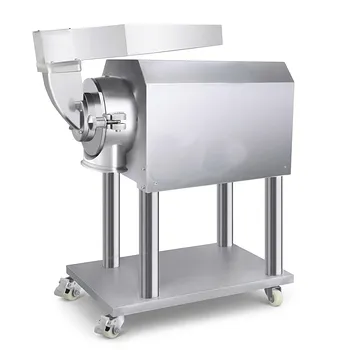
High Speed Small Laboratory Crusher for Dry Material Sample Preparation
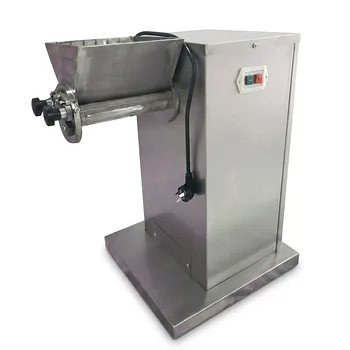
Small Laboratory Oscillating Granulator for Wet and Dry Granulation Processing
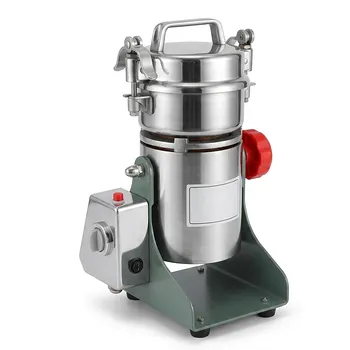
High Speed Swing Type Laboratory Pulverizer for Fine Powder Grinding and Sample Preparation