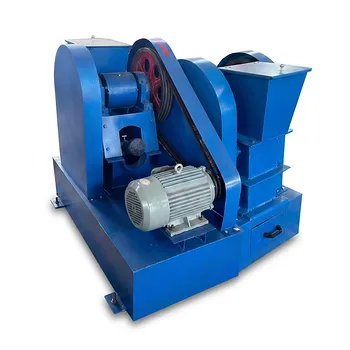
What key functions does a laboratory hydraulic press provide in biomass densification? Optimize Your Biofuel Research
Updated 4 months ago
In biomass densification, a laboratory hydraulic press serves as the primary mechanism for converting loose organic matter into standardized, high-density solids. It provides a highly controlled environment with pressures typically ranging from 130.8 to 457.8 MPa to overcome the internal elastic resistance of biomass fibers. This allows researchers to precisely study the relationship between molding force and the resulting physical properties of the biofuel.
A laboratory hydraulic press provides the stable, high-pressure environment necessary to force biomass particles into a dense state through rearrangement and bonding. Its precision is the foundation for establishing mathematical models of densification and ensuring sample consistency for mechanical testing.
Mechanical Transformation of Raw Biomass
Overcoming Internal Elastic Resistance
The primary function of the press is to apply enough force to surpass the elastic resistance of the biomass powder. This transition is essential for transforming a loose, springy material into a permanent, dense solid.
Particle Rearrangement and Interlocking
High axial loads force biomass particles to undergo rearrangement, deformation, and interlocking. This physical shift reduces the void space between fibers, significantly increasing the material's bulk density.
Promotion of Intermolecular Bonding
Constant pressure facilitates bonding through intermolecular forces and plastic deformation of woody fibers. This ensures that the biomass maintains its molded shape even after being ejected from the die.
Precision Control for Scientific Research
Pressure-Holding Stability
The ability to maintain a constant pressure environment is critical for research accuracy. Stability allows scientists to isolate variables and determine the exact mathematical relationship between molding pressure and specific density (DE).
Elimination of Fluctuations
Consistent compression force eliminates the fluctuations in molding force that often occur in manual or less precise systems. This ensures that every sample in a study is produced under identical conditions, which is vital for quality analysis.
Standardization of Sample Geometry
By using high-strength molds, the press creates "green bodies" or pellets with precise dimensions. These standardized geometries are necessary for subsequent mechanical testing, such as measuring Young's modulus or hardness.
Enhancing Physical and Energy Properties
Increasing Volumetric Energy Density
Densification can increase the bulk density of materials like sugarcane bagasse from 0.08 g/cm³ to 0.25 g/cm³. This process converts low-energy waste into high-energy fuel rods that are easier to transport and store.
Improving Structural Integrity
The press ensures that fuel briquettes achieve a high shattering index, making them resistant to breakage. This durability is essential for simulating the rigors of industrial-scale pelletization and logistics.
Removal of Internal Porosity
Accurate pressure application helps eliminate internal pores and density gradients. This prevents the specimens from deforming or cracking during later stages of research, such as heat treatments.
Understanding the Trade-offs
Limits of Elastic Recovery
If the pressure is not held for a sufficient duration, the biomass may experience elastic recovery upon ejection. This can lead to expansion, cracking, or a total loss of structural integrity in the pellet.
Risks of Excessive Pressure
While higher pressure generally increases density, exceeding the material's limits can cause internal stresses. These stresses may result in "hidden" fractures that compromise the accuracy of mechanical strength data.
Mold Wear and Maintenance
Operating at the high end of the pressure range (above 400 MPa) significantly increases wear on the molding die. Frequent calibration and inspection are required to ensure that the internal dimensions of the mold remain within experimental tolerances.
How to Apply This to Your Project
Recommendations for Success
- If your primary focus is establishing mathematical models: Prioritize a press with high pressure-holding stability to ensure that your density-to-pressure data is statistically significant.
- If your primary focus is simulating industrial production: Focus on a system that can reach high axial loads (97 MPa or higher) to replicate the interlocking and bonding seen in commercial pellet mills.
- If your primary focus is mechanical property testing: Ensure your press can eliminate internal pores and density gradients to prevent sample failure during Young's modulus or hardness evaluations.
The laboratory hydraulic press remains the indispensable core of biomass research, providing the precision necessary to turn raw waste into viable energy solutions.
Summary Table:
| Key Function | Impact on Biomass Material | Research Benefit |
|---|---|---|
| Mechanical Transformation | Overcomes elastic resistance & rearranges particles | Increases bulk density and solidifies loose matter |
| Precision Pressure Control | Eliminates force fluctuations during compression | Ensures repeatable data for mathematical modeling |
| Structural Standardization | Creates uniform green bodies and pellets | Provides precise geometry for mechanical testing |
| Energy Density Boost | Removes internal porosity and void spaces | Increases volumetric energy density for storage |
| Bonding Promotion | Facilitates intermolecular forces and interlocking | Enhances structural integrity and shattering index |
Elevate Your Biomass Research with Precision Engineering
Achieving consistent, high-density results in biomass densification requires equipment that offers both power and stability. [Your Brand Name] provides complete laboratory sample preparation solutions tailored for material science. We specialize in high-performance powder processing and compaction equipment designed to meet the rigorous demands of biofuel research.
Our extensive product line includes:
- Crushing & Grinding: Jaw/roll crushers, liquid nitrogen cryogenic grinders, and planetary ball/jet mills.
- Sieving & Mixing: Vibratory sieve shakers and high-efficiency powder/defoaming mixers.
- Advanced Pressing Solutions: A full spectrum of hydraulic presses, including Cold/Warm Isostatic Presses (CIP/WIP), standard lab presses, XRF pellet presses, and vacuum hot presses.
Whether you are establishing mathematical models or simulating industrial pelletization, our equipment ensures your samples have the structural integrity and density required for world-class research.
Contact our experts today to find the perfect press for your lab!
References
- Marek Wróbel, Adrian Knapczyk. Influence of Raw Material Drying Temperature on the Scots Pine (Pinus sylvestris L.) Biomass Agglomeration Process—A Preliminary Study. DOI: 10.3390/en13071809
Mentioned Products
- 6-Ton Small Single-Punch Tablet Press — Laboratory Powder & Granule Tableting Equipment / Tablet Forming Machine
- 5 Ton Single Punch Tablet Press Laboratory Small Batch Production
- Manual Tablet Press with Dual Scale Pressure Gauge for Pharmaceutical Food Chemical Laboratory Sample Preparation
- 6 Ton Variable Frequency Single Punch Tablet Press
- High Shear Laboratory Emulsifier for Mixing and Homogenization
People Also Ask
- What is the function of a laboratory press in Cr-Ti alloy evaluation? Quantify Fracture Stress & Strength
- What is the function of a laboratory press in assessing the hydrophobic performance of modified vermiculite fillers?
- What is the core function of a laboratory press in the forming of ceramic filter element green bodies? Maximize Density.
- What is the function of a laboratory press in the preparation of ceramic feed rods? Master Density and Precision
- Why is vacuum sealing and flexible packaging necessary for Aluminum Titanate powders during CIP? Ensure Peak Density

Tech Team · PowderPreparation
Last updated on Jun 03, 2026
Related Products
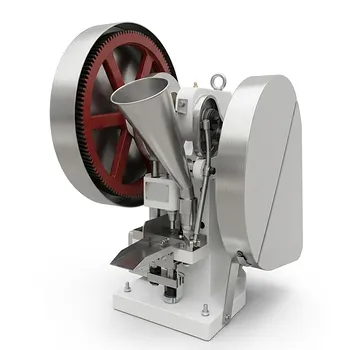
6-Ton Small Single-Punch Tablet Press — Laboratory Powder & Granule Tableting Equipment / Tablet Forming Machine
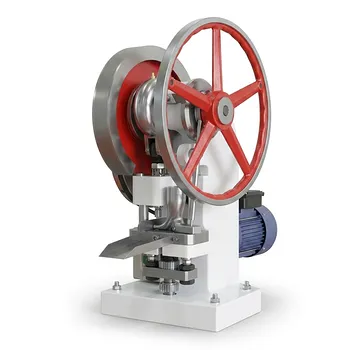
5 Ton Single Punch Tablet Press Laboratory Small Batch Production
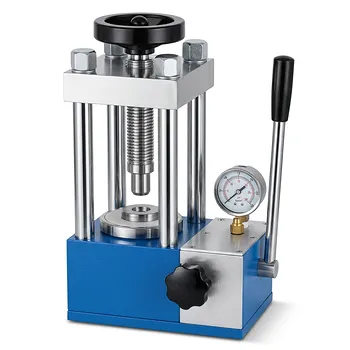
Manual Tablet Press with Dual Scale Pressure Gauge for Pharmaceutical Food Chemical Laboratory Sample Preparation
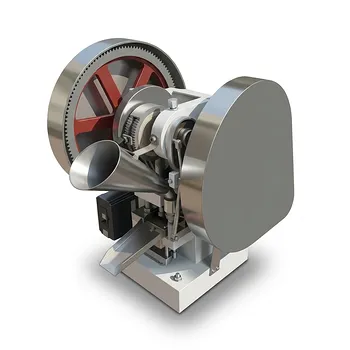
6 Ton Variable Frequency Single Punch Tablet Press
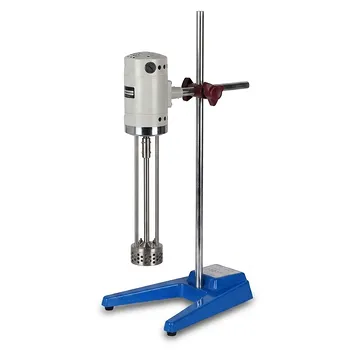
High Shear Laboratory Emulsifier for Mixing and Homogenization
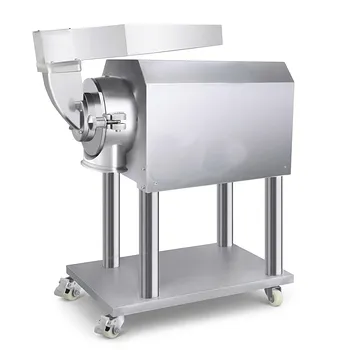
High Speed Small Laboratory Crusher for Dry Material Sample Preparation
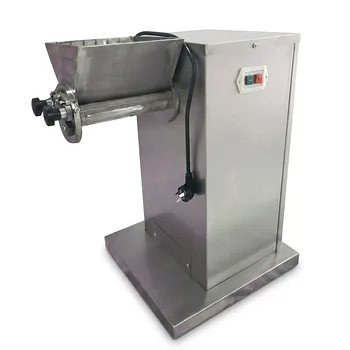
Small Laboratory Oscillating Granulator for Wet and Dry Granulation Processing
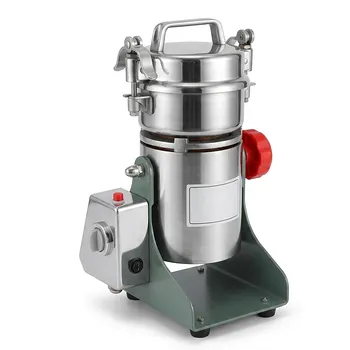
High Speed Swing Type Laboratory Pulverizer for Fine Powder Grinding and Sample Preparation