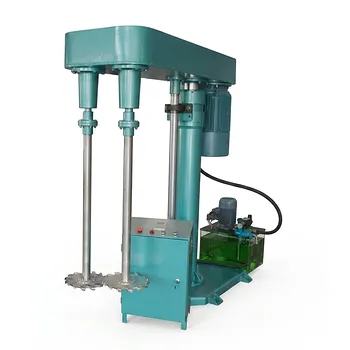
What is the technical significance of radial clearance in horizontal mixers? Boost Homogeneity & Reduce Dead Zones.
Updated 4 months ago
The radial clearance in industrial horizontal mixers is the primary mechanical lever for controlling shear intensity and ensuring batch homogeneity. It dictates how effectively material near the vessel wall is integrated into the bulk flow, directly preventing the formation of stagnant "dead zones." A precisely calibrated gap ensures that every particle is subjected to the same mixing forces, regardless of its position in the chamber.
The technical significance of radial clearance lies in its ability to balance high-efficiency mixing with material protection. Proper calibration maximizes material turnover while preventing the mechanical degradation or overheating caused by excessive particle squeezing.
Enhancing Mixing Uniformity and Flow Dynamics
Eliminating Dead Zones at the Vessel Periphery
In a horizontal mixer, the area closest to the vessel wall is the most prone to stagnation. A small, precise radial clearance ensures that the blade tips sweep the entire inner surface, forcing peripheral powder back into the active mixing stream. Without this proximity, a "skin" of unmixed material can build up, compromising the final product’s consistency.
Generating Necessary Shear Forces
The gap between the blade and the wall creates a high-velocity gradient known as shear. This force is essential for breaking down agglomerates and ensuring that additives are evenly dispersed throughout the primary medium. By adjusting the clearance, engineers can tune the shear intensity to match the specific viscosity or particle size of the material.
Impact on Material Integrity and Thermal Stability
Preventing Particle Attrition and Squeezing
If the radial clearance is too narrow relative to the particle size, material can become trapped and "squeezed" between the metal surfaces. This leads to particle breakage (attrition), which may alter the physical properties of the product, such as flowability or dissolution rates. Maintaining a gap slightly larger than the average particle diameter can mitigate this mechanical damage.
Managing Heat Generation
Mechanical friction in the clearance zone naturally generates heat. For thermally sensitive materials, such as certain plastics or pharmaceuticals, excessive squeezing in a tight gap can cause localized melting or chemical degradation. Controlling the clearance is a critical step in managing the "thermal budget" of the mixing process.
Understanding the Trade-offs and Operational Risks
The Risks of Excessive Clearance
While a wider gap protects particles, it significantly increases the risk of material layering against the wall. This leads to longer cycle times and potential batch contamination if the unmixed material is not recovered during discharge. In many cases, excessive clearance results in a "low-energy" mix that fails to reach the required level of homogeneity.
The Hazards of Insufficient Clearance
A clearance that is too tight increases the risk of metal-to-metal contact due to thermal expansion or shaft deflection during high-load starts. This can lead to equipment damage and the introduction of metallic contaminants into the product. Furthermore, the increased motor torque required to overcome friction in a tight gap can lead to higher energy costs and premature wear on the drive system.
Optimizing Clearance for Your Specific Application
Achieving the perfect balance depends entirely on the characteristics of your raw materials and your desired throughput.
- If your primary focus is Maximum Homogeneity: Minimize the radial clearance to ensure high shear and the total elimination of dead zones at the vessel wall.
- If your primary focus is Fragile Material Integrity: Increase the clearance to a width that exceeds the largest particle diameter to prevent crushing and attrition.
- If your primary focus is Heat-Sensitive Processing: Opt for a moderate clearance to reduce frictional heat generation and prevent localized product degradation.
By treating radial clearance as a critical process variable rather than a static design feature, you can significantly improve both the quality of your output and the longevity of your mixing equipment.
Summary Table:
| Clearance Level | Primary Benefit | Key Risk | Ideal Application |
|---|---|---|---|
| Narrow | Maximum homogeneity & high shear | Heat generation & particle breakage | Fine powders & de-agglomeration |
| Moderate | Balanced flow & thermal stability | Slightly longer cycle times | General-purpose mixing |
| Wide | Protects fragile particle integrity | Material layering & dead zones | Large or shear-sensitive granules |
Optimize Your Powder Processing with KINTEK
Achieving perfect homogeneity requires precision-engineered equipment tailored to your material's unique characteristics. KINTEK provides complete laboratory sample preparation solutions for material science, specializing in high-performance powder processing and compaction equipment.
Our extensive product line includes:
- Advanced Mixing: Powder mixers and defoaming mixers designed for consistency.
- Size Reduction: Crushers (jaw/roll), liquid nitrogen cryogenic grinders, and various mills (planetary ball, jet, sand/bead, disc, rotor).
- Classification: Sieve shakers (vibratory/air-jet) with precision test sieves.
- Compaction Excellence: A full spectrum of hydraulic presses, including Cold/Warm Isostatic Presses (CIP/WIP), standard lab presses, XRF pellet presses, and vacuum hot presses.
Whether you are refining shear intensity in a horizontal mixer or seeking high-pressure compaction solutions, our experts are here to help you enhance efficiency and product quality.
Contact KINTEK today for a customized solution!
References
- Bruno Laurent, J. Bridgwater. On the Relationship between Torque and Flow Structure in Powder Mixers. DOI: 10.14356/kona.2001016
Mentioned Products
- Horizontal Ribbon Mixer for Dry Powder and Slurry Blending
- Horizontal Trough Mixer for Uniform Powder and Paste Blending
- Horizontal Ribbon Mixer for Uniform Powder and Slurry Mixing
- Horizontal Jaw Crusher Medium Hard Material Crushing Laboratory Sample Preparation Equipment
- 非介入式材料均质机真空脱泡行星搅拌高粘度混合设备
People Also Ask
- How does the fill level of a horizontal mixer influence the selection of the stirring mechanism? Optimize Your Design
- How should the operation of mixing equipment be adjusted when processing cohesive powders? Key Operational Strategies
- What is the purpose of using a powder mixer to process Cu, Zn, and Al powders? Achieve Uniform High-Quality Coatings
- Why is the mixing process critical when incorporating carbonized products into an epoxy resin matrix? Maximize Strength
- What is the function of laboratory milling equipment in Sc2SnC synthesis? Achieve High-Purity MAX Phase Ceramics

Tech Team · PowderPreparation
Last updated on Jun 03, 2026
Related Products
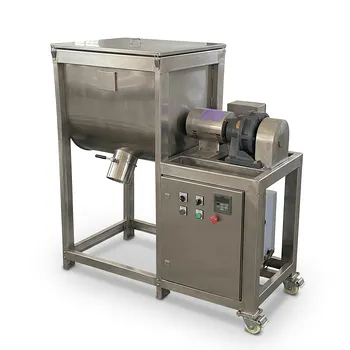
Horizontal Ribbon Mixer for Dry Powder and Slurry Blending
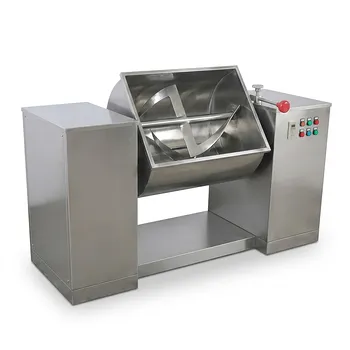
Horizontal Trough Mixer for Uniform Powder and Paste Blending
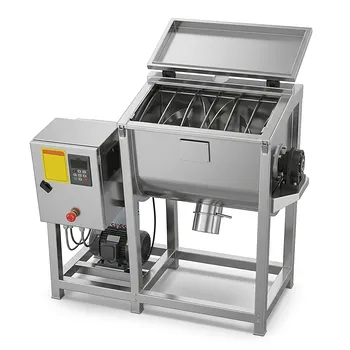
Horizontal Ribbon Mixer for Uniform Powder and Slurry Mixing
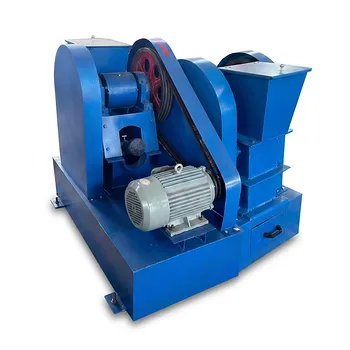
Horizontal Jaw Crusher Medium Hard Material Crushing Laboratory Sample Preparation Equipment
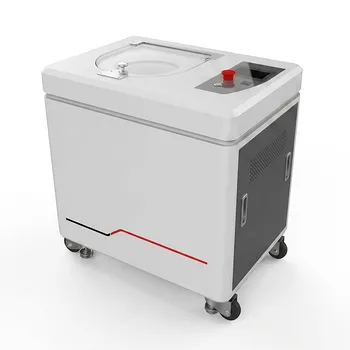
非介入式材料均质机真空脱泡行星搅拌高粘度混合设备
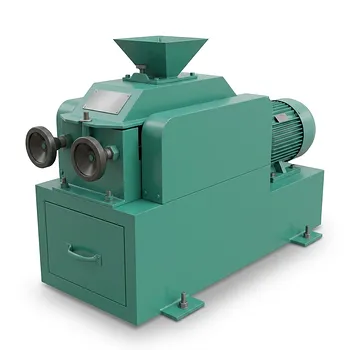
Horizontal Double Roll Crusher for Medium Fine Crushing of Coal Limestone and Ores
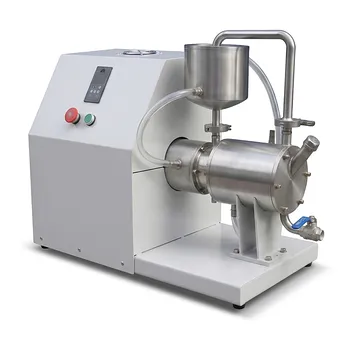
Laboratory Small Horizontal Sand Mill for Nano Materials Wet Grinding
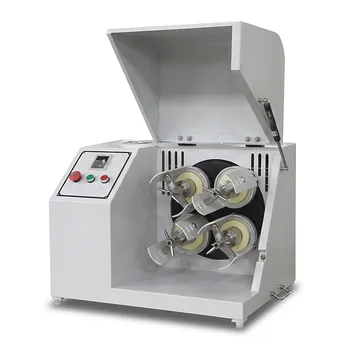
Horizontal Light Duty Planetary Ball Mill for Laboratory Sample Preparation
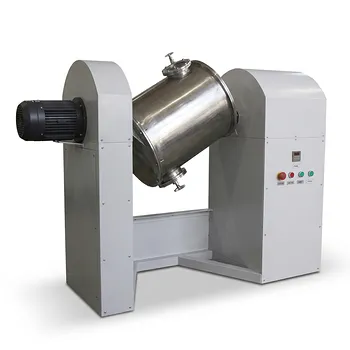
Inclined Mixer for Homogeneous Powder Blending and Grinding
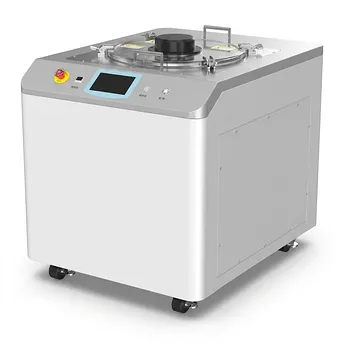
Industrial Planetary Centrifugal Vacuum Defoaming Mixer for High Viscosity Paste and Powder Homogenization
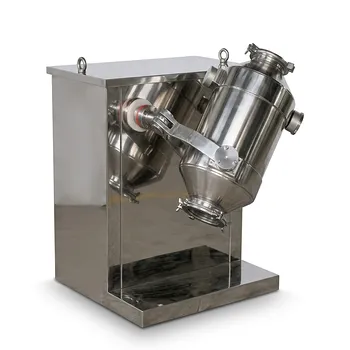
Three-Dimensional Motion Mixer for Laboratory Powder and Granule Blending
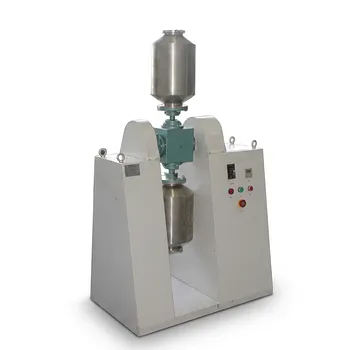
Multi Dimensional Universal Mixer for High Uniformity Powder Blending
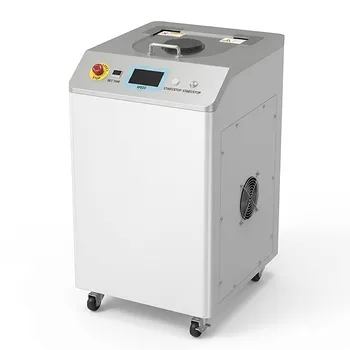
High Viscosity Planetary Centrifugal Vacuum Mixer for Material Defoaming and Uniform Mixing
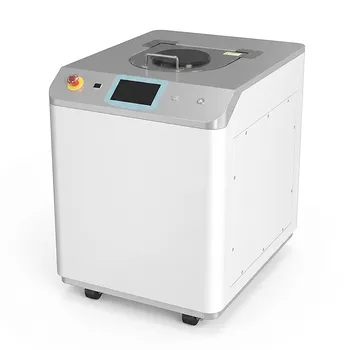
Industrial Planetary Centrifugal Vacuum Defoaming Mixer for High Viscosity Paste and Advanced Material Science
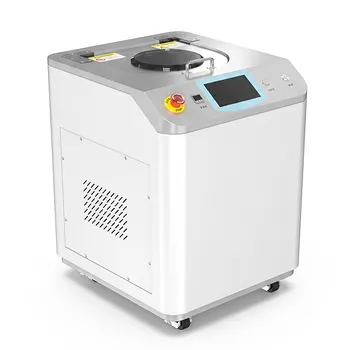
High Speed Vacuum Planetary Centrifugal Mixer and Defoamer for Industrial Paste Processing
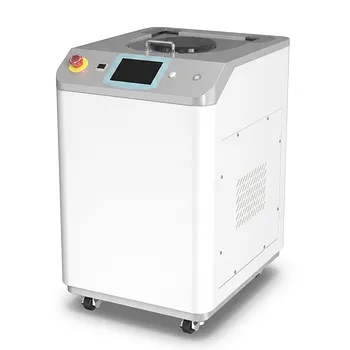
High Viscosity Planetary Centrifugal Mixing and Vacuum Defoaming Machine for Laboratory Material Preparation
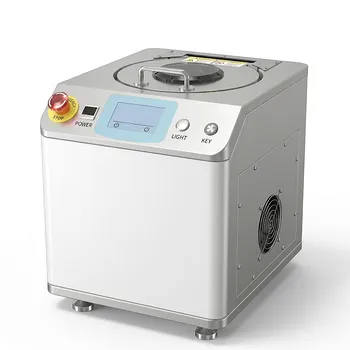
High Efficiency Vacuum Planetary Centrifugal Mixer and Defoaming Machine for Industrial Material Research and Precise Laboratory Powder Dispersion
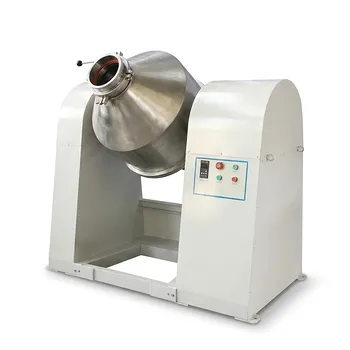
Industrial Double Cone Mixer for Powder Blending and Homogeneous Mixing
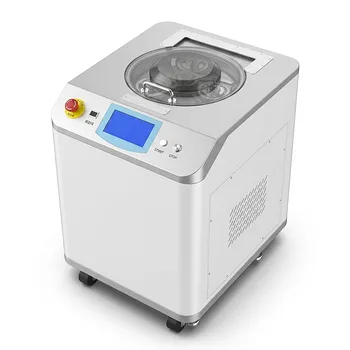
Dual Cup Vacuum Centrifugal Mixer Planetary Paste Defoaming Machine Industrial Material Processor