Why is the mixing process critical when incorporating carbonized products into an epoxy resin matrix? Maximize Strength
Updated 4 months ago
The mixing process is the defining factor in the structural integrity and functional performance of carbon-epoxy composites. Effective mixing ensures that carbonized particles, typically added at mass fractions of 5% to 7.5%, are uniformly dispersed throughout the resin matrix before the hardener is introduced. This uniformity prevents the formation of clusters that degrade mechanical properties and ensures the final material performs predictably under stress.
Core Takeaway: Proper mixing eliminates particle agglomeration, transforming a heterogeneous mixture into a stable composite with consistent mechanical, physical, and electromagnetic properties.
Eliminating Structural Weaknesses
Preventing Particle Agglomeration
Carbonized products have a natural tendency to clump together into clusters known as agglomerates. If these clusters are not broken down during the mixing phase, they remain as localized "islands" within the cured epoxy.
Reducing Stress Concentration Points
Agglomerates act as stress concentration points within the polymer matrix. When the material is under load, these points become the primary sites for crack initiation, significantly reducing the overall strength and durability of the composite.
Ensuring a Homogeneous Microstructure
A successful mixing process results in a homogeneous mixture, which is essential for consistent molding. This uniformity ensures that every section of the final component possesses the same density and structural characteristics.
Enhancing Functional Performance
Creating Conductive Networks
In applications requiring electrical or thermal conductivity, carbon particles must be spaced correctly to form conductive networks. Uniform dispersion allows for the creation of efficient polarization interfaces within the polymer, which is critical for electromagnetic performance.
Achieving Isotropic Properties
Proper mixing ensures that the composite exhibits isotropic properties, meaning its physical characteristics are identical in all directions. Without high-energy shear forces to distribute nanoscale fillers, the material may develop "dead zones" where the carbonized product is absent.
Understanding the Trade-offs and Pitfalls
Shear Force vs. Air Entrapment
High-energy mixing provides the strong shear forces required to break down nanopowders, but it risks introducing excessive air into the resin. Conversely, low-speed mechanical mixing (typically below 200 rpm) minimizes air bubbles but may require longer durations to achieve total dispersion.
Viscosity and Processing Challenges
Adding carbonized products increases the viscosity of the liquid epoxy resin, making it harder for air to escape. If the mixing speed is too high or the method is improper, the resulting entrapped air creates voids, which are just as damaging to the material's integrity as particle agglomeration.
How to Optimize Your Mixing Strategy
Applying This to Your Project
Achieving the right balance between dispersion and material purity depends on your specific performance requirements and the scale of your particles.
- If your primary focus is mechanical strength: Use consistent, low-speed mechanical shear (under 200 rpm) to ensure a homogeneous microstructure while preventing the introduction of air voids.
- If your primary focus is electromagnetic shielding or conductivity: Utilize high-energy mixing equipment to generate the shear forces necessary to break down nanoscale agglomerates and establish a conductive network.
- If your primary focus is high mass-fraction loading (above 7.5%): Prioritize multi-stage mixing to ensure the increasingly viscous resin fully wets every carbon particle before adding the curing agent.
Mastering the mixing phase is the most cost-effective way to ensure your carbon-epoxy composite meets its theoretical performance potential.
Summary Table:
| Mixing Challenge | Impact on Composite | Optimization Strategy |
|---|---|---|
| Particle Agglomeration | Creates stress points & crack sites | High-energy shear forces to break clusters |
| Air Entrapment | Causes structural voids/weakness | Low-speed mixing or vacuum defoaming |
| Non-Uniformity | Leads to anisotropic "dead zones" | Consistent mechanical dispersion (<200 rpm) |
| High Viscosity | Hinders air escape & wetting | Multi-stage mixing for high mass fractions |
Elevate Your Material Research with Precision Engineering
Achieving the perfect dispersion of carbonized products requires more than just a stir—it requires specialized equipment tailored to material science. At [Company Name], we provide complete laboratory sample preparation solutions designed to eliminate agglomeration and ensure structural integrity.
From breaking down raw materials with our planetary ball mills and jet mills to achieving bubble-free homogeneity with our specialized powder and defoaming mixers, we empower your lab to produce superior composites. Whether you are processing powders or compacting them using our Cold Isostatic Presses (CIP) and vacuum hot presses, our equipment ensures consistency at every stage.
Ready to optimize your composite performance? Contact our technical experts today to find the right equipment for your application!
References
- Agata Wieczorska, Grzegorz Hajdukiewicz. Analysis of the Tensile Properties of Composite Material Added Carbonisate Based on the Change of Strain Dynamics. DOI: 10.3390/ma17246219
Mentioned Products
- V-Type Powder Mixer for Uniform Blending of Dry Powders and Granules
- Multi Dimensional Universal Mixer for High Uniformity Powder Blending
- Inclined Mixer for Homogeneous Powder Blending and Grinding
- Horizontal Trough Mixer for Uniform Powder and Paste Blending
- Industrial Double Cone Mixer for Powder Blending and Homogeneous Mixing
People Also Ask
- Why is a media-free and ball-free V-type powder mixer used for Al2O3/Inconel 718? Preserve Purity & Shape
- How does a V-type powder mixer facilitate the blending of oxidizers and catalysts? Safe & Uniform Mixing Solutions
- Why is it necessary to consider the influence of static walls in powder mixing experiment design? Optimize Uniformity.
- What role does powder mixing play in Al2O3-Er3Al5O12 ceramics? Achieve Precise Homogeneity and Phase Control
- How do powder mixers and additives influence ZTA ceramics? Optimize microstructure for superior toughness and density

Tech Team · PowderPreparation
Last updated on Jun 03, 2026
Related Products
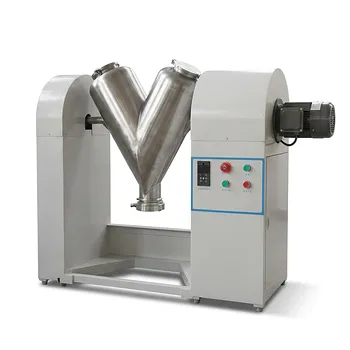
V-Type Powder Mixer for Uniform Blending of Dry Powders and Granules
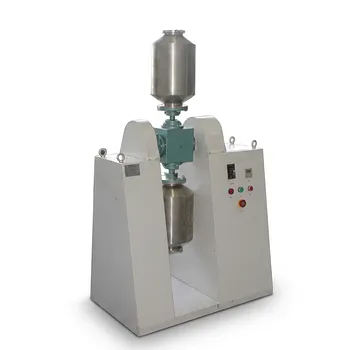
Multi Dimensional Universal Mixer for High Uniformity Powder Blending
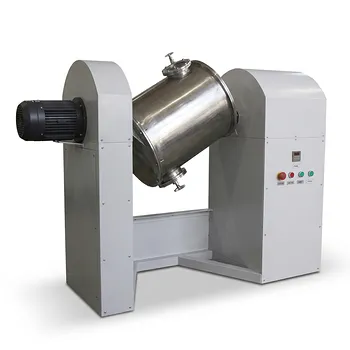
Inclined Mixer for Homogeneous Powder Blending and Grinding
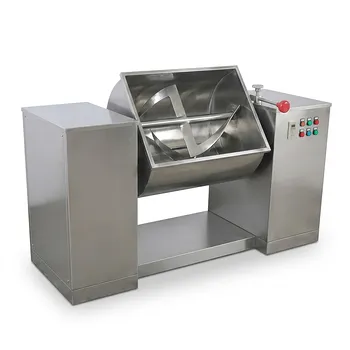
Horizontal Trough Mixer for Uniform Powder and Paste Blending
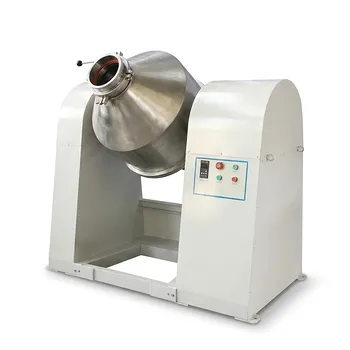
Industrial Double Cone Mixer for Powder Blending and Homogeneous Mixing
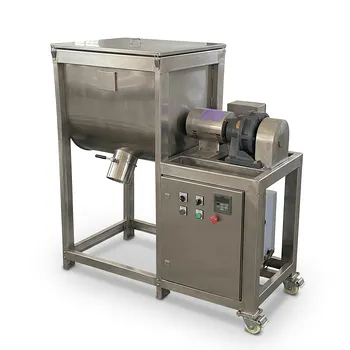
Horizontal Ribbon Mixer for Dry Powder and Slurry Blending
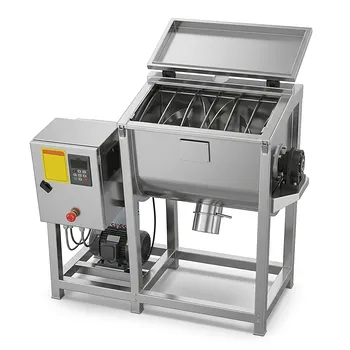
Horizontal Ribbon Mixer for Uniform Powder and Slurry Mixing
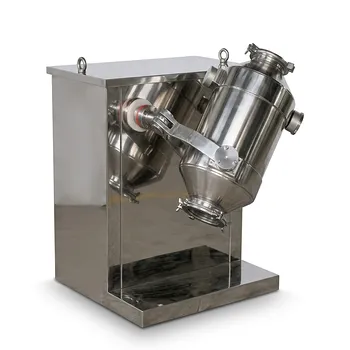
Three-Dimensional Motion Mixer for Laboratory Powder and Granule Blending
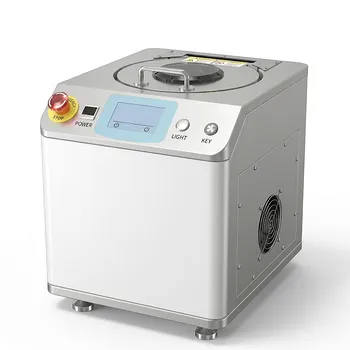
High Efficiency Vacuum Planetary Centrifugal Mixer and Defoaming Machine for Industrial Material Research and Precise Laboratory Powder Dispersion
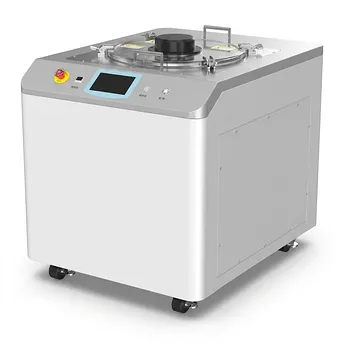
Industrial Planetary Centrifugal Vacuum Defoaming Mixer for High Viscosity Paste and Powder Homogenization
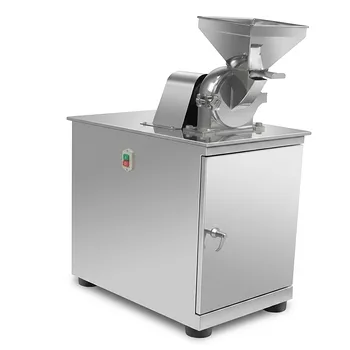
Universal Laboratory Pulverizer Grinder for Small Batch Powder Processing and Material Science Research
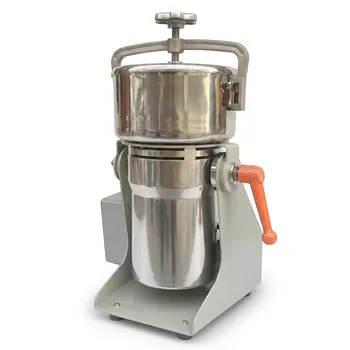
High Speed Laboratory Grinder Efficient Stainless Steel Powder Pulverizer Universal Material Science Mill for Sample Preparation
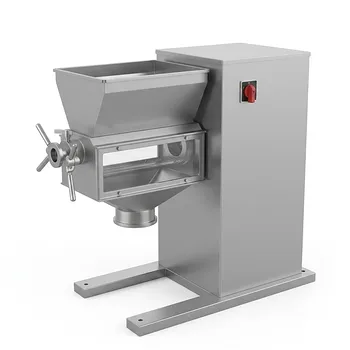
Industrial Swing Granulator for Powder Processing in Pharma Food and Chemical Industries
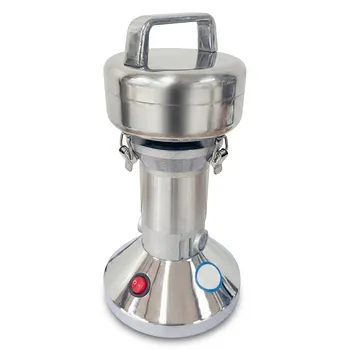
Small Trace Sample High Speed Pulverizer Grinder Laboratory Powder Mill
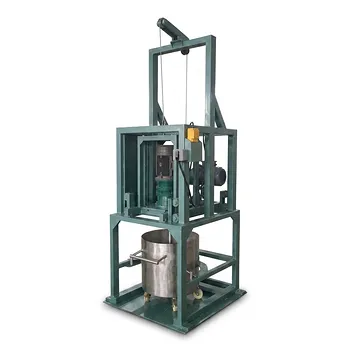
High-Speed Simple Disperser for Efficient Mixing, Dispersion, and Emulsification
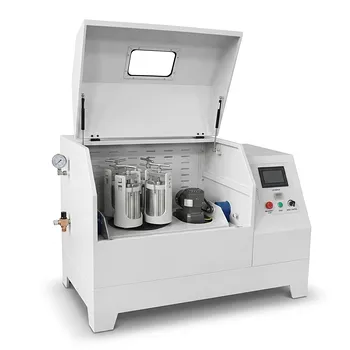
Vertical Production Planetary Ball Mill for High Throughput Powder Processing
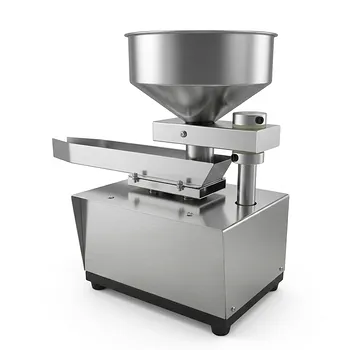
Automatic Vibrating Powder Feeder for Laboratory Material Processing Precision Vibratory Hopper Feeder for Granular and Powder Material Handling Industrial Grade Vibrating Tray Feeder for Consistent Material Sample Preparation
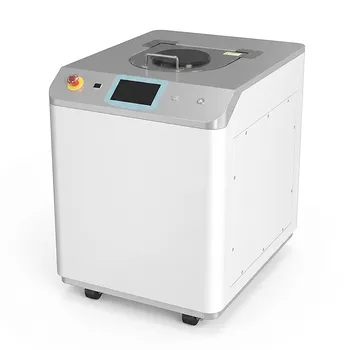
Industrial Planetary Centrifugal Vacuum Defoaming Mixer for High Viscosity Paste and Advanced Material Science
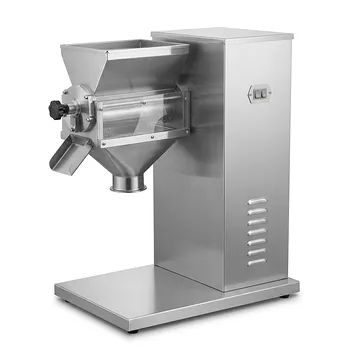
Small Swing Granulator Efficient Powder Granulation for Pharmaceutical Chemical Food Industries