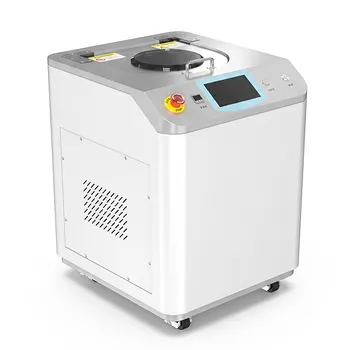
What is the purpose of using a powder mixer to process Cu, Zn, and Al powders? Achieve Uniform High-Quality Coatings
Updated 4 months ago
Achieving high uniformity across divergent powder morphologies is the primary purpose of using a powder mixer. By employing rotation or vibration logic, the mixer ensures that Cu, Zn, and Al powders are distributed evenly at both macroscopic and microscopic scales. This process is the critical foundation for maintaining chemical consistency and ensuring stable powder feeding during the subsequent coating application.
The use of a powder mixer eliminates the natural tendency of dissimilar powders to segregate, transforming a collection of raw materials into a homogenous feedstock. This uniformity is essential for preventing localized phase variations and ensuring the mechanical integrity of the final copper-based composite coating.
Ensuring Structural and Chemical Homogeneity
Overcoming Morphological Differences
Raw powders often possess vastly different shapes, such as dendritic copper and spherical aluminum or zinc. These geometric differences naturally cause powders to settle or separate if not mechanically forced into a uniform blend.
A powder mixer uses mechanical force to interleave these shapes, creating a stable matrix where the different particles are trapped in a consistent ratio. This ensures that every gram of powder entering the processing equipment has the exact same composition.
Preventing Localized Phase Segregation
Without intensive mixing, "clumps" of a single element can form within the mixture. This leads to localized phase segregation, where certain areas of the finished coating are overly rich in one metal while deficient in others.
Uniform distribution at the microscopic level ensures that when the coating is formed—whether through cold spraying or thermal processes—the metallurgical properties remain consistent across the entire surface.
Optimizing Downstream Process Stability
Enhancing Feeding Stability
In processes like cold spraying, the stability of the powder feeder is highly dependent on the flowability and uniformity of the feedstock. Variations in the powder mix can lead to "surging" or clogging in the delivery lines.
A well-mixed powder ensures a constant mass flow rate. This stability allows for precise control over the coating thickness and the deposition efficiency of the copper-based composite.
Improving Powder Flowability
Mechanical mixing, particularly at specific rotation speeds, can help break down powder agglomerates. By reducing these clusters, the mixer improves the overall flow characteristics of the Cu-Zn-Al blend.
Consistent flowability is a prerequisite for high-quality industrial coatings, as it prevents fluctuations in the kinetic energy of the particles during the application process.
Understanding the Trade-offs and Limitations
The Risk of Particle Deformation
While extended mixing times improve uniformity, excessive mechanical energy can lead to work hardening or physical deformation of softer powders like Al and Zn. If the particles become too distorted, their ability to bond during the coating process may be compromised.
Contamination and Heat Generation
Dry mixing generates internal friction which can increase the temperature of the powder batch. In some cases, this can lead to surface oxidation of the copper or aluminum, which acts as a barrier to high-quality coating adhesion.
Furthermore, the choice of mixing media or container material must be carefully managed to prevent the introduction of impurities into the high-purity Cu-Zn-Al matrix.
How to Apply This to Your Coating Project
Optimizing Your Mixing Strategy
Achieving the best results requires balancing the intensity of the mix with the preservation of the powder's original characteristics.
- If your primary focus is chemical precision: Prioritize extended dry mixing times at moderate rotation speeds to ensure microscopic dispersion without deforming the dendritic structures.
- If your primary focus is high-speed production (Cold Spray): Focus on achieving macro-level uniformity and breaking agglomerates to ensure a constant, non-clogging feed rate into the spray nozzle.
- If your primary focus is mechanical strength: Use controlled mixing durations to prevent excessive work hardening of the aluminum and zinc particles, preserving their ductility for better impact bonding.
The performance of your powder mixer is the single greatest predictor of the microstructural stability and macroscopic hardness of your resulting copper-based composite coating.
Summary Table:
| Key Objective | Mechanism / Benefit | Impact on Coating |
|---|---|---|
| Homogeneity | Overcomes divergent morphologies | Consistent chemical composition |
| Phase Stability | Prevents localized clustering | Uniform mechanical integrity |
| Feeding Stability | Ensures constant mass flow rate | Precise thickness control |
| Flowability | Breaks down powder agglomerates | Optimized deposition efficiency |
Elevate Your Material Research with Precision Powder Processing
Ready to optimize your composite coating feedstock? We provide complete laboratory sample preparation solutions tailored for material science. Our expertise lies in high-performance powder processing and compaction equipment designed to ensure the structural and chemical homogeneity of your blends.
Our extensive product lines include:
- Advanced Mixing & Milling: Powder mixers, defoaming mixers, and a full range of mills (planetary ball, jet, sand/bead, disc, rotor) to achieve perfect particle distribution.
- Preparation Equipment: Jaw/roll crushers, liquid nitrogen cryogenic grinders, and sieve shakers (vibratory/air-jet).
- High-Pressure Compaction: A full spectrum of hydraulic presses, including Cold/Warm Isostatic Presses (CIP/WIP), standard lab presses, and vacuum hot presses.
Whether you are refining Cu-Zn-Al matrices or developing new alloys, our equipment ensures the consistency and reliability your project demands. Contact us today to find the perfect solution for your lab!
References
- Hao Chen, Jianjun Zheng. Corrosion Behavior and Microstructure of Cu-Based Composite Coatings Deposited by Cold Spraying. DOI: 10.3390/met12060955
Mentioned Products
- V-Type Powder Mixer for Uniform Blending of Dry Powders and Granules
- Multi Dimensional Universal Mixer for High Uniformity Powder Blending
- Inclined Mixer for Homogeneous Powder Blending and Grinding
- Horizontal Trough Mixer for Uniform Powder and Paste Blending
- Horizontal Ribbon Mixer for Dry Powder and Slurry Blending
People Also Ask
- Why is a media-free and ball-free V-type powder mixer used for Al2O3/Inconel 718? Preserve Purity & Shape
- How does a V-type powder mixer facilitate the blending of oxidizers and catalysts? Safe & Uniform Mixing Solutions
- Why is it necessary to consider the influence of static walls in powder mixing experiment design? Optimize Uniformity.
- What role does powder mixing play in Al2O3-Er3Al5O12 ceramics? Achieve Precise Homogeneity and Phase Control
- How do powder mixers and additives influence ZTA ceramics? Optimize microstructure for superior toughness and density

Tech Team · PowderPreparation
Last updated on Jun 03, 2026
Related Products
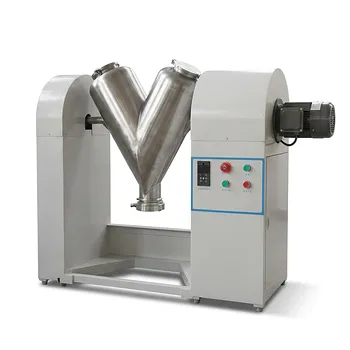
V-Type Powder Mixer for Uniform Blending of Dry Powders and Granules
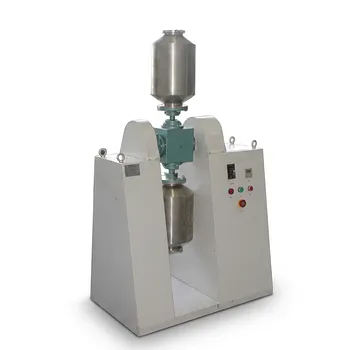
Multi Dimensional Universal Mixer for High Uniformity Powder Blending
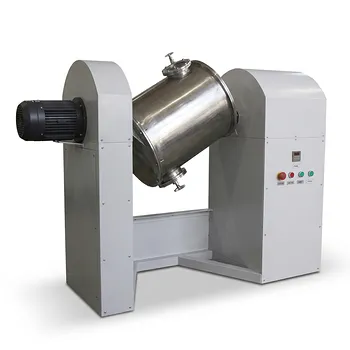
Inclined Mixer for Homogeneous Powder Blending and Grinding
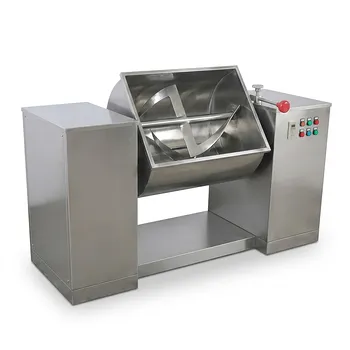
Horizontal Trough Mixer for Uniform Powder and Paste Blending
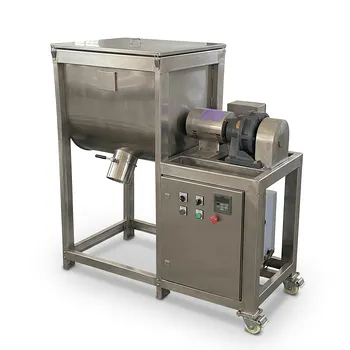
Horizontal Ribbon Mixer for Dry Powder and Slurry Blending
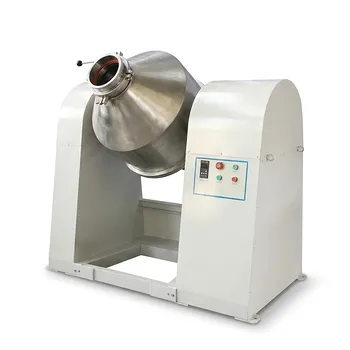
Industrial Double Cone Mixer for Powder Blending and Homogeneous Mixing
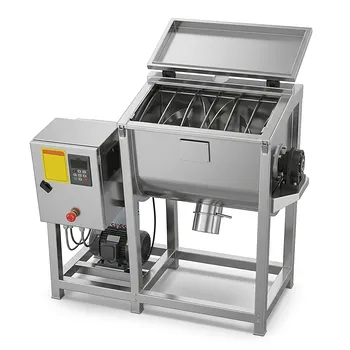
Horizontal Ribbon Mixer for Uniform Powder and Slurry Mixing
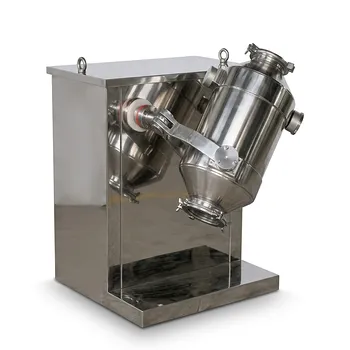
Three-Dimensional Motion Mixer for Laboratory Powder and Granule Blending
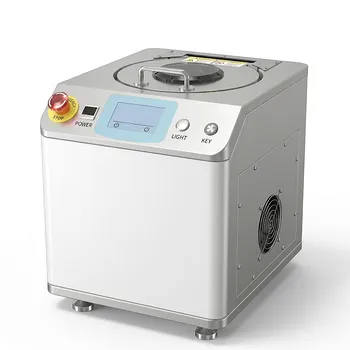
High Efficiency Vacuum Planetary Centrifugal Mixer and Defoaming Machine for Industrial Material Research and Precise Laboratory Powder Dispersion
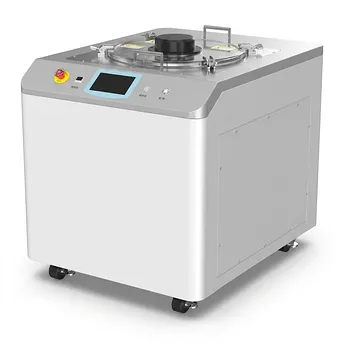
Industrial Planetary Centrifugal Vacuum Defoaming Mixer for High Viscosity Paste and Powder Homogenization
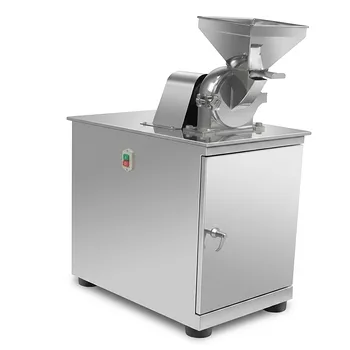
Universal Laboratory Pulverizer Grinder for Small Batch Powder Processing and Material Science Research
High Speed Laboratory Grinder Efficient Stainless Steel Powder Pulverizer Universal Material Science Mill for Sample Preparation
Industrial Swing Granulator for Powder Processing in Pharma Food and Chemical Industries
Small Trace Sample High Speed Pulverizer Grinder Laboratory Powder Mill
High-Speed Simple Disperser for Efficient Mixing, Dispersion, and Emulsification

Vertical Production Planetary Ball Mill for High Throughput Powder Processing
Automatic Vibrating Powder Feeder for Laboratory Material Processing Precision Vibratory Hopper Feeder for Granular and Powder Material Handling Industrial Grade Vibrating Tray Feeder for Consistent Material Sample Preparation
Industrial Planetary Centrifugal Vacuum Defoaming Mixer for High Viscosity Paste and Advanced Material Science
Small Swing Granulator Efficient Powder Granulation for Pharmaceutical Chemical Food Industries