How does the fill level of a horizontal mixer influence the selection of the stirring mechanism? Optimize Your Design
Updated 4 months ago
The fill level of a horizontal mixer is the primary driver of powder flow dynamics, which directly dictates the required geometry of the stirring mechanism. At low fill levels (under 40%), materials exhibit a cascading flow that is best managed by single-blade or long flat-plate agitators. Conversely, high fill levels cause materials to rotate as a single mass or form "channels," requiring multi-stage stirring mechanisms with short paddles to ensure proper material exchange and stable torque.
Core Takeaway: To achieve optimal mixing, you must match the agitator's design to the expected volume of material. Selecting the wrong stirring mechanism for your specific fill level leads to "dead zones," excessive power consumption, and poor mixing uniformity.
How Volume Dictates Material Flow Modes
The Dynamics of Low Fill Levels
When a mixer is filled below 40% of its total capacity, the material particles have ample space to move freely. This creates a cascading flow, where particles are lifted by the agitator and then fall back down across the surface of the bed.
For this flow mode, single-blade or long flat-plate agitators are highly efficient. Their extended surface area can effectively "catch" and lift the smaller volume of material, maximizing the convective movement necessary for a quick blend.
Challenges of High Fill Levels
As the fill level exceeds critical thresholds, the free space within the chamber disappears. Instead of cascading, the material often begins to rotate as a single mass between the shaft and the wall, or it develops "channels" where only a small portion of the powder actually moves.
In these scenarios, multi-stage mechanisms with short paddles are the superior choice. These smaller, staggered blades break up the solid rotation of the material and force exchange between different layers of the powder bed.
Optimizing for Uniformity and Power Stability
The "Sweet Spot" for Mixing Quality
Research indicates that a filling rate of approximately 58 percent often represents the optimal balance for horizontal mixers. At this level, many systems achieve a mixing uniformity of nearly 95%, providing the best return on energy investment.
Precise volume control ensures there is enough "void space" for particles to engage in convection and diffusion. Without this space, particles cannot change positions relative to one another, resulting in a stagnant and poorly blended product.
Managing Torque and Power Spikes
The stirring mechanism also plays a role in protecting the mixer's mechanical integrity. Overloading a mixer with the wrong agitator type can lead to massive torque spikes as the motor struggles to move a compacted mass.
Short, multi-stage paddles distribute the mechanical resistance more evenly across the shaft. This leads to a more stable torque output, reducing wear on the gearbox and motor during high-volume operations.
Understanding the Trade-offs
Productivity vs. Precision
Choosing to operate at a very high fill level (e.g., 80%+) increases throughput but significantly increases the risk of uneven mixing. Even with the correct multi-stage paddles, the lack of headspace limits the diffusion of finer particles.
Mechanical Complexity
While multi-stage stirring mechanisms are more versatile for high-fill scenarios, they are often more difficult to clean and maintain than simple flat-plate designs. In industries where cross-contamination is a high risk, the simplicity of a single-blade design may be preferable, even if it requires running smaller batches.
How to Apply This to Your Project
When selecting a stirring mechanism, align your choice with your intended production volume and material characteristics.
- If your primary focus is maximum throughput per batch: Select a multi-stage mechanism with short paddles to maintain material exchange and stable torque at higher fill levels.
- If your primary focus is high-precision uniformity with fast cycle times: Aim for a fill level of roughly 58% and utilize a design that maximizes convective "lift" and "drop" within the chamber.
- If your primary focus is ease of maintenance and low-volume batches: A long flat-plate or single-blade agitator will provide the best efficiency for fill levels under 40%.
Understanding the relationship between volume and flow ensures your mixer operates with the highest efficiency while protecting your equipment from unnecessary mechanical stress.
Summary Table:
| Fill Level | Flow Dynamics | Recommended Mechanism | Key Benefit |
|---|---|---|---|
| Low (<40%) | Cascading Flow | Single-blade / Long flat-plate | Maximizes convective lift and mixing speed |
| Optimal (~58%) | Balanced Diffusion | Design dependent | Peak uniformity (95%) and energy efficiency |
| High (>60%) | Mass Rotation / Channeling | Multi-stage short paddles | Stable torque and forced material exchange |
| Excessive (>80%) | Stagnant / Compacted | Heavy-duty multi-stage | High throughput but risks poor uniformity |
Optimize Your Material Processing with Precision Engineering
Achieving the perfect blend requires more than just a mixer; it requires the right configuration for your specific volume and material dynamics. At [Brand Name], we provide complete laboratory sample preparation solutions for material science, specializing in high-performance powder processing and compaction equipment.
Our extensive range includes:
- Advanced Milling: Planetary ball, jet, sand/bead, disc, and rotor mills.
- Mixing Excellence: Precision powder mixers and defoaming mixers designed for uniformity.
- Size Reduction: Heavy-duty jaw and roll crushers plus cryogenic grinders.
- Compaction Solutions: A full spectrum of hydraulic presses, including Cold/Warm Isostatic Presses (CIP/WIP), vacuum hot presses, and XRF pellet presses.
Whether you are scaling up production or refining lab-scale research, our experts are here to help you select the ideal stirring mechanisms and processing equipment to eliminate dead zones and maximize efficiency.
Ready to elevate your lab's performance? Contact us today to discuss your project!
References
- Bruno Laurent, J. Bridgwater. On the Relationship between Torque and Flow Structure in Powder Mixers. DOI: 10.14356/kona.2001016
Mentioned Products
- Horizontal Ribbon Mixer for Dry Powder and Slurry Blending
- Horizontal Trough Mixer for Uniform Powder and Paste Blending
- Horizontal Ribbon Mixer for Uniform Powder and Slurry Mixing
- Horizontal Jaw Crusher Medium Hard Material Crushing Laboratory Sample Preparation Equipment
- Inclined Mixer for Homogeneous Powder Blending and Grinding
People Also Ask
- What is the technical significance of radial clearance in horizontal mixers? Boost Homogeneity & Reduce Dead Zones.
- How should the operation of mixing equipment be adjusted when processing cohesive powders? Key Operational Strategies
- What is the purpose of using a powder mixer to process Cu, Zn, and Al powders? Achieve Uniform High-Quality Coatings
- Why is the mixing process critical when incorporating carbonized products into an epoxy resin matrix? Maximize Strength
- What is the function of laboratory milling equipment in Sc2SnC synthesis? Achieve High-Purity MAX Phase Ceramics

Tech Team · PowderPreparation
Last updated on Jun 03, 2026
Related Products
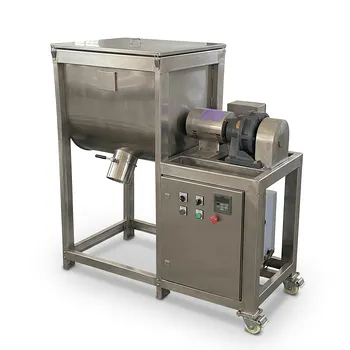
Horizontal Ribbon Mixer for Dry Powder and Slurry Blending
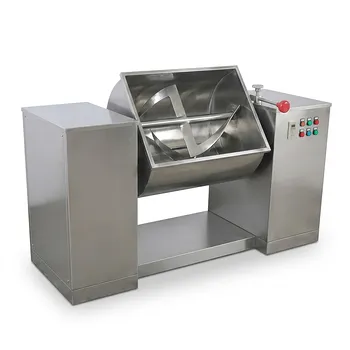
Horizontal Trough Mixer for Uniform Powder and Paste Blending
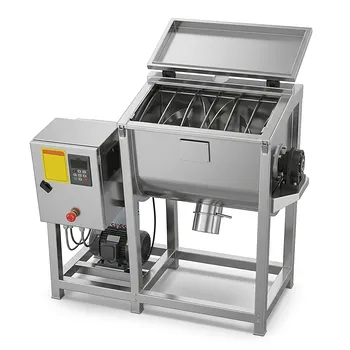
Horizontal Ribbon Mixer for Uniform Powder and Slurry Mixing
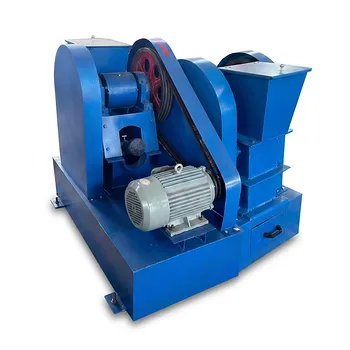
Horizontal Jaw Crusher Medium Hard Material Crushing Laboratory Sample Preparation Equipment
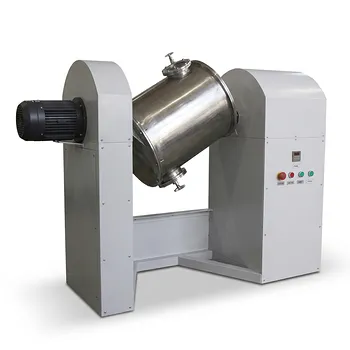
Inclined Mixer for Homogeneous Powder Blending and Grinding
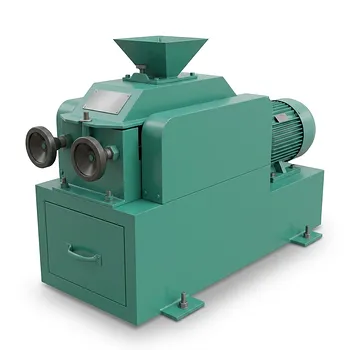
Horizontal Double Roll Crusher for Medium Fine Crushing of Coal Limestone and Ores
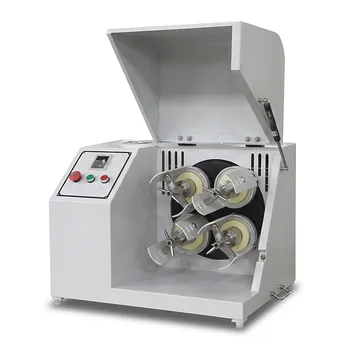
Horizontal Light Duty Planetary Ball Mill for Laboratory Sample Preparation
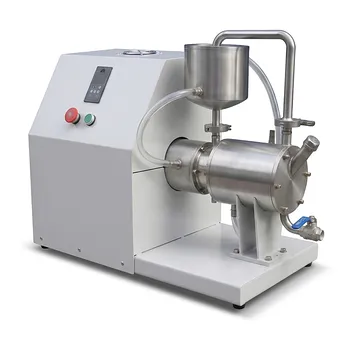
Laboratory Small Horizontal Sand Mill for Nano Materials Wet Grinding
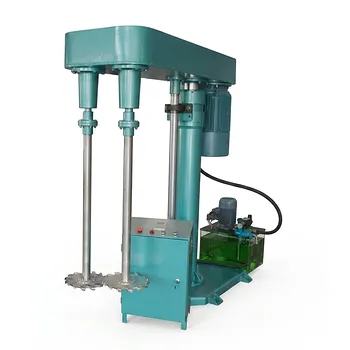
Hydraulic Double Shaft Disperser for High Viscosity Liquid Mixing and Dispersion
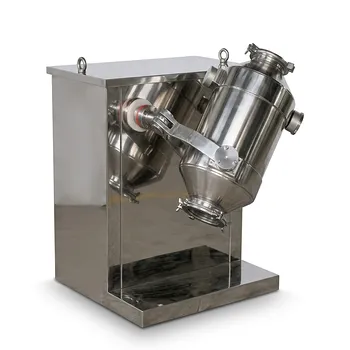
Three-Dimensional Motion Mixer for Laboratory Powder and Granule Blending
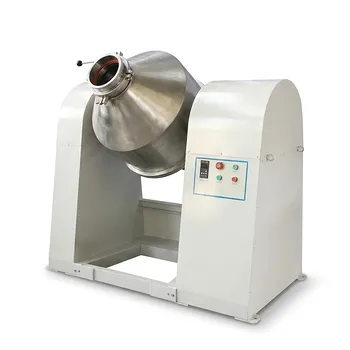
Industrial Double Cone Mixer for Powder Blending and Homogeneous Mixing
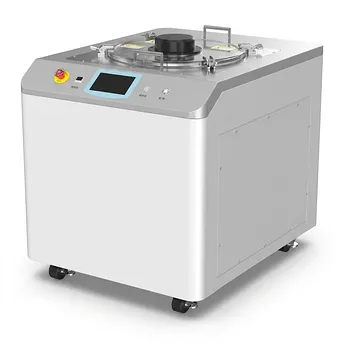
Industrial Planetary Centrifugal Vacuum Defoaming Mixer for High Viscosity Paste and Powder Homogenization
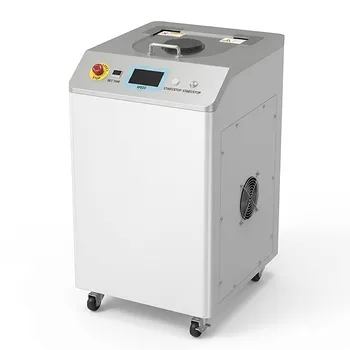
High Viscosity Planetary Centrifugal Vacuum Mixer for Material Defoaming and Uniform Mixing
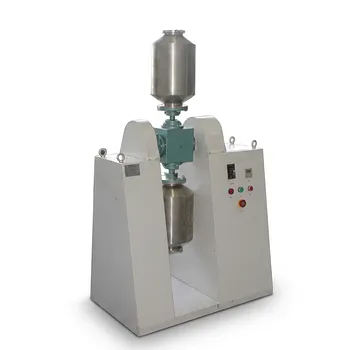
Multi Dimensional Universal Mixer for High Uniformity Powder Blending
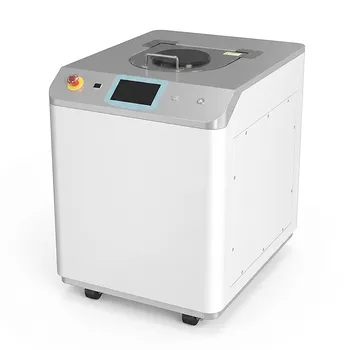
Industrial Planetary Centrifugal Vacuum Defoaming Mixer for High Viscosity Paste and Advanced Material Science

Vertical Production Planetary Ball Mill for High Throughput Powder Processing
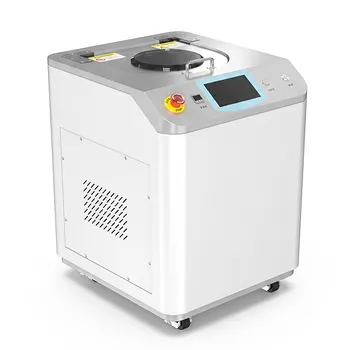
High Speed Vacuum Planetary Centrifugal Mixer and Defoamer for Industrial Paste Processing
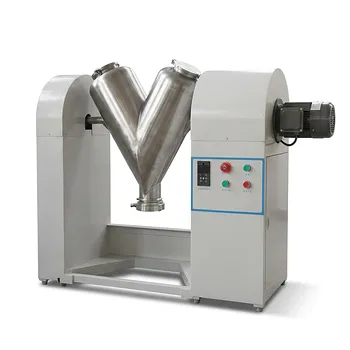
V-Type Powder Mixer for Uniform Blending of Dry Powders and Granules
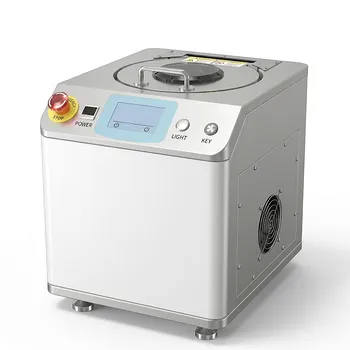
High Efficiency Vacuum Planetary Centrifugal Mixer and Defoaming Machine for Industrial Material Research and Precise Laboratory Powder Dispersion