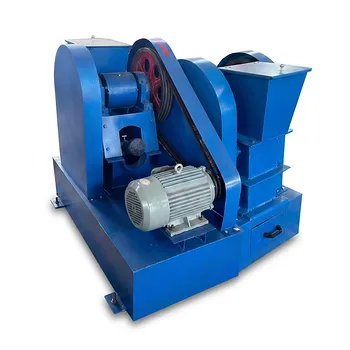
Significance of 100 MPa Pressure in Cordierite Forming: Achieve Peak Green Density and Superior Ceramic Sintering
Updated 3 months ago
The application of 100 MPa of pressure is a critical densification step in cordierite fabrication. This specific pressure level forces powder particles to overcome inter-particle friction, facilitating mechanical rearrangement and the elimination of internal pores. By maximizing the green density at this stage, the process establishes the necessary physical contact and surface energy required for efficient mass transport during subsequent thermal treatment.
Core Takeaway: Applying 100 MPa transforms loose powder into a cohesive green body with high initial density, which is technically significant because it minimizes the diffusion distance for solid-state reactions and liquid-phase diffusion, ultimately ensuring low porosity in the final ceramic.
Mechanisms of Mechanical Densification
Overcoming Inter-particle Friction
At the 100 MPa threshold, the laboratory hydraulic press provides sufficient uniaxial force to overcome the frictional resistance between individual cordierite particles. This allows for particle displacement and rearrangement, moving the material from a loose aggregate to a structured compact.
Elimination of Internal Voids
The high-pressure environment forces particles into the interstitial spaces, effectively filling internal pores and voids. This reduction in the volume of air pockets is the primary driver for increasing the green density of the body before it ever enters the kiln.
Establishing Initial Structural Strength
By compressing the powder through a specialized die, the hydraulic press grants the cordierite green body preliminary structural strength. This makes the component handleable and provides the foundational shape required for further processing, such as isostatic pressing or sintering.
Impact on Sintering Kinetics
Optimization of Diffusion Pathways
High-pressure forming results in tight physical contact between particles, which significantly shortens the paths required for solid-state reactions. This proximity is essential for promoting grain boundary diffusion and ensuring that chemical reactions occur uniformly throughout the material.
Enhancing Surface Energy
The mechanical energy applied during the 100 MPa compaction increases the surface energy of the powder particles. This heightened energy state acts as a catalyst for liquid-phase diffusion, which is a key mechanism for achieving a fully dense, low-porosity cordierite ceramic.
Control of Shrinkage and Deformation
A high initial green density directly influences the shrinkage rate during the 1150 °C to 1200 °C sintering process. By achieving a dense pack at 100 MPa, the risk of sample deformation, warping, or irregular shrinkage is significantly mitigated.
Understanding the Trade-offs
Pressure Limits and Material Integrity
While 100 MPa is effective for cordierite, exceeding optimal pressure limits can lead to density gradients within the green body. If the pressure is applied unevenly or is excessively high for the specific granulation, it may result in micro-cracking or "spring-back" effects upon release from the die.
Friction and Die Wear
The use of high uniaxial pressure increases the mechanical wear on high-precision molds and dies. Proper lubrication or the use of granulated powders is often necessary to prevent the cordierite from adhering to the die walls or causing premature equipment failure.
Applying This to Your Project
Recommendations for Process Optimization
Choosing the right forming pressure depends on the desired final properties of the cordierite component and the specific powder morphology.
- If your primary focus is maximizing mechanical strength: Ensure the 100 MPa pressure is held for a consistent "dwell time" to allow particles to reach their most stable, dense configuration.
- If your primary focus is dimensional accuracy: Monitor the green density closely, as higher initial density leads to more predictable and lower shrinkage rates during the sintering stage.
- If your primary focus is preventing defects: Use a homogenized or wet-mixed powder to minimize internal air pockets and reduce the likelihood of warping during high-temperature processing.
By precisely controlling the 100 MPa forming stage, you establish the microstructural foundation necessary for high-performance, low-porosity cordierite ceramics.
Summary Table:
| Technical Aspect | Mechanism at 100 MPa | Impact on Final Ceramic |
|---|---|---|
| Particle Packing | Overcomes inter-particle friction | Maximizes green density and structural integrity |
| Pore Management | Eliminates internal voids and air pockets | Minimizes diffusion distance for solid-state reactions |
| Sintering Kinetics | Enhances surface energy and contact | Promotes uniform liquid-phase diffusion |
| Dimensional Control | Establishes high initial compaction | Reduces shrinkage rates and prevents deformation |
Elevate Your Material Research with Precision Compaction Solutions
Achieving the perfect 100 MPa pressure for cordierite green bodies requires reliable, high-precision equipment. We provide complete laboratory sample preparation solutions for material science, specializing in advanced powder processing and compaction.
Our extensive product range includes:
- Hydraulic Presses: A full spectrum featuring Standard Lab Presses, Cold/Warm Isostatic Presses (CIP/WIP), XRF pellet presses, and Vacuum Hot Presses.
- Powder Processing: High-efficiency Planetary Ball Mills, jet mills, cryogenic grinders, and jaw crushers.
- Mixing & Sizing: Powder mixers, defoaming mixers, and vibratory/air-jet sieve shakers.
Whether you are aiming for maximizing mechanical strength or ensuring dimensional accuracy, our equipment provides the consistency your research demands.
Ready to optimize your ceramic fabrication workflow?
Contact our technical team today for a tailored solution!
References
- Jae-Seung Lee, Heesoo Lee. The Effect of the MgO/Al2O3 Ratio on the Thermal and Refractory Behaviors of Cordierite Ceramics. DOI: 10.3390/ma18010168
Mentioned Products
- 6-Ton Small Single-Punch Tablet Press — Laboratory Powder & Granule Tableting Equipment / Tablet Forming Machine
- 5 Ton Single Punch Tablet Press Laboratory Small Batch Production
- Manual Tablet Press with Dual Scale Pressure Gauge for Pharmaceutical Food Chemical Laboratory Sample Preparation
- 6 Ton Variable Frequency Single Punch Tablet Press
- High Shear Laboratory Emulsifier for Mixing and Homogenization
People Also Ask
- What is the function of a laboratory press in Cr-Ti alloy evaluation? Quantify Fracture Stress & Strength
- What is the function of a laboratory press in assessing the hydrophobic performance of modified vermiculite fillers?
- What is the core function of a laboratory press in the forming of ceramic filter element green bodies? Maximize Density.
- What is the function of a laboratory press in the preparation of ceramic feed rods? Master Density and Precision
- Why is vacuum sealing and flexible packaging necessary for Aluminum Titanate powders during CIP? Ensure Peak Density

Tech Team · PowderPreparation
Last updated on Jun 03, 2026
Related Products
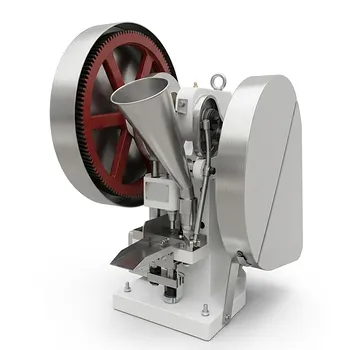
6-Ton Small Single-Punch Tablet Press — Laboratory Powder & Granule Tableting Equipment / Tablet Forming Machine
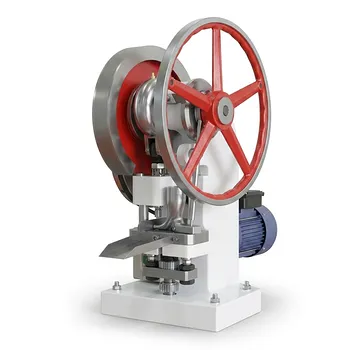
5 Ton Single Punch Tablet Press Laboratory Small Batch Production
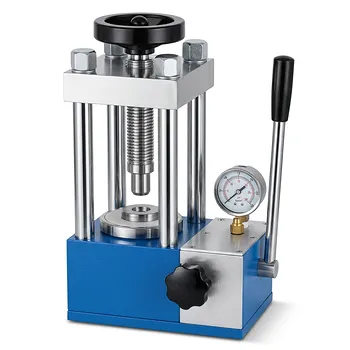
Manual Tablet Press with Dual Scale Pressure Gauge for Pharmaceutical Food Chemical Laboratory Sample Preparation
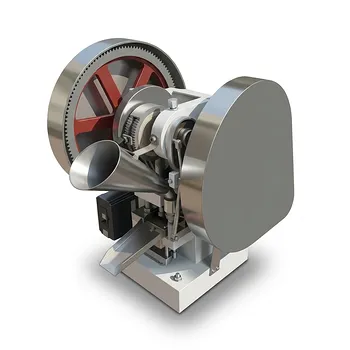
6 Ton Variable Frequency Single Punch Tablet Press
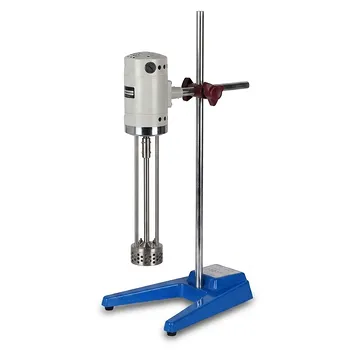
High Shear Laboratory Emulsifier for Mixing and Homogenization
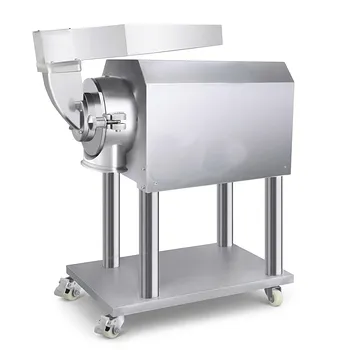
High Speed Small Laboratory Crusher for Dry Material Sample Preparation
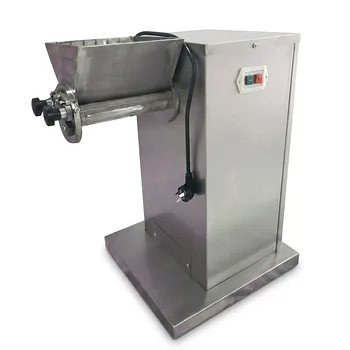
Small Laboratory Oscillating Granulator for Wet and Dry Granulation Processing
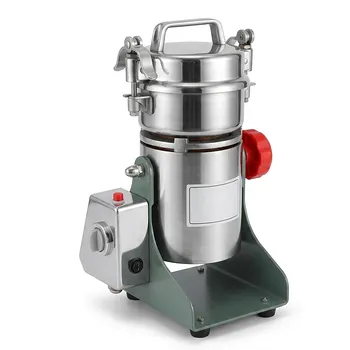
High Speed Swing Type Laboratory Pulverizer for Fine Powder Grinding and Sample Preparation