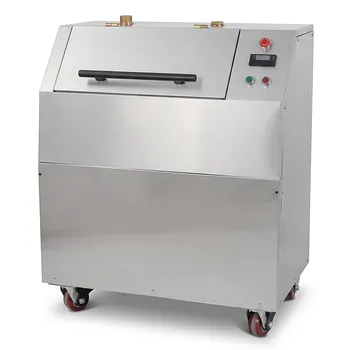
What is the technical necessity of using a vibratory sieve shaker and standard test sieves in copper ore characterization?
Updated 3 months ago
The technical necessity of using a vibratory sieve shaker and standard test sieves lies in the precise determination of the "economic liberation size." By applying mechanical vibration to drive ground copper ore through a tiered stack of standardized mesh layers, technicians can accurately map how metal content is distributed across various particle sizes. This physical classification is the essential foundation for optimizing grinding circuits, predicting flotation recovery, and minimizing metal loss in fine-grained fractions.
Core Takeaway: Vibratory sieve analysis provides a standardized, repeatable method to quantify particle size distribution, which is the primary variable governing mineral liberation and the efficiency of downstream separation processes like flotation and leaching.
The Foundation of Mineral Liberation
Identifying the Economic Liberation Point
The primary goal of copper ore characterization is to find the coarsest particle size at which the valuable minerals are sufficiently freed from the surrounding waste rock (gangue). Vibratory sieve shakers allow researchers to isolate specific size fractions to determine where the highest concentration of copper resides. This data prevents "over-grinding," which wastes energy and complicates recovery, or "under-grinding," which leaves copper trapped and unrecoverable.
Mapping Metal Distribution (TCu and ASCu)
Standard test sieves enable the measurement of Total Copper (TCu) and Acid Soluble Copper (ASCu) across discrete dimensions, such as 90μm or 250μm. By analyzing the chemistry of each fraction, engineers can identify if copper is disproportionately lost in the "slimes" (ultra-fine particles). This characterization provides the physical basis for determining desliming cut-off points in industrial mineral processing.
Enhancing Downstream Process Efficiency
Optimizing Flotation and Leaching Kinetics
Mineral recovery processes like flotation and leaching are highly sensitive to particle surface area and mass. Using a vibratory sieve shaker ensures that experimental materials meet strict size standards, such as an average particle size of 27 micrometers. By controlling this distribution, researchers can eliminate kinetic variations caused by size, ensuring that the results of flotation tests are reproducible and accurate.
Feeding Size-Sensitive Equipment
Downstream separation equipment, including gravity and electrostatic separators, often requires a specific feed size range to operate at peak efficiency. Fine grading via standard test sieves minimizes errors caused by uneven particle distribution. This precise classification significantly enhances the purity of the final metal-enriched products by ensuring the feed remains within the equipment's optimal operating window.
Ensuring Experimental Integrity
Standardizing Mechanical Separation
Mechanical vibration provides a consistent, repeatable force that manual shaking cannot replicate. This consistency ensures that the ore powder moves through multiple sieve layers (e.g., 1.18mm down to 0.3mm) in a uniform manner. Without this mechanical standardization, particle size data would vary between operators, making it impossible to compare the effectiveness of different grinding protocols.
Evaluating Grinding Effectiveness
Sieve analysis acts as the "audit" for the grinding circuit. By comparing the size distribution of the feed versus the discharge, technicians can evaluate whether the mill is performing to specification. This allows for real-time adjustments to the grinding media or throughput to maintain the optimal particle gradation required for maximum recovery.
Understanding the Trade-offs and Pitfalls
The Risk of Sieve Blinding
In copper ore analysis, moisture or "near-size" particles can clog the sieve openings, a phenomenon known as blinding. While vibratory shakers reduce this risk through constant agitation, extremely fine or clay-heavy ores may still require wet sieving methods to achieve accurate results. Ignoring blinding can lead to an incorrect "coarse" bias in the data.
Sieve Wear and Calibration
Standard test sieves are precision instruments that degrade over time due to the abrasive nature of copper ore. Worn mesh leads to larger-than-standard openings, which compromises the accuracy of the particle size distribution. Regular calibration and replacement are technically necessary to ensure the characterization data remains valid for industrial scaling.
How to Apply This to Your Project
Making the Right Choice for Your Goal
To effectively utilize vibratory sieving in your characterization workflow, align your approach with your specific metallurgical objectives:
- If your primary focus is process design: Use a full stack of standard sieves to create a complete particle size distribution (PSD) curve to determine the optimal desliming and flotation points.
- If your primary focus is energy efficiency: Use sieve analysis to identify the exact moment of economic liberation, allowing you to reduce grinding time and energy consumption.
- If your primary focus is experimental reproducibility: Utilize a standardized vibratory shaker at fixed amplitudes and times to eliminate human error and ensure comparable results across different ore samples.
By mastering the use of vibratory sieve shakers and standard test sieves, you transform raw ore into a detailed map of mineral potential, ensuring every downstream process is built on a foundation of technical precision.
Summary Table:
| Technical Function | Key Benefit | Impact on Mineral Processing |
|---|---|---|
| PSD Mapping | Determines "Economic Liberation Size" | Prevents over-grinding and energy waste |
| Metal Distribution | Tracks TCu/ASCu across fractions | Identifies desliming cut-off points |
| Standardization | Eliminates manual shaking variables | Ensures repeatable experimental data |
| Kinetic Control | Uniform particle surface area | Optimizes flotation and leaching results |
Precision Sample Prep for Mining and Material Science
Maximize your recovery rates and research accuracy with professional-grade laboratory equipment. At our core, we provide complete laboratory sample preparation solutions tailored for material science and mineral processing professionals.
Our extensive product lines are designed to handle every stage of powder processing:
- Size Reduction: High-performance crushers (jaw/roll), liquid nitrogen cryogenic grinders, and advanced mills (planetary ball, jet, sand/bead, disc, rotor).
- Classification & Analysis: Precision vibratory and air-jet sieve shakers with a full range of standard test sieves and meshes.
- Mixing: High-efficiency powder mixers and vacuum defoaming mixers.
- Compaction & Sintering: A full spectrum of hydraulic presses, including Cold/Warm Isostatic Presses (CIP/WIP), standard lab presses, XRF pellet presses, and vacuum hot presses.
Ready to optimize your grinding circuits and characterization workflows? Contact our technical team today to find the perfect equipment for your specific mineralogy requirements.
References
- Willie Nheta, Omoyemi O. Ola-Omole. Exploring the characterization, liberation and flotation response of a Nigerian low-grade copper ore. DOI: 10.46873/2300-3960.1374
Mentioned Products
- Vibratory Sieve Shaker Electromagnetic 3D Motion Powder Particle Size Analyzer for Dry and Wet Sieving
- Laboratory Dry and Wet Three Dimensional Vibratory Sieve Shaker for Particle Analysis
- Dry Three Dimensional Vibratory Sieve Shaker
- Stainless Steel Laboratory Vibratory Test Sieve Shaker
- Heavy Duty Dry Three Dimensional Vibratory Sieve Shaker for Particle Separation
People Also Ask
- How does a vibratory sieve shaker contribute to optimizing the performance of activated carbon? Enhance Adsorption Precision
- Why is a laboratory vibratory sieve shaker necessary for processing magnesium-based borate precursor powders? Boost Activity
- Why use a vibratory sieve shaker to verify coarse aggregate grading in rubberized concrete? Ensure Structural Integrity
- What function do vibratory sieve shakers and standard test sieves serve in the preparation of adsorbents? Key Guide
- What role does a vibratory sieve shaker play in the particle size analysis of ground corn products? Enhance QC Precision

Tech Team · PowderPreparation
Last updated on Jun 03, 2026
Related Products
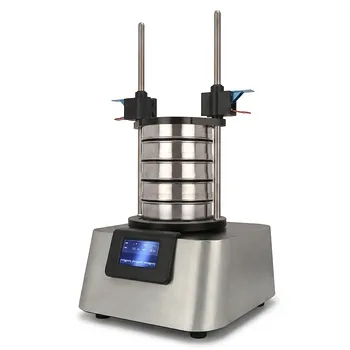
Vibratory Sieve Shaker Electromagnetic 3D Motion Powder Particle Size Analyzer for Dry and Wet Sieving
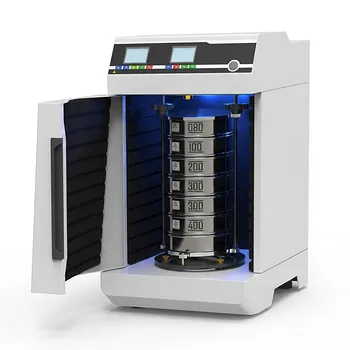
Laboratory Dry and Wet Three Dimensional Vibratory Sieve Shaker for Particle Analysis
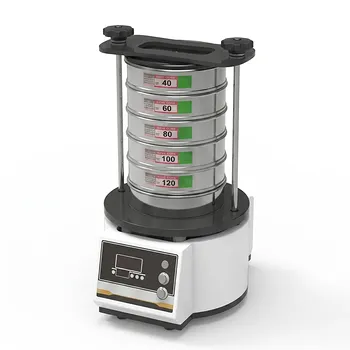
Dry Three Dimensional Vibratory Sieve Shaker
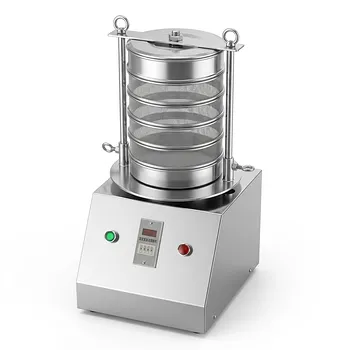
Stainless Steel Laboratory Vibratory Test Sieve Shaker
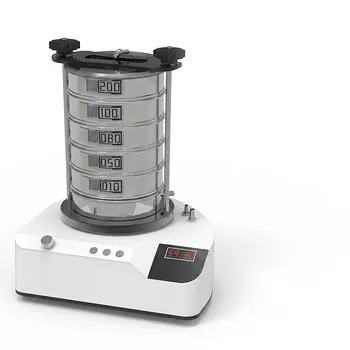
Heavy Duty Dry Three Dimensional Vibratory Sieve Shaker for Particle Separation
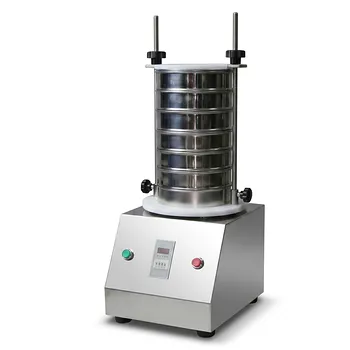
Small Laboratory Vibratory Sieve Shaker for Powder Gradation and Particle Size Analysis
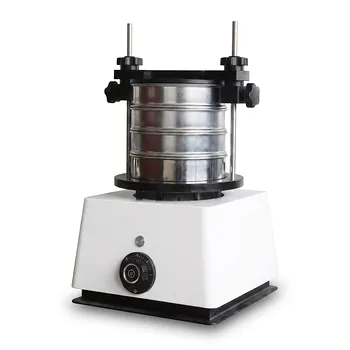
Small Laboratory Vibrating Sieve Shaker for Precise Particle Size Analysis
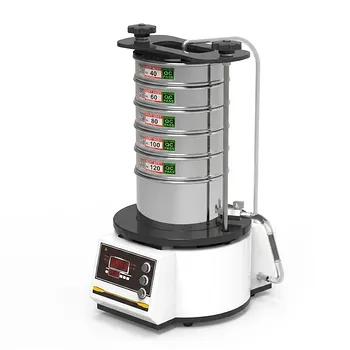
High Frequency Wet Three-Dimensional Vibrating Sieve Shaker for Dry and Wet Particle Size Analysis
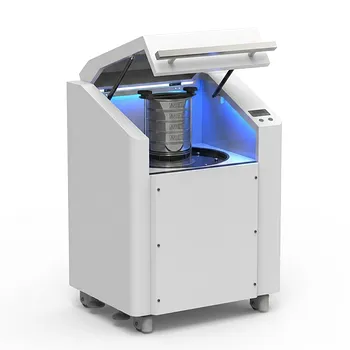
High Frequency Cabinet Type Three-Dimensional Rotary Vibrating Sieve Shaker for Dry Sieving and Particle Classification
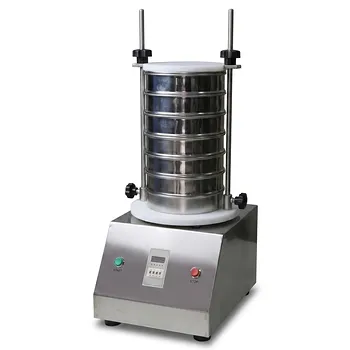
Laboratory Vibratory Test Sieve Shaker for Precision Particle Size Analysis and Powder Grading
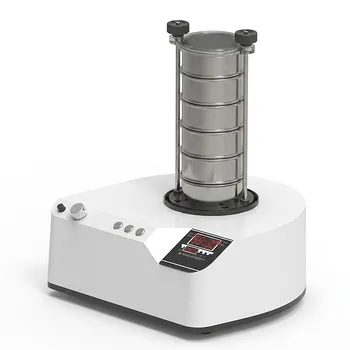
三维电磁微量振动筛分仪
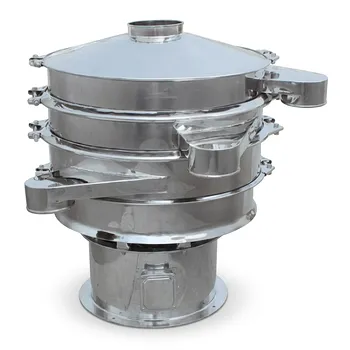
Stainless Steel Rotary Vibrating Sieve High Precision Circular Vibratory Separator Industrial Powder Grading Machine Multi Layer Sifting Equipment
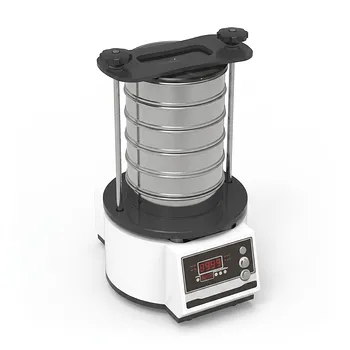
Tapping Oscillating Sieve Shaker for Dry and Wet Particle Size Analysis
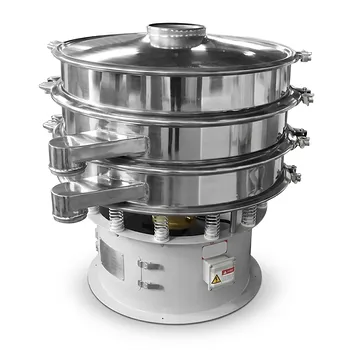
Three Dimensional Rotary Vibrating Sieve
Vibratory Superfine Grinder for Ultra Fine Laboratory Powder Milling
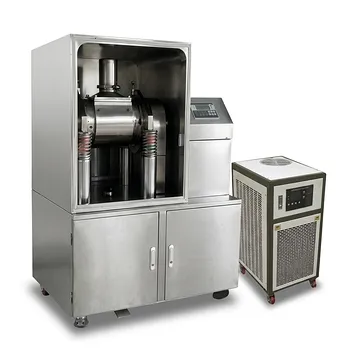
Small Vibrating Ultrafine Grinder for Traditional Chinese Medicine
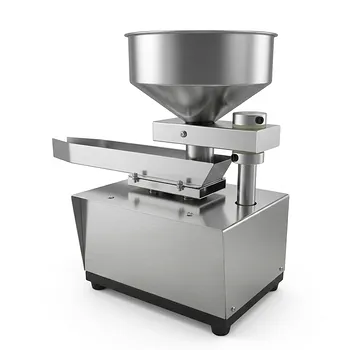
Automatic Vibrating Powder Feeder for Laboratory Material Processing Precision Vibratory Hopper Feeder for Granular and Powder Material Handling Industrial Grade Vibrating Tray Feeder for Consistent Material Sample Preparation