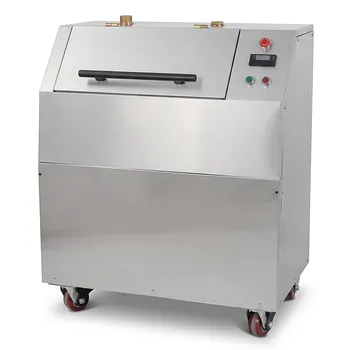
What is the significance of using a vibratory sieve shaker after grinding fibers? Ensure High-Performance Uniformity
Updated 4 months ago
Ensuring particle size uniformity is the bridge between raw mechanical grinding and predictable material performance. By using a vibratory sieve shaker, processors can control fiber dimensions—typically ensuring they fall below 0.25 mm—which is critical for the kinetics of subsequent chemical reactions. This uniformity ensures that treatments like alkali processing and bleaching reach the core of every particle, preventing the incomplete reactions often caused by oversized fibers.
The primary significance of a vibratory sieve shaker lies in its ability to eliminate particle size as a variable, ensuring that chemical reaction rates, thermal stability, and mechanical properties remain consistent across the entire batch of processed fibers.
Optimizing Chemical Reaction Kinetics
Preventing Incomplete Chemical Treatment
When fibers are inconsistent in size, larger particles may only undergo surface-level reactions. During alkali treatment or bleaching, a vibratory sieve shaker ensures that all particles are small enough for the chemicals to penetrate completely and evenly.
Standardizing Surface Modification
Uniform particle size, often graded between 30 to 40 mesh, is essential for synthesizing consistent chemical products like Carboxymethyl Holocellulose (CMH). This precision leads to stable physicochemical properties, ensuring the fiber powder functions reliably as a high-quality binder or additive.
Increasing Specific Surface Area
By screening out larger fragments and focusing on fine particles (sometimes as small as 63 microns), you maximize the specific surface area. This increased area enhances the reactivity of the powder, which is vital for achieving high densification during stages like sintering in ceramic or refractory production.
Enhancing Industrial Manufacturing Stability
Improving Extrusion and Rheology
In processes like twin-screw extrusion, inconsistent fiber sizes can lead to local uneven heating or physical flow blockages. Maintaining a uniform distribution via sieving ensures the "dough" maintains stable rheological properties, which directly improves the repeatability of the final extruded product.
Streamlining Metallurgical and Leaching Processes
Precise control of the particle size range is fundamental for maintaining a constant liquid-solid ratio. In metallurgical applications, this prevents the filtration difficulties caused by excessively fine "fines" and the incomplete leaching associated with oversized slag particles.
Quantifying Milling Efficiency
The sieve shaker acts as a diagnostic tool to evaluate the grinding process itself. By analyzing the Particle Size Distribution (PSD) and SPAN values, engineers can quantitatively determine if the grinding media is performing efficiently or if the equipment requires maintenance.
Understanding the Trade-offs and Pitfalls
Material Waste and Recycling
Rigorous sieving inevitably results in "oversized" material that does not pass through the mesh. While this ensures quality, it requires a closed-loop system where larger particles are returned for further grinding to prevent significant yield loss.
Mesh Blinding and Maintenance
Fine fiber particles can often "blind" or clog the sieve openings, especially if the fibers have high moisture content or static charge. Frequent cleaning and the use of anti-blinding accessories (like bouncing balls or ultrasonic cleaners) are necessary to maintain accuracy.
Throughput vs. Precision
High-precision sieving takes time, potentially creating a bottleneck in high-volume production lines. Balancing the vibration amplitude and duration is necessary to achieve the required grading without compromising the overall manufacturing speed.
How to Apply This to Your Project
Making the Right Choice for Your Goal
- If your primary focus is Chemical Modification: Use a sieve shaker to isolate particles below 0.25 mm to ensure total chemical penetration and uniform reaction kinetics.
- If your primary focus is Composite Manufacturing: Target a specific mesh range (e.g., 30-40 mesh) to prevent flow blockages and ensure stable rheology during extrusion or injection molding.
- If your primary focus is Process Optimization: Regularly perform PSD analysis using a stack of standard test sieves (from 1000 to 75 microns) to monitor the wear and efficiency of your grinding equipment.
- If your primary focus is Research and Analysis: Use fine meshes (up to 270 mesh) to eliminate particle size variables when testing the specific surface area or surface energy of new fiber treatments.
By integrating vibratory sieving as a mandatory post-grinding step, you transform a raw, heterogeneous powder into a standardized industrial raw material.
Summary Table:
| Key Benefit | Impact on Fiber Processing | Typical Target Size |
|---|---|---|
| Chemical Kinetics | Prevents incomplete reactions; ensures core penetration during bleaching/alkali treatment. | < 0.25 mm |
| Manufacturing Stability | Improves rheology and flow during extrusion; prevents liquid-solid ratio imbalances. | 30 - 40 Mesh |
| Reactivity Optimization | Maximizes specific surface area for better densification and sintering. | ~63 Microns |
| Process Diagnostic | Evaluates grinding efficiency and equipment wear through PSD analysis. | 75 - 1000 Microns |
Elevate Your Material Precision with Professional Preparation Solutions
Consistency in fiber particle size is the foundation of predictable material performance. At [Company Name], we provide complete laboratory sample preparation solutions for material science, specializing in the equipment you need to bridge the gap between raw grinding and final application.
Whether you require high-energy planetary ball mills or jet mills for initial grinding, or our precision vibratory and air-jet sieve shakers for exact grading, our equipment is designed for accuracy and durability. We also offer a full spectrum of hydraulic presses (CIP/WIP) and hot presses to transform your processed powders into high-density materials.
Ready to optimize your fiber processing workflow? Contact our technical experts today to find the perfect equipment configuration for your lab!
References
- Aida Safina Aridi, Yus Aniza Yusof. Effect of sodium hypochlorite concentration during pre-treatment on isolation of nanocrystalline cellulose from Leucaena leucocephala (Lam.) mature pods. DOI: 10.15376/biores.16.2.3137-3158
Mentioned Products
- Vibratory Sieve Shaker Electromagnetic 3D Motion Powder Particle Size Analyzer for Dry and Wet Sieving
- Laboratory Dry and Wet Three Dimensional Vibratory Sieve Shaker for Particle Analysis
- Dry Three Dimensional Vibratory Sieve Shaker
- Stainless Steel Laboratory Vibratory Test Sieve Shaker
- Heavy Duty Dry Three Dimensional Vibratory Sieve Shaker for Particle Separation
People Also Ask
- How does a vibratory sieve shaker contribute to optimizing the performance of activated carbon? Enhance Adsorption Precision
- Why is a laboratory vibratory sieve shaker necessary for processing magnesium-based borate precursor powders? Boost Activity
- Why use a vibratory sieve shaker to verify coarse aggregate grading in rubberized concrete? Ensure Structural Integrity
- What function do vibratory sieve shakers and standard test sieves serve in the preparation of adsorbents? Key Guide
- What role does a vibratory sieve shaker play in the particle size analysis of ground corn products? Enhance QC Precision

Tech Team · PowderPreparation
Last updated on Jun 03, 2026
Related Products
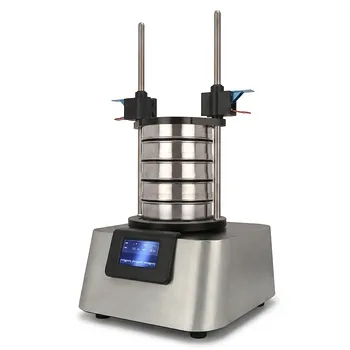
Vibratory Sieve Shaker Electromagnetic 3D Motion Powder Particle Size Analyzer for Dry and Wet Sieving
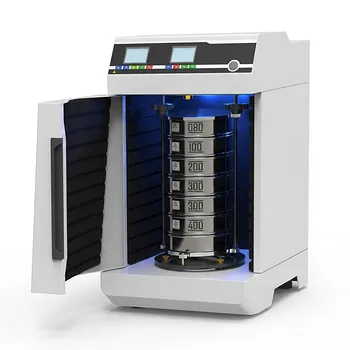
Laboratory Dry and Wet Three Dimensional Vibratory Sieve Shaker for Particle Analysis

Dry Three Dimensional Vibratory Sieve Shaker
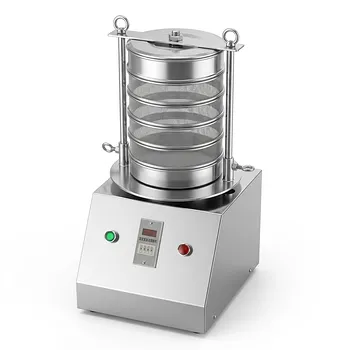
Stainless Steel Laboratory Vibratory Test Sieve Shaker

Heavy Duty Dry Three Dimensional Vibratory Sieve Shaker for Particle Separation
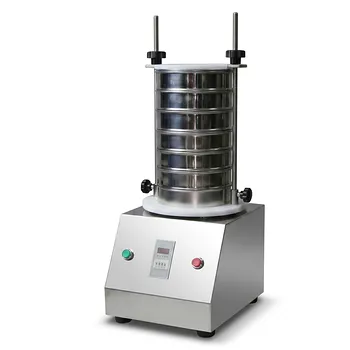
Small Laboratory Vibratory Sieve Shaker for Powder Gradation and Particle Size Analysis
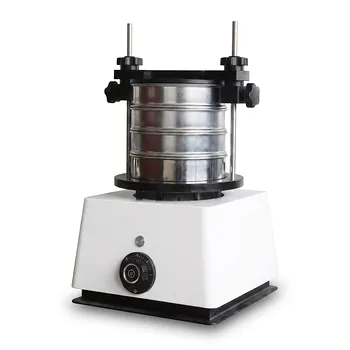
Small Laboratory Vibrating Sieve Shaker for Precise Particle Size Analysis
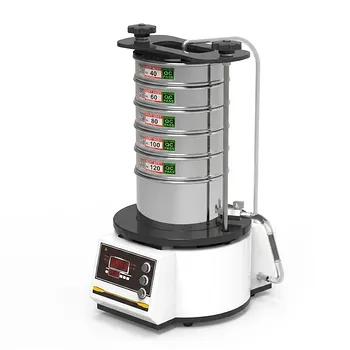
High Frequency Wet Three-Dimensional Vibrating Sieve Shaker for Dry and Wet Particle Size Analysis
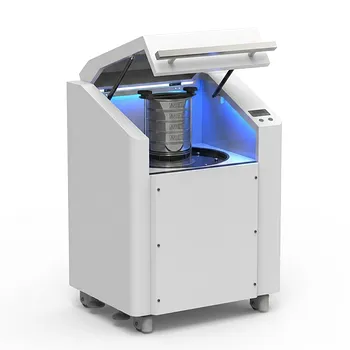
High Frequency Cabinet Type Three-Dimensional Rotary Vibrating Sieve Shaker for Dry Sieving and Particle Classification

Laboratory Vibratory Test Sieve Shaker for Precision Particle Size Analysis and Powder Grading
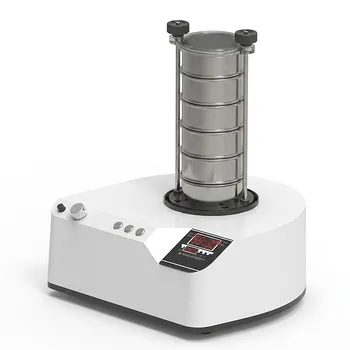
三维电磁微量振动筛分仪

Stainless Steel Rotary Vibrating Sieve High Precision Circular Vibratory Separator Industrial Powder Grading Machine Multi Layer Sifting Equipment
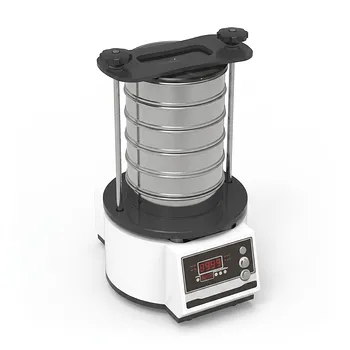
Tapping Oscillating Sieve Shaker for Dry and Wet Particle Size Analysis
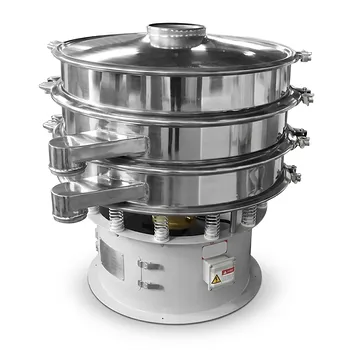
Three Dimensional Rotary Vibrating Sieve
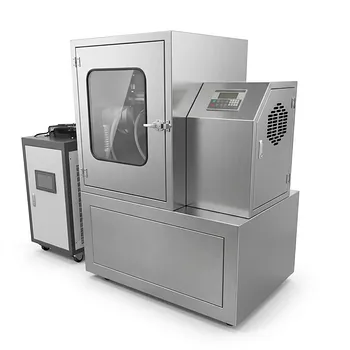
Vibratory Superfine Grinder for Ultra Fine Laboratory Powder Milling
Small Vibrating Ultrafine Grinder for Traditional Chinese Medicine
Automatic Vibrating Powder Feeder for Laboratory Material Processing Precision Vibratory Hopper Feeder for Granular and Powder Material Handling Industrial Grade Vibrating Tray Feeder for Consistent Material Sample Preparation