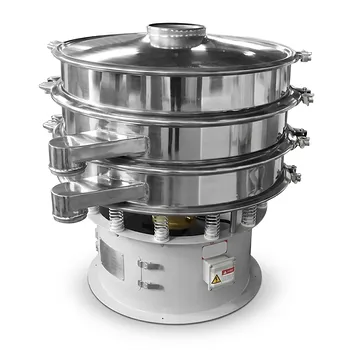
What is the significance of using a standard sieve shaker for sieve analysis? Optimize Grinding Process Efficiency
Updated 4 months ago
The standard sieve shaker is the primary tool for quantifying grinding efficiency by providing precise, repeatable particle size classification. By subjecting ground material to standardized mechanical vibration through a stack of graduated sieves, it determines the exact weight distribution of various particle fractions. This data allows engineers to calculate critical metrics like the ratio of target product to "slime," which serves as the direct foundation for optimizing grinding parameters and building predictive process models.
Sieve analysis via a mechanical shaker transforms raw grinding output into quantitative data, enabling the calculation of particle size distribution (PSD) and uniformity. This objective measurement is essential for identifying whether a grinding circuit is meeting production targets or requires parameter adjustments to reduce waste and improve throughput.
Quantifying Grinding Performance via Particle Distribution
Determining Yield and Fraction Ratios
The primary role of the shaker is to separate dried products into specific size ranges to identify the yield of the target fraction. By measuring the mass retained on each sieve, operators can distinguish between acceptable granules and undesired "slime" or oversized particles.
Calculating Statistical Indicators
Data from the shaker allows for the calculation of the Geometric Mean Diameter (GMD) and Geometric Standard Deviation (GSD). These statistical values, along with indicators like D10, D50, and D90, provide a technical baseline for evaluating the intensity and uniformity of the size reduction process.
Assessing Uniformity and Quality
A sieve shaker provides the foundational data needed to calculate the uniformity coefficient. This metric is a core indicator for evaluating the efficiency of various grinding technologies, including stone milling, hammer milling, and roller milling.
Driving Process Optimization and Modeling
Building Predictive Models
The ratio of target sizes to fines provides the empirical evidence needed to construct process prediction models. These models help technical personnel understand how changes in grinding duration or intensity will impact the final product quality.
Adjusting Operational Parameters
Sieve analysis reveals how variables like screw speed or agitation intensity affect the fine powder rate. This feedback loop is critical for fine-tuning machinery to achieve specific production targets, such as a 50% pass rate in rod mill discharge.
Predicting Downstream Performance
Precise classification helps predict how the powder will behave in subsequent stages, such as compression moldability. Ensuring a uniform size distribution is often a prerequisite for high-quality downstream processing and final product integrity.
The Necessity of Standardization
Reducing Human Error
Unlike manual sieving, a mechanical shaker provides standardized, continuous vibration frequency and force. This consistency ensures that particles are fully graded within a specific timeframe, significantly improving the repeatability and accuracy of the analysis.
Ensuring Multi-Layer Separation
The shaker allows for the simultaneous use of a stack of test sieves with various apertures (ranging from 25 μm to several millimeters). This multi-layer physical separation is necessary to capture the full spectrum of the Particle Size Distribution (PSD) in a single test.
Understanding the Trade-offs
Physical Limitations of Mechanical Sieving
While highly effective for many materials, mechanical shakers may struggle with extremely fine powders (typically below 25 μm) where electrostatic forces or moisture cause clumping. In these cases, the physical separation may not reflect the true primary particle size.
Impact of Particle Shape
Sieve analysis essentially measures the second smallest dimension of a particle. If the ground material is highly elongated or needle-like, it may pass through a mesh that does not accurately represent its volume or mass, leading to potential inaccuracies in size reduction evaluation.
Applying Sieve Analysis to Your Grinding Workflow
Accurate sieve analysis should be used as a diagnostic tool to bridge the gap between machinery settings and final product requirements.
- If your primary focus is maximizing yield: Use the shaker data to calculate the exact ratio of target particles to fines and adjust mill retention time accordingly.
- If your primary focus is process stability: Implement standardized shaker intervals (e.g., 10 minutes) to eliminate human error and ensure repeatable gradation results across different shifts.
- If your primary focus is equipment benchmarking: Compare the D50 and uniformity coefficients across different milling technologies to determine which method provides the most efficient size reduction for your specific material.
By integrating standardized sieve shaking into your quality control protocol, you turn subjective observations into the precise technical data required for industrial optimization.
Summary Table:
| Feature of Sieve Analysis | Key Metrics Provided | Impact on Grinding Efficiency |
|---|---|---|
| Quantification | Yield of target fraction vs. "slime" | Identifies waste and maximizes product recovery |
| Statistical Analysis | D10, D50, D90, GMD, GSD | Establishes baselines for size reduction intensity |
| Uniformity Tracking | Uniformity Coefficient | Evaluates consistency across different milling technologies |
| Standardization | Constant frequency and force | Eliminates human error for repeatable, accurate data |
| Process Modeling | Pass rates and fine powder ratios | Enables predictive adjustment of mill speed and duration |
Optimize Your Powder Processing with Precision Equipment
Achieving peak grinding efficiency requires more than just high-quality mills—it demands precise, repeatable analysis. At our facility, we provide complete laboratory sample preparation solutions for material science, specializing in professional-grade powder processing and compaction equipment.
Our extensive product lines are designed to support every stage of your workflow:
- Sieve Analysis: High-precision sieve shakers (vibratory and air-jet) with a wide range of test sieves and meshes for accurate PSD evaluation.
- Grinding & Milling: Advanced crushers (jaw/roll), liquid nitrogen cryogenic grinders, and diverse mills (planetary ball, jet, sand/bead, disc, rotor).
- Mixing & Preparation: Powder mixers and defoaming mixers for material homogeneity.
- Compaction & Forming: A full spectrum of hydraulic presses, including Cold/Warm Isostatic Presses (CIP/WIP), standard lab presses, XRF pellet presses, and vacuum hot presses.
Whether you are refining a rod mill discharge or developing new material powders, our equipment ensures your data is reliable and your throughput is maximized. Contact us today to discuss your specific application and find the ideal solution for your laboratory or production line.
References
- Gamal S. Abdelhaffez, Mohammed A. Hefni. CONTROLLING GRINDING PROCESS PARAMETERS USING CENTRAL COMPOSITE DESIGN TO REDUCE SLIMES IN PHOSPHATE ORE BENEFICIATION. DOI: 10.17794/rgn.2022.3.11
Mentioned Products
- Stainless Steel Laboratory Vibratory Test Sieve Shaker
- 三维电磁微量振动筛分仪
- Small Laboratory Vibrating Sieve Shaker for Precise Particle Size Analysis
- Heavy Duty Dry Three Dimensional Vibratory Sieve Shaker for Particle Separation
- Vibratory Sieve Shaker Electromagnetic 3D Motion Powder Particle Size Analyzer for Dry and Wet Sieving
People Also Ask
- What function does a laboratory vibratory sieve shaker serve in the production process of metakaolin? Optimize Reactivity
- Why is a precision laboratory vibratory sieve shaker necessary for particle size control? Optimize Biomass Carbonization
- What is the function of a laboratory vibratory sieve shaker? Enhance Coal Particle Size Distribution (PSD) Analysis
- What role do laboratory vibratory sieve shakers and test sieves play before the molding of Nb-Cu composite powders?
- What is the primary function of a laboratory vibratory sieve shaker in the evaluation of sand liquefaction potential?

Tech Team · PowderPreparation
Last updated on Jun 03, 2026
Related Products
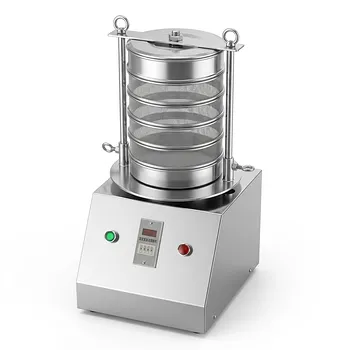
Stainless Steel Laboratory Vibratory Test Sieve Shaker
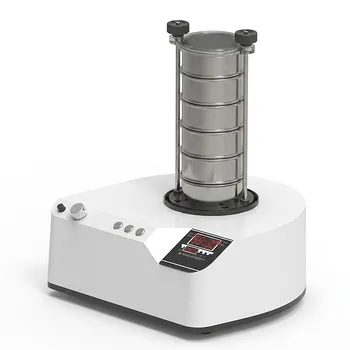
三维电磁微量振动筛分仪
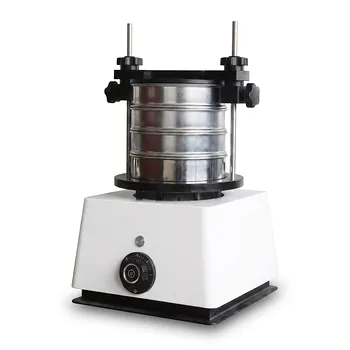
Small Laboratory Vibrating Sieve Shaker for Precise Particle Size Analysis
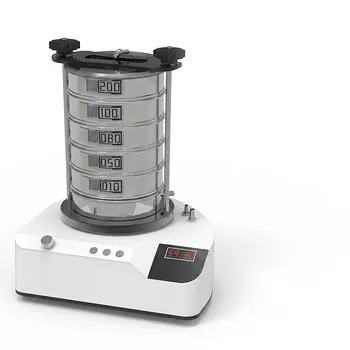
Heavy Duty Dry Three Dimensional Vibratory Sieve Shaker for Particle Separation
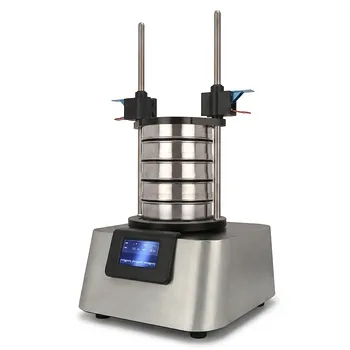
Vibratory Sieve Shaker Electromagnetic 3D Motion Powder Particle Size Analyzer for Dry and Wet Sieving
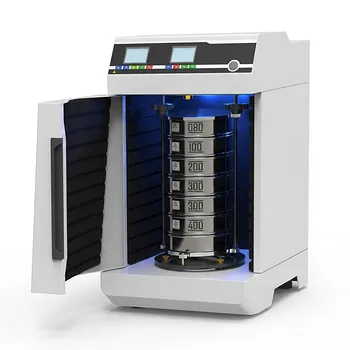
Laboratory Dry and Wet Three Dimensional Vibratory Sieve Shaker for Particle Analysis
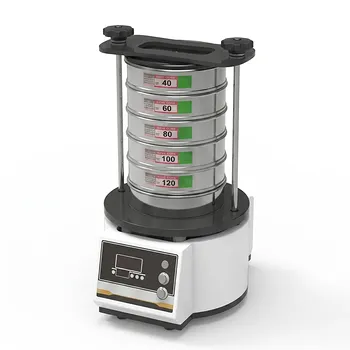
Dry Three Dimensional Vibratory Sieve Shaker
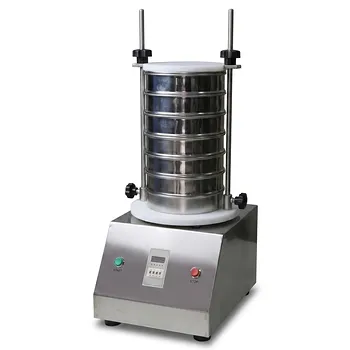
Laboratory Vibratory Test Sieve Shaker for Precision Particle Size Analysis and Powder Grading
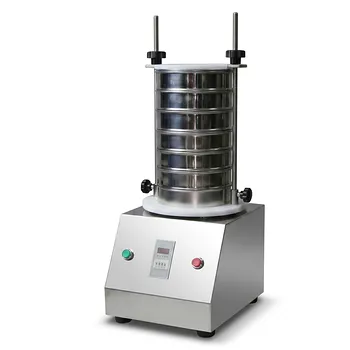
Small Laboratory Vibratory Sieve Shaker for Powder Gradation and Particle Size Analysis
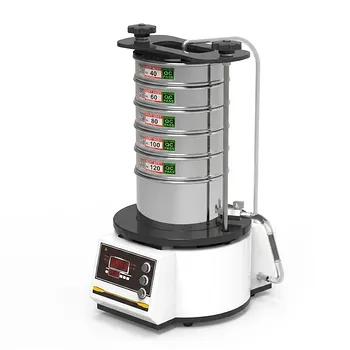
High Frequency Wet Three-Dimensional Vibrating Sieve Shaker for Dry and Wet Particle Size Analysis
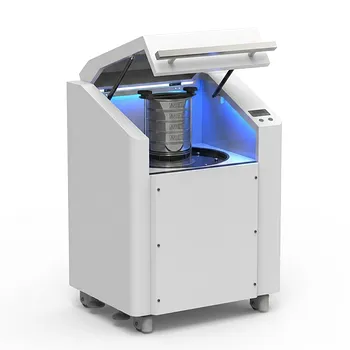
High Frequency Cabinet Type Three-Dimensional Rotary Vibrating Sieve Shaker for Dry Sieving and Particle Classification
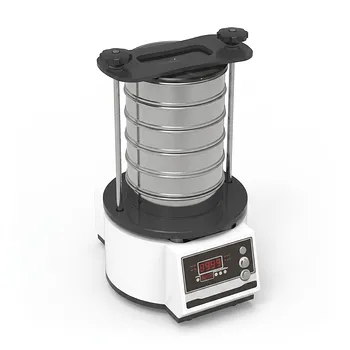
Tapping Oscillating Sieve Shaker for Dry and Wet Particle Size Analysis
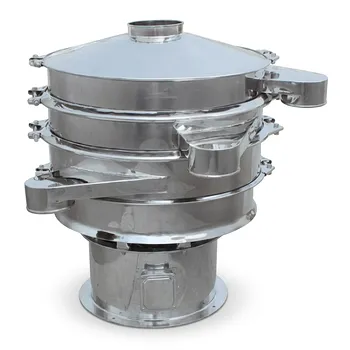
Stainless Steel Rotary Vibrating Sieve High Precision Circular Vibratory Separator Industrial Powder Grading Machine Multi Layer Sifting Equipment
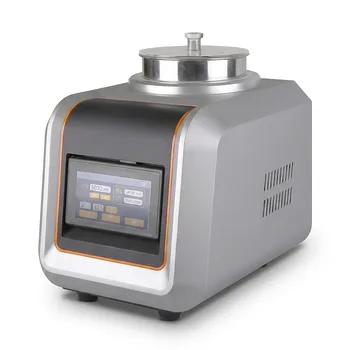
Laboratory Air Jet Sieving Machine for Fine Powder Particle Size Analysis and Deagglomeration