What is the significance of the timing control feature on a mechanical sieve shaker? Ensure precise ore particle analysis.
Updated 3 months ago
Timing control on a mechanical sieve shaker is the critical mechanism that ensures every ore sample is subjected to an identical duration of mechanical force. By establishing a standardized sieving window—typically 15 minutes—the feature allows the sample to reach a "definitive sieving endpoint" where all eligible particles have successfully passed through the mesh. This consistency is the only way to ensure that particle size data remains comparable across different production batches, various laboratories, and shifting operational shifts.
The core significance of timing control lies in its ability to eliminate temporal variables, transforming a manual, subjective process into a repeatable scientific standard. It ensures that the "endpoint" of physical separation is reached uniformly, providing the reliable data foundation required for complex metallurgical modeling.
Standardizing the Physical Separation Process
Reaching the Definitive Sieving Endpoint
Sieving is a time-dependent process where particles must undergo constant reorientation to find an opening in the mesh. The timing control ensures that the shaker runs long enough for the majority of eligible particles to pass through, reaching a state of physical separation equilibrium. Without a fixed timer, an operator might stop the process prematurely, leading to an underestimation of the "fines" within the ore sample.
Ensuring Consistent Mechanical Energy
Mechanical shakers utilize a combination of horizontal circular motion and vertical tapping to move material across the sieve surface. The timing feature guarantees that every sample receives the exact same number of vibrations and taps. This standardized energy input prevents human error and ensures that the force applied to the ore is a constant, not a variable.
Eliminating Human Subjectivity
Manual sieving or untimed mechanical sieving relies on the operator’s judgment, which is inherently inconsistent. Automated timing removes this subjective bias, ensuring that the results from a morning shift match those from an evening shift. This level of automation is essential for maintaining high-frequency quality control in rigorous industrial environments.
The Role of Timing in Data Modeling
Establishing t10 and Breakage Parameters
In ore analysis, precise mass fraction data is used to calculate t10 breakage parameters and develop t-curve models. These models predict how ore will behave during large-scale crushing and grinding. If the sieving time varies, the resulting mass fractions will be inaccurate, leading to flawed models that can compromise the efficiency of the entire processing plant.
Facilitating Inter-Laboratory Comparability
For global mining operations, data must be shared and compared between site labs and central research facilities. Timing control acts as a universal calibration constant, ensuring that a sample analyzed in one location will yield the same results in another. This alignment is vital for verifying that ore meets specific metallurgical benchmarks or contract requirements.
Supporting Advanced Statistical Analysis
Standardized timing allows for the accurate calculation of the fineness modulus, coefficient of uniformity (Cu), and coefficient of curvature (Cc). These metrics are fundamental for confirming that the aggregate is well-graded. Reliable timing ensures these statistical values reflect the true nature of the material rather than fluctuations in the testing process.
Understanding the Trade-offs and Limitations
Risk of Particle Degradation
While longer sieving times generally improve accuracy, excessive vibration can cause friable ore particles to break down into smaller fragments. This "attrition" creates a false reading of the original particle size distribution. Analysts must balance the need for a complete endpoint with the risk of mechanical degradation of the sample.
Sieve Blinding and Mesh Wear
Repeated, long-duration cycles increase the likelihood of sieve blinding, where particles become wedged in the mesh openings. Consistent timing helps monitor this, as a sudden change in results over a standard 15-minute window can signal that a sieve is clogged or worn. Over-sieving beyond the standard timeframe accelerates equipment wear without providing significant gains in data accuracy.
How to Apply Timing Standards to Your Analysis
To maximize the value of your particle size analysis, your timing protocols should be tailored to the specific material and your ultimate analytical goals.
- If your primary focus is process prediction modeling: Use a strict 15-minute standard to ensure the mass fraction data is precise enough for t10 and t-curve breakage calculations.
- If your primary focus is high-volume quality control: Establish the shortest possible "endpoint" time (e.g., 10 minutes) that still captures the majority of the fines to increase laboratory throughput without sacrificing accuracy.
- If your primary focus is analyzing friable or soft ores: Conduct a time-series test to find the "sweet spot" where separation is complete but particle attrition hasn't yet skewed the results.
- If your primary focus is meeting industry certifications: Adhere strictly to the timing specified in ASTM or ISO standards to ensure your data is legally and commercially defensible.
By mastering the timing control of your mechanical sieve shaker, you transform raw ore samples into the precise, actionable data required for modern metallurgical excellence.
Summary Table:
| Feature of Timing Control | Impact on Ore Analysis | Analytical Benefit |
|---|---|---|
| Endpoint Achievement | Ensures all eligible fines pass the mesh | Prevents underestimation of particle distribution |
| Energy Standardization | Uniform vibration and tapping force | Eliminates variables across different shifts |
| Process Automation | Removes operator subjectivity | Facilitates inter-laboratory data comparability |
| Data Modeling Support | Accurate mass fraction calculations | Enables reliable t10 and breakage parameter modeling |
Elevate Your Material Analysis with Professional Preparation Solutions
Precise data starts with superior equipment. As specialists in laboratory sample preparation for material science, we provide a comprehensive range of powder processing and compaction tools designed to meet rigorous standards like ASTM and ISO.
Whether you are refining ore analysis or developing advanced ceramics, our extensive product lines have you covered:
- Sizing & Separation: High-precision vibratory and air-jet sieve shakers with a full range of test sieves and meshes.
- Milling & Grinding: Jaw/roll crushers, planetary ball mills, jet mills, and liquid nitrogen cryogenic grinders.
- Compaction & Pressing: A full spectrum of hydraulic presses, including Cold/Warm Isostatic Presses (CIP/WIP), vacuum hot presses, and XRF pellet presses.
- Mixing: Powder mixers and advanced defoaming mixers for uniform sample blending.
Ready to enhance your lab's efficiency and data accuracy? Contact our technical experts today to discuss a customized solution for your material processing needs.
References
- Sushanta Kumar Pradhan, Sudip Sundar Das. Comparison of Sieving Techniques in Size Distribution and Estimation of Particle Size of a Bulk Sample. DOI: 10.37398/jsr.2023.670401
Mentioned Products
- 三维电磁微量振动筛分仪
- Vibratory Sieve Shaker Electromagnetic 3D Motion Powder Particle Size Analyzer for Dry and Wet Sieving
- Laboratory Dry and Wet Three Dimensional Vibratory Sieve Shaker for Particle Analysis
- Small Laboratory Vibrating Sieve Shaker for Precise Particle Size Analysis
- Stainless Steel Laboratory Vibratory Test Sieve Shaker
People Also Ask
- Why is a standard sieve shaker essential for CBA powders in geopolymers? Enhance Reactivity & Material Strength
- Why are standard metal sieves and sieve shakers necessary for 5-aminotetrazole mixtures? Optimize Thermal & Kinetic Data
- Why Use Sieve Shakers for Gangue Slurry Experiments? Optimize Particle Grading for Superior Results
- What are the advantages of mechanical vs. manual sieving for road dust analysis? Achieve Superior Data Standardization.
- How do high-precision sieve shakers and powder mixers facilitate material circularity in metal PBF? Optimize AM Cycles

Tech Team · PowderPreparation
Last updated on Jun 03, 2026
Related Products
三维电磁微量振动筛分仪
Vibratory Sieve Shaker Electromagnetic 3D Motion Powder Particle Size Analyzer for Dry and Wet Sieving
Laboratory Dry and Wet Three Dimensional Vibratory Sieve Shaker for Particle Analysis
Small Laboratory Vibrating Sieve Shaker for Precise Particle Size Analysis
Stainless Steel Laboratory Vibratory Test Sieve Shaker

Heavy Duty Dry Three Dimensional Vibratory Sieve Shaker for Particle Separation

Dry Three Dimensional Vibratory Sieve Shaker
Small Laboratory Vibratory Sieve Shaker for Powder Gradation and Particle Size Analysis

Laboratory Vibratory Test Sieve Shaker for Precision Particle Size Analysis and Powder Grading
High Frequency Wet Three-Dimensional Vibrating Sieve Shaker for Dry and Wet Particle Size Analysis
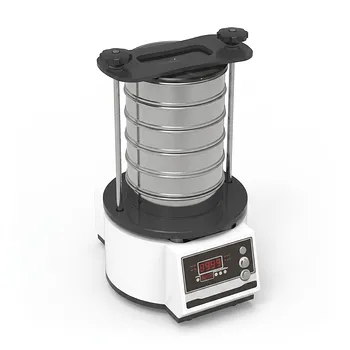
Tapping Oscillating Sieve Shaker for Dry and Wet Particle Size Analysis
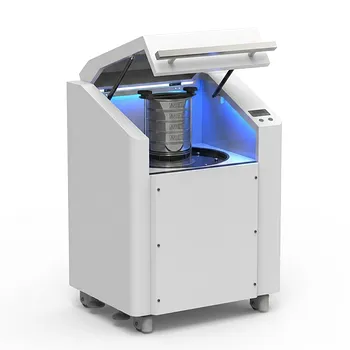
High Frequency Cabinet Type Three-Dimensional Rotary Vibrating Sieve Shaker for Dry Sieving and Particle Classification

Stainless Steel Rotary Vibrating Sieve High Precision Circular Vibratory Separator Industrial Powder Grading Machine Multi Layer Sifting Equipment
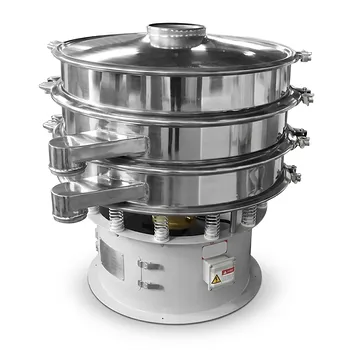
Three Dimensional Rotary Vibrating Sieve