What is the significance of precise pressure maintenance for SiC green bodies? Achieve Superior Density & Stability
Updated 4 months ago
Precise pressure maintenance is the technical foundation for high-performance Silicon Carbide (SiC) production. By providing a stable, high-precision load, laboratory hydraulic systems ensure that SiC powder is densified uniformly within the mold. This uniformity eliminates internal stress gradients and prevents anisotropic deformation or cracking during the subsequent high-temperature sintering process.
Core Takeaway: Precise pressure control dictates the initial density and pore structure of the SiC green body, which directly determines the dimensional stability and chemical stoichiometry of the final ceramic product.
Ensuring Structural Integrity and Dimensional Stability
The Elimination of Internal Stress Gradients
Stable pressure maintenance ensures that the SiC powder particles are distributed with uniform density throughout the entire volume of the mold. Without this precision, the green body develops internal stress gradients where some areas are more compacted than others. These gradients act as failure points, leading to micro-cracks or catastrophic fractures when the material expands and contracts during sintering.
Controlling Shrinkage and Geometric Accuracy
Precise hydraulic systems, often operating at specific loads like 40 MPa, force particles to overcome friction and rearrange into a dense packing. This high-pressure forming expels entrapped air and maximizes particle-to-particle contact area. By achieving a consistent initial density, manufacturers can accurately predict and reduce shrinkage deviations, ensuring the final ceramic meets strict dimensional tolerances.
Driving Mass Transfer During Sintering
The packing density achieved during the pressing stage provides the necessary driving force for mass transfer during sintering. A well-compacted green body reduces the distance atoms must travel to bond, facilitating faster and more complete densification. This process is essential for transforming a loose powder compact into a high-strength, low-porosity ceramic block.
Optimizing Chemical Stoichiometry and Composition
Regulating Melt Infiltration Volumes
In processes involving melt infiltration, the precision of the hydraulic press determines the initial porosity of the green body. This porosity acts as a reservoir that regulates the volume percentage of secondary phases, such as metallic silicon, that can enter the matrix. Precise pressure control is therefore the primary mechanism for achieving the exact stoichiometric ratio required for the composite.
Integrity of Multi-Layer and Graded Materials
When preparing graded SiC ceramics, the hydraulic system must provide accurate pre-pressing for each sequential powder layer. This prevents different compositions from intermixing and ensures each layer reaches a consistent packing density. High-precision loading improves the bonding strength at the interfaces, allowing for a continuous compositional gradient without structural delamination.
Uniformity in High-Entropy Systems
For complex SiC-based high-entropy ceramics, precise pressure ensures thorough rearrangement of diverse powder species. This eliminates large macroscopic pores and microstructure inhomogeneity that often plague complex chemical systems. Consistent pressure distribution guarantees that the final product maintains its intended dielectric strength and mechanical toughness.
Understanding the Trade-offs and Pitfalls
The Risk of Pressure Over-Saturation
While high pressure increases density, exceeding the material's elastic limit can lead to capping or delamination upon pressure release. If the hydraulic system cannot bleed pressure in a controlled manner, the stored elastic energy can cause the green body to crack instantly as it exits the mold.
Sensitivity to Loading Rates
Precise maintenance is not just about the peak pressure, but also the stability of the load over time. Fluctuations in hydraulic pressure during the "dwell" or holding phase can lead to uneven particle interlocking. This instability creates "soft spots" in the green body that result in warping or non-uniform grain growth during the final firing.
How to Apply This to Your Project
Recommendations for Material Goals
- If your primary focus is Dimensional Precision: Invest in a system with digital pressure monitoring to ensure consistent green density and predictable shrinkage.
- If your primary focus is Reaction Bonding/Melt Infiltration: Prioritize hydraulic systems with high repeatability to strictly control the pore volume available for secondary phases.
- If your primary focus is Multi-Layered Composites: Select a press capable of precise, incremental pre-loading to stabilize interfaces between different powder layers.
- If your primary focus is High-Strength Structural Parts: Ensure the system can maintain a stable "dwell time" to allow for maximum particle rearrangement and air expulsion.
Ultimately, the hydraulic press functions as the architect of the ceramic’s internal structure, where every megapascal of precision translates directly into the reliability of the final material.
Summary Table:
| Key Factor | Impact on SiC Green Body | Benefit to Final Product |
|---|---|---|
| Uniform Density | Eliminates internal stress gradients | Prevents cracking and warping during sintering |
| Shrinkage Control | Consistent initial packing density | Ensures high dimensional accuracy and tolerances |
| Pore Regulation | Precise volume for melt infiltration | Achieves exact chemical stoichiometry |
| Interface Stability | Stable pre-pressing of powder layers | Enhances bonding strength in graded materials |
Elevate Your SiC Material Performance with Precision Engineering
Achieving the perfect Silicon Carbide green body requires more than just force—it requires absolute precision. At our core, we provide complete laboratory sample preparation solutions tailored for advanced material science. Whether you are focusing on high-strength structural parts or complex high-entropy ceramics, our equipment ensures the structural integrity and reliability your research demands.
Our Specialized Solutions Include:
- Hydraulic Press Systems: A full spectrum of Cold/Warm Isostatic Presses (CIP/WIP), standard lab presses, XRF pellet presses, and vacuum hot presses designed for stable pressure maintenance.
- Powder Processing: High-performance crushers (jaw/roll), liquid nitrogen cryogenic grinders, and diverse mills (planetary ball, jet, rotor) for optimal particle size distribution.
- Advanced Mixing & Sizing: Powder and defoaming mixers, plus vibratory/air-jet sieve shakers to ensure material homogeneity.
Don't let pressure fluctuations compromise your ceramic's stoichiometry or strength. Contact our technical team today to discover how our compaction equipment can optimize your laboratory workflow and deliver superior material outcomes.
References
- Han Liu, Ping Xiao. A study on the thermal conductivity of proton irradiated CVD-SiC and sintered SiC, measured using a modified laser flash method with multi-step machining. DOI: 10.1016/j.jeurceramsoc.2024.04.001
Mentioned Products
- 5 Ton Single Punch Tablet Press Laboratory Small Batch Production
- 6-Ton Small Single-Punch Tablet Press — Laboratory Powder & Granule Tableting Equipment / Tablet Forming Machine
- 500g Capacity Water Cooled Low Temperature Grinder with Variable Speed and Safety Cover
- Vertical Production Planetary Ball Mill for High Throughput Powder Processing
- 6 Ton Variable Frequency Single Punch Tablet Press
People Also Ask
- What is the function of a laboratory press in assessing the hydrophobic performance of modified vermiculite fillers?
- What is the core function of a laboratory press in the forming of ceramic filter element green bodies? Maximize Density.
- What is the function of a laboratory press in Cr-Ti alloy evaluation? Quantify Fracture Stress & Strength
- Why is vacuum sealing and flexible packaging necessary for Aluminum Titanate powders during CIP? Ensure Peak Density
- Why is a laboratory hydraulic press required for FT-IR KBr pellets? Achieve Precise Sample Clarity for ZrC–SiC Analysis

Tech Team · PowderPreparation
Last updated on Jun 03, 2026
Related Products
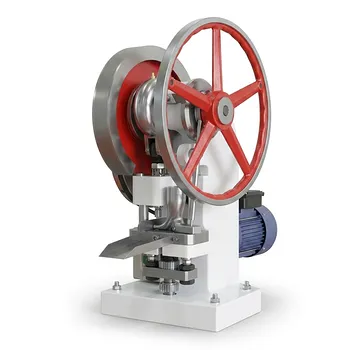
5 Ton Single Punch Tablet Press Laboratory Small Batch Production
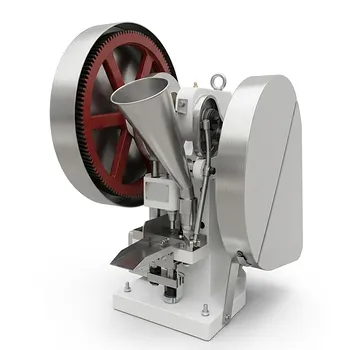
6-Ton Small Single-Punch Tablet Press — Laboratory Powder & Granule Tableting Equipment / Tablet Forming Machine
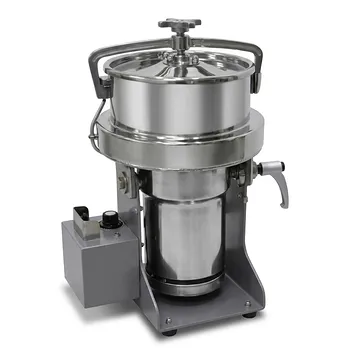
500g Capacity Water Cooled Low Temperature Grinder with Variable Speed and Safety Cover
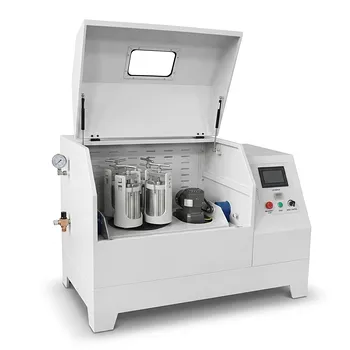
Vertical Production Planetary Ball Mill for High Throughput Powder Processing
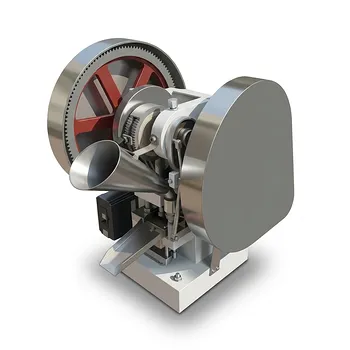
6 Ton Variable Frequency Single Punch Tablet Press
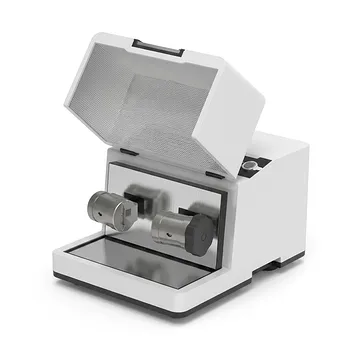
Heating Temperature Controlled High Energy Vibratory Ball Mill
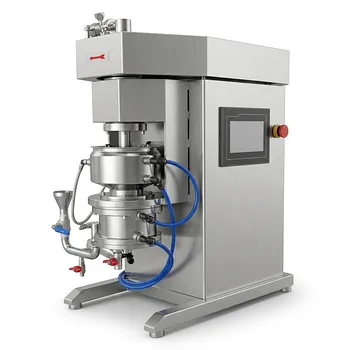
Small Ceramic Structure Laboratory Sand Mill Nanoscale Grinding Dispersion Equipment Seal-less Screen-less Design
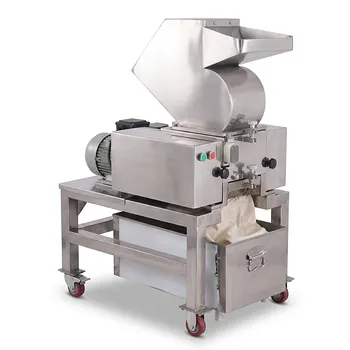
Stainless Steel Coarse Crusher for Pharmaceutical Food and Plastic Material Processing
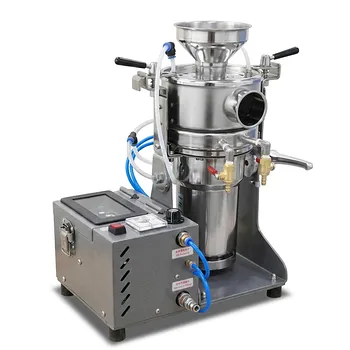
Water Cooled Pulse Jet Ultrafine Grinder
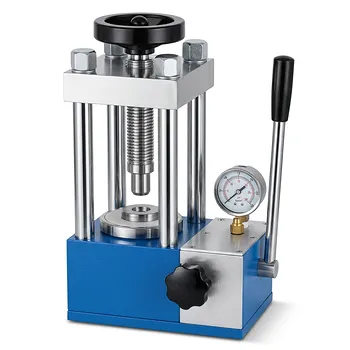
Manual Tablet Press with Dual Scale Pressure Gauge for Pharmaceutical Food Chemical Laboratory Sample Preparation
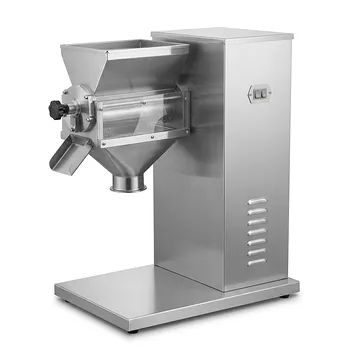
Small Swing Granulator Efficient Powder Granulation for Pharmaceutical Chemical Food Industries
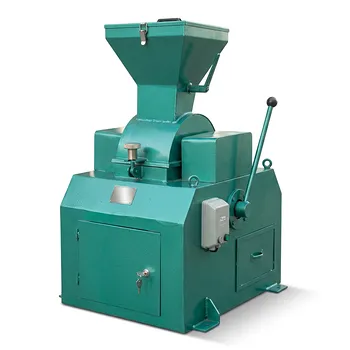
Laboratory Sealed Hammer Blade Crusher Divider for High Hardness Sample Preparation
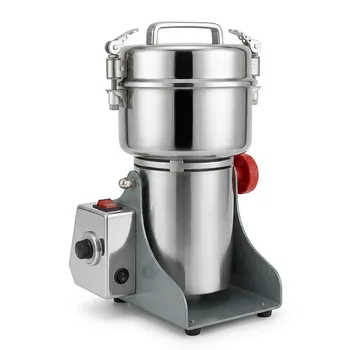
Versatile Industrial Crusher for Laboratory Crushing and Material Processing
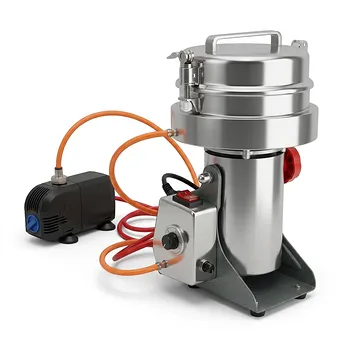
Water Cooled High Speed Grinder with Cryogenic Option for Laboratory Sample Preparation
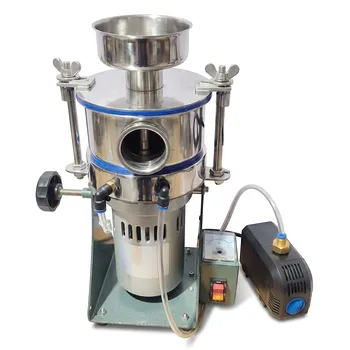
Water Cooled Airflow Ultra Fine Grinder for Low Temperature Material Processing
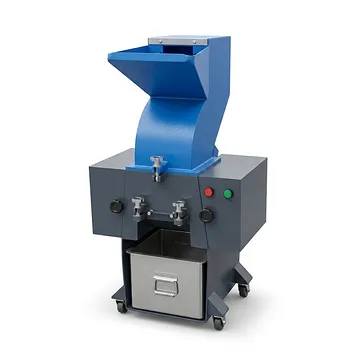
Heavy-Duty Crusher for Laboratory and Industrial Material Size Reduction
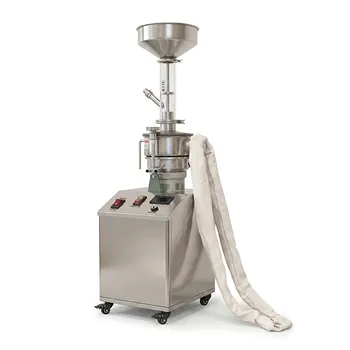
Small Liquid Nitrogen Cryogenic Grinder for Plastic and Heat-Sensitive Material Sample Preparation
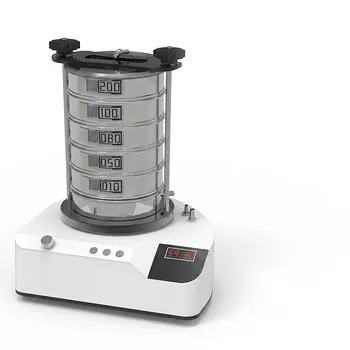
Heavy Duty Dry Three Dimensional Vibratory Sieve Shaker for Particle Separation
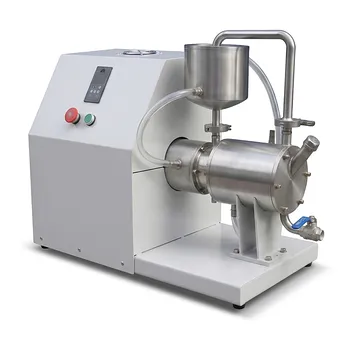
Laboratory Small Horizontal Sand Mill for Nano Materials Wet Grinding