What is the significance of grinding ball material and ball-to-powder ratio? Optimize Your Perovskite Synthesis
Updated 4 months ago
The choice of grinding ball material and the ball-to-powder ratio (BPR) are the primary determinants of energy transfer and product purity in the mechanochemical synthesis of perovskites. These parameters dictate the mechanical activation energy required to drive solid-state reactions between precursor oxides. By precisely controlling the media hardness and the mass ratio, researchers can ensure complete phase conversion while minimizing the introduction of performance-degrading impurities.
Core Takeaway: Mechanochemical efficiency hinges on balancing the kinetic energy input (determined by BPR) with the structural integrity of the grinding media to achieve high-purity perovskite phases.
The Role of Grinding Ball Material
Hardness and Impact Energy
High-strength stainless steel and zirconia are the standard materials due to their extreme hardness and impact resistance. These materials provide the necessary kinetic energy to cause lattice distortion and interfacial diffusion in precursors like Barium Oxide and Titanium Dioxide.
Purity and Contamination Control
The material must be highly wear-resistant to prevent foreign metals or oxides from entering the perovskite structure during high-frequency milling. Zirconia is often preferred when the material’s optical bandgap and electrical properties are sensitive to metallic contamination.
Density and Grinding Efficiency
The density of the material directly affects the magnitude of the impact forces generated during collisions. Higher-density media, such as zirconia or steel, reduce the time required to reach the desired particle size and crystalline phase.
The Mechanics of the Ball-to-Powder Ratio (BPR)
Controlling Energy Density
The BPR is the critical variable that determines the energy density transferred to the reactants. A higher ratio—often ranging from 20:1 to 200:1 in laboratory settings—increases the driving force for the chemical reaction.
Impact on Reaction Kinetics
A high BPR significantly increases collision frequency and the specific surface area available for contact. This acceleration of mechanical activation allows for the formation of desired perovskite phases within a much shorter milling duration.
Scaling and Mass Efficiency
In large-scale production, maintaining a high BPR is often impractical due to volume constraints and equipment wear. Industrial processes frequently optimize for lower ratios (as low as 1.3:1) by using varied ball diameters to maintain reaction efficiency.
Understanding the Trade-offs
Energy Intensity vs. Media Wear
While increasing the BPR speeds up the reaction, it also intensifies the mechanical wear on the grinding balls and the mill lining. This creates a direct trade-off between synthesis speed and the potential for introducing impurities into the final powder.
Heat Generation and Phase Stability
High-energy milling at extreme BPR levels can generate significant localized heat. In some perovskite systems, excessive thermal energy may lead to phase instability or the formation of unwanted secondary phases.
Collision Force vs. Frequency
Using a few large balls generates high impact energy suitable for crushing hard precursors, but fewer contact points. Conversely, many small balls provide higher collision frequency, which is superior for mixing and uniform phase transition but may lack the force to break down high-hardness materials.
Making the Right Choice for Your Goal
To achieve the best results in mechanochemical perovskite synthesis, tailor your parameters to your specific performance requirements:
- If your primary focus is maximum phase purity: Utilize zirconia grinding media to ensure that wear-induced impurities do not degrade the electrical or optical properties of the perovskite.
- If your primary focus is rapid laboratory-scale synthesis: Implement a high BPR (20:1 or greater) to maximize energy transfer and reduce the time required for complete conversion.
- If your primary focus is industrial scalability: Optimize for a low BPR (e.g., 1.3:1) using a mixture of ball sizes to balance energy input with high throughput and reduced media costs.
Mastering the synergy between grinding media and energy density allows for the precise, scalable synthesis of high-performance perovskite materials.
Summary Table:
| Parameter | Typical Options | Impact on Perovskite Synthesis |
|---|---|---|
| Media Material | Zirconia, Stainless Steel | Determines impact energy, hardness, and chemical purity. |
| Zirconia Advantage | High wear-resistance | Prevents metallic contamination in optical/electrical phases. |
| Lab Scale BPR | 20:1 to 200:1 | Maximizes energy density and collision frequency for speed. |
| Industrial BPR | ~1.3:1 | Balances throughput with media wear and thermal stability. |
| Ball Size | Mixed diameters | Small balls improve mixing; large balls crush hard precursors. |
Elevate Your Material Research with Precision Powder Solutions
Achieving the perfect perovskite phase requires more than just the right ratio—it requires the right equipment. At [Brand Name], we provide complete laboratory sample preparation solutions tailored for material science. Whether you are optimizing energy density in a lab or scaling for production, our high-performance equipment ensures consistent results and maximum purity.
Our extensive product line includes:
- Advanced Milling: Planetary ball mills, jet mills, sand/bead mills, and rotor mills designed for precise mechanical activation.
- Sample Preparation: Crushers (jaw/roll), liquid nitrogen cryogenic grinders, and vibratory/air-jet sieve shakers.
- Mixing & Defoaming: High-efficiency powder mixers and vacuum defoaming mixers for uniform precursor blending.
- Compaction & Pressing: A full spectrum of hydraulic presses, including Cold/Warm Isostatic Presses (CIP/WIP), standard lab presses, and vacuum hot presses.
Ready to enhance your lab's efficiency and product quality? Contact our experts today to find the ideal setup for your specific mechanochemical requirements.
References
- Zonghan Hong, Han Sen Soo. Completely Solvent-free Protocols to Access Phase-Pure, Metastable Metal Halide Perovskites and Functional Photodetectors from the Precursor Salts. DOI: 10.1016/j.isci.2019.05.042
Mentioned Products
- Vertical Semi Circular Planetary Ball Mill for Laboratory Precision Grinding
- High Energy Planetary Ball Mill for Nano Scale Grinding and Mechanical Alloying
- Vertical Production Planetary Ball Mill for High Throughput Powder Processing
- Heavy Duty Horizontal Planetary Ball Mill for Efficient Industrial Grinding and Sample Preparation
- 360° Rotating Omnidirectional Laboratory Planetary Ball Mill for Homogeneous Ultra-Fine Grinding and Mixing
People Also Ask
- What role does a planetary ball mill play in the synthesis of Li6PS5Cl (LPSCl)? Unlock High Ionic Conductivity
- Why is a planetary ball mill essential for SiBCN-rGO wet-spinning? Achieve Superior Dispersion and Spinnability
- Why is an intermittent grinding process required for perovskites in a planetary ball mill? Ensure Stability & Purity
- Why is a planetary ball mill required for PET micronization? Ensure Accurate Chemical Analysis of Reprocessed PET
- How does mechanized planetary ball milling compare to manual agate grinding? Optimize sulfide standard material precision.

Tech Team · PowderPreparation
Last updated on Jun 03, 2026
Related Products
Vertical Semi Circular Planetary Ball Mill for Laboratory Precision Grinding
High Energy Planetary Ball Mill for Nano Scale Grinding and Mechanical Alloying
Vertical Production Planetary Ball Mill for High Throughput Powder Processing
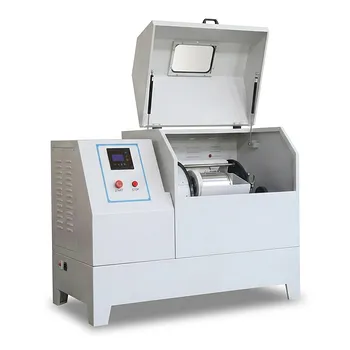
Heavy Duty Horizontal Planetary Ball Mill for Efficient Industrial Grinding and Sample Preparation
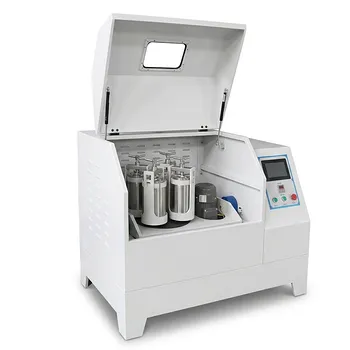
360° Rotating Omnidirectional Laboratory Planetary Ball Mill for Homogeneous Ultra-Fine Grinding and Mixing
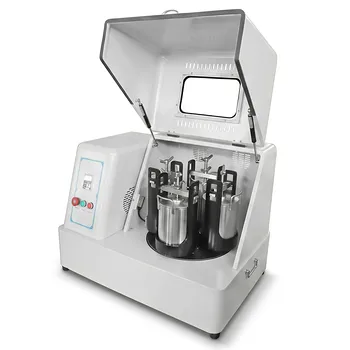
Vertical Square Planetary Ball Mill for Laboratory Sample Preparation and Nanoscale Grinding
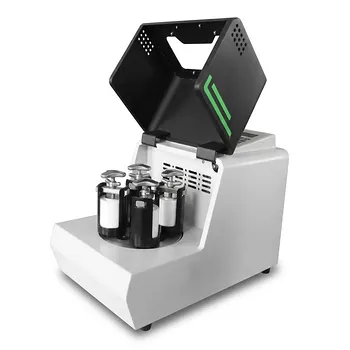
Miniature Planetary Ball Mill with Vacuum Grinding and High Efficiency for Laboratory Sample Preparation
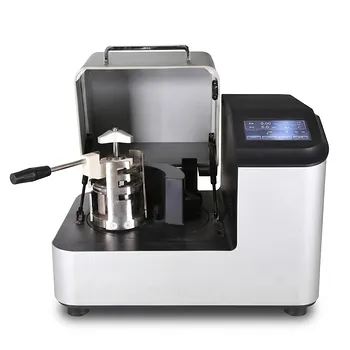
High Energy Laboratory Planetary Ball Mill for Nano Grinding and Material Science Sample Preparation
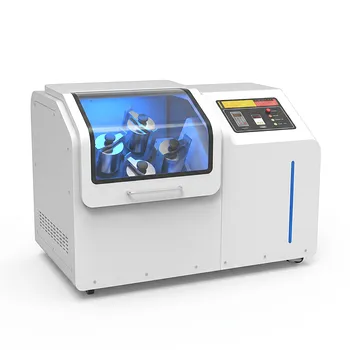
High Energy Omnidirectional Planetary Ball Mill 16L
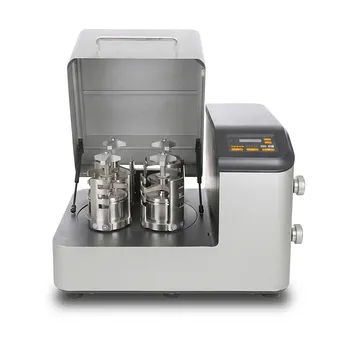
High Energy Planetary Ball Mill for Nano Scale Grinding and Colloidal Mixing in Material Science Research
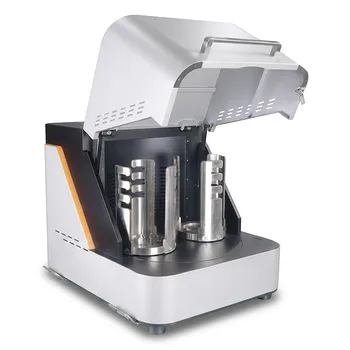
High Energy Laboratory Planetary Ball Mill for Nano Grinding and Colloidal Mixing of Hard and Brittle Materials
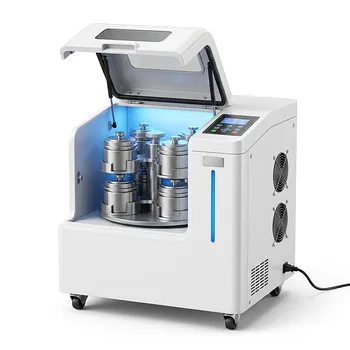
High Energy Omnidirectional Planetary Ball Mill 20L
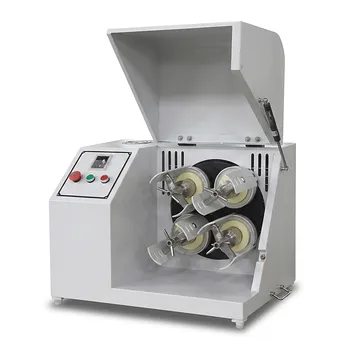
Horizontal Light Duty Planetary Ball Mill for Laboratory Sample Preparation
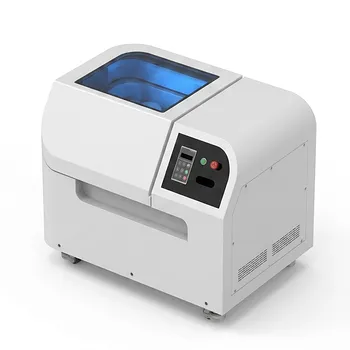
8L Planetary Ball Mill for Laboratory Grinding and Sample Preparation
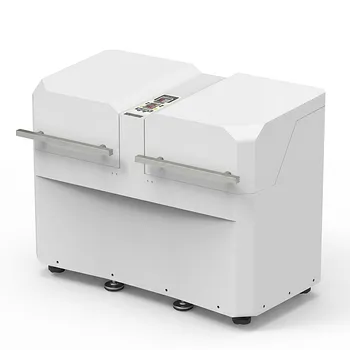
Dual Station Planetary Ball Mill 24L
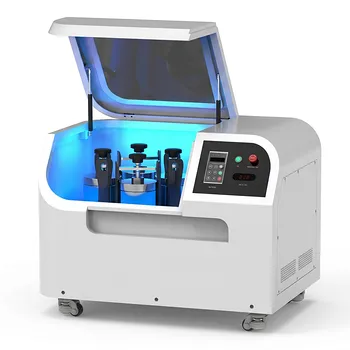
Planetary Ball Mill 12L

Nano High Energy Vibratory Ball Mill for Laboratory Sample Preparation
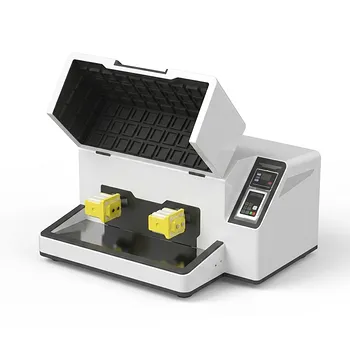
Multi-Platform Nanoscale High-Energy Vibratory Ball Mill
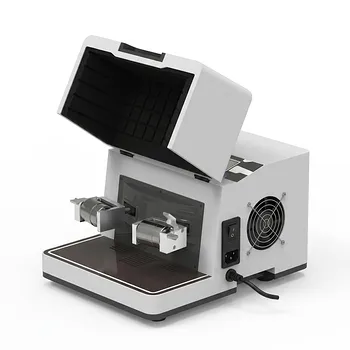
High Energy Hybrid Vibratory Ball Mill for Grinding Mixing and Cell Disruption