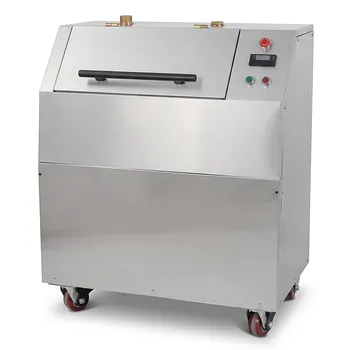
What is the role of vibratory sieve shakers and sieves in pharmaceutical PSD analysis? Ensure Quality & Consistency
Updated 5 months ago
Vibratory sieve shakers and standard test sieves serve as the primary mechanical tools for the physical classification of pharmaceutical powders and granules. By utilizing high-frequency mechanical vibrations, these systems drive raw materials through a vertical stack of sieves with decreasing aperture sizes. This process allows manufacturers to accurately determine the Particle Size Distribution (PSD) of Active Pharmaceutical Ingredients (APIs) and excipients, which is critical for ensuring consistent flowability, chemical reactivity, and dissolution rates in the final dosage form.
Core Takeaway: Sieve-based PSD analysis is a fundamental characterization method that uses standardized mechanical force to categorize particles by their geometric dimensions. This data is essential for controlling the tableting process and ensuring the therapeutic efficacy of pharmaceutical products.
The Mechanics of Sieve-Based Particle Classification
Standardized Mechanical Vibration and Oscillation
A laboratory vibratory sieve shaker applies high-frequency mechanical oscillations and tapping actions to a sample. This movement ensures that every particle has multiple opportunities to present its smallest dimension to the sieve mesh. Standardized force and fixed durations—typically 10 to 15 minutes—are required to achieve a reproducible "end-point" where particles are fully categorized.
The Hierarchical Sieve Stack
Analysis is performed using a series of standard analytical sieves stacked in descending order of aperture size (e.g., mesh #20 to #110). As the material moves down the stack, non-uniform particles are separated into specific size fractions. This physical separation is the basis for calculating the Mean Granule Size (MGS) and evaluating the width of the distribution.
Accuracy Through Mesh Standardization
Standard test sieves are manufactured to precise tolerances, typically ranging from 1.8 mm to 0.1 mm (or approximately 10 to 100 mesh) for pharmaceutical applications. These standardized apertures ensure that the classification is based purely on geometric dimensions. This reliability allows for the construction of cumulative PSD curves that can be compared across different production batches.
Impact on Pharmaceutical Manufacturing
Influence on Flowability and Tableting
The PSD of raw materials directly dictates how a powder flows into the tablet press dies. Inconsistent particle sizes can lead to weight variations and poor compaction and tableting performance. By monitoring the distribution, manufacturers can predict how binders affect powder agglomeration and granulation.
Ensuring Dissolution Consistency
Particle size is a primary driver of a drug's surface area, which in turn controls its dissolution consistency. Smaller particles generally dissolve faster; therefore, maintaining a specific PSD ensures that each tablet releases the API at the intended rate. This is vital for the bioequivalence and safety of the medication.
Quantifying Refinement and Refinement Metrics
Beyond simple sizing, this analysis provides critical indicators like the D80 (the size at which 80% of the material passes) and the P10-P90 range. These metrics quantify the degree of material refinement and the impact of different grinding or milling conditions. They are also used to determine the Geldart classification, which predicts how particles will behave in a fluidized bed.
Understanding the Technical Trade-offs
Limitations with Fine and Cohesive Powders
While effective for granules and coarse powders, vibratory sieving can struggle with ultra-fine particles (less than 63 micrometers). Fine sediments or powders often exhibit static charge or agglomeration, which can cause "blinding" (clogging) of the sieve mesh. In these cases, specialized anti-blinding aids or wet sieving techniques may be required.
Potential for Material Attrition
The mechanical energy required to separate particles can sometimes cause friable materials to break down during the test. This results in a "fines" count that is higher than the actual distribution in the original sample. Professionals must balance the vibration intensity with the physical integrity of the raw material to ensure data accuracy.
How to Apply This to Your Process
Choosing the right sieving parameters is essential for obtaining actionable data that translates to manufacturing success.
- If your primary focus is API dissolution: Prioritize high-mesh sieves (smaller apertures) to monitor the fine end of the distribution and ensure the P10-P50 range remains within tight tolerances.
- If your primary focus is granulation uniformity: Use a wide stack of sieves to calculate the Mean Granule Size (MGS) and verify that binders are creating a consistent agglomeration across the batch.
- If your primary focus is high-speed tableting: Focus on the flowability indicators derived from the PSD curve to ensure the powder blend will not bridge or "rat-hole" in the hopper.
By mastering the use of vibratory sieve shakers, pharmaceutical professionals can transform raw material characterization from a routine check into a powerful tool for process optimization.
Summary Table:
| Key Factor | Role in Pharmaceutical PSD Analysis |
|---|---|
| Sieve Stack | Classifies particles by geometric size to determine Mean Granule Size (MGS). |
| Mechanical Vibration | Provides standardized force for reproducible classification of APIs and excipients. |
| PSD Metrics (D80/P10) | Quantifies material refinement to predict dissolution rates and bioequivalence. |
| Process Impact | Controls powder flowability to prevent weight variations during high-speed tableting. |
| Quality Control | Enables cumulative curve analysis to ensure batch-to-batch manufacturing consistency. |
Optimize Your Pharmaceutical Material Characterization
Achieving precise Particle Size Distribution is the foundation of high-quality pharmaceutical manufacturing. At [Your Company Name], we provide complete laboratory sample preparation solutions for material science, specializing in advanced powder processing and compaction equipment.
Our extensive product lines are designed to meet the rigorous demands of pharmaceutical R&D and QC, including:
- Sieving & Classification: Vibratory and air-jet sieve shakers with a full range of high-precision test sieves and meshes.
- Milling & Grinding: Planetary ball mills, jet mills, and liquid nitrogen cryogenic grinders for achieving ultra-fine API refinement.
- Compaction & Tableting: A full spectrum of hydraulic presses, including Cold/Warm Isostatic Presses (CIP/WIP), standard lab presses, and vacuum hot presses.
- Mixing: High-efficiency powder mixers and defoaming mixers for uniform blending.
Whether you are focusing on API dissolution or granulation uniformity, our expertise ensures your lab has the tools to succeed. Contact our technical experts today to find the perfect equipment for your pharmaceutical workflow!
References
- Tambe St, Sujit Tambe. FORMULATION DEVELOPMENT AND EVALUATION OF IMMEDIATE RELEASE TABLETS OF MUSCARINIC RECEPTOR ANTAGONIST USING VARIOUS GRADES OF LACTOSE MONOHYDRATE AND API PSD TO STUDY IMPACT ON FLOW PROPERTIES AND DISSOLUTION OF DRUG PRODUCT. DOI: 10.31032/ijbpas/2021/10.6.5540
Mentioned Products
- Vibratory Sieve Shaker Electromagnetic 3D Motion Powder Particle Size Analyzer for Dry and Wet Sieving
- Laboratory Dry and Wet Three Dimensional Vibratory Sieve Shaker for Particle Analysis
- Dry Three Dimensional Vibratory Sieve Shaker
- Stainless Steel Laboratory Vibratory Test Sieve Shaker
- Heavy Duty Dry Three Dimensional Vibratory Sieve Shaker for Particle Separation
People Also Ask
- How does a vibratory sieve shaker contribute to optimizing the performance of activated carbon? Enhance Adsorption Precision
- Why is a laboratory vibratory sieve shaker necessary for processing magnesium-based borate precursor powders? Boost Activity
- Why use a vibratory sieve shaker to verify coarse aggregate grading in rubberized concrete? Ensure Structural Integrity
- What function do vibratory sieve shakers and standard test sieves serve in the preparation of adsorbents? Key Guide
- What role does a vibratory sieve shaker play in the particle size analysis of ground corn products? Enhance QC Precision

Tech Team · PowderPreparation
Last updated on May 14, 2026
Related Products
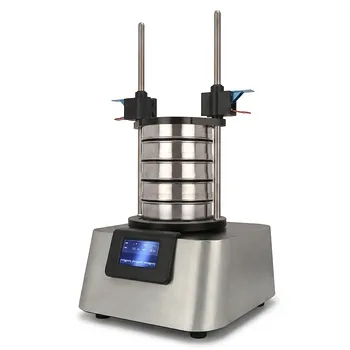
Vibratory Sieve Shaker Electromagnetic 3D Motion Powder Particle Size Analyzer for Dry and Wet Sieving
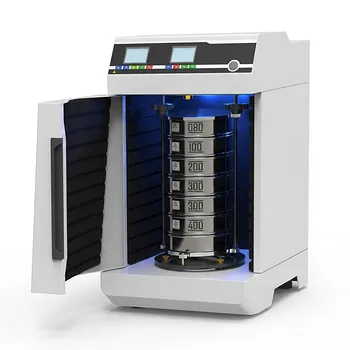
Laboratory Dry and Wet Three Dimensional Vibratory Sieve Shaker for Particle Analysis
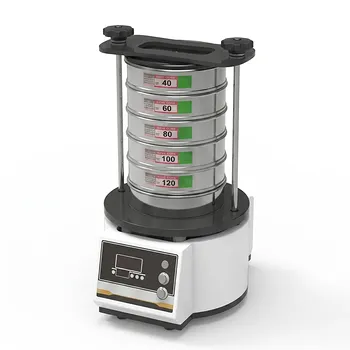
Dry Three Dimensional Vibratory Sieve Shaker
Stainless Steel Laboratory Vibratory Test Sieve Shaker

Heavy Duty Dry Three Dimensional Vibratory Sieve Shaker for Particle Separation
Small Laboratory Vibratory Sieve Shaker for Powder Gradation and Particle Size Analysis

Small Laboratory Vibrating Sieve Shaker for Precise Particle Size Analysis
High Frequency Wet Three-Dimensional Vibrating Sieve Shaker for Dry and Wet Particle Size Analysis
High Frequency Cabinet Type Three-Dimensional Rotary Vibrating Sieve Shaker for Dry Sieving and Particle Classification

Laboratory Vibratory Test Sieve Shaker for Precision Particle Size Analysis and Powder Grading
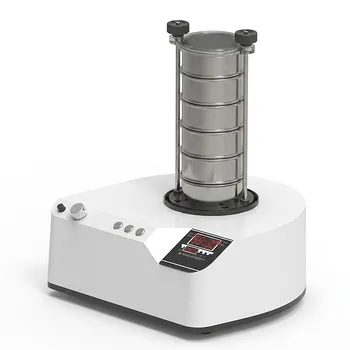
三维电磁微量振动筛分仪

Stainless Steel Rotary Vibrating Sieve High Precision Circular Vibratory Separator Industrial Powder Grading Machine Multi Layer Sifting Equipment
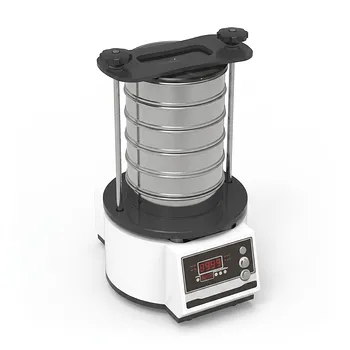
Tapping Oscillating Sieve Shaker for Dry and Wet Particle Size Analysis

Three Dimensional Rotary Vibrating Sieve
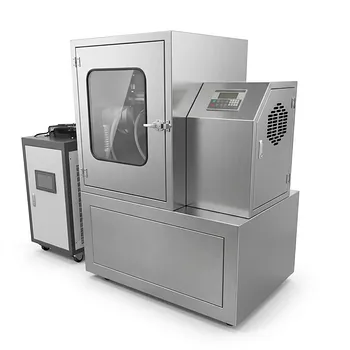
Vibratory Superfine Grinder for Ultra Fine Laboratory Powder Milling
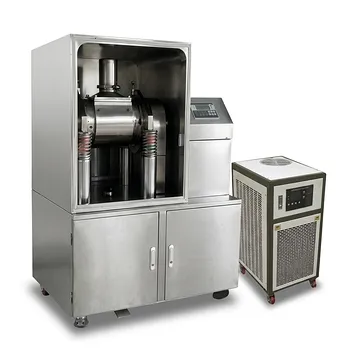
Small Vibrating Ultrafine Grinder for Traditional Chinese Medicine
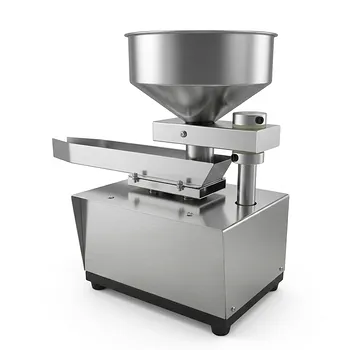
Automatic Vibrating Powder Feeder for Laboratory Material Processing Precision Vibratory Hopper Feeder for Granular and Powder Material Handling Industrial Grade Vibrating Tray Feeder for Consistent Material Sample Preparation