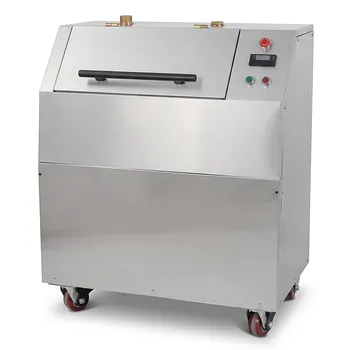
Role of Sieve Shakers & Test Sieves in Biomass Characterization: A Guide to Precise Particle Analysis
Updated 5 months ago
Vibratory sieve shakers and standard test sieves characterize biomass by using mechanical vibration to pass material through a series of precise mesh apertures. This process, known as physical interception, allows researchers to determine the particle size distribution (PSD), calculate geometric mean diameters, and ensure the raw material is optimized for downstream processes like gasification, pelletizing, or board manufacturing.
Core Takeaway: By providing a standardized, repeatable method for mechanical screening, these tools transform raw biomass into a quantifiable resource, ensuring consistency in material feeding, reaction rates, and structural integrity of the final product.
The Mechanics of Biomass Classification
Standardized Mechanical Action
A vibratory sieve shaker provides a constant frequency and mechanical amplitude that causes biomass particles to move rhythmically across the sieve surface. This standardized motion ensures that each particle makes thorough contact with the sieve openings, which is far more accurate than manual sieving.
Minimizing Fiber Entanglement
Biomass materials, such as sawdust or shredded stalks, often contain elongated fibers that can entangle and skew results. The high-frequency vibration of the shaker effectively breaks up these clusters, minimizing "false" size readings and allowing for a precise statistical calculation of mass percentages across different size ranges.
Precision Through Multi-Layered Stacking
By stacking sieves with decreasing aperture sizes—ranging from coarse (8mm) to fine (100 µm)—operators can classify materials like crushed fruit stones or biochar in a single run. This multi-layered approach reveals the "grading" of the material, which is essential for predicting how well the particles will interlock or flow.
Critical Impacts on Downstream Processing
Optimizing Reaction and Combustion Rates
In gasification and thermal analysis, the particle size directly dictates the surface area-to-volume ratio. Sieve analysis ensures that particles are small enough to avoid internal diffusion limitations, which allows for accurate measurements of ignition temperatures and ensures consistent reaction activity within fluidized beds.
Enhancing Pellet Durability and Molding
For fuel pellet production, the configuration of particle sizes influences the "molding effect." Finer particles identified through sieving help achieve partial densification and mechanical interlocking, which reduces the energy required for forming and increases the overall durability of the pellet.
Efficiency in Board Manufacturing
In the production of particleboards, precise grading prevents fine powders from consuming excessive amounts of binder (glue). Simultaneously, it identifies oversized coarse fibers that could cause a loose, unstable board structure, ensuring the final product maintains stable mechanical properties.
Understanding the Trade-offs and Limitations
The Challenge of Irregular Particle Shapes
While sieving is excellent for spherical or cubic particles, biomass is often needle-like or flaky. These irregular shapes can sometimes pass through a mesh vertically despite being longer than the aperture size, leading to a slight underestimation of the "coarse" fraction in some materials.
Material Loss and Dust Management
High-frequency vibration can generate significant dust, especially with very dry biomass or biochar. If the sieve stack is not properly sealed, loss of fine material can occur, which inaccurately shifts the calculated particle size distribution toward the coarser end of the spectrum.
Mesh Blinding and Maintenance
Resinous or moist biomass can "blind" the sieves, where particles become stuck in the mesh openings and block the passage of smaller material. Frequent cleaning and the use of de-blinding aids (like tapping balls) are necessary to maintain the accuracy and longevity of the standard test sieves.
Applying Sieve Analysis to Your Project
How to Select Your Configuration
The setup of your shaker and the selection of your mesh sizes should be dictated by your specific end-goal for the biomass material.
- If your primary focus is gasification or thermal analysis: Use sieves with apertures between 100 and 200 µm to ensure a high surface-area-to-volume ratio and prevent internal diffusion lags.
- If your primary focus is pellet durability or molding: Focus on a range of sizes (0.5 to 2 mm) to ensure a "reasonable grading" that promotes mechanical interlocking and reduces energy consumption.
- If your primary focus is particleboard or fiberboard manufacturing: Prioritize removing excessive dust and oversized fibers to optimize binder consumption and ensure structural density.
- If your primary focus is material flowability in industrial feeders: Use sieve analysis to calculate the geometric standard deviation, ensuring a uniform size that prevents bridge-building or blockages in feeding systems.
By mastering the use of vibratory shakers and standardized sieves, you move from guesswork to a scientifically grounded understanding of biomass behavior.
Summary Table:
| Application | Target Particle Size | Key Process Benefit |
|---|---|---|
| Gasification | 100 – 200 µm | Optimizes surface area; prevents diffusion lags |
| Pelletizing | 0.5 – 2.0 mm | Enhances mechanical interlocking and durability |
| Board Manufacturing | Variable (Focus on uniformity) | Reduces binder consumption and ensures density |
| Industrial Feeding | Defined Size Distribution | Prevents bridging and ensures consistent flow |
Optimize Your Biomass Processing with Expert Solutions
Achieving consistent results in material science starts with precise sample preparation. At [Your Brand Name], we provide complete laboratory solutions tailored for powder processing and material characterization.
Whether you are refining biomass for energy or developing new materials, our extensive product line supports every stage of your workflow:
- Sieve Analysis: High-precision vibratory and air-jet sieve shakers for accurate particle size distribution.
- Milling & Grinding: Advanced planetary ball mills, jet mills, and cryogenic grinders for perfect particle reduction.
- Compaction & Pressing: A full spectrum of hydraulic presses, including Cold/Warm Isostatic Presses (CIP/WIP) and vacuum hot presses.
- Mixing: Specialized powder and defoaming mixers for uniform material blending.
Ready to enhance your lab's efficiency and accuracy? Contact our technical team today to discuss how our equipment can streamline your research and production goals.
References
- Sibéria Caroline Gomes de Moraes, C. M. B. M. Barbosa. Gasification system coupled to fixed bed column aiming adsorption of H2S from biomass. DOI: 10.5902/2236117037685
Mentioned Products
- Vibratory Sieve Shaker Electromagnetic 3D Motion Powder Particle Size Analyzer for Dry and Wet Sieving
- Laboratory Dry and Wet Three Dimensional Vibratory Sieve Shaker for Particle Analysis
- Dry Three Dimensional Vibratory Sieve Shaker
- Stainless Steel Laboratory Vibratory Test Sieve Shaker
- Heavy Duty Dry Three Dimensional Vibratory Sieve Shaker for Particle Separation
People Also Ask
- How does a vibratory sieve shaker contribute to optimizing the performance of activated carbon? Enhance Adsorption Precision
- Why is a laboratory vibratory sieve shaker necessary for processing magnesium-based borate precursor powders? Boost Activity
- Why use a vibratory sieve shaker to verify coarse aggregate grading in rubberized concrete? Ensure Structural Integrity
- What function do vibratory sieve shakers and standard test sieves serve in the preparation of adsorbents? Key Guide
- What role does a vibratory sieve shaker play in the particle size analysis of ground corn products? Enhance QC Precision

Tech Team · PowderPreparation
Last updated on May 14, 2026
Related Products
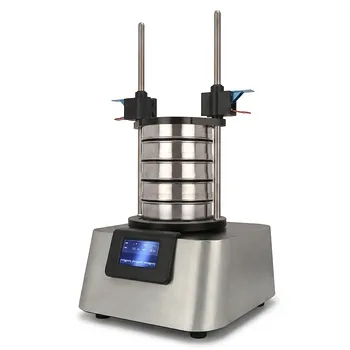
Vibratory Sieve Shaker Electromagnetic 3D Motion Powder Particle Size Analyzer for Dry and Wet Sieving
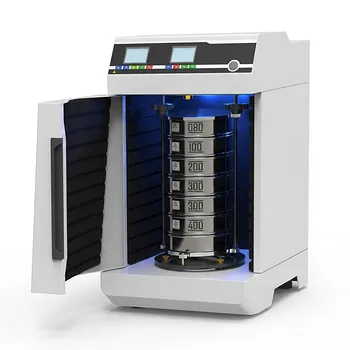
Laboratory Dry and Wet Three Dimensional Vibratory Sieve Shaker for Particle Analysis
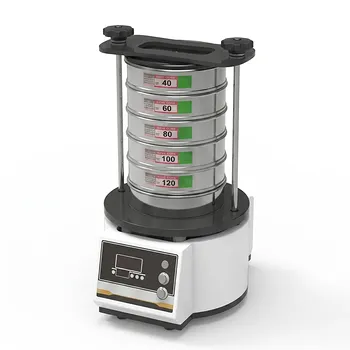
Dry Three Dimensional Vibratory Sieve Shaker
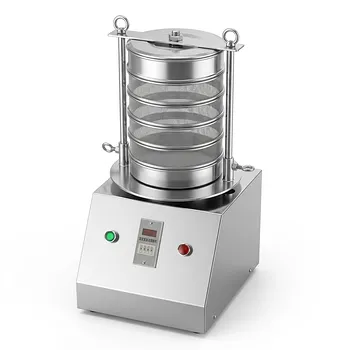
Stainless Steel Laboratory Vibratory Test Sieve Shaker
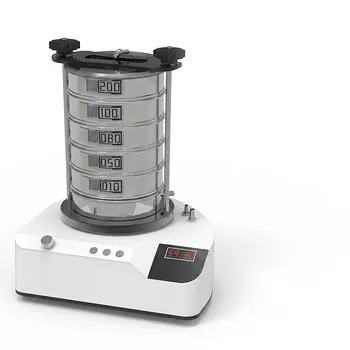
Heavy Duty Dry Three Dimensional Vibratory Sieve Shaker for Particle Separation
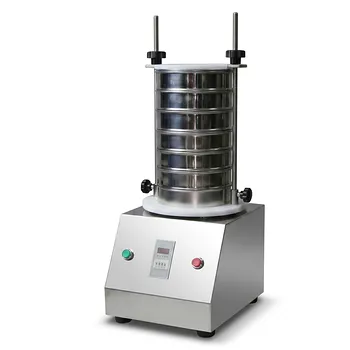
Small Laboratory Vibratory Sieve Shaker for Powder Gradation and Particle Size Analysis
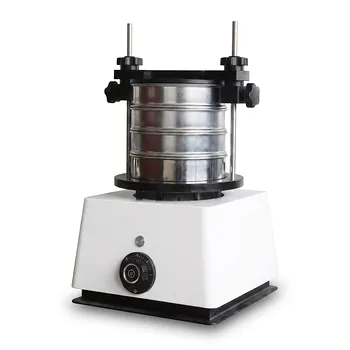
Small Laboratory Vibrating Sieve Shaker for Precise Particle Size Analysis
High Frequency Wet Three-Dimensional Vibrating Sieve Shaker for Dry and Wet Particle Size Analysis
High Frequency Cabinet Type Three-Dimensional Rotary Vibrating Sieve Shaker for Dry Sieving and Particle Classification
Laboratory Vibratory Test Sieve Shaker for Precision Particle Size Analysis and Powder Grading
三维电磁微量振动筛分仪
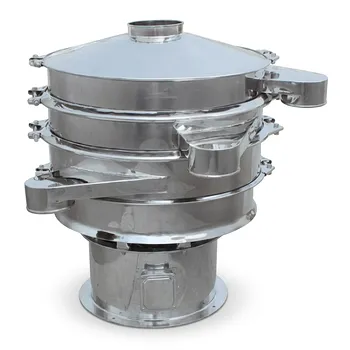
Stainless Steel Rotary Vibrating Sieve High Precision Circular Vibratory Separator Industrial Powder Grading Machine Multi Layer Sifting Equipment
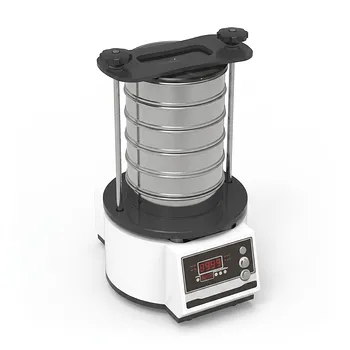
Tapping Oscillating Sieve Shaker for Dry and Wet Particle Size Analysis
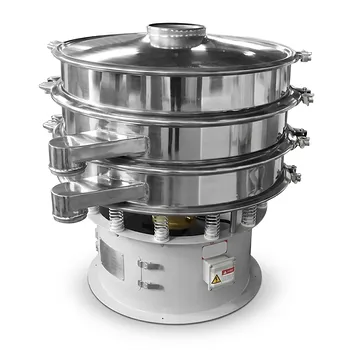
Three Dimensional Rotary Vibrating Sieve
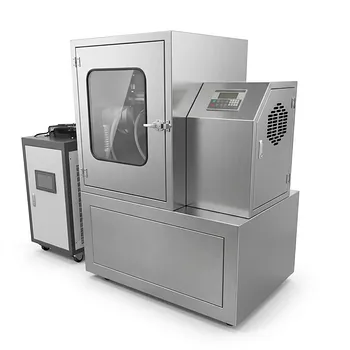
Vibratory Superfine Grinder for Ultra Fine Laboratory Powder Milling
Small Vibrating Ultrafine Grinder for Traditional Chinese Medicine
Automatic Vibrating Powder Feeder for Laboratory Material Processing Precision Vibratory Hopper Feeder for Granular and Powder Material Handling Industrial Grade Vibrating Tray Feeder for Consistent Material Sample Preparation