What is the role of the industrial ball milling process in the preparation of powder for alumina ceramic electrical substrates?
Updated 3 months ago
Industrial ball milling is the critical mechanical process used to achieve deep compositional uniformity and microscopic de-agglomeration in alumina powder. By utilizing high-energy impact and shear forces, it blends raw alumina with essential additives like magnesium oxide (MgO) and silicon dioxide (SiO2) to ensure a homogeneous mixture. This level of precision is vital to prevent local chemical fluctuations that would otherwise compromise the electrical insulation and structural integrity of the ceramic substrate.
Core Takeaway: Ball milling transforms raw materials into a highly uniform, de-agglomerated precursor. This ensures consistent sintering behavior and eliminates phase defects, which are the primary requirements for high-performance electrical insulation in alumina substrates.
Achieving Compositional Uniformity
Prevention of Local Fluctuations
The primary role of ball milling is to ensure that trace additives are distributed evenly throughout the alumina matrix. Without this deep mixing, the ceramic can suffer from local compositional fluctuations during the sintering process.
These fluctuations often lead to glass phase enrichment or the formation of non-equilibrium phases, such as theta-alumina. Such defects create weak points in the material's structure and degrade its electrical performance.
Stabilization of Electrical Properties
By achieving a high degree of uniformity, ball milling provides the foundation for consistent electrical insulation. The process ensures that the final substrate behaves predictably under high-voltage conditions.
This uniformity is achieved through high-energy mechanical forces that force the alumina particles and additives into an intimate, stable blend. This stage is non-negotiable for producing substrates used in sensitive electronics.
Microscopic Particle Processing
De-agglomeration and Particle Refinement
Raw alumina powder often contains large agglomerates that can lead to internal voids and structural flaws. Ball milling uses physical shear and impact to break these clusters down into individual, refined particles.
Controlling the particle size distribution is essential for achieving a dense ceramic body. A well-milled powder packs more efficiently during the shaping process, leading to a higher-quality "green body" before firing.
Uniform Coating of Organic Additives
In many preparations, trace organic additives like binders (PVA), lubricants, and dispersants must be integrated. Ball milling ensures these additives are uniformly coated onto the surface of the ceramic particles at a microscopic level.
This uniform coating is critical for the flowability and compaction of the powder. Without it, the powder may not fill molds correctly or may crack during subsequent pressing or extrusion stages.
Managing Slurry and Suspension Stability
Viscosity Control for Casting
When preparing slurries for processes like slip casting, ball milling ensures the uniform dispersion of high-concentration alumina powder in a liquid medium. This process effectively manages the physical interaction between the powder and the solvent.
Through continuous mechanical action, the mill achieves a stable viscosity (often measured in centipoise, e.g., 176 cP). A stable slurry is necessary to prevent sedimenting and to ensure a smooth, defect-free surface on the final substrate.
Surface Activation for Sintering
The mechanical impact of the milling media can activate the powder surface. This increased surface energy promotes liquid phase sintering and helps lower the required melting point of the mixture.
This activation also plays a role in inhibiting abnormal grain growth. By keeping grain growth uniform, the material maintains its mechanical strength and avoids the formation of large, brittle crystals.
Understanding the Trade-offs
Contamination from Milling Media
While ball milling is effective, the constant friction causes wear on the grinding balls and the mill lining. If the media material is not compatible (e.g., using steel balls for high-purity alumina), it can introduce metallic impurities that ruin the substrate's insulation.
To mitigate this, high-purity alumina grinding media are typically used. However, even with matched materials, the slight increase in alumina content from media wear must be accounted for in the initial chemical formulation.
Over-milling and Thermal Build-up
Excessive milling time can lead to over-refinement, where the powder becomes too fine and difficult to handle. This can result in excessive shrinkage during sintering, leading to dimensional inaccuracies or warping.
Furthermore, long-duration milling generates significant heat. In some cases, this thermal energy can prematurely degrade organic binders or cause unwanted chemical reactions in the slurry if not properly monitored.
How to Apply This to Your Process
Making the Right Choice for Your Goal
To optimize your ball milling stage, consider the specific requirements of your final alumina substrate.
- If your primary focus is electrical insulation consistency: Prioritize the deep mixing of MgO and SiO2 additives to prevent the formation of theta-alumina and glass phase pockets.
- If your primary focus is manufacturing complex shapes: Focus on the uniform coating of binders and lubricants to ensure the powder has the necessary flowability for high-pressure molding.
- If your primary focus is structural density and strength: Emphasize de-agglomeration and particle size refinement to ensure maximum packing density during the green body formation.
Effective ball milling is the bridge between raw chemical ingredients and a high-performance engineering material.
Summary Table:
| Process Function | Key Objective | Impact on Final Substrate |
|---|---|---|
| Deep Mixing | Distribute additives (MgO, SiO2) | Prevents phase defects & ensures insulation |
| De-agglomeration | Break down particle clusters | Achieves high density & eliminates voids |
| Surface Activation | Increase surface energy | Promotes sintering & inhibits grain growth |
| Slurry Stabilization | Uniform powder dispersion | Ensures stable viscosity for defect-free casting |
| Additive Coating | Uniform binder/lubricant film | Improves powder flowability & compaction |
Optimize Your Alumina Powder Preparation with Expert Solutions
Achieving the perfect balance of uniformity and density in ceramic substrates requires precision equipment. At [Insert Brand Name], we provide complete laboratory sample preparation solutions tailored for material science.
From high-energy planetary ball mills, jet mills, and disc mills for microscopic refinement to vibratory sieve shakers for precise sizing, our tools ensure your precursor materials meet the strictest standards. We also specialize in the final stages of production with our full spectrum of hydraulic presses, including Cold/Warm Isostatic Presses (CIP/WIP), hot presses, and vacuum hot presses for superior compaction.
Ready to enhance your lab's efficiency and material performance? Contact our technical team today to find the ideal milling and pressing solution for your specific application!
References
- Libohang Zhang, Ye Liu. Study on Properties Optimization and Advanced Preparation Techniques of Alumina Ceramic Electronic Substrates. DOI: 10.54254/2755-2721/2025.24578
Mentioned Products
- Heavy Duty Horizontal Planetary Ball Mill for Efficient Industrial Grinding and Sample Preparation
- Vertical Semi Circular Planetary Ball Mill for Laboratory Precision Grinding
- Vertical Production Planetary Ball Mill for High Throughput Powder Processing
- Vertical Square Planetary Ball Mill for Laboratory Sample Preparation and Nanoscale Grinding
- High Energy Planetary Ball Mill for Nano Scale Grinding and Mechanical Alloying
People Also Ask
- Why grind lime-pozzolan specimens for TG/DTA for 3 mins? Master sample prep for high-precision thermal analysis.
- What is the role of a planetary ball mill in the mechanical activation of ZTA powder? Boost Sintering Performance
- How does a planetary ball mill contribute to the homogenization of trace elements? Achieve Sub-Micron Uniformity
- What is the function of a planetary ball mill in wollastonite ceramic prep? Achieve Molecular Homogenization & Reactivity
- What is the primary function of a planetary ball mill in the treatment of Halloysite-Rich Soils? Boost Mineral Activity

Tech Team · PowderPreparation
Last updated on May 14, 2026
Related Products

Heavy Duty Horizontal Planetary Ball Mill for Efficient Industrial Grinding and Sample Preparation

Vertical Semi Circular Planetary Ball Mill for Laboratory Precision Grinding

Vertical Production Planetary Ball Mill for High Throughput Powder Processing

Vertical Square Planetary Ball Mill for Laboratory Sample Preparation and Nanoscale Grinding

High Energy Planetary Ball Mill for Nano Scale Grinding and Mechanical Alloying

Dual Station Planetary Ball Mill 24L
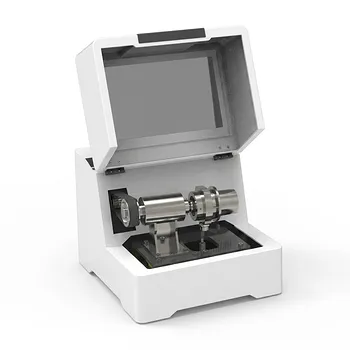
Single Tank High Energy Vibratory Ball Mill for Laboratory Grinding and Mixing

High Energy Laboratory Planetary Ball Mill for Nano Grinding and Material Science Sample Preparation

Miniature Planetary Ball Mill with Vacuum Grinding and High Efficiency for Laboratory Sample Preparation

High Energy Omnidirectional Planetary Ball Mill 16L

High Energy Planetary Ball Mill for Nano Scale Grinding and Colloidal Mixing in Material Science Research

360° Rotating Omnidirectional Laboratory Planetary Ball Mill for Homogeneous Ultra-Fine Grinding and Mixing
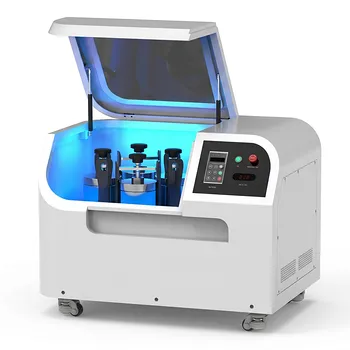
Planetary Ball Mill 12L

High Energy Laboratory Planetary Ball Mill for Nano Grinding and Colloidal Mixing of Hard and Brittle Materials
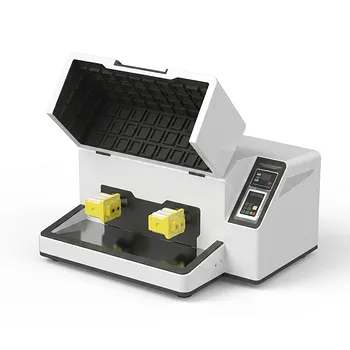
Multi-Platform Nanoscale High-Energy Vibratory Ball Mill
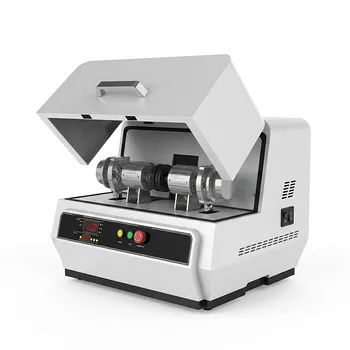
Dual Jar High Energy Vibratory Ball Mill

High Energy Omnidirectional Planetary Ball Mill 20L

8L Planetary Ball Mill for Laboratory Grinding and Sample Preparation

Nano High Energy Vibratory Ball Mill for Laboratory Sample Preparation