What is the role of Standard Test Sieves in evaluating cement fineness? Optimize Quality & Concrete Performance
Updated 4 months ago
Standard test sieves serve as the primary instrument for quantifying cement fineness by physically separating particles based on their size. This measurement is achieved through mechanical or hydraulic sieving, where a specific mass of cement is processed through precise apertures—typically a 150-micron sieve—to determine the percentage of residue remaining. By accurately measuring this residue, manufacturers can ensure the cement meets critical quality standards and possesses the surface area necessary for proper chemical reactivity.
Standard test sieves provide a vital benchmark for cement quality by measuring particle size distribution, which directly dictates the hydration rate, grinding efficiency, and the ultimate structural strength of the concrete.
The Impact of Fineness on Chemical Performance
Controlling the Hydration Rate
The fineness of cement particles determines the total surface area available for chemical reactions with water. Finer particles promote a more rapid hydration rate, which leads to faster setting times and accelerated early-age strength development. Standard test sieves allow technicians to monitor this distribution to ensure the cement reacts within the desired timeframe.
Enhancing Compressive Strength
There is a direct correlation between particle size and the final compressive strength of the hardened concrete. Because finer cement provides more reactive sites, it facilitates a denser bond between the cement paste and the aggregates. Using sieves to maintain a specific fineness ensures that the concrete achieves its intended structural load-bearing capacity.
Reducing Concrete Bleeding
Properly graded cement particles help optimize the packing density of the mixture, which minimizes the internal voids. This optimization reduces concrete bleeding, a process where water rises to the surface, and improves the overall durability and permeability of the finished structure.
Operational Efficiency and Process Stability
Optimizing the Grinding Stage
In cement production, the grinding process is one of the most energy-intensive stages. Standard test sieves allow operators to determine the exact point where the cement is "fine enough," preventing over-grinding and unnecessary energy consumption. This data-driven approach balances production costs with the required technical specifications.
Monitoring Production Stability
By performing regular sieve analysis, laboratory technicians can monitor the stability of the grinding process over time. Any significant change in the residue rate on the 150-micron sieve indicates a potential issue with the milling equipment or the raw material feed. This proactive monitoring ensures that every batch of cement remains consistent and compliant with ASTM, BS, or IQS standards.
Standardized Residue Testing
Technical specifications often mandate a specific residue limit, such as a maximum of 10 percent remaining on a 150-micron sieve. Standard test sieves provide the standardized, repeatable methodology required to verify this limit. This quantitative analysis is the foundation for certifying that the cement is fit for commercial use.
Understanding the Trade-offs and Limitations
Mechanical Limitations of Sieving
While standard test sieves are highly effective for identifying oversized particles, they are less precise for measuring the ultra-fine distribution below the smallest mesh sizes. Mechanical sieving alone may not capture the full nuances of the particle size curve that modern laser diffraction methods can provide.
Maintenance and Wear
The accuracy of a test sieve is entirely dependent on the integrity of the mesh apertures. Over time, mechanical stress or improper cleaning can distort the mesh, leading to "blinding" or enlarged openings that skew results. Regular calibration and careful handling are mandatory to maintain the sieve as a reliable diagnostic tool.
Applying Sieve Analysis to Your Quality Control
To maximize the value of standard test sieves in your operations, consider the primary goal of your testing protocol.
- If your primary focus is Production Efficiency: Use frequent sieve checks to calibrate grinding mills, ensuring you achieve the required fineness without wasting energy on over-processing.
- If your primary focus is Regulatory Compliance: Adhere strictly to standardized mesh sizes (like the 150-micron sieve) and documented residue limits to meet international construction codes.
- If your primary focus is Concrete Performance: Focus on the correlation between sieve residue and hydration rates to predict how the cement will behave in high-strength or rapid-setting applications.
Effective use of standard test sieves transforms cement fineness from a vague characteristic into a precise, controllable variable for superior construction outcomes.
Summary Table:
| Key Role | Impact on Cement Quality | Technical Metric/Metric |
|---|---|---|
| Hydration Control | Dictates setting time and early-age strength | Surface area reactivity |
| Strength Optimization | Enhances density and load-bearing capacity | 150-micron sieve residue |
| Bleeding Reduction | Improves packing density and durability | Particle size distribution |
| Grinding Efficiency | Minimizes energy use and prevents over-grinding | Residue percentage limits |
| Regulatory Compliance | Ensures production stability and certification | ASTM, BS, and IQS standards |
Elevate Your Quality Control with Professional Laboratory Solutions
Precise particle size analysis is the cornerstone of high-performance cement production. At [Company Name], we provide complete laboratory sample preparation solutions tailored for material science. We specialize in high-efficiency powder processing and compaction equipment designed to meet the rigorous demands of cement and construction testing.
Our extensive product line includes:
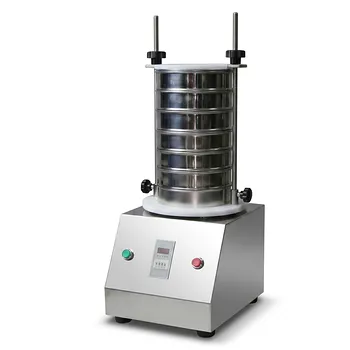
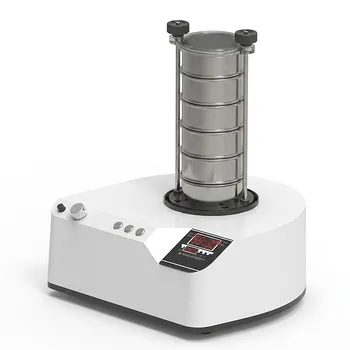
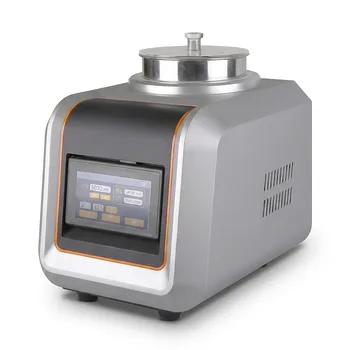
- Sieve Shakers: Vibratory and air-jet models with precise test sieves for accurate fineness evaluation.
- Grinding & Milling: Planetary ball, jet, and rotor mills, plus jaw and roll crushers for optimal sample reduction.
- Hydraulic Presses: A full spectrum of equipment including Cold/Warm Isostatic Presses (CIP/WIP), standard lab presses, and vacuum hot presses for superior sample preparation.
- Mixing Technology: Advanced powder and defoaming mixers for consistent material blending.
Ready to optimize your production efficiency and ensure structural integrity? Contact our experts today to find the perfect equipment for your laboratory's unique requirements!
References
- Pothunuri Shalini kumari, Tirumala Deepika. Effect of Mineral Admixtures on Mechanical Properties of Concrete with Partially Replacement of Flyash and Ggbs. DOI: 10.14419/ijet.v7i3.35.29145
Mentioned Products
- Stainless Steel Laboratory Vibratory Test Sieve Shaker
- Laboratory Vibratory Test Sieve Shaker for Precision Particle Size Analysis and Powder Grading
- Small Laboratory Vibrating Sieve Shaker for Precise Particle Size Analysis
- Small Laboratory Vibratory Sieve Shaker for Powder Gradation and Particle Size Analysis
- 三维电磁微量振动筛分仪
People Also Ask
- What function does a laboratory vibratory sieve shaker serve in the production process of metakaolin? Optimize Reactivity
- Why is a precision laboratory vibratory sieve shaker necessary for particle size control? Optimize Biomass Carbonization
- What is the function of a laboratory vibratory sieve shaker? Enhance Coal Particle Size Distribution (PSD) Analysis
- What role do laboratory vibratory sieve shakers and test sieves play before the molding of Nb-Cu composite powders?
- What is the primary function of a laboratory vibratory sieve shaker in the evaluation of sand liquefaction potential?

Tech Team · PowderPreparation
Last updated on Jun 03, 2026
Related Products
Stainless Steel Laboratory Vibratory Test Sieve Shaker
Laboratory Vibratory Test Sieve Shaker for Precision Particle Size Analysis and Powder Grading
Small Laboratory Vibrating Sieve Shaker for Precise Particle Size Analysis
Small Laboratory Vibratory Sieve Shaker for Powder Gradation and Particle Size Analysis
三维电磁微量振动筛分仪
Laboratory Air Jet Sieving Machine for Fine Powder Particle Size Analysis and Deagglomeration
Stainless Steel Rotary Vibrating Sieve High Precision Circular Vibratory Separator Industrial Powder Grading Machine Multi Layer Sifting Equipment
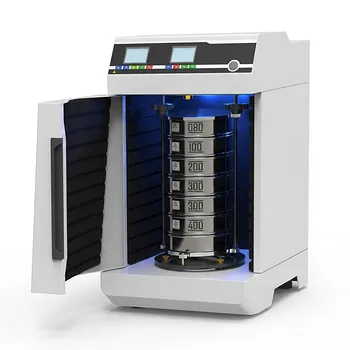
Laboratory Dry and Wet Three Dimensional Vibratory Sieve Shaker for Particle Analysis
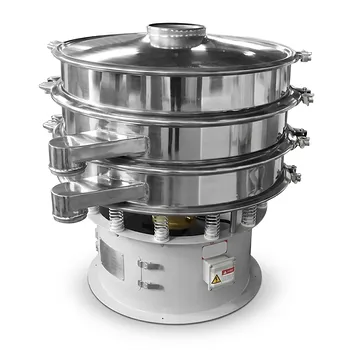
Three Dimensional Rotary Vibrating Sieve
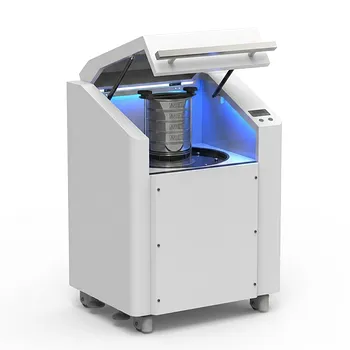
High Frequency Cabinet Type Three-Dimensional Rotary Vibrating Sieve Shaker for Dry Sieving and Particle Classification
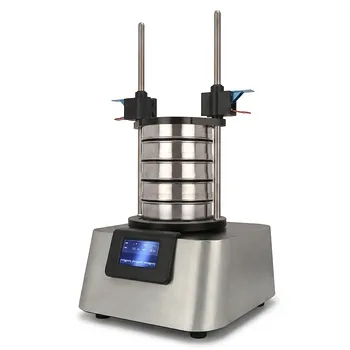
Vibratory Sieve Shaker Electromagnetic 3D Motion Powder Particle Size Analyzer for Dry and Wet Sieving
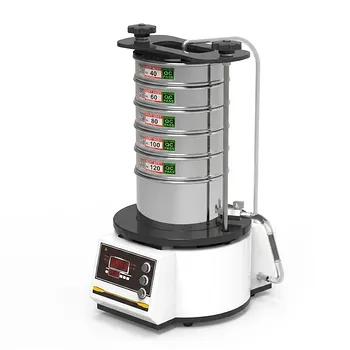
High Frequency Wet Three-Dimensional Vibrating Sieve Shaker for Dry and Wet Particle Size Analysis
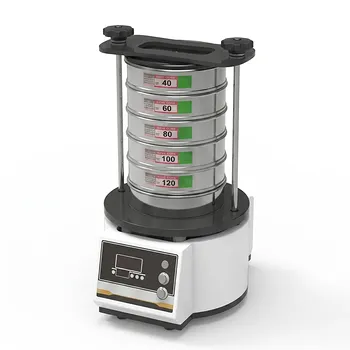
Dry Three Dimensional Vibratory Sieve Shaker
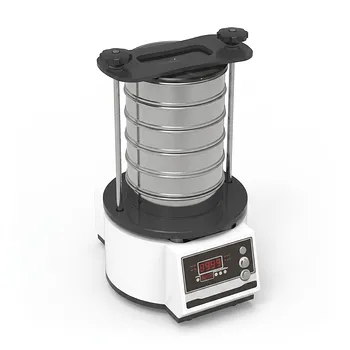
Tapping Oscillating Sieve Shaker for Dry and Wet Particle Size Analysis
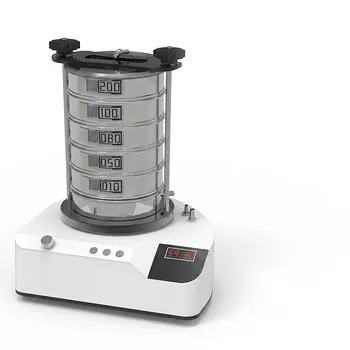
Heavy Duty Dry Three Dimensional Vibratory Sieve Shaker for Particle Separation
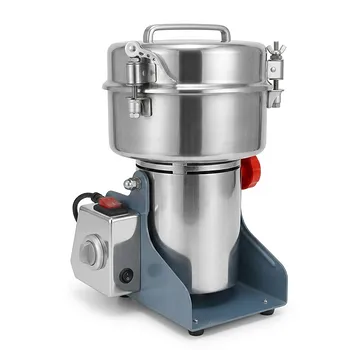
Small High-Speed Grinder for Efficient Laboratory Sample Preparation
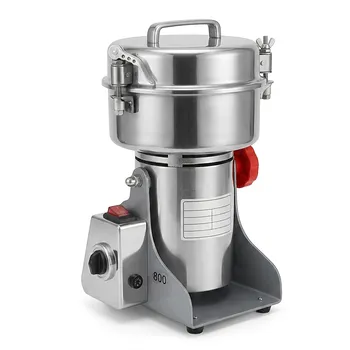
Small High-Speed Laboratory Grinder for Rapid Sample Preparation
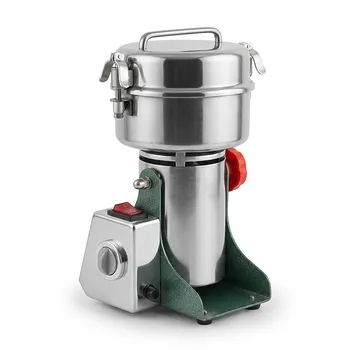
Small High-Speed Swing Grinder for Laboratory Sample Preparation
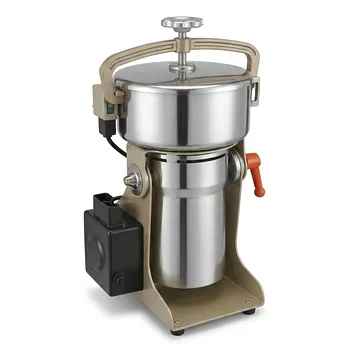
Multifunctional High Efficiency High Speed Laboratory Grinder