What is the role of high-range pressure control in bagasse compaction? Maximize Your Biomass Energy Density
Updated 5 months ago
High-range pressure control is the fundamental driver of biomass densification. It transforms loose sugarcane bagasse into a high-density fuel source by forcing particle deformation and expelling internal air. Specifically, a laboratory hydraulic press applying 5 to 11 MPa facilitates the formation of Van der Waals forces and mechanical interlocking, resulting in a 7 to 8-fold increase in volumetric energy density.
High-range pressure control provides the specific energy required to overcome the natural elasticity of sugarcane bagasse, enabling permanent deformation and molecular-level bonding. Without precise control within the 5–11 MPa range, the resulting compacts lack the structural integrity and energy density required for efficient energy production.
The Mechanics of Densification
Air Expulsion and Particle Rearrangement
At the onset of compaction, the hydraulic press applies axial pressure to force biomass particles to rearrange and fill existing voids. High-range control ensures that the pressure is sufficient to expel internal air trapped between the irregular fibers of the bagasse.
Activation of Bonding Forces
As the pressure reaches the 5–11 MPa range, it forces the bagasse particles to deform physically, increasing the physical contact area between them. This proximity allows for the formation of Van der Waals forces and mechanical interlocking, which act as the "glue" holding the compacted material together.
Achieving Volumetric Energy Density
The primary goal of this controlled pressure is a massive reduction in volume. By applying precise force, a laboratory press can achieve a 7 to 8-fold increase in volumetric energy density, making the bagasse viable for storage and transport.
Maintaining Structural Integrity
Precision Through Instrumentation
Monitoring the compaction process requires a load gauge (analog or digital) to ensure the pressure remains within the target window. This precision prevents under-compacting, which results in a "spring-back" effect where the material expands once pressure is released.
Controlled Pressure Holding
Maintaining pressure for a set duration allows the particles to settle into their new, densified state. This pressure-holding phase ensures a consistent internal density distribution and helps the material resist breaking apart during subsequent handling.
The Role of Relief Valves
To maintain safety and precision, hydraulic presses utilize pressure-relief valves. these prevent the system from exceeding its maximum safe capacity, which could otherwise damage the equipment or the structural fibers of the bagasse.
Understanding the Trade-offs
The Risk of Inadequate Pressure
If the pressure is too low, the bagasse will retain internal pores and high elasticity. This results in a "green body" that is fragile, has low energy density, and is prone to crumbling during transport or storage.
The Impact of Excessive Pressure
While high pressure is necessary, exceeding the required range can be counterproductive. Excessive pressure may cause the individual reinforcement particles or fibers to fracture, which can actually weaken the overall mechanical strength of the final compact.
Managing Residual Stress
Rapidly releasing pressure can introduce internal residual stresses, leading to cracks or deformations. Using a needle or cam-type release valve allows for a controlled bleed of oil back to the reservoir, ensuring the compact remains stable as it returns to atmospheric pressure.
How to Apply This to Your Project
When utilizing a laboratory hydraulic press for bagasse compaction, your technical approach should shift based on your end-use requirements.
- If your primary focus is Maximizing Transport Efficiency: Prioritize reaching the upper limit of the 5–11 MPa range to ensure the highest possible volumetric energy density.
- If your primary focus is Long-term Storage Stability: Focus on the pressure-holding duration and controlled release to minimize internal stresses and prevent the compact from crumbling over time.
- If your primary focus is Material Testing (UCS): Ensure your load gauges are calibrated in tons or kN to accurately record the maximum load the specimen can withstand before failure.
Precise pressure control is the bridge between loose agricultural waste and a high-performance, energy-dense biofuel.
Summary Table:
| Feature/Parameter | Value/Range | Impact on Compaction |
|---|---|---|
| Optimal Pressure | 5 – 11 MPa | Facilitates Van der Waals forces and mechanical interlocking. |
| Energy Density | 7 – 8x Increase | Massive reduction in volume for efficient storage and transport. |
| Pressure Holding | Timed Phase | Ensures consistent internal density and prevents "spring-back." |
| Safety Control | Relief Valve | Prevents fiber fracture and equipment damage from over-pressurization. |
| Release Method | Controlled Bleed | Minimizes internal residual stress to prevent cracks and crumbling. |
Optimize Your Material Research with Precision Compaction Solutions
Achieving the perfect densification for sugarcane bagasse or advanced powders requires equipment that offers uncompromising control. At [Company Name], we provide complete laboratory sample preparation solutions for material science, specializing in high-performance powder processing and compaction equipment.
Our extensive range includes:
- Hydraulic Presses: Standard lab presses, XRF pellet presses, Hot Presses, Vacuum Hot Presses, and Cold/Warm Isostatic Presses (CIP/WIP).
- Milling & Grinding: Planetary ball mills, jet mills, and liquid nitrogen cryogenic grinders.
- Sieving & Mixing: Sieve shakers, powder mixers, and defoaming mixers.
Whether you are scaling up biofuel production or conducting fundamental material testing, our technical experts are ready to help you select the right pressure-holding and relief systems for your specific application.
Ready to enhance your lab's efficiency? Contact us today for a tailored solution!
References
- Ian Dominic F. Tabañag, Luis K. Cabatingan. Utilization of Lignin from Waste Degumming Liquor as Fuel Additive and Binder in Sugarcane Bagasse Briquettes. DOI: 10.4028/p-4ksdat
Mentioned Products
- 6-Ton Small Single-Punch Tablet Press — Laboratory Powder & Granule Tableting Equipment / Tablet Forming Machine
- 5 Ton Single Punch Tablet Press Laboratory Small Batch Production
- Manual Tablet Press with Dual Scale Pressure Gauge for Pharmaceutical Food Chemical Laboratory Sample Preparation
- 6 Ton Variable Frequency Single Punch Tablet Press
- High Shear Laboratory Emulsifier for Mixing and Homogenization
People Also Ask
- What is the function of a laboratory press in Cr-Ti alloy evaluation? Quantify Fracture Stress & Strength
- What is the function of a laboratory press in assessing the hydrophobic performance of modified vermiculite fillers?
- What is the core function of a laboratory press in the forming of ceramic filter element green bodies? Maximize Density.
- What is the function of a laboratory press in the preparation of ceramic feed rods? Master Density and Precision
- Why is vacuum sealing and flexible packaging necessary for Aluminum Titanate powders during CIP? Ensure Peak Density

Tech Team · PowderPreparation
Last updated on May 14, 2026
Related Products
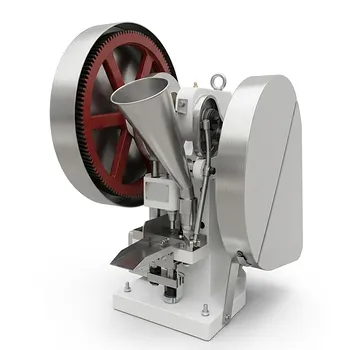
6-Ton Small Single-Punch Tablet Press — Laboratory Powder & Granule Tableting Equipment / Tablet Forming Machine
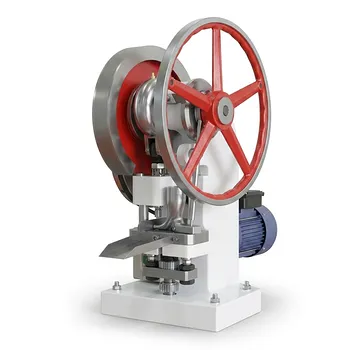
5 Ton Single Punch Tablet Press Laboratory Small Batch Production
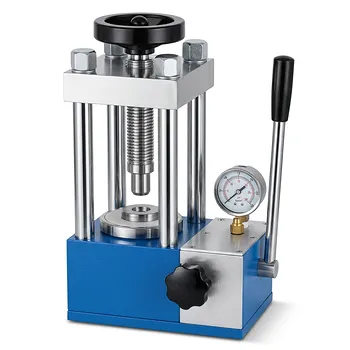
Manual Tablet Press with Dual Scale Pressure Gauge for Pharmaceutical Food Chemical Laboratory Sample Preparation
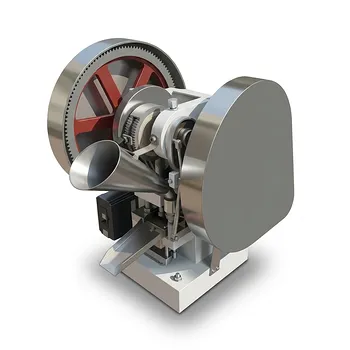
6 Ton Variable Frequency Single Punch Tablet Press
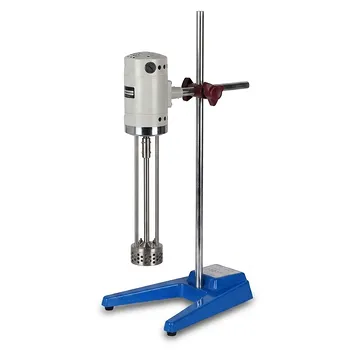
High Shear Laboratory Emulsifier for Mixing and Homogenization
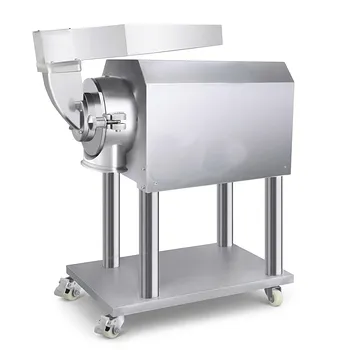
High Speed Small Laboratory Crusher for Dry Material Sample Preparation
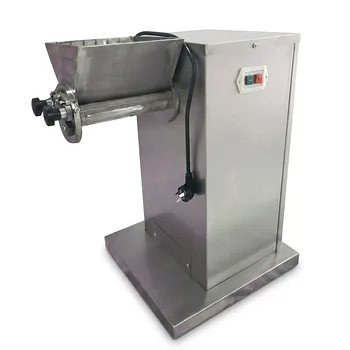
Small Laboratory Oscillating Granulator for Wet and Dry Granulation Processing
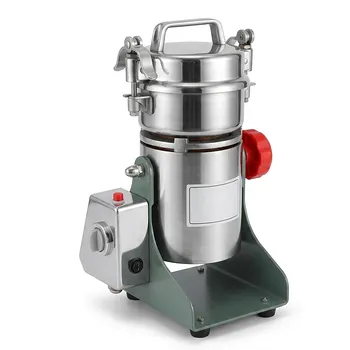
High Speed Swing Type Laboratory Pulverizer for Fine Powder Grinding and Sample Preparation
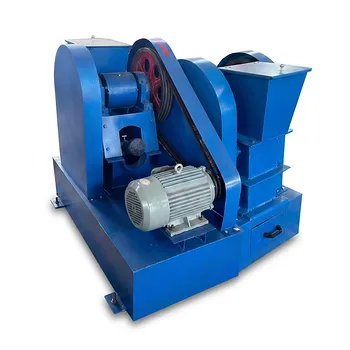
Horizontal Jaw Crusher Medium Hard Material Crushing Laboratory Sample Preparation Equipment