Role of Sieve Shakers in Determining Material Water Absorption: Ensure Precision for Synthetic Aggregates
Updated 5 months ago
The automatic vibratory sieve shaker serves as a critical control mechanism in material characterization. It functions primarily to eliminate particle size as a confounding variable by ensuring that comparative materials—such as sand or zeolite—share an identical gradation. By isolating specific fractions, such as powders smaller than 45 μm, the shaker allows researchers to isolate the impact of a material’s internal microporous structure on its water absorption and retention characteristics.
The core role of the sieve shaker is to provide a uniform baseline for comparison. By neutralizing the influence of particle size, it enables an objective evaluation of how the unique physical properties of Carbonated Paste-based Synthetic Aggregate (CPSA) affect the workability and fluid dynamics of a mixture.
Isolating Material Properties Through Gradation Control
Eliminating Particle Size as a Variable
Water absorption is heavily influenced by the total surface area of the particles. If the particle sizes of two materials differ, it is impossible to determine if a higher absorption rate is due to the material's porosity or simply its smaller size.
The automatic vibratory sieve shaker ensures that all tested materials occupy the same size class. This process transforms "particle size" from a variable into a constant across all experimental groups.
Precision Isolation of Fine Powders
In the study of CPSA, isolating specific ranges like those under 45 μm is essential. This fine classification allows for a focused analysis of how the paste-based aggregate interacts with moisture at a microscopic level.
Mechanical vibration facilitates the passage of these fines through precision test sieves more efficiently than manual methods. This efficiency is vital for maintaining the integrity of the sample and the speed of the testing workflow.
Enhancing Accuracy in Comparative Analysis
Benchmarking Against Conventional Materials
To understand the performance of CPSA, it must be compared to established materials like natural sand or zeolite. The sieve shaker ensures these materials are graded to the same distribution curves, such as those defined by DIN 4187-8 or ASTM C33.
When the grading is identical, any observed difference in water retention or concrete workability can be confidently attributed to the microporous structure of the CPSA itself.
Determining Fineness Modulus and Packing Density
The shaker allows for the calculation of the Fineness Modulus (FM), a key metric for predicting how aggregates will pack together. This data is essential for understanding the void ratio within a mixture.
By optimizing the packing density through precise sieving, researchers can better predict how much water is "trapped" in voids versus how much is absorbed by the aggregate particles.
Understanding the Trade-offs and Limitations
Potential for Particle Degradation
The high-frequency mechanical vibration required for effective separation can sometimes cause friable synthetic aggregates to break down. If the shaker is too aggressive, it may create "new" fines during the test, leading to inaccurate grading data.
Sieve Blinding and Maintenance
Fine particles, especially those in the <45 μm range, are prone to "blinding" or clogging the sieve mesh. This requires the use of automatic pulse settings or cleaning aids to ensure the sieve remains open and the results remain consistent.
Geometry Bias
Sieve shakers classify particles based on their smallest cross-section. While effective for spheres, they may misrepresent the volume of elongated or irregular synthetic aggregates, which can slightly skew the calculated surface area and absorption predictions.
Optimizing Your Aggregate Analysis Workflow
When utilizing an automatic vibratory sieve shaker to evaluate synthetic aggregates, your approach should vary based on your specific research or production requirements.
- If your primary focus is Isolating Internal Porosity: Isolate a single, narrow particle size range (e.g., <45 μm) to remove surface area variables entirely.
- If your primary focus is Mixture Workability: Use the shaker to replicate a specific cumulative residue curve to see how the aggregate performs within a standard grading envelope.
- If your primary focus is Computational Modeling: Use the fineness modulus and distribution data derived from the shaker to calibrate Discrete Element Method (DEM) simulations.
The precision offered by an automatic vibratory sieve shaker is the only way to ensure that the unique performance of synthetic aggregates is measured accurately against traditional materials.
Summary Table:
| Feature | Impact on Material Analysis | Key Benefit for Research |
|---|---|---|
| Gradation Control | Eliminates particle size as a confounding variable | Isolates internal porosity effects |
| Fine Fraction Isolation | Separates powders <45 μm with high precision | Analyzes microscopic moisture interaction |
| Standard Benchmarking | Matches gradation to ASTM C33/DIN 4187-8 | Enables objective comparison with sand/zeolite |
| Packing Density Data | Calculates Fineness Modulus (FM) | Predicts mixture void ratios and workability |
Elevate Your Material Characterization with Expert Solutions
Accurate analysis of synthetic aggregates like CPSA requires precision equipment that eliminates variables and ensures repeatability. We provide complete laboratory sample preparation solutions tailored for material science and powder processing.
Our extensive product line includes:
- Sieving & Separation: Advanced vibratory and air-jet sieve shakers with high-precision test sieves for meticulous gradation.
- Size Reduction: High-performance crushers (jaw/roll) and a variety of mills (planetary ball, jet, and cryogenic grinders).
- Sample Compaction: A full spectrum of hydraulic presses, including Cold/Warm Isostatic Presses (CIP/WIP), vacuum hot presses, and XRF pellet presses.
- Mixing: Specialized powder and defoaming mixers for uniform sample preparation.
Whether you are a researcher optimizing internal porosity or a distributor looking for reliable OEM/ODM support, our equipment delivers the durability and precision your lab demands.
Ready to enhance your testing workflow? Contact our technical team today for a customized solution!
References
- Ebtisam Saeed, Jorge S. Dolado. Supplementary Cementitious Materials Based on CO <sub>2</sub> –Capturing Periwinkle Shell. DOI: 10.1021/acssusresmgt.5c00313
Mentioned Products
- Vibratory Sieve Shaker Electromagnetic 3D Motion Powder Particle Size Analyzer for Dry and Wet Sieving
- Laboratory Dry and Wet Three Dimensional Vibratory Sieve Shaker for Particle Analysis
- Dry Three Dimensional Vibratory Sieve Shaker
- Heavy Duty Dry Three Dimensional Vibratory Sieve Shaker for Particle Separation
- Stainless Steel Laboratory Vibratory Test Sieve Shaker
People Also Ask
- How does a vibratory sieve shaker contribute to optimizing the performance of activated carbon? Enhance Adsorption Precision
- Why is a laboratory vibratory sieve shaker necessary for processing magnesium-based borate precursor powders? Boost Activity
- Why use a vibratory sieve shaker to verify coarse aggregate grading in rubberized concrete? Ensure Structural Integrity
- What function do vibratory sieve shakers and standard test sieves serve in the preparation of adsorbents? Key Guide
- What role does a vibratory sieve shaker play in the particle size analysis of ground corn products? Enhance QC Precision

Tech Team · PowderPreparation
Last updated on May 14, 2026
Related Products

Vibratory Sieve Shaker Electromagnetic 3D Motion Powder Particle Size Analyzer for Dry and Wet Sieving
Laboratory Dry and Wet Three Dimensional Vibratory Sieve Shaker for Particle Analysis
Dry Three Dimensional Vibratory Sieve Shaker

Heavy Duty Dry Three Dimensional Vibratory Sieve Shaker for Particle Separation

Stainless Steel Laboratory Vibratory Test Sieve Shaker

Small Laboratory Vibratory Sieve Shaker for Powder Gradation and Particle Size Analysis

Small Laboratory Vibrating Sieve Shaker for Precise Particle Size Analysis
High Frequency Cabinet Type Three-Dimensional Rotary Vibrating Sieve Shaker for Dry Sieving and Particle Classification

High Frequency Wet Three-Dimensional Vibrating Sieve Shaker for Dry and Wet Particle Size Analysis

Laboratory Vibratory Test Sieve Shaker for Precision Particle Size Analysis and Powder Grading

三维电磁微量振动筛分仪

Stainless Steel Rotary Vibrating Sieve High Precision Circular Vibratory Separator Industrial Powder Grading Machine Multi Layer Sifting Equipment
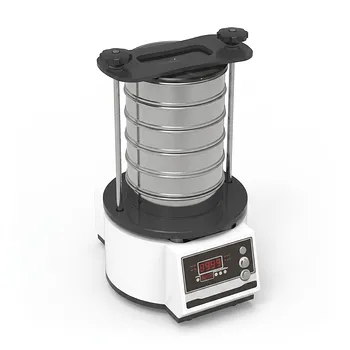
Tapping Oscillating Sieve Shaker for Dry and Wet Particle Size Analysis
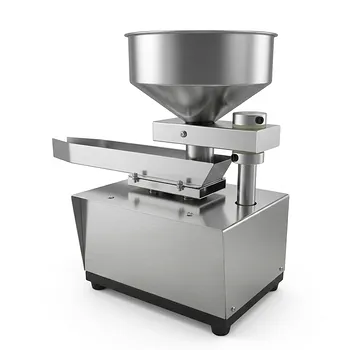
Automatic Vibrating Powder Feeder for Laboratory Material Processing Precision Vibratory Hopper Feeder for Granular and Powder Material Handling Industrial Grade Vibrating Tray Feeder for Consistent Material Sample Preparation

Three Dimensional Rotary Vibrating Sieve
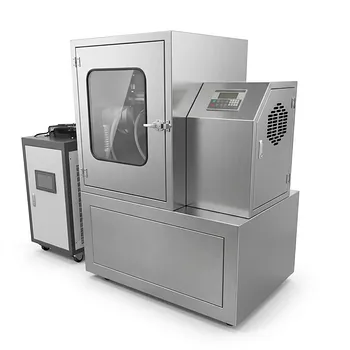
Vibratory Superfine Grinder for Ultra Fine Laboratory Powder Milling
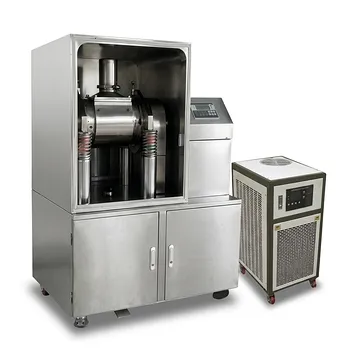
Small Vibrating Ultrafine Grinder for Traditional Chinese Medicine