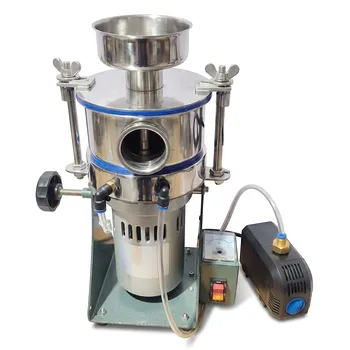
What is the role of an air-jet sieve shaker in diabase tailings assessment? Ensure Precision & Chemical Reactivity.
Updated 4 months ago
The air-jet sieve shaker is the primary instrument for assessing the fineness of diabase tailings by determining the sieve residue on micro-fine meshes, such as the 45 µm standard. It utilizes a controlled negative pressure environment to fluidize particles, ensuring a clean separation of fine powders that traditional vibratory methods cannot achieve. This assessment is a critical prerequisite for predicting the chemical activity and reactivity of the tailings when used in alkali-activated reactions.
The air-jet sieve shaker overcomes the limitations of traditional dry sieving by using high-speed airflow to prevent particle agglomeration in ultra-fine mineral powders. This ensures a precise measurement of diabase tailing fineness, providing the foundational data required to evaluate the material's potential for industrial-grade reactivity and classification.
The Mechanics of Precision Fineness Assessment
Overcoming Particle Agglomeration
Fine materials like diabase tailings often suffer from electrostatic adsorption and moisture-induced clumping. Traditional vibratory sieving struggles to break these bonds, leading to inaccurate residue readings and "blinding" or clogging of the mesh.
The air-jet sieve shaker solves this by using a rotating slit nozzle to inject a high-speed airflow beneath the sieve. This action fluidizes the powder, keeping it in a suspended state that effectively breaks up agglomerates and allows individual particles to pass through the mesh.
The Role of Negative Pressure and Fluidization
By creating a controlled negative pressure environment, the equipment pulls fine particles through the sieve while the air jet clears the mesh from below. This dual-action process ensures that the 45 µm or 125 µm sieves remain clear throughout the test.
The result is a highly repeatable and precise measurement of sieve residue. This data is the industry standard for determining whether a mineral admixture meets specific fineness levels, such as Class S or Class N.
Linking Physical Fineness to Chemical Reactivity
Predicting Alkali-Activated Reaction Potential
The physical fineness of diabase tailings is directly proportional to its surface area. Increased surface area enhances the contact between the tailings and chemical activators, which is vital for the success of alkali-activated binders.
Using an air-jet sieve shaker allows engineers to quantify this surface area indirectly through residue analysis. Accurate residue data is essential for predicting the chemical activity and the eventual mechanical strength of the resulting mortar or concrete matrix.
Standardizing Classification for Industrial Use
For diabase tailings to be utilized as a resource, they must be classified according to their particle size distribution. The air-jet sieve shaker provides the empirical data needed to determine if the tailings can be used as a micro-fine mineral admixture.
This classification is not merely academic; it dictates the market value and application suitability of the tailings. Precision in this stage prevents the waste of material that might otherwise be deemed non-reactive due to poor assessment techniques.
Understanding the Trade-offs
Limitations Compared to Vibratory Sieving
While the air-jet sieve shaker is superior for fine powders, it is generally limited to one sieve at a time. This makes it less efficient for broad-spectrum particle size distribution (PSD) analysis compared to multi-layered vibratory shakers.
Vibratory shakers remain the better choice for coarse classification (e.g., particles larger than 2mm). The air-jet sieve shaker is a specialized tool that sacrifices "bulk analysis" speed for "fine-end" precision.
Equipment Sensitivity and Calibration
The accuracy of an air-jet sieve shaker is highly dependent on the stability of the vacuum and the condition of the sieve mesh. Minor fluctuations in negative pressure can lead to inconsistent results, making regular calibration and maintenance a necessity.
Furthermore, because the process is highly dynamic, it can cause attrition in very fragile materials. While diabase is generally robust, users must be aware that the high-speed airflow could theoretically break down very soft particles, slightly skewing the fineness results.
How to Apply This to Your Project
Recommendations for Material Assessment
Effective classification requires selecting the right tool for the specific fineness goal.
- If your primary focus is determining chemical reactivity: Use the air-jet sieve shaker on a 45 µm mesh to provide the most accurate data for predicting pozzolanic or alkali-activated performance.
- If your primary focus is broad particle size distribution: Utilize a standard vibratory sieve shaker to categorize the material into coarse fractions before using air-jet sieving for the sub-100 µm components.
- If your primary focus is preventing mesh blinding in fine powders: Opt for the air-jet sieve shaker’s rotating nozzle technology to ensure repeatable results without the manual labor of cleaning clogged sieves.
Accurate fineness assessment transforms diabase tailings from a waste product into a predictable, high-value industrial mineral.
Summary Table:
| Feature | Air-Jet Sieve Shaker | Vibratory Sieve Shaker |
|---|---|---|
| Optimal Particle Size | Ultra-fine powders (< 100 µm) | Coarse materials (> 2 mm) |
| Sieving Mechanism | Air-jet fluidization & vacuum | Mechanical vibration/oscillation |
| Anti-Blinding | High (prevents mesh clogging) | Low (prone to clumping) |
| Main Advantage | Precise fineness/reactivity data | Bulk particle size distribution |
| Analysis Capacity | Single sieve per test | Multiple sieves in a stack |
Elevate Your Material Research with Expert Sample Prep Solutions
Unlock the full potential of your diabase tailings and mineral admixtures with high-precision equipment designed for the most demanding laboratory environments. At [Your Brand Name], we provide complete laboratory sample preparation solutions for material science, specializing in advanced powder processing and compaction equipment.
Our extensive product line is engineered to ensure accuracy at every stage of your workflow:
- Size Reduction: High-efficiency crushers (jaw/roll), liquid nitrogen cryogenic grinders, and versatile mills (planetary ball, jet, sand/bead, disc, rotor).
- Classification: Precision air-jet and vibratory sieve shakers with a full range of standardized test sieves and meshes.
- Homogenization: High-performance powder and vacuum defoaming mixers.
- Compaction: A full spectrum of hydraulic presses, including Cold/Warm Isostatic Presses (CIP/WIP), XRF pellet presses, and vacuum hot presses.
Whether you are assessing chemical activity or scaling up industrial production, our equipment delivers the repeatability you need to succeed. Contact our technical team today to find the perfect solution for your specific material challenges!
References
- Yanan Hu, Xinchun Yang. Green Low-Temperature Activation and Curing for High-Toughness Geopolymer Binders from Diabase Tailings. DOI: 10.3390/ma18163815
Mentioned Products
- Laboratory Air Jet Sieving Machine for Fine Powder Particle Size Analysis and Deagglomeration
- Vibratory Sieve Shaker Electromagnetic 3D Motion Powder Particle Size Analyzer for Dry and Wet Sieving
- Stainless Steel Laboratory Vibratory Test Sieve Shaker
- 三维电磁微量振动筛分仪
- Heavy Duty Dry Three Dimensional Vibratory Sieve Shaker for Particle Separation
People Also Ask
- What role do laboratory test sieves play in the nanocrystallization process of iron powder? Ensure Uniform Refinement
- What is the function of a laboratory test sieve in the river sediment sample preparation process? Ensure Precise Data
- What is the purpose of using 0.038 mm sieves in magnetite grinding? Quantify Kinetics and Boost Grinding Efficiency
- How do laboratory test sieves contribute to the analysis of soil texture composition? Optimize Particle Grading Accuracy
- Why is a 0.08mm standard sieve required for testing the fineness of cement? Optimize Recycled Pervious Concrete Quality

Tech Team · PowderPreparation
Last updated on May 14, 2026
Related Products
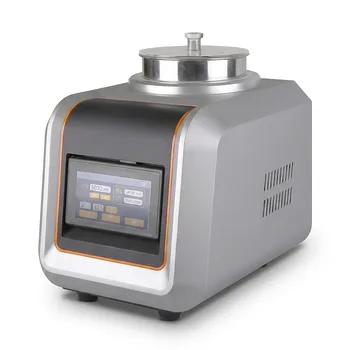
Laboratory Air Jet Sieving Machine for Fine Powder Particle Size Analysis and Deagglomeration
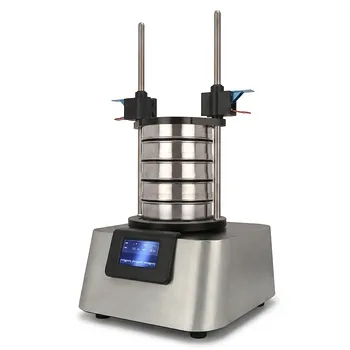
Vibratory Sieve Shaker Electromagnetic 3D Motion Powder Particle Size Analyzer for Dry and Wet Sieving
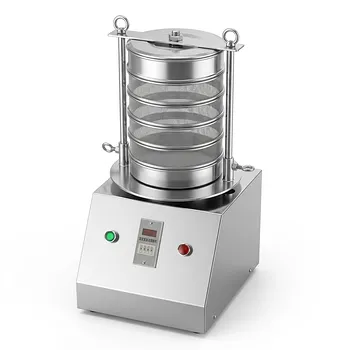
Stainless Steel Laboratory Vibratory Test Sieve Shaker
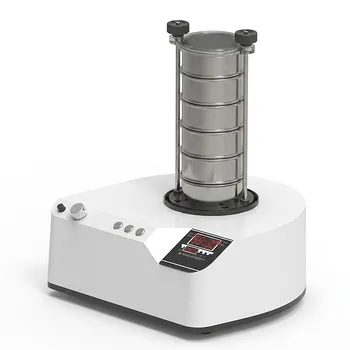
三维电磁微量振动筛分仪
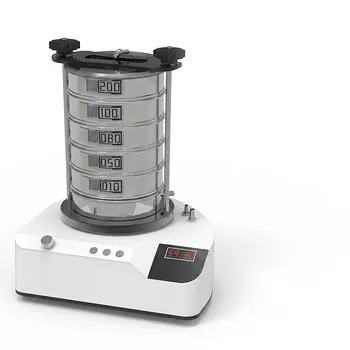
Heavy Duty Dry Three Dimensional Vibratory Sieve Shaker for Particle Separation
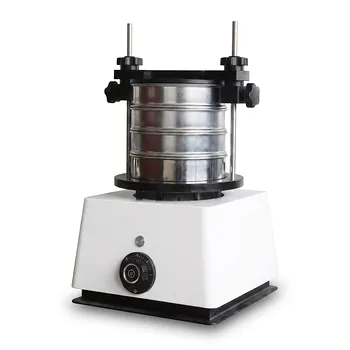
Small Laboratory Vibrating Sieve Shaker for Precise Particle Size Analysis
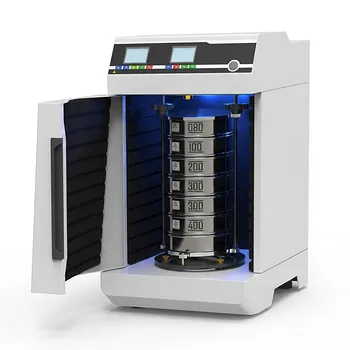
Laboratory Dry and Wet Three Dimensional Vibratory Sieve Shaker for Particle Analysis
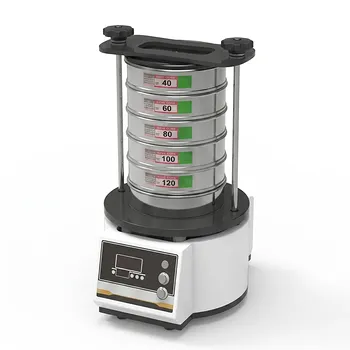
Dry Three Dimensional Vibratory Sieve Shaker
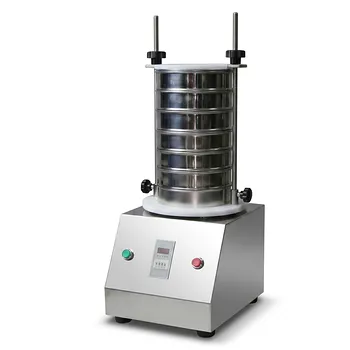
Small Laboratory Vibratory Sieve Shaker for Powder Gradation and Particle Size Analysis
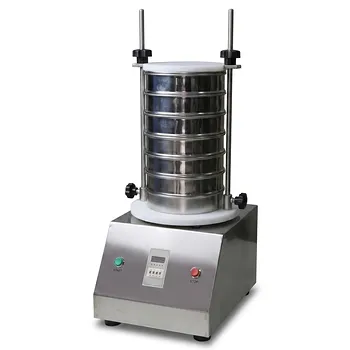
Laboratory Vibratory Test Sieve Shaker for Precision Particle Size Analysis and Powder Grading
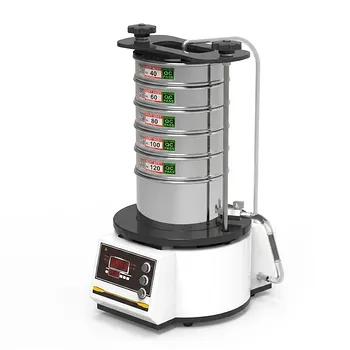
High Frequency Wet Three-Dimensional Vibrating Sieve Shaker for Dry and Wet Particle Size Analysis
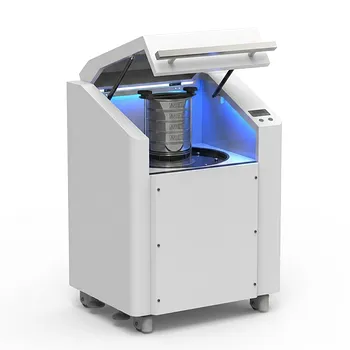
High Frequency Cabinet Type Three-Dimensional Rotary Vibrating Sieve Shaker for Dry Sieving and Particle Classification
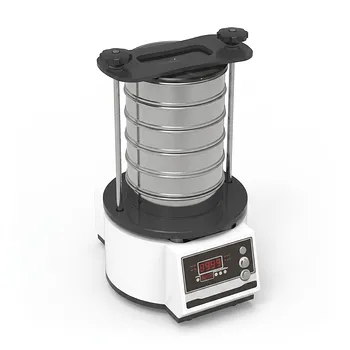
Tapping Oscillating Sieve Shaker for Dry and Wet Particle Size Analysis
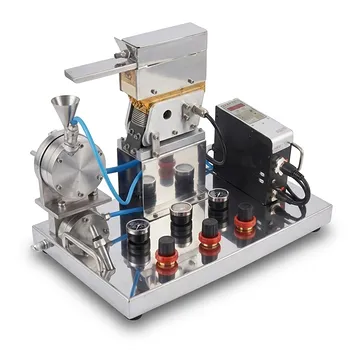
Benchtop Micro Air Jet Mill for Ultrafine Grinding of High Value Powders
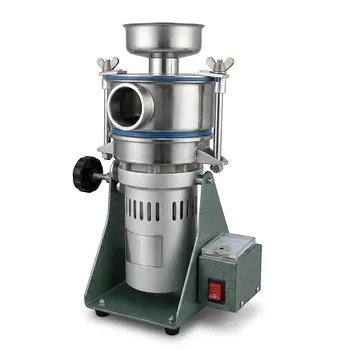
Small Airflow Ultra-Fine Grinder for Laboratory Sample Preparation
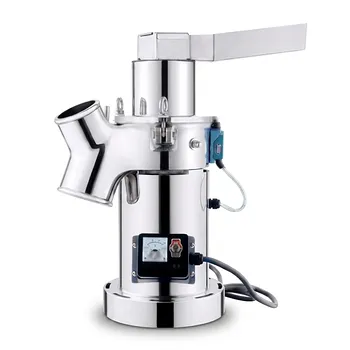
Airflow Ultrafine Pulverizer for Laboratory Ultra-fine Grinding
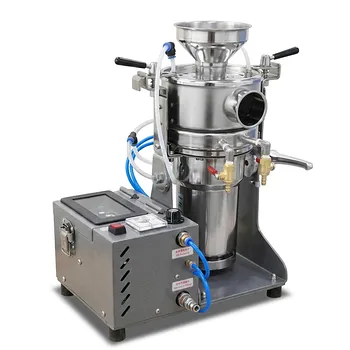
Water Cooled Pulse Jet Ultrafine Grinder