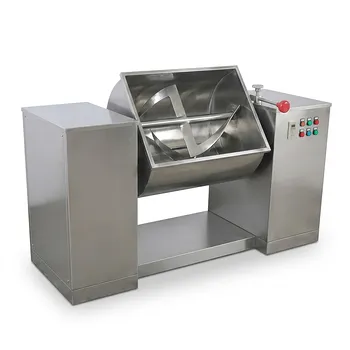
What is the role of a planetary centrifugal mixer in N-doped ZTC synthesis? Achieve High-Precision Pore Impregnation
Updated 5 months ago
The planetary centrifugal mixer is the critical engine for high-precision, solvent-free impregnation during the synthesis of nitrogen-doped zeolite-templated carbon (N-doped ZTC). By generating intense centrifugal and shear forces through simultaneous revolution and rotation, the equipment forces liquid acrylonitrile (AN) monomers into the microscopic pores of a dry NaY zeolite template. This process achieves a level of molecular-level dispersion in approximately one minute that traditional mixing methods cannot replicate, ensuring a perfectly uniform distribution of nitrogen throughout the final carbon framework.
The core role of the planetary centrifugal mixer is to transform a heterogeneous mixture of liquid monomers and solid templates into a microscopically uniform precursor without the use of organic solvents. This high-energy, non-contact method is essential for ensuring that every zeolite micropore is consistently filled, which dictates the structural integrity and chemical functionality of the resulting N-doped carbon.
The Physics of High-Energy Homogenization
Synergy of Revolution and Rotation
The mixer operates on a dual-axis system where the material container revolves around a central point while simultaneously rotating on its own axis. This motion generates powerful centrifugal forces that push the zeolite template and AN monomer outward, while the shear forces break down any liquid droplets or solid aggregates.
Rapid Micro-pore Impregnation
In N-doped ZTC synthesis, the primary challenge is moving a trace amount of liquid monomer into the dense micropore network of a zeolite. The high-energy environment of the mixer overcomes surface tension and capillary resistance, achieving complete adsorption within a very short timeframe, typically around sixty seconds.
Non-Contact Dispersion
Unlike traditional stirring, this is a non-contact mixing method that does not utilize blades or paddles. This eliminates the risk of contaminating the high-purity carbon precursor with metallic or polymer wear-debris from mixing equipment, ensuring the electrochemical purity of the ZTC.
Why Precision Mixing is Mandatory for ZTC
Eliminating Amorphous Carbon
If the monomer is not perfectly distributed, "pockets" of excess liquid will form on the exterior of the zeolite particles. During subsequent heating, these pockets carbonize into unwanted amorphous carbon, which blocks the pore structure and degrades the surface area of the final material.
Uniform Nitrogen Distribution
The goal of N-doping is to create a carbon lattice with consistent chemical properties throughout the structure. The planetary mixer ensures the nitrogen-bearing monomers are distributed evenly at the start of the process, preventing localized "hot spots" of high nitrogen concentration that could destabilize the framework.
Degassing and Void Prevention
The centrifugal action inherently performs a defoaming and degassing function, removing air bubbles trapped within the zeolite powder or the liquid monomer. This creates a void-free interface between the template and the carbon source, which is critical for maintaining the high-fidelity structural replication of the zeolite.
Understanding the Trade-offs
Heat Generation
The high-speed revolution and rotation generate significant kinetic energy, which can lead to localized heat buildup in the sample. If temperatures rise too quickly, it may cause premature polymerization of the monomers or evaporation of volatile components before they are fully adsorbed.
Batch Size Limitations
Planetary centrifugal mixers are typically designed for high-precision, smaller-scale batches rather than continuous industrial flow. Scaling the synthesis of N-doped ZTC requires a careful balance between the volume of the container and the RPM settings to maintain the same shear-force profile.
Equipment Cost
Compared to simple magnetic stirring or manual mixing, planetary centrifugal mixers represent a significant capital investment. However, the reduction in solvent waste and the improvement in material consistency often offset these initial costs in high-performance application settings.
How to Apply This to Your Synthesis Project
Efficient mixing is the foundation of high-performance carbon materials. When integrating a planetary centrifugal mixer into your workflow, consider your specific material requirements:
- If your primary focus is Maximum Surface Area: Utilize high-speed settings (above 2000 RPM) for at least 60 seconds to ensure the monomer is forced deep into the micropores, preventing external amorphous carbon buildup.
- If your primary focus is Chemical Purity: Rely on the non-contact nature of the mixer to avoid using solvents or metallic stirrers that could introduce trace contaminants into the nitrogen-doped framework.
- If your primary focus is Scalability: Establish a "shear-force profile" on a small scale that can be replicated as you increase batch sizes, ensuring consistent adsorption rates across all samples.
By mastering the high-energy dynamics of planetary centrifugal mixing, researchers can produce N-doped ZTC with a level of structural perfection and chemical homogeneity that defines the state-of-the-art in porous carbon materials.
Summary Table:
| Feature | Benefit in ZTC Synthesis | Mechanism |
|---|---|---|
| Dual-axis Motion | Uniform molecular-level dispersion | Combined revolution and rotation forces |
| High Shear Force | Rapid micropore impregnation | Overcomes capillary resistance in <60s |
| Non-contact Mixing | Eliminates contamination risks | Blade-free processing ensures high purity |
| Centrifugal Action | Void-free carbon frameworks | Inherent degassing and air bubble removal |
Elevate Your Material Research with Precision Sample Preparation
Achieving the structural perfection required for nitrogen-doped zeolite-templated carbon (N-doped ZTC) demands high-performance equipment. We provide complete laboratory sample preparation solutions tailored for advanced material science and powder processing.
From defoaming mixers that ensure uniform nitrogen distribution to our extensive range of mills and hydraulic presses, we support your workflow at every stage:
- Advanced Mixing: High-precision powder mixers and centrifugal defoaming mixers for solvent-free homogenization.
- Powder Processing: Crushers (jaw/roll), liquid nitrogen cryogenic grinders, and high-energy mills (planetary ball, jet, sand, rotor).
- Sizing & Analysis: Sieve shakers (vibratory/air-jet) with a wide range of test sieves and meshes.
- Compaction & Pressing: A full spectrum of hydraulic presses, including Cold/Warm Isostatic Presses (CIP/WIP), standard lab presses, XRF pellet presses, and vacuum hot presses.
Ensure maximum surface area and electrochemical purity in your samples with our specialized equipment. Contact our experts today to find the ideal solution for your laboratory’s synthesis and compaction needs.
References
- Hiroyuki Itoi, Yoshimi Ohzawa. Simple synthesis of nitrogen-doped zeolite-templated carbon and its use in electric double-layer capacitors. DOI: 10.7209/carbon.020101
Mentioned Products
- High Viscosity Planetary Centrifugal Vacuum Mixer for Material Defoaming and Uniform Mixing
- High Efficiency Vacuum Planetary Centrifugal Mixer and Defoaming Machine for Industrial Material Research and Precise Laboratory Powder Dispersion
- High Speed Vacuum Planetary Centrifugal Mixer and Defoamer for Industrial Paste Processing
- Industrial Planetary Centrifugal Vacuum Defoaming Mixer for High Viscosity Paste and Powder Homogenization
- High Viscosity Planetary Centrifugal Mixing and Vacuum Defoaming Machine for Laboratory Material Preparation
People Also Ask
- What core functions does a planetary centrifugal mixer perform? Optimize Hard Carbon Anode Slurry & Degassing
- Why is a planetary centrifugal mixer recommended for geopolymer slurries? Achieve high-shear, air-free homogenization.
- Why is a planetary centrifugal mixer utilized for wood powder and HPMC? Achieve uniform dispersion & rapid defoaming.
- How does a planetary centrifugal mixer address key challenges in Tyr-CDs@EVA optical films? Ensure Optical Clarity.
- What is the role of a planetary centrifugal mixer in UHTC slurry preparation? Achieve Void-Free, High-Viscosity Mixing

Tech Team · PowderPreparation
Last updated on May 14, 2026
Related Products
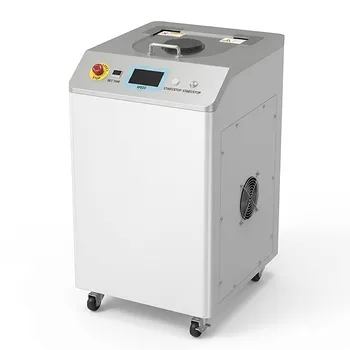
High Viscosity Planetary Centrifugal Vacuum Mixer for Material Defoaming and Uniform Mixing
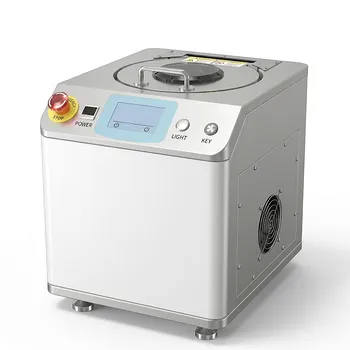
High Efficiency Vacuum Planetary Centrifugal Mixer and Defoaming Machine for Industrial Material Research and Precise Laboratory Powder Dispersion
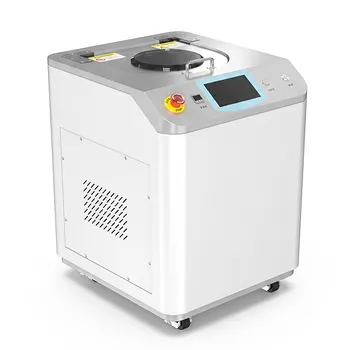
High Speed Vacuum Planetary Centrifugal Mixer and Defoamer for Industrial Paste Processing
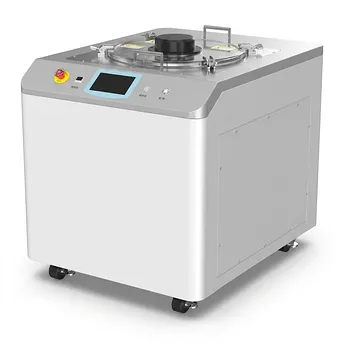
Industrial Planetary Centrifugal Vacuum Defoaming Mixer for High Viscosity Paste and Powder Homogenization
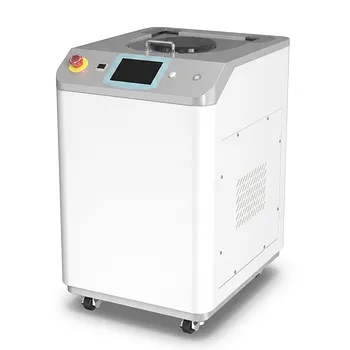
High Viscosity Planetary Centrifugal Mixing and Vacuum Defoaming Machine for Laboratory Material Preparation
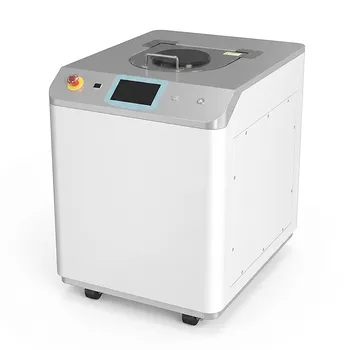
Industrial Planetary Centrifugal Vacuum Defoaming Mixer for High Viscosity Paste and Advanced Material Science
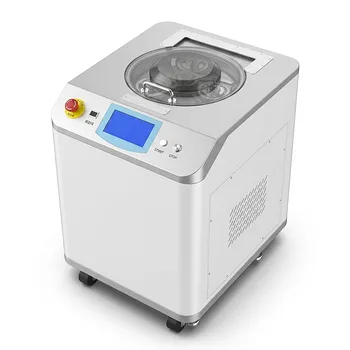
Dual Cup Vacuum Centrifugal Mixer Planetary Paste Defoaming Machine Industrial Material Processor
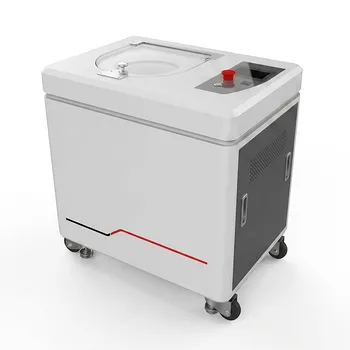
非介入式材料均质机真空脱泡行星搅拌高粘度混合设备
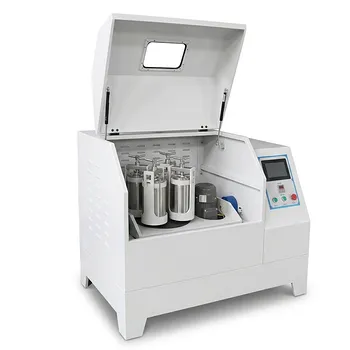
360° Rotating Omnidirectional Laboratory Planetary Ball Mill for Homogeneous Ultra-Fine Grinding and Mixing
Ultra Centrifugal Mill High Speed Laboratory Grinder for Fibrous and Brittle Sample Preparation
Ultra Centrifugal Mill for Rapid Laboratory Sample Preparation and Fine Powder Grinding
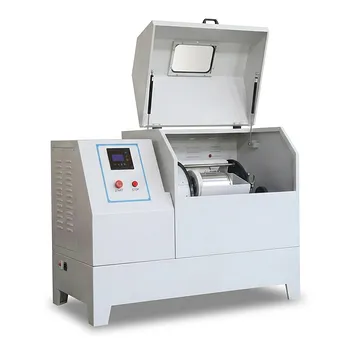
Heavy Duty Horizontal Planetary Ball Mill for Efficient Industrial Grinding and Sample Preparation
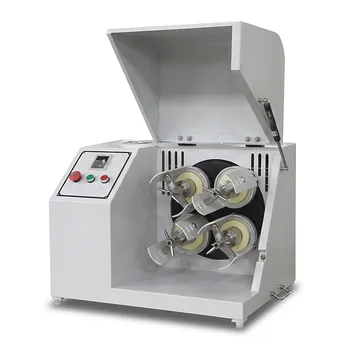
Horizontal Light Duty Planetary Ball Mill for Laboratory Sample Preparation
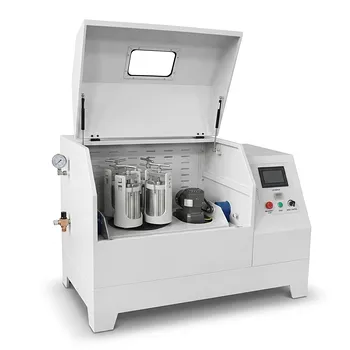
Vertical Production Planetary Ball Mill for High Throughput Powder Processing
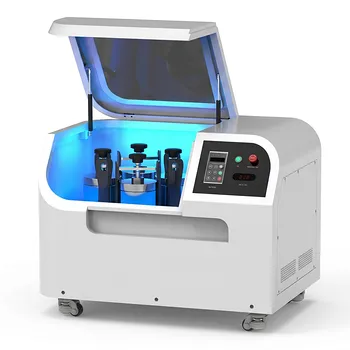
Planetary Ball Mill 12L
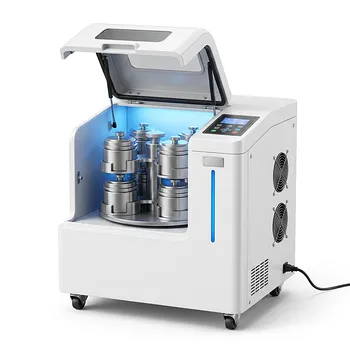
High Energy Omnidirectional Planetary Ball Mill 20L
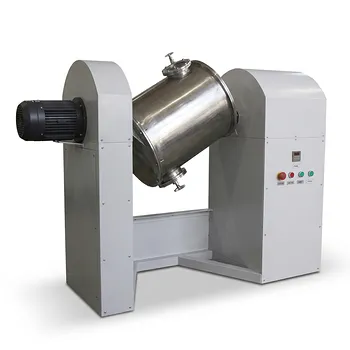
Inclined Mixer for Homogeneous Powder Blending and Grinding
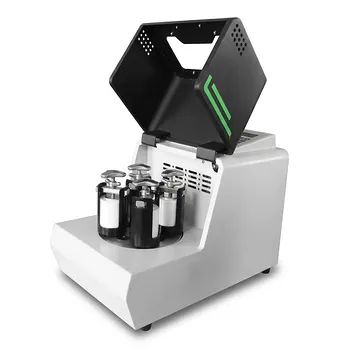
Miniature Planetary Ball Mill with Vacuum Grinding and High Efficiency for Laboratory Sample Preparation
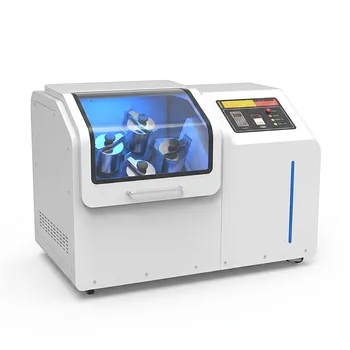
High Energy Omnidirectional Planetary Ball Mill 16L