What is the role of a planetary ball mill & zirconia media in BCZT prep? Boost Homogeneity and Phase Purity
Updated 4 months ago
The planetary ball mill and zirconia media are the primary drivers of homogenization and reactivity. In the preparation of Barium Calcium Zirconium Titanate (BCZT) powders, these tools mechanically refine raw materials like barium carbonate, calcium carbonate, titanium dioxide, and zirconium dioxide into an ultrafine, highly reactive state. This process ensures that the subsequent solid-phase reaction at 1150°C produces a ceramic with a uniform phase structure and high chemical purity.
The core role of planetary ball milling in BCZT synthesis is to convert coarse raw materials into a high-surface-energy precursor. By utilizing high-density zirconia media, the system achieves the atomic-level mixing necessary for precise phase formation while preventing metallic contamination that would degrade electrical performance.
Achieving Microscopic Homogeneity and Refinement
Particle Size Reduction and De-agglomeration
The planetary ball mill utilizes high-speed rotation to generate intense impact and shear forces. These forces break down large agglomerates in the raw powders, reducing them to the micron or sub-micron level. This refinement is essential for ensuring that the different chemical species are in close physical proximity.
Increasing Chemical Reactivity and Surface Energy
High-energy milling significantly increases the specific surface area and surface activity of the BCZT precursors. In some cases, the intensity of the collisions can lead to the partial amorphization of the powder. This heightened energy state provides the necessary driving force for rapid densification and reaction during the heating cycle.
Atomic-Level Uniform Mixing
Unlike simple stirring, the planetary action ensures a thorough homogenization of the multi-component system. This ensures that the barium, calcium, zirconium, and titanium ions are distributed uniformly at a microscopic scale. Such uniformity is critical to prevent compositional segregation, which can lead to secondary phases during sintering.
The Critical Role of Zirconia Grinding Media
Leveraging High Hardness and Density
Zirconia (ZrO2) grinding balls are chosen for their high hardness and high density. These properties allow the media to transfer maximum kinetic energy to the raw materials during high-speed collisions. This efficiency is vital for effectively grinding hard oxides like titanium dioxide and zirconium dioxide.
Maintaining Chemical Purity and Electrical Integrity
Zirconia is highly wear-resistant, which minimizes the introduction of foreign materials into the powder. Because BCZT is often used for its piezoelectric and dielectric properties, preventing metallic contamination from the milling media is essential. Using zirconia media ensures the final ceramic maintains its intended electrical performance and chemical stoichiometry.
Material Compatibility and "Self-Contamination"
In many advanced ceramic processes, using zirconia media with zirconium-containing powders like BCZT is a strategic choice. Any minimal wear from the grinding balls is chemically compatible with the zirconium dioxide component already present in the BCZT formula. This "self-compatibility" further reduces the risk of introducing detrimental impurities.
Facilitating the Solid-Phase Reaction
Optimizing Kinetic Conditions for Sintering
The milling process provides the optimal kinetic conditions required for the solid-phase sintering reaction. By increasing the contact area between the carbonates and oxides, the diffusion distances for atoms are shortened. This allows the synthesis of BCZT to occur efficiently at temperatures such as 1150°C.
Synthesis of Ultrafine Polycrystalline Powders
The end result of effective planetary milling is an ultrafine powder with a uniform phase structure. This high-quality precursor is the foundation for creating high-performance polycrystalline ceramics. Without this intensive mixing stage, the final BCZT material would likely suffer from structural defects and inconsistent ferroelectric properties.
Understanding the Trade-offs and Pitfalls
The Risk of Over-Milling
While high energy is beneficial, excessive milling time can lead to unwanted phase changes or excessive amorphization. This can sometimes alter the reaction path during sintering in unpredictable ways. It is essential to balance milling duration with the desired particle size.
Contamination from Milling Vials
While zirconia balls prevent most contamination, the material of the milling jar (vial) must also be considered. If a stainless steel jar is used with zirconia balls, the balls may abrade the jar walls, introducing iron or chrome into the BCZT. For high-purity applications, zirconia-lined jars are often preferred.
Thermal Management During Processing
High-energy planetary milling generates significant heat within the vials. This temperature rise can sometimes cause volatile components to react prematurely or lead to the caking of the powder. Using a wet milling medium, such as anhydrous ethanol, is often necessary to manage heat and improve grinding efficiency.
How to Apply This to Your Project
When preparing BCZT or similar polycrystalline powders, your milling strategy should align with your final performance requirements.
- If your primary focus is phase purity: Utilize zirconia-lined milling vials in addition to zirconia media to eliminate metallic contamination entirely.
- If your primary focus is rapid sintering: Increase the milling energy or duration to maximize surface area, but monitor for excessive heat buildup.
- If your primary focus is stoichiometric precision: Account for any potential material loss during wet milling and ensure the media-to-powder ratio is optimized to prevent uneven grinding.
Effective planetary ball milling is the bridge between raw chemical components and a high-performance functional ceramic.
Summary Table:
| Key Feature | Role in BCZT Preparation | Benefit to Final Material |
|---|---|---|
| High-Energy Impact | Breaks down TiO2 and ZrO2 agglomerates | Achieves sub-micron particle refinement |
| Planetary Rotation | Ensures atomic-level mixing of 4+ components | Prevents phase segregation & defects |
| Zirconia Media | High-density grinding without metal wear | Maintains chemical purity & dielectric properties |
| Increased Surface Energy | Shortens atomic diffusion distances | Facilitates efficient reaction at 1150°C |
Elevate Your Material Synthesis with Professional Prep Solutions
Achieving the perfect BCZT polycrystalline powder requires precision at every stage. At [Brand Name], we provide complete laboratory sample preparation solutions tailored for material science. From achieving sub-micron homogeneity to final pellet compaction, our equipment ensures your research is backed by purity and consistency.
Our Specialized Product Range Includes:
- Advanced Milling: High-energy planetary ball mills, jet mills, and cryogenic grinders.
- Premium Media: High-density zirconia grinding balls and lined milling vials.
- Compaction Excellence: A full spectrum of hydraulic presses, including Cold/Warm Isostatic Presses (CIP/WIP), hot presses, and XRF pellet presses.
- Sizing & Mixing: Vibratory sieve shakers and high-efficiency vacuum defoaming mixers.
Ready to optimize your powder processing workflow? Contact our technical team today to find the ideal equipment for your laboratory.
References
- Yueping Wang, Zhijian Peng. [Retracted Article] Performance of Ba<sub>0.95</sub>Ca<sub>0.05</sub>Zr<sub>0.15</sub>Ti<sub>0.85</sub>O<sub>3</sub>/PVDF composite flexible films. DOI: 10.2109/jcersj2.122.719
Mentioned Products
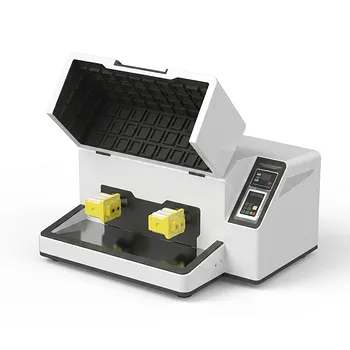
- Vertical Production Planetary Ball Mill for High Throughput Powder Processing
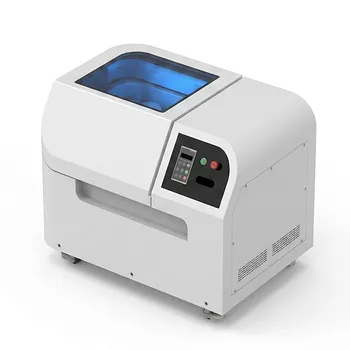
- 8L Planetary Ball Mill for Laboratory Grinding and Sample Preparation
- 360° Rotating Omnidirectional Laboratory Planetary Ball Mill for Homogeneous Ultra-Fine Grinding and Mixing
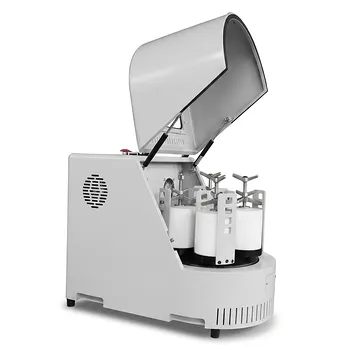
- Vertical Semi Circular Planetary Ball Mill for Laboratory Precision Grinding
- Vertical Square Planetary Ball Mill for Laboratory Sample Preparation and Nanoscale Grinding
People Also Ask
- What is the function of a high-performance planetary ball mill in AMZ laminates? Master Ceramic Homogenization.
- What is the role of a planetary ball mill in Al–Si3N4 nanocomposite prep? Achieve Uniform Homogenization
- What is the function of a planetary ball mill in lanthanum hexaaluminate synthesis? Master Micron-Level Homogenization
- What role does a planetary ball mill play in the synthesis of Er-doped PMN-PT ceramics? Enhancing Homogeneity & Purity
- What are the advantages of using a planetary ball mill for the fine grinding of barium silicate glass powder? Peak Results

Tech Team · PowderPreparation
Last updated on Jun 03, 2026
Related Products

Vertical Production Planetary Ball Mill for High Throughput Powder Processing
8L Planetary Ball Mill for Laboratory Grinding and Sample Preparation

360° Rotating Omnidirectional Laboratory Planetary Ball Mill for Homogeneous Ultra-Fine Grinding and Mixing
Vertical Semi Circular Planetary Ball Mill for Laboratory Precision Grinding

Vertical Square Planetary Ball Mill for Laboratory Sample Preparation and Nanoscale Grinding

Heavy Duty Horizontal Planetary Ball Mill for Efficient Industrial Grinding and Sample Preparation
Horizontal Light Duty Planetary Ball Mill for Laboratory Sample Preparation

High Energy Omnidirectional Planetary Ball Mill 16L

High Energy Laboratory Planetary Ball Mill for Nano Grinding and Material Science Sample Preparation
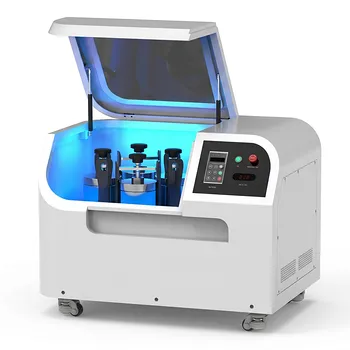
Planetary Ball Mill 12L

High Energy Omnidirectional Planetary Ball Mill 20L
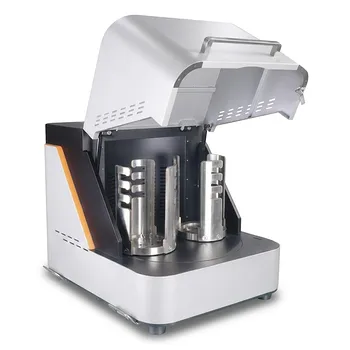
High Energy Laboratory Planetary Ball Mill for Nano Grinding and Colloidal Mixing of Hard and Brittle Materials

High Energy Planetary Ball Mill for Nano Scale Grinding and Mechanical Alloying
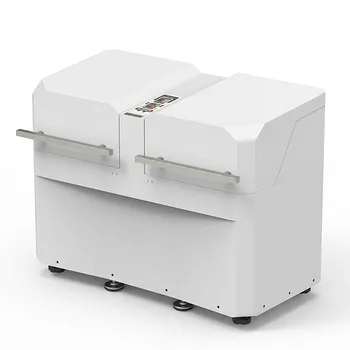
Dual Station Planetary Ball Mill 24L

Miniature Planetary Ball Mill with Vacuum Grinding and High Efficiency for Laboratory Sample Preparation
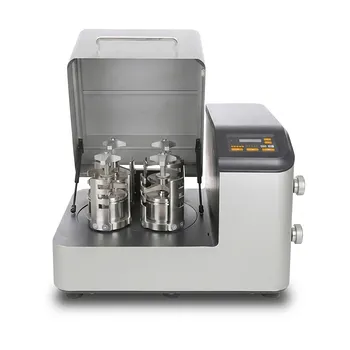
High Energy Planetary Ball Mill for Nano Scale Grinding and Colloidal Mixing in Material Science Research
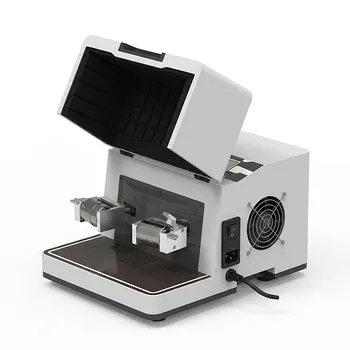
High Energy Hybrid Vibratory Ball Mill for Grinding Mixing and Cell Disruption
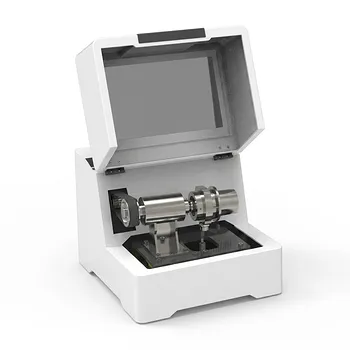
Single Tank High Energy Vibratory Ball Mill for Laboratory Grinding and Mixing
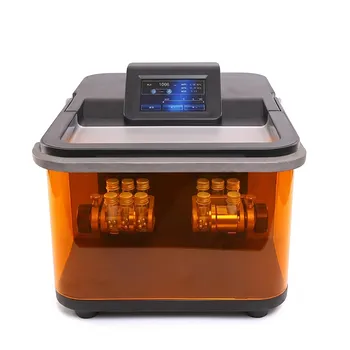
High Throughput Micro Ball Mill for Cryogenic Grinding and Laboratory Cell Disruption