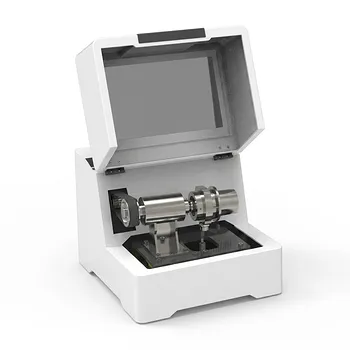
What is the role of a planetary ball mill in magnesium hydrogen storage? Optimize kinetics & achieve nanoscale refinement.
Updated 5 months ago
A planetary ball mill serves as the primary engine for mechanical activation and microstructural engineering in magnesium-based hydrogen storage. It utilizes high-energy impact and shear forces to destroy the passivating oxide layer on magnesium particles while simultaneously refining them to the nanoscale. This process dramatically increases the specific surface area and introduces dense lattice defects, transforming inert magnesium into a highly reactive medium capable of rapid hydrogen absorption and desorption.
Core Takeaway: Planetary ball milling is the critical pretreatment step that overcomes the inherent kinetic barriers of magnesium by reducing grain size and creating "hydrogen highways" through the introduction of lattice defects and grain boundaries.
The Mechanism of Mechanical Activation
Destruction of the Surface Oxide Layer
Magnesium particles naturally possess a stubborn oxide layer that acts as a barrier to hydrogen diffusion. The high-energy friction and impact of the planetary ball mill physically break this layer, exposing fresh metallic surfaces for immediate reaction.
Nanoscale Particle Refinement
The mill uses high-speed rotation to generate centrifugal forces, subjecting the powder to repeated cycles of fracturing and cold welding. This reduces magnesium particles from the micrometer scale to the nanoscale (often between 25–45 nm), significantly shortening the distance hydrogen atoms must travel.
Creation of High-Activity Diffusion Paths
Mechanical milling introduces a high density of lattice defects, dislocations, and grain boundaries. These structural imperfections serve as "fast diffusion channels," allowing hydrogen to penetrate the interior of the material much more efficiently than in untreated powder.
Mechanical Alloying and Catalyst Integration
Atomic-Level Mixing
The planetary ball mill facilitates mechanical alloying, allowing magnesium to be blended with elements like nickel, aluminum, or vanadium at the atomic level. This process creates new magnesium-based alloys and compounds, such as Mg-Al alloys, which exhibit superior storage properties compared to pure magnesium.
Uniform Catalyst Dispersion
To further improve kinetics, catalysts like Ni/MnOx are often added during the milling process. The intense shearing forces ensure these catalysts are uniformly loaded onto the magnesium hydride (MgH2) surfaces, maximizing their effectiveness in lowering the energy barrier for hydrogen release.
Enhancing Thermodynamic Performance
By engineering the microstructure and facilitating alloying, planetary ball milling significantly reduces the dehydrogenation temperature. This makes the material more viable for practical applications where hydrogen must be released at lower, more manageable temperatures.
Understanding the Trade-offs
Energy Consumption vs. Material Gain
Achieving the desired nanoscale structure often requires extended milling durations, sometimes exceeding four hours. This high energy input must be balanced against the resulting improvements in hydrogen storage capacity and kinetic speed to ensure economic viability.
Risk of Contamination
The high-intensity grinding process can lead to wear and tear of the grinding balls and the mill jar. This can introduce impurities into the magnesium powder, which may negatively impact the long-term cycling stability of the hydrogen storage material.
Handling and Pyrophoricity
Refining magnesium to the nanoscale significantly increases its reactivity with oxygen and moisture. The resulting powders are often pyrophoric, requiring strict processing under inert atmospheres (such as argon) to prevent spontaneous combustion or degradation.
Applying Ball Milling to Your Project
Recommendations Based on Technical Goals
- If your primary focus is maximizing absorption speed: Utilize extended milling times to ensure grain sizes reach the sub-50nm range and maximize the density of lattice defects.
- If your primary focus is reducing release temperature: Focus on mechanical alloying by adding transition metals or metal oxides during the milling phase to alter the material's thermodynamics.
- If your primary focus is industrial scalability: Optimize the ball-to-powder ratio and rotation speed to achieve the necessary particle refinement (e.g., <125 μm) while minimizing total energy expenditure.
Properly executed planetary ball milling is the definitive solution for turning raw magnesium into a high-performance hydrogen storage medium.
Summary Table:
| Mechanism | Action on Magnesium Powder | Benefit for Hydrogen Storage |
|---|---|---|
| Oxide Removal | Physically breaks the MgO barrier layer | Enables immediate hydrogen absorption |
| Nano-Refinement | Reduces grain size to 25–45 nm | Shortens diffusion paths for faster kinetics |
| Lattice Defects | Creates dislocations & grain boundaries | Acts as "highways" for fast hydrogen diffusion |
| Mechanical Alloying | Atomic-level blending with catalysts | Lowers dehydrogenation temperatures |
Elevate Your Hydrogen Storage Research with KINTEK SOLUTION
Optimizing magnesium for hydrogen storage requires precision, high-energy performance, and specialized equipment. KINTEK SOLUTION provides complete laboratory sample preparation solutions for material science, specializing in the powder processing and compaction technology essential for advanced energy research.
Our extensive product line is designed to help you overcome kinetic barriers:
- High-Energy Milling: Planetary ball mills, jet mills, and disc mills for achieving critical nanoscale refinement.
- Powder Preparation: Sieve shakers, powder mixers, and specialized grinders for uniform catalyst dispersion.
- Advanced Compaction: A full spectrum of hydraulic presses, including Cold/Warm Isostatic Presses (CIP/WIP), vacuum hot presses, and XRF pellet presses for high-density material forming.
Whether you are focusing on mechanical activation or alloy synthesis, our expertise ensures your magnesium powders reach peak reactivity and storage capacity.
Ready to accelerate your material engineering?
Contact KINTEK SOLUTION today to find the perfect equipment for your laboratory needs!
References
- Viktor N. Kudiiarov, Parvizi Ibrohim Khomidzoda. The Defect Structure Evolution in MgH2-EEWNi Composites in Hydrogen Sorption–Desorption Processes. DOI: 10.3390/met15010072
Mentioned Products
- Planetary Ball Mill 12L
- Vertical Square Planetary Ball Mill for Laboratory Sample Preparation and Nanoscale Grinding
- 8L Planetary Ball Mill for Laboratory Grinding and Sample Preparation
- Horizontal Light Duty Planetary Ball Mill for Laboratory Sample Preparation
- Miniature Planetary Ball Mill with Vacuum Grinding and High Efficiency for Laboratory Sample Preparation
People Also Ask
- What is the core function of a planetary ball mill in Mn3AlC synthesis? Master Mechanical Activation for Magnetic Powders
- What is the role of a planetary ball mill in MCP powder preparation? Optimize Reactivity & 3D Printing Performance
- Why is an industrial-grade planetary ball mill used for precursor treatment? Optimize Cation Disorder in ZnSiP2 Anodes
- What is the function of a planetary ball mill in Cu-ODS? Essential for Mechanical Alloying & Nano-Oxide Dispersion
- Why is a planetary ball mill required for the preparation of AZ91D-Ni-GNPs composite powders? High-Energy Alloying Guide

Tech Team · PowderPreparation
Last updated on May 14, 2026
Related Products
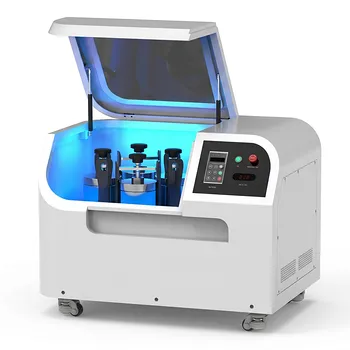
Planetary Ball Mill 12L
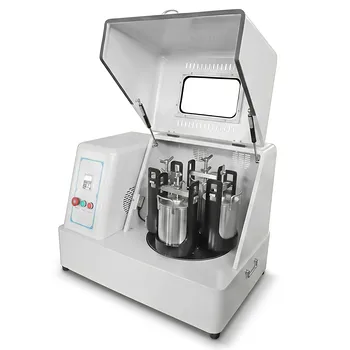
Vertical Square Planetary Ball Mill for Laboratory Sample Preparation and Nanoscale Grinding

8L Planetary Ball Mill for Laboratory Grinding and Sample Preparation
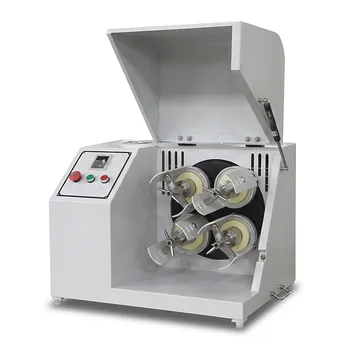
Horizontal Light Duty Planetary Ball Mill for Laboratory Sample Preparation

Miniature Planetary Ball Mill with Vacuum Grinding and High Efficiency for Laboratory Sample Preparation

High Energy Laboratory Planetary Ball Mill for Nano Grinding and Material Science Sample Preparation
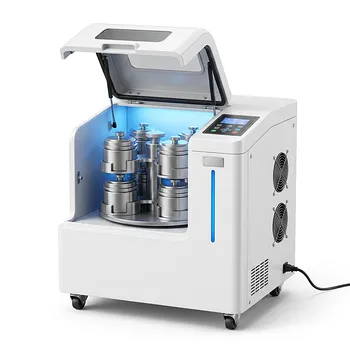
High Energy Omnidirectional Planetary Ball Mill 20L
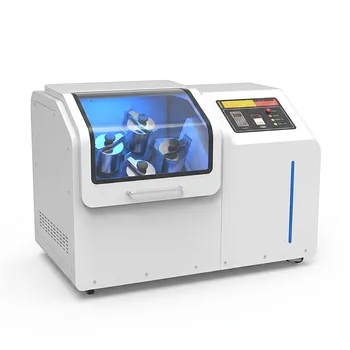
High Energy Omnidirectional Planetary Ball Mill 16L
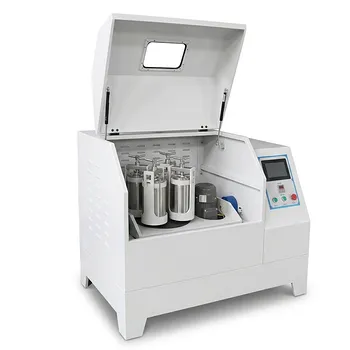
360° Rotating Omnidirectional Laboratory Planetary Ball Mill for Homogeneous Ultra-Fine Grinding and Mixing
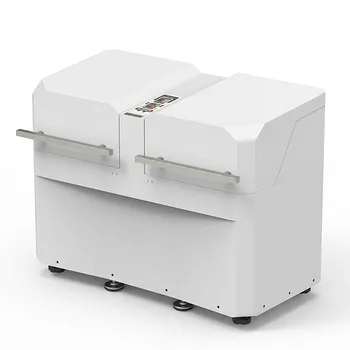
Dual Station Planetary Ball Mill 24L
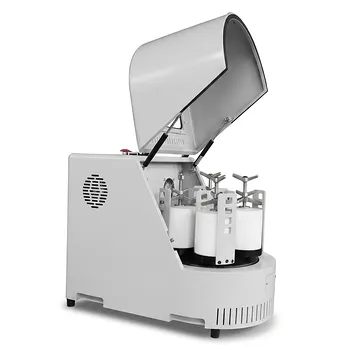
Vertical Semi Circular Planetary Ball Mill for Laboratory Precision Grinding
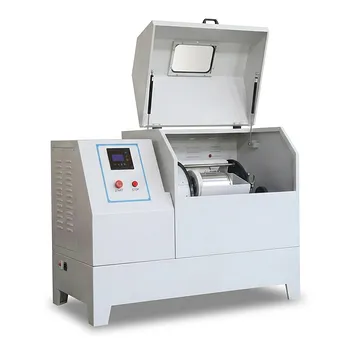
Heavy Duty Horizontal Planetary Ball Mill for Efficient Industrial Grinding and Sample Preparation

High Energy Laboratory Planetary Ball Mill for Nano Grinding and Colloidal Mixing of Hard and Brittle Materials
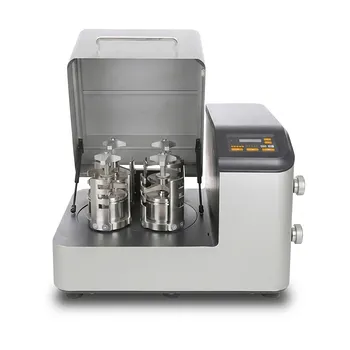
High Energy Planetary Ball Mill for Nano Scale Grinding and Colloidal Mixing in Material Science Research
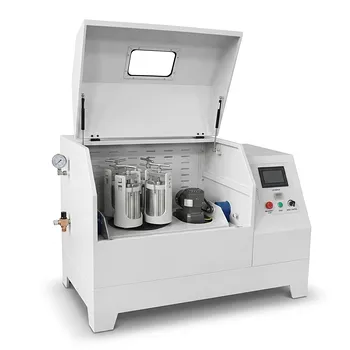
Vertical Production Planetary Ball Mill for High Throughput Powder Processing

High Energy Planetary Ball Mill for Nano Scale Grinding and Mechanical Alloying

Multi-Platform Nanoscale High-Energy Vibratory Ball Mill

Nanoscale High-Energy Vibratory Ball Mill for Laboratory Sample Preparation, Mechanochemistry, and Mechanical Alloying

High Energy Hybrid Vibratory Ball Mill for Grinding Mixing and Cell Disruption