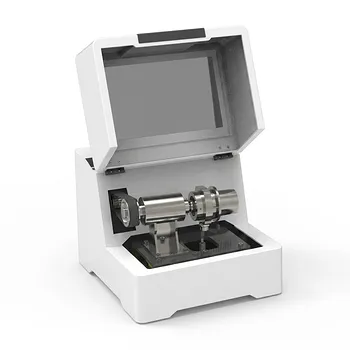
What is the role of a planetary ball mill in the preparation of raw materials for mullite-based carbon composites?
Updated 5 months ago
The planetary ball mill serves as the critical homogenization and refinement engine in the synthesis of mullite-based carbon composites. By applying high-frequency impact and shear forces, it transforms raw materials—specifically kaolin powder and organic sources like oak sawdust—into a deeply integrated precursor. This ensures that organic additives are uniformly distributed within the inorganic mineral matrix, which is essential for a consistent carbonization reaction during the sintering phase.
The primary role of the planetary ball mill is to achieve a level of microscopic uniformity and particle refinement that manual or low-energy mixing cannot reach. This process creates a high-surface-area, chemically active precursor that dictates the final structural integrity and performance of the composite.
Achieving Homogeneity at the Microscopic Level
Uniform Distribution of Organic Phases
In the preparation of mullite-carbon composites, the mill ensures that organic additives (like oak sawdust) are thoroughly embedded within the inorganic mineral matrix (kaolin). This deep mixing prevents the segregation of carbon sources, which is vital for maintaining a uniform material structure after thermal treatment.
Breaking Down Particle Agglomerates
Raw powders often form clusters or agglomerates that can lead to structural defects in the final ceramic. The intense shear forces provided by the planetary motion effectively dissociate these clusters, ensuring that each particle is available for the subsequent chemical reactions.
Atomic-Level Component Intermixing
For high-performance mullite, the mill can achieve atomic-level distribution of components such as silica and alumina. This proximity is critical because it reduces the diffusion distance required for chemical phases to form, leading to a more complete transition to the mullite phase.
Mechanical Activation and Surface Area Enhancement
Increasing Specific Surface Area
By significantly reducing the particle size—often down to the nanometer scale—the planetary ball mill increases the total surface area of the raw materials. This increased surface area provides more contact points between the kaolin and the carbon source, accelerating the reaction kinetics.
Inducing Mechanochemical Reactions
The high-energy environment inside the mill can induce mechanochemical reactions before the material even reaches the furnace. These reactions provide highly active precursors that lower the energy barrier for the synthesis of the final composite during high-temperature sintering.
Enhancing Reaction Enthalpy
Through prolonged impact, the mill increases the contact area between reactants at the microscopic level. This is particularly important for composites requiring specific reaction enthalpies, such as those involving self-propagating high-temperature synthesis (SHS).
Establishing the Foundation for Sintering
Facilitating Solid-Phase Reactions
The uniform distribution achieved during milling is the primary driver for solid-phase reactions during sintering. Without this uniformity, the formation of the mullite phase would be inconsistent, resulting in localized areas of unreacted material.
Promoting In-Situ Growth
In advanced composites, the mill establishes the material foundation for the in-situ growth of mullite whiskers. By ensuring sintering additives and reactive components are distributed at the micrometer scale, the mill allows for controlled growth of reinforcing structures within the matrix.
Ensuring Uniform Carbonization
Because the carbon source is evenly dispersed, the carbonization reaction occurs predictably throughout the entire volume of the material. This prevents the formation of "carbon-rich" or "carbon-poor" zones, which would otherwise compromise the mechanical properties of the composite.
Understanding the Trade-offs and Pitfalls
Material Contamination
A significant risk in high-energy milling is contamination from the grinding media (balls and vials). Over time, small amounts of the milling equipment material can wear off and integrate into the powder, potentially altering the chemical purity of the mullite-carbon composite.
Thermal Degradation of Organics
The intense energy of a planetary ball mill generates significant heat within the milling jars. If not carefully managed through interval cooling, this heat can prematurely degrade organic components like oak sawdust or phenolic resins, negatively impacting the carbonization process.
Over-Milling and Amorphization
While refinement is beneficial, excessive milling can lead to unwanted amorphization or the formation of metastable phases. This can change the sintering behavior of the kaolin in unpredictable ways, making it harder to control the final density of the ceramic.
How to Apply This to Your Project
Recommendations Based on Project Goals
- If your primary focus is maximum mechanical strength: Prioritize longer milling times at moderate speeds to ensure the highest degree of homogenization and the smallest possible particle size.
- If your primary focus is chemical purity: Utilize grinding jars and balls made of the same material as your matrix (e.g., alumina or zirconia) to minimize the impact of media wear.
- If your primary focus is structural uniformity: Use wet milling techniques to better disperse organic additives and prevent the re-agglomeration of fine powders during the process.
By mastering the high-energy dynamics of the planetary ball mill, you transform raw powders into a high-performance precursor ready for advanced thermal synthesis.
Summary Table:
| Key Role | Specific Mechanism | Impact on Final Composite |
|---|---|---|
| Homogenization | Uniformly embeds organic phases (e.g., sawdust) into inorganic matrices. | Prevents carbon segregation; ensures consistent structural integrity. |
| Refinement | Breaks down clusters and reduces particles to nanometer scale. | Increases reaction kinetics and eliminates structural defects. |
| Activation | Induces mechanochemical reactions and increases surface area. | Lowers the energy barrier for synthesis and enhances sintering. |
| Consistency | Enables atomic-level intermixing of silica and alumina. | Promotes complete mullite phase transition and uniform carbonization. |
Elevate Your Material Synthesis with Precision Engineering
Achieving the perfect precursor for mullite-based carbon composites requires more than just mixing—it requires the high-energy homogenization and mechanical activation that only professional-grade equipment can provide. At [Your Brand Name], we provide complete laboratory sample preparation solutions tailored for material science research and industrial production.
Our specialized equipment range includes:
- Advanced Milling & Grinding: High-energy planetary ball mills, jet mills, and cryogenic grinders for nanometer-scale refinement.
- Powder Processing: High-performance powder mixers, defoaming mixers, and precision sieve shakers (vibratory/air-jet).
- Compaction & Sintering Prep: A full spectrum of hydraulic presses, including Cold/Warm Isostatic Presses (CIP/WIP), vacuum hot presses, and XRF pellet presses.
Whether you are a researcher focused on microscopic uniformity or a distributor looking for reliable OEM/ODM support and certified equipment, we are here to support your success. Contact us today to discuss your project requirements and discover how our expertise in powder processing can optimize your results!
References
- Emese Kurovics, László A. Gömze. EXAMINATION OF THE CARBONIZATION PROCESS USING KAOLIN AND SAWDUST. DOI: 10.2495/mc190021
Mentioned Products
- 360° Rotating Omnidirectional Laboratory Planetary Ball Mill for Homogeneous Ultra-Fine Grinding and Mixing
- Vertical Square Planetary Ball Mill for Laboratory Sample Preparation and Nanoscale Grinding
- 8L Planetary Ball Mill for Laboratory Grinding and Sample Preparation
- Heavy Duty Horizontal Planetary Ball Mill for Efficient Industrial Grinding and Sample Preparation
- Vertical Semi Circular Planetary Ball Mill for Laboratory Precision Grinding
People Also Ask
- What role does an omni-directional planetary ball mill play in brass/cobalt antimonide pretreatment? Achieve Nano-Scale Homogeneity.
- What is the function of an omni-directional planetary ball mill? Achieve Streak-Free Glass Homogenization
- Why is an intermittent grinding process required for perovskites in a planetary ball mill? Ensure Stability & Purity
- Why is a planetary ball mill essential for SiBCN-rGO wet-spinning? Achieve Superior Dispersion and Spinnability
- What role does a planetary ball mill play in the synthesis of Li6PS5Cl (LPSCl)? Unlock High Ionic Conductivity

Tech Team · PowderPreparation
Last updated on May 14, 2026
Related Products
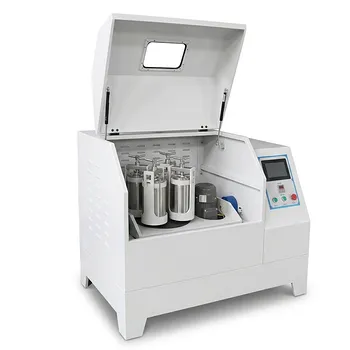
360° Rotating Omnidirectional Laboratory Planetary Ball Mill for Homogeneous Ultra-Fine Grinding and Mixing

Vertical Square Planetary Ball Mill for Laboratory Sample Preparation and Nanoscale Grinding

8L Planetary Ball Mill for Laboratory Grinding and Sample Preparation
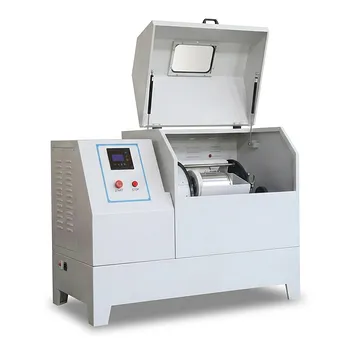
Heavy Duty Horizontal Planetary Ball Mill for Efficient Industrial Grinding and Sample Preparation
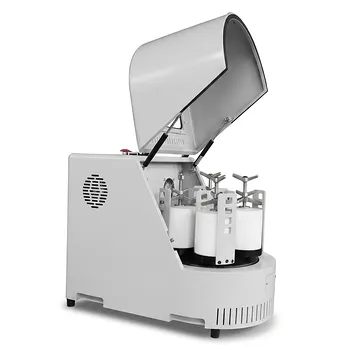
Vertical Semi Circular Planetary Ball Mill for Laboratory Precision Grinding
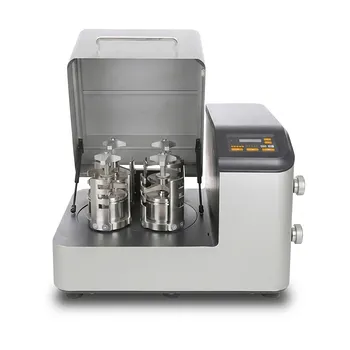
High Energy Planetary Ball Mill for Nano Scale Grinding and Colloidal Mixing in Material Science Research
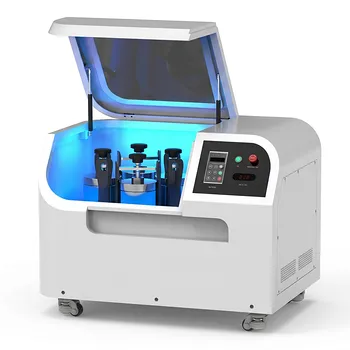
Planetary Ball Mill 12L
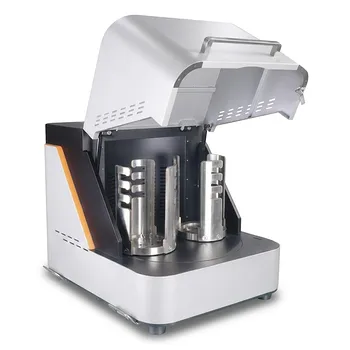
High Energy Laboratory Planetary Ball Mill for Nano Grinding and Colloidal Mixing of Hard and Brittle Materials

Miniature Planetary Ball Mill with Vacuum Grinding and High Efficiency for Laboratory Sample Preparation
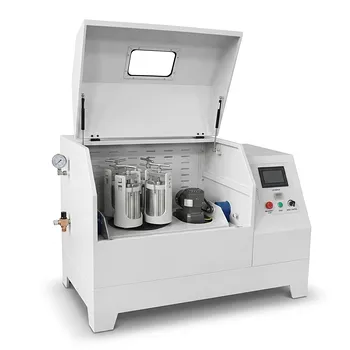
Vertical Production Planetary Ball Mill for High Throughput Powder Processing
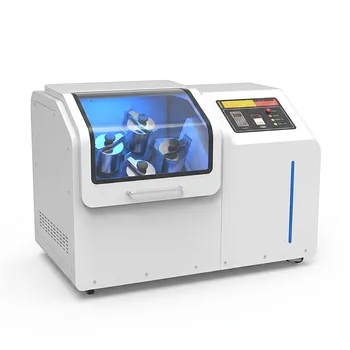
High Energy Omnidirectional Planetary Ball Mill 16L

High Energy Laboratory Planetary Ball Mill for Nano Grinding and Material Science Sample Preparation
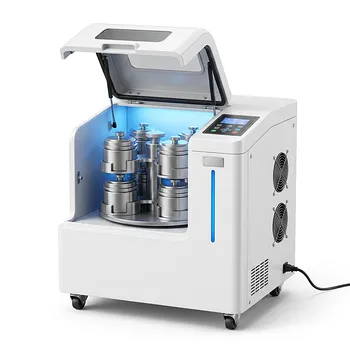
High Energy Omnidirectional Planetary Ball Mill 20L

High Energy Planetary Ball Mill for Nano Scale Grinding and Mechanical Alloying
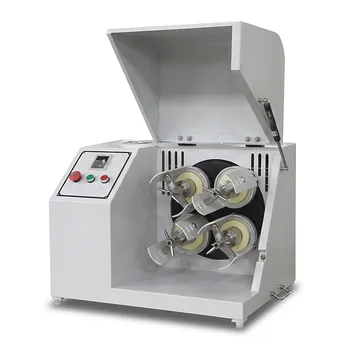
Horizontal Light Duty Planetary Ball Mill for Laboratory Sample Preparation
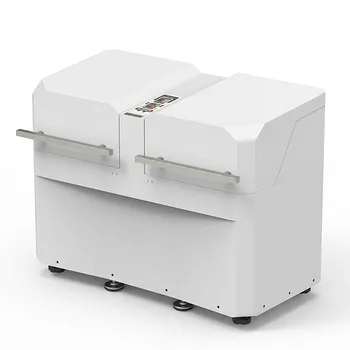
Dual Station Planetary Ball Mill 24L

Multi-Platform Nanoscale High-Energy Vibratory Ball Mill
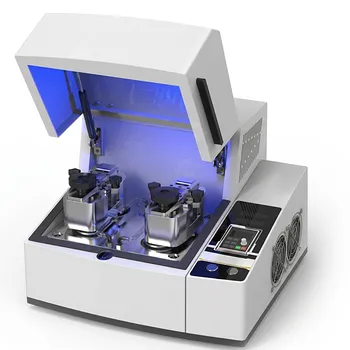
Laboratory Nano High Energy Ball Mill Ultrafine Grinding Mechanical Alloying

High Energy Hybrid Vibratory Ball Mill for Grinding Mixing and Cell Disruption