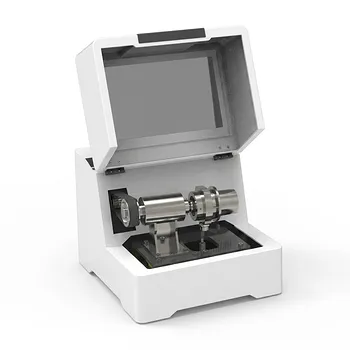
What is the role of a planetary ball mill in NASICON precursor prep? Boost Ion Conductivity & Phase Purity
Updated 5 months ago
Planetary ball milling is the critical high-energy processing step used to refine particle size and ensure atomic-scale homogenization of raw material precursors. By utilizing intense impact and shear forces, this process increases the specific surface area and chemical reactivity of powders, which is essential for achieving high sodium-ion conductivity and phase purity in the final NASICON or beta-alumina ceramic.
The planetary ball mill serves as more than a simple mixer; it is a high-energy reactor that optimizes the physical and chemical state of precursor powders. This ensures uniform solid-state reactions during sintering, ultimately reducing bulk resistance and improving the electrochemical performance of the electrolyte.
Particle Refinement and Surface Activation
Increasing Kinetic Reactivity
The primary role of the planetary ball mill is to utilize high-speed rotation to crush raw materials like zirconia, silica, and sodium carbonate into sub-micron particles. This mechanical reduction significantly increases the specific surface area, providing more contact points for chemical reactions.
Lowering Sintering Temperatures
By increasing the stored energy within the powder through mechanical strain and surface area expansion, the mill facilitates solid-state reactions at lower temperatures. This is particularly vital for sodium-based materials to prevent the volatilization of sodium during high-temperature calcination.
Mechanical Alloying Capabilities
In some synthesis routes, the mill drives mechanical alloying, where chemical bonds are broken and new phases begin to form at the atomic level before the powder even enters a furnace. This process ensures that the precursor is not just a mixture, but a highly active intermediate phase.
Achieving Microstructural and Phase Homogeneity
Homogeneous Dopant Distribution
For high-performance electrolytes like Sc/Mg co-doped NASICON, the mill ensures that dopants are distributed uniformly at the atomic scale. This prevents the formation of secondary, non-conductive phases that can block sodium-ion transport at grain boundaries.
Phase Purity in Final Ceramics
High-energy wet milling in mediums like ethanol or isopropyl alcohol achieves micron-level mixing of complex precursors such as $ZrSiO_4$ and $Na_3PO_4$. This level of intimacy between reactants is required to ensure a complete reaction, resulting in a high-phase-purity crystalline structure after sintering.
Interfacial Contact for Composites
When preparing composites with conductive additives (like carbon black or graphene), the mill provides the mechanical energy to uniformly coat the active particles. This establishes the tight interfacial contact necessary to overcome the naturally low electronic conductivity of some NASICON-type materials.
Optimizing Processing and Rheology
Control of Particle Size Distribution (PSD)
The planetary ball mill allows for precise regulation of the Particle Size Distribution, often targeting a unimodal distribution around 4.5 µm. Controlling the PSD is essential for managing the surface energy of the powder, which directly impacts the quality of subsequent processing steps.
Enhancing Tape Casting Performance
For manufacturers using tape casting to create thin-film electrolytes, milling improves the rheological characteristics of the slurry. A well-milled powder ensures the consistency and uniformity of the green film, preventing defects during the drying and sintering phases.
Reduction of Bulk Resistance
The cumulative effect of refined particles and uniform microstructure is a significant reduction in bulk resistance. Impedance spectroscopy analysis typically shows that properly milled precursors lead to a more dense ceramic matrix with superior ion-conducting pathways.
Understanding the Trade-offs
Risk of Media Contamination
The high-energy nature of planetary milling can lead to abrasion of the milling jars and balls (typically zirconia or alumina). This introduces trace impurities into the precursor, which may negatively impact the ionic conductivity or mechanical integrity of the final electrolyte.
Processing Heat and Phase Stability
Intense mechanical energy generates significant heat within the milling vials, which can cause premature or uncontrolled phase transitions. Technicians must often implement interval cycles (rest periods) to manage temperature and ensure the stability of volatile components.
Energy and Time Intensity
While effective, planetary ball milling is an energy-intensive process that requires careful optimization of rotation speeds and milling times. Over-milling can lead to particle agglomeration, which paradoxically reduces the effective surface area and complicates the sintering process.
How to Apply This to Your Project
Making the Right Choice for Your Goal
- If your primary focus is maximizing ionic conductivity: Prioritize high-energy wet milling with an organic medium to ensure sub-micron refinement and atomic-scale dopant distribution.
- If your primary focus is thin-film fabrication: Focus on achieving a unimodal Particle Size Distribution (PSD) to ensure stable slurry rheology for tape casting.
- If your primary focus is minimizing impurities: Utilize milling jars and media of the same material as your primary precursor (e.g., zirconia) and implement optimized interval cycles to reduce wear.
- If your primary focus is synthesizing sulfide-based solid electrolytes: Use the mill to drive mechanical alloying at low temperatures to avoid the complexities of traditional high-temperature melt-quenching.
By mastering the mechanical variables of the planetary ball mill, researchers can precisely engineer the precursor properties required for the next generation of high-performance sodium-based batteries.
Summary Table:
| Key Role | Impact on Precursor | Benefit to Solid Electrolyte |
|---|---|---|
| Particle Refinement | Sub-micron size reduction | Lower sintering temps & high density |
| Homogenization | Atomic-scale dopant mixing | Enhanced phase purity & ion transport |
| Surface Activation | Increased kinetic reactivity | Faster solid-state reaction kinetics |
| PSD Control | Optimized size distribution | Improved rheology for tape casting |
| Mechanical Alloying | Phase formation during milling | Reduced bulk resistance & better stability |
Optimize Your Solid Electrolyte Research with Precision Equipment
Achieving superior sodium-ion conductivity starts with perfect precursor preparation. At [Brand Name], we provide complete laboratory sample preparation solutions tailored for material science and battery research. Whether you are refining NASICON precursors or compacting advanced ceramics, our equipment ensures high-phase purity and consistency.
Our extensive product range includes:
- Advanced Milling: Planetary ball mills, jet mills, and cryogenic grinders for sub-micron refinement.
- Crushing & Sieve Shakers: Jaw/roll crushers and air-jet sieves for precise particle size control.
- Mixing Solutions: High-performance powder and vacuum defoaming mixers.
- Compaction & Sintering: A full spectrum of hydraulic presses, including Cold/Warm Isostatic Presses (CIP/WIP), standard lab presses, and Vacuum Hot Presses for dense electrolyte fabrication.
Ready to elevate your material performance? Contact our technical team today to find the ideal equipment for your laboratory and experience the difference in electrochemical excellence.
References
- Renjie Liu, Anthony R. West. Electrochemical impedance spectroscopy of battery systems, including sodium materials. DOI: 10.1016/j.coelec.2025.101800
Mentioned Products
- Vertical Semi Circular Planetary Ball Mill for Laboratory Precision Grinding
- High Energy Planetary Ball Mill for Nano Scale Grinding and Mechanical Alloying
- Vertical Production Planetary Ball Mill for High Throughput Powder Processing
- Heavy Duty Horizontal Planetary Ball Mill for Efficient Industrial Grinding and Sample Preparation
- 360° Rotating Omnidirectional Laboratory Planetary Ball Mill for Homogeneous Ultra-Fine Grinding and Mixing
People Also Ask
- What role does a planetary ball mill play in the synthesis of Li6PS5Cl (LPSCl)? Unlock High Ionic Conductivity
- Why is a planetary ball mill essential for SiBCN-rGO wet-spinning? Achieve Superior Dispersion and Spinnability
- Why is an intermittent grinding process required for perovskites in a planetary ball mill? Ensure Stability & Purity
- Why is a planetary ball mill required for PET micronization? Ensure Accurate Chemical Analysis of Reprocessed PET
- How does mechanized planetary ball milling compare to manual agate grinding? Optimize sulfide standard material precision.

Tech Team · PowderPreparation
Last updated on May 14, 2026
Related Products
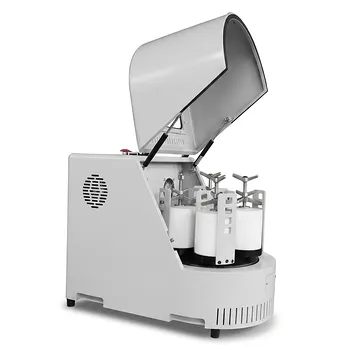
Vertical Semi Circular Planetary Ball Mill for Laboratory Precision Grinding

High Energy Planetary Ball Mill for Nano Scale Grinding and Mechanical Alloying

Vertical Production Planetary Ball Mill for High Throughput Powder Processing

Heavy Duty Horizontal Planetary Ball Mill for Efficient Industrial Grinding and Sample Preparation

360° Rotating Omnidirectional Laboratory Planetary Ball Mill for Homogeneous Ultra-Fine Grinding and Mixing

Vertical Square Planetary Ball Mill for Laboratory Sample Preparation and Nanoscale Grinding

Miniature Planetary Ball Mill with Vacuum Grinding and High Efficiency for Laboratory Sample Preparation

High Energy Laboratory Planetary Ball Mill for Nano Grinding and Material Science Sample Preparation

High Energy Omnidirectional Planetary Ball Mill 16L
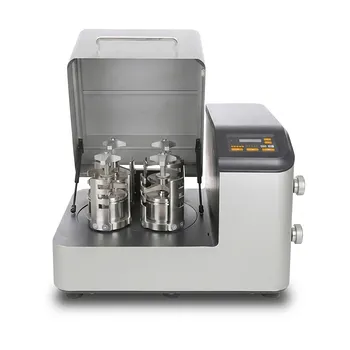
High Energy Planetary Ball Mill for Nano Scale Grinding and Colloidal Mixing in Material Science Research

High Energy Laboratory Planetary Ball Mill for Nano Grinding and Colloidal Mixing of Hard and Brittle Materials

High Energy Omnidirectional Planetary Ball Mill 20L
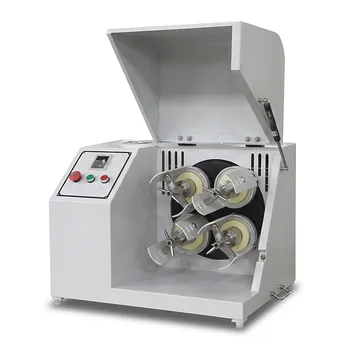
Horizontal Light Duty Planetary Ball Mill for Laboratory Sample Preparation

8L Planetary Ball Mill for Laboratory Grinding and Sample Preparation

Dual Station Planetary Ball Mill 24L
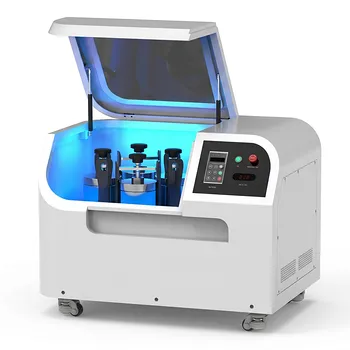
Planetary Ball Mill 12L

Nano High Energy Vibratory Ball Mill for Laboratory Sample Preparation

Multi-Platform Nanoscale High-Energy Vibratory Ball Mill

High Energy Hybrid Vibratory Ball Mill for Grinding Mixing and Cell Disruption